Quick Answer: Electric Pedal Vehicle or Full EV?
If your daily round-trip commute is under 30 miles and you live in a mild climate, a Class 1 or Class 3 electric pedal vehicle (e-bike or e-cargo bike) costing $1,500–$4,500 can replace most car trips at under $0.01/mile in electricity. If you regularly exceed 40 miles, carry passengers, drive in extreme weather, or need highway speeds, a battery-electric vehicle (BEV) like the 2026 Chevrolet Equinox EV (EPA 319 mi, ~$33,000 base) or 2026 Hyundai Ioniq 5 (EPA 314 mi, ~$42,450) is the practical choice, costing roughly $0.04–$0.06/mile to charge at home.
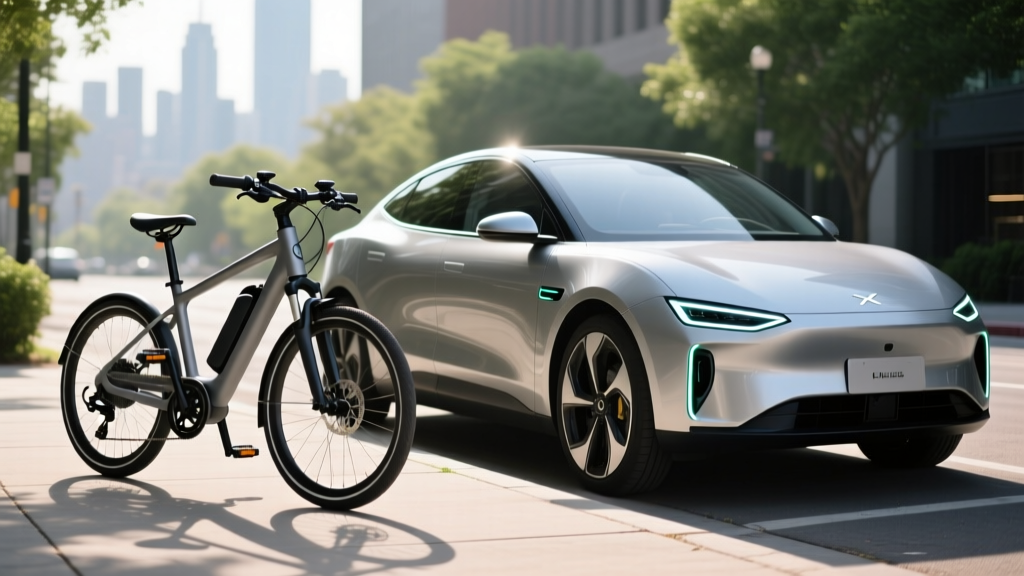
The term "electric pedal vehicle" typically refers to pedal-assist electric bicycles, e-cargo bikes, and electric trikes where human pedaling is augmented by a hub or mid-drive motor. These sit in a completely different regulatory and practical category from full battery-electric cars. But for urban commuters weighing their options, the real question isn't which technology is "better" — it's which one matches your driving pattern, climate, and budget. Below, we break down the numbers that matter.
What Exactly Is an Electric Pedal Vehicle?
In US federal classification, electric pedal vehicles generally fall into three e-bike classes:
- Class 1: Pedal-assist only, motor cuts off at 20 mph. Typical motor: 250–500W. Battery: 0.4–0.7 kWh.
- Class 2: Throttle-assisted up to 20 mph without pedaling. Same motor/battery range.
- Class 3: Pedal-assist up to 28 mph. Motors up to 750W. Battery: 0.5–1.0 kWh.
Popular 2026 models include the Rad Power RadCity 5 Plus (~$1,999, 45-mile range, 0.67 kWh battery), the Tern GSD S10 cargo e-bike (~$4,399, 124-mile range with dual batteries, 1.0 kWh total), and the Trek Allant+ 8S (~$3,849, 60-mile range, 0.5 kWh). These are not motorcycles, scooters, or neighborhood electric vehicles (NEVs) — they require pedaling input for assist and are legal on most bike paths where local ordinances allow.
Full battery-electric vehicles, by contrast, are highway-capable, federally regulated by NHTSA, and carry traction batteries ranging from 58 kWh (2026 Nissan Leaf S) to 131 kWh (2026 GMC Hummer EV). The energy gap is enormous: a full EV battery holds roughly 100–200× the energy of an e-bike battery.
Cost Comparison: Electric Pedal Vehicle vs EV vs Gas Car
The table below compares a representative electric pedal vehicle (RadCity 5 Plus), an affordable BEV (2026 Chevrolet Equinox EV 2LT), and a comparable gas sedan (2026 Honda Civic) across five years of urban commuting (12,000 miles/year).
| Category | E-Bike (RadCity 5 Plus) | BEV (Equinox EV 2LT) | Gas (Honda Civic) |
|---|---|---|---|
| Purchase Price | $1,999 | $34,900 (est.) | $26,500 |
| Federal Tax Credit (§30D) | None | Up to $7,500 (see IRS rules) | None |
| Net Cost After Credit | $1,999 | ~$27,400 | $26,500 |
| Energy Cost/Mile | ~$0.005 | ~$0.045 (home, $0.15/kWh) | ~$0.14 (30 MPG, $4.20/gal) |
| 5-Year Fuel/Energy Cost (60k mi) | $300 | $2,700 | $8,400 |
| 5-Year Maintenance | ~$400 (tires, brakes, chain) | ~$1,800 (tires, cabin filter, wipers) | ~$3,500 (oil, brakes, filters, tires) |
| Insurance (Annual Avg) | $0–$150 (renters/rider) | ~$1,800/yr | ~$1,400/yr |
| 5-Year Total Cost of Ownership | ~$3,300 | ~$40,900 | ~$42,400 |
Sources: fueleconomy.gov for EPA data; IRS §30D guidelines for tax credit rules. E-bike pricing from manufacturer MSRP. Insurance estimates are national averages and vary significantly by state, age, and driving record.
The e-bike's cost advantage is staggering — but only if it can actually handle your transportation needs. That depends on several real-world factors.
Range, Weather, and Practicality: Where Each Option Wins
An electric pedal vehicle excels in a narrow but important use case: short urban trips in fair weather. Here's how the practical realities break down.
Range Reality
| Metric | E-Bike (Class 3) | BEV (Equinox EV) | Gas Car (Civic) |
|---|---|---|---|
| Advertised Range | 45 miles | EPA 319 miles | ~400 miles (12.4 gal tank) |
| Real-World Range (moderate conditions) | 30–40 miles | 270–290 miles (mixed driving) | ~350 miles |
| Cold Weather Range (20°F) | 20–25 miles (battery loss) | ~220–250 miles (~20% loss) | ~320 miles (minimal loss) |
| Refuel/Recharge Time | 3–5 hours (Level 1, 120V) | ~30 min (10–80% at 150 kW DC) | 5 minutes |
| Top Speed | 28 mph (Class 3 assist) | 120+ mph | 120+ mph |
| Passenger Capacity | 1–2 (cargo bike) | 5 | 5 |
Climate and Terrain
If you live in Phoenix, San Diego, or Austin and your commute is a 6-mile flat ride on protected bike lanes, an electric pedal vehicle is a legitimate primary vehicle replacement. If you're in Minneapolis, Chicago, or anywhere with significant snow, ice, or sustained sub-30°F winters, e-bike commuting becomes impractical for 3–5 months of the year. Lithium-ion e-bike batteries lose 20–35% of their capacity in freezing temperatures, and traction on two wheels in snow is a genuine safety concern.
Full EVs also lose range in cold weather — typically 15–30% depending on whether they use a heat pump (the Equinox EV and Ioniq 5 both include one). But a heated cabin, all-wheel drive options, and 250+ miles of remaining range make them viable year-round in any US climate.
Charging Access
One advantage of electric pedal vehicles: you can charge them anywhere with a standard 120V outlet — apartment, garage, office desk. The battery is small enough (0.5–1.0 kWh) that a full charge takes 3–5 hours on a regular wall plug. No Level 2 charger installation required.
Full EVs are different. Home Level 2 charging (240V, 7–11 kW) is strongly recommended and typically costs $500–$2,000 to install, including a quality Level 2 unit and electrician labor. If your home electrical panel needs an upgrade to 200A, add $1,500–$3,500. Apartment dwellers without garage access face a real challenge — public DC fast charging works but costs 2–3× more than home charging ($0.30–$0.50/kWh vs. $0.12–$0.18/kWh) and adds wear to the battery if used exclusively.
Common Misconceptions: Myths vs Facts
| Myth | Fact |
|---|---|
| "E-bikes don't count as electric vehicles." | They're electrified transportation — just a different class. They use lithium-ion batteries, brushless motors, and regenerative systems. They just aren't highway vehicles. |
| "EVs are always cheaper to own than gas cars." | EVs save on fuel and maintenance, but higher purchase prices, insurance premiums (often 15–25% more than gas equivalents), and potential home charging installation costs narrow the gap. Break-even is typically 3–5 years depending on mileage and local electricity rates. |
| "An e-bike can fully replace my car." | For 30–50% of urban trips (groceries, commute, errands under 15 miles), yes. For highway trips, family travel, extreme weather, or hauling, no. Many households successfully use an e-bike + one car instead of two cars. |
| "EV batteries need replacing every few years." | Modern NMC and LFP traction batteries are warrantied for 8 years/100,000 miles (federal minimum). Real-world data shows 10–15% degradation at 100,000 miles for most liquid-cooled packs. E-bike batteries degrade faster (20–30% over 3–5 years) because they typically lack thermal management. |
| "The $7,500 tax credit applies to every EV." | The §30D credit requires the buyer to meet income caps ($150K single / $300K joint), the vehicle must be under MSRP caps ($55K sedans / $80K SUVs/trucks), and battery minerals and components must meet US-sourcing thresholds that tighten annually. Always verify current-year eligibility at irs.gov. |
Decision Framework: Which Should You Choose?
Choose an electric pedal vehicle if:
- Your daily round-trip is under 25 miles on bike-friendly roads
- You live in a mild climate (rarely below 35°F)
- You have secure storage (garage, shed, or indoor parking) to prevent theft
- You're physically able to pedal (even with assist)
- You want to eliminate a second car or avoid car ownership entirely
- Your budget for the vehicle is under $5,000
Choose a full battery-electric vehicle if:
- Your commute exceeds 30 miles one-way or includes highway driving
- You regularly carry passengers or cargo beyond what a cargo bike handles
- You live in a region with harsh winters, heavy rain, or extreme heat
- You need a single vehicle for all trips including road trips
- You have (or can install) home Level 2 charging access
- You can budget $25,000–$45,000+ after applicable tax credits
Choose both (the "one-car + e-bike" household) if:
- You currently own two gas cars and one is used primarily for short urban trips
- Selling one gas car and replacing it with an e-bike saves $3,000–$6,000/year in insurance, fuel, and maintenance
- Your remaining car can be an EV for the longer trips and bad-weather days
What First-Time EV Buyers Must Know
If your research into electric pedal vehicles has you considering a full EV as well, here are the non-obvious realities that spec sheets don't highlight:
kW vs kWh — know the difference. kW (kilowatts) measures power — how fast energy flows. kWh (kilowatt-hours) measures energy — how much the battery holds. A 75 kWh battery charged at 11 kW (Level 2) takes roughly 7 hours from empty. That same battery at a 150 kW DC fast charger can go from 10–80% in about 25 minutes. Confusing these two units is the most common mistake new EV buyers make.
Charging curves are not linear. A vehicle advertised at "250 kW peak charging" only sustains that rate briefly, typically between 10–40% state of charge. Above 80%, charging slows dramatically to protect battery health. A "10–80% in 18 minutes" claim is more useful than a peak kW number.
EPA range is a ceiling, not a guarantee. Expect 10–20% less range at sustained highway speeds (70+ mph), 15–30% less in freezing temperatures, and additional reduction when towing or climbing elevation. Plan road trips around the lower number.
Insurance costs more for EVs. On average, EV insurance premiums run 15–25% higher than equivalent gas vehicles due to higher repair costs and specialized parts. Get quotes before purchasing — the difference can be $200–$600/year.
Home charging is the backbone. Over 80% of EV charging happens at home. If you can't install a Level 2 charger (240V, 32–48A), EV ownership becomes significantly less convenient and more expensive. Verify your electrical panel capacity before committing to a vehicle.
Frequently Asked Questions
Do electric pedal vehicles qualify for any federal tax credits?
No. The IRS §30D Clean Vehicle Credit applies only to four-wheeled highway-capable vehicles with a gross vehicle weight rating under 14,000 lbs that meet battery sourcing and MSRP requirements. E-bikes and electric pedal vehicles do not qualify. Some states and local utilities offer separate e-bike rebates — check your state energy office or local transit authority for current programs.
Can I ride an electric pedal vehicle on the road without a license?
In most US states, Class 1 and Class 2 e-bikes (20 mph max) can be ridden on bike lanes and paths without a license, registration, or insurance. Class 3 e-bikes (28 mph) may have additional restrictions depending on your state. Always check local ordinances — some cities restrict e-bikes on sidewalks or certain trails.
How long do e-bike batteries last compared to EV batteries?
E-bike batteries (typically 0.4–1.0 kWh, no active thermal management) generally last 500–1,000 charge cycles before degrading to 80% capacity — roughly 3–5 years of regular use. Replacement costs $400–$900. Full EV traction batteries (58–131 kWh, liquid-cooled) are designed for 1,500–3,000+ cycles and carry 8-year/100,000-mile federal warranty minimums. Many EV batteries retain 85–90% capacity at 100,000 miles based on fleet data.
Is an electric cargo bike practical for family groceries and school runs?
For families within 5–8 miles of school and groceries, yes — cargo e-bikes like the Tern GSD S10 (up to 440 lbs cargo capacity, dual-battery 124-mile range) or the RadWagon 5 (~$1,999, 60-mile range) can handle two children and groceries. In rain and winter, however, most families need a backup vehicle. The "one EV + one cargo e-bike" model is increasingly popular as a two-car household replacement.
What's the cheapest full EV worth buying in 2026?
The 2026 Chevrolet Equinox EV (EPA 319 mi, starting ~$33,000) and the 2026 Nissan Leaf (EPA 149–212 mi, starting ~$28,140) are among the most affordable. If you qualify for the full $7,500 §30D point-of-sale credit, the Equinox EV drops to roughly $25,500 — making it competitive with gas compact SUVs on purchase price alone, before fuel savings. Always verify eligibility at irs.gov before relying on the credit, as battery sourcing and income requirements apply.