The Short Answer
Electric passenger airplanes are not yet a viable consumer transportation option in 2026. Companies like Joby Aviation, Archer Aviation, and Beta Technologies have flown prototype eVTOL (electric vertical takeoff and landing) aircraft and begun limited commercial pilot programs, but these are air-taxi services — not personal aircraft you can buy. Range is typically 80–150 miles, payload is 3–5 passengers, and per-seat-mile costs rival or exceed Uber Black. Meanwhile, ground-based EVs offer 250–400+ miles of EPA range, home charging, and a mature purchase/ownership ecosystem. If you're researching electric passenger airplanes out of curiosity about where electrified transport is heading, this guide puts the real numbers in context against the EVs you can actually buy and drive today.
What Is an Electric Passenger Airplane, Exactly?
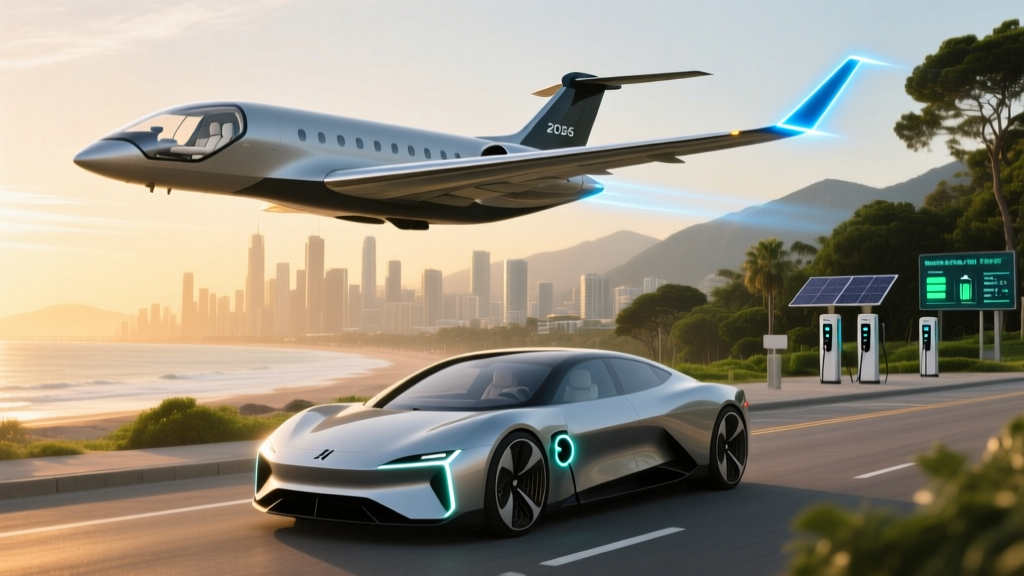
The term "electric passenger airplane" in 2026 mostly refers to eVTOL aircraft — battery-electric vehicles designed for short urban and suburban air routes. These are not electric versions of a Cessna 172. They're multi-rotor or tilt-rotor machines that take off vertically like a helicopter and transition to fixed-wing cruise for efficiency.
Key players and their announced specs:
- Joby Aviation (S4): 4 passengers + pilot, ~100-mile range, 200 mph cruise speed. Joby began limited commercial operations under Part 135 certification, with routes in select metro areas.
- Archer Aviation (Midnight): 4 passengers + pilot, ~100-mile range optimized for 20-mile hop routes (e.g., airport to downtown). United Airlines has placed conditional orders.
- Beta Technologies (Alia CX300): 6-passenger conventional takeoff electric aircraft, ~250-mile range — the closest to a traditional "electric airplane."
- Eviation (Alice): 9-passenger commuter aircraft, ~250-mile range, targeting regional airline routes. Still in advanced flight testing as of 2026.
None of these are available for personal purchase. They operate — or plan to operate — as on-demand air-taxi or regional shuttle services.
Electric Passenger Airplane vs EV: The Numbers Side by Side
To put the electric passenger airplane concept in perspective against the EVs you can actually buy in 2026, here's a direct comparison using representative data:
| Metric | eVTOL Air Taxi (Joby S4) | 2026 Tesla Model Y LR AWD | 2026 Hyundai Ioniq 5 Long Range |
|---|---|---|---|
| Range | ~100 miles (per flight) | 320 miles (EPA est.) | 305 miles (EPA est.) |
| Battery Capacity | ~85 kWh (est., NMC) | 75 kWh usable (NMC) | 77.4 kWh usable (NMC) |
| Passenger Capacity | 4 + pilot | 5 | 5 |
| Top Speed | ~200 mph (cruise) | 135 mph (governed) | 115 mph (governed) |
| Cost Per Trip (20 mi) | $50–$100+ per seat (est.) | $0.80–$1.20 (home charging) | $0.85–$1.25 (home charging) |
| Availability to Consumers | Limited metro air-taxi routes | Widely available at dealers | Widely available at dealers |
| Purchase Price | Not for sale to individuals | From ~$44,990 MSRP | From ~$42,600 MSRP |
Sources: Joby Aviation, fueleconomy.gov, manufacturer spec sheets.
The Real Cost Breakdown: Air Taxi vs EV Ownership
If you're considering whether electric air taxis could replace your daily commute or regular road trips, the economics tell a clear story.
| Cost Factor | eVTOL Air Taxi (Annual, 250 trips) | EV Ownership (Annual, 12,000 mi) |
|---|---|---|
| Annual Transport Cost | $12,500–$25,000 (at $50–$100/trip) | $360–$540 (home charging at $0.12–$0.18/kWh) |
| Vehicle Purchase | N/A (ride service) | $42,000–$55,000 (before credits) |
| Federal Tax Credit (§30D) | N/A | Up to $7,500 (subject to IRS income, MSRP, and sourcing rules) |
| Insurance | Included in fare | $1,800–$2,800/year (EV avg.) |
| Maintenance | Included in fare | $300–$500/year (tires, cabin filter, wiper fluid) |
| 5-Year Total Cost | $62,500–$125,000 (service fees only) | $30,000–$45,000 (purchase + operating, after credit) |
Even at the most optimistic air-taxi pricing, a single year of regular eVTOL commuting costs more than the entire 5-year operating expense of a mid-range EV. The air taxi is a premium mobility service, not a mass-market transportation replacement.
Why Electric Passenger Airplanes Aren't Ready for Personal Use
Beyond cost, several hard technical and regulatory barriers separate eVTOLs from the EV in your driveway:
Energy Density: The Physics Problem
Current lithium-ion battery packs deliver roughly 250–300 Wh/kg at the cell level. Aviation requires lifting mass against gravity, which is exponentially more energy-intensive than rolling on wheels. A 2026 Model Y moves ~4,400 lbs down the road using about 26 kWh/100mi (roughly 0.6 kWh per mile). A Joby S4 must lift ~5,400 lbs vertically and sustain flight — consuming its ~85 kWh battery in under 45 minutes of cruise.
Until solid-state batteries reach commercial aviation scale (projected 2030s), electric passenger airplanes will remain range-limited to short hops.
Certification and Airspace
The FAA certifies aircraft under entirely different frameworks than NHTSA regulates cars. eVTOL operators need Part 135 air-carrier certificates, vertiport infrastructure, and integration into controlled airspace. As of 2026, only a handful of vertiports exist in the U.S., concentrated in Los Angeles, New York, and Miami metro areas.
Weather and Availability
Light eVTOLs are more susceptible to wind, icing, and visibility restrictions than ground vehicles. A day with 25-knot crosswinds or low ceilings grounds air-taxi flights while EVs continue operating normally. If you need reliable daily transportation, ground-based EVs win on availability.
Common Misconceptions About Electric Passenger Airplanes
| Myth | Fact |
|---|---|
| "I can buy a personal electric airplane now." | No consumer eVTOL or electric passenger airplane is available for individual purchase in 2026. All current programs are commercial fleet operations. |
| "Electric airplanes will replace road trips." | eVTOL range (80–150 mi) and payload are optimized for urban air taxi hops, not intercity travel. EVs with 300+ mi EPA range and DC fast charging remain the practical choice. |
| "They'll be affordable within a few years." | Even at scale, per-seat-mile costs for air taxis are projected at $3–$6/mile — comparable to premium rideshare, not mass transit. An EV at $0.03–$0.05/mile (electricity) is 60–200× cheaper per mile. |
| "Electric planes are zero-emission." | Like EVs, eVTOLs produce zero tailpipe emissions but depend on grid electricity generation. The upstream carbon intensity depends on your regional energy mix. |
| "They're self-flying." | All current eVTOL programs require a licensed pilot on board. Autonomous passenger aircraft (SAE-equivalent Level 4+ aviation) are not FAA-certified for commercial passenger service. |
What This Means for Your EV Purchase Decision
If you landed on this article researching "electric passenger airplane" because you're excited about electrified transport and wondering how to position your next vehicle purchase, here's the practical framework:
Decision Framework: Where to Put Your Money in 2026
Choose a battery-electric vehicle (BEV) if:
- You have access to home Level 2 charging (240V, 32–48A circuit) and want $0.03–$0.05/mile fuel costs.
- Your daily commute is under 80 miles round-trip and you take road trips under 400 miles.
- You want a vehicle you can buy today, with full §30D tax credit eligibility (income caps: $150K single / $300K joint; MSRP caps: $55K cars / $80K SUVs/trucks).
- Examples: Tesla Model Y, Hyundai Ioniq 5, Chevrolet Equinox EV, Ford Mustang Mach-E.
Choose a plug-in hybrid (PHEV) if:
- You lack reliable home charging but want 25–40 miles of electric-only range for daily errands.
- You regularly drive 400+ miles and don't want to plan around DC fast-charger availability.
- Examples: Toyota RAV4 Prime (42 mi EV range), Jeep Wrangler 4xe (22 mi EV range), Hyundai Tucson PHEV (33 mi EV range).
Wait on electric air taxis if:
- You live in a metro area with planned vertiport infrastructure (LA, NYC, Miami, Dallas) and want to try a premium air-taxi ride by 2027–2028.
- You view it as an occasional premium experience (airport transfer, special occasion), not a daily commute replacement.
- You understand per-seat pricing will be $50–$150+ per trip for the foreseeable future.
The Battery Technology Gap: Cars vs Aircraft
Understanding why EVs have scaled while electric passenger airplanes haven't requires a look at battery chemistry and energy density:
- Ground EVs (2026): NMC (nickel manganese cobalt) cells at ~280 Wh/kg; LFP (lithium iron phosphate) at ~170 Wh/kg. Weight is manageable because wheels bear the load and regenerative braking recovers energy.
- Electric aircraft: Require the highest possible Wh/kg because every gram must be lifted. Current packs at ~250–300 Wh/kg limit range severely. Aviation-grade battery certification (DO-311A) adds years of testing.
- Solid-state (future): Projected 400–500 Wh/kg could unlock 300+ mile electric aircraft, but commercial availability for aviation is not expected before the early 2030s.
This is the same reason EVs have a 250–400 mile range while electric aircraft are stuck at 80–250 miles: gravity is unforgiving, and batteries haven't caught up to jet fuel's ~12,000 Wh/kg energy density.
Frequently Asked Questions
Can I buy an electric passenger airplane in 2026?
No. All current electric passenger aircraft (Joby S4, Archer Midnight, Eviation Alice, Beta Alia) are being developed for commercial fleet operations — air taxis, regional shuttles, and cargo. None are available for individual consumer purchase, and FAA certification for private ownership of eVTOLs does not yet exist in a practical framework.
How much would an electric air taxi ride cost?
Industry projections and early pricing models suggest $50–$150 per seat for a 15–25 mile urban hop (e.g., Manhattan to JFK, or downtown LA to LAX). That's comparable to Uber Black or a premium helicopter transfer, not a mass-market fare.
What's the range of current electric passenger airplanes?
Most eVTOL designs target 80–150 miles per charge. Conventional-takeoff electric aircraft like the Beta Alia CX300 and Eviation Alice aim for ~250 miles. For comparison, a 2026 Tesla Model Y Long Range delivers 320 EPA-estimated miles — and you can recharge at 17,000+ Superchargers nationwide.
Will electric airplanes ever be practical for personal travel?
For short urban hops via air-taxi service, possibly within the next 3–5 years in major metros. For personal ownership or intercity travel, battery energy density needs to roughly double from current levels, and autonomous flight certification would need to advance significantly. Ground-based EVs will remain the practical electrified personal transport option well into the 2030s.
Should I wait for electric aviation tech before buying an EV?
No. EV technology, charging infrastructure, and pricing are mature in 2026. A well-chosen BEV or PHEV delivers immediate fuel savings (typically $1,000–$2,000/year vs. gas), lower maintenance costs, and available federal tax credits up to $7,500. Electric aviation developments won't change the ground-transportation calculus for at least a decade.