Quick Answer: Can You Buy an Electric Passenger Aircraft Today?
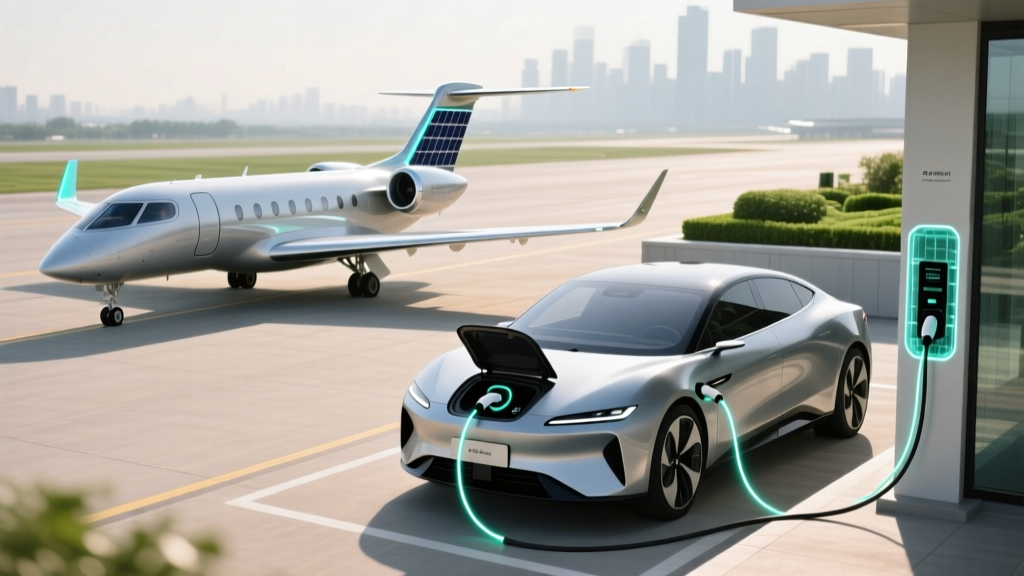
No. As of 2026, electric passenger aircraft — including eVTOL (electric vertical takeoff and landing) air taxis and fixed-wing electric planes — are not available for consumer purchase. Companies like Joby Aviation, Archer Aviation, and Eviation have achieved limited FAA certification milestones, and commercial air-taxi services are beginning pilot operations in select cities (Los Angeles, Dubai, Paris). However, these are operator-only services, not vehicles you can buy, charge in your garage, or fly yourself. For personal electric transportation you can actually purchase and use daily, a battery-electric vehicle (BEV) remains the only practical, market-available option.
If you landed here searching for "electric passenger aircraft," you're likely trying to understand whether electric flight is a viable alternative to driving — or whether the technology behind electric planes might influence your next EV purchase. This guide breaks down where electric aviation actually stands in 2026, compares it head-to-head with ground-based EVs on range, cost, and practicality, and gives you a clear decision framework for your own transportation spending.
Where Electric Passenger Aircraft Stand in 2026
The electric aviation sector has made genuine progress, but it remains firmly in the early commercial deployment phase — not the consumer ownership phase. Here's the current landscape:
- Joby Aviation (S4): A four-passenger eVTOL with approximately 100 miles of range and a top speed of 200 mph. Joby received FAA Part 135 air carrier certification and has begun limited commercial operations. The aircraft is not sold to individuals; it operates as a ride-hailing-style air taxi service.
- Archer Aviation (Midnight): A four-passenger eVTOL designed for 20-mile urban hop routes (e.g., airport to downtown). Archer has pursued FAA type certification with target commercial launch in select markets. Like Joby, it's a service model, not a product you can own.
- Eviation Alice: A nine-passenger fixed-wing electric aircraft with a claimed 440-mile range and a 840 kWh battery pack. Eviation has taken pre-orders from regional carriers (Cape Air, Deutsche Aircraft), but FAA type certification is still in progress, and no deliveries to operators have been confirmed as of early 2026.
- Heart Aerospace (ES-30): A 30-seat hybrid-electric regional airliner targeting 200 km (124 mi) on electric power alone, with a reserve turbogenerator extending range. Aimed at short-haul regional routes. Certification expected late this decade.
The common thread: these are commercial fleet vehicles, not consumer products. Even once certified, an electric passenger aircraft will cost between $3 million and $8 million per unit, require FAA-licensed pilots, certified maintenance facilities, and access to approved vertiports or runways. There is no "plug it in at home" equivalent for personal electric aircraft.
Electric Passenger Aircraft vs. EV: Range, Cost, and Practicality
To put electric aviation in context for a transportation buyer, here's how the specs compare to a mainstream 2026 BEV you can actually purchase today — the Hyundai Ioniq 6 SE Long Range:
| Metric | Joby S4 (eVTOL Air Taxi) | Eviation Alice (Announced) | 2026 Hyundai Ioniq 6 SE LR (BEV) | 2026 Toyota Camry LE (Gas Baseline) |
|---|---|---|---|---|
| Passenger Capacity | 4 + pilot | 9 + 2 crew | 5 | 5 |
| Range | ~100 mi | ~440 mi (claimed) | EPA 361 mi | ~550 mi (13.2 gal × 42 mpg hwy) |
| Battery / Fuel | ~75 kWh (est.) | 840 kWh | 77.4 kWh (NMC) | 13.2 gal gasoline |
| Top Speed | 200 mph | 250 kt (~288 mph) | 115 mph (electronically limited) | ~130 mph |
| Cost Per Unit | ~$4M (fleet only) | ~$4-5M (fleet only) | $42,750 MSRP | $29,495 MSRP |
| Consumer Purchase? | No | No | Yes | Yes |
| Home "Charging" / Refuel | N/A | N/A | Yes — Level 2, ~10.5 kW | Yes — any gas station |
| Federal Tax Credit | N/A | N/A | Up to $7,500 (§30D, eligibility varies) | None |
The gap is stark. A 2026 Ioniq 6 offers more range than Joby's eVTOL, seats five, costs under $43,000, charges at home overnight, and qualifies for partial or full federal EV tax credits depending on your income and the vehicle's battery sourcing. An electric passenger aircraft, by contrast, is a fleet-only asset with a price tag measured in millions and a range that falls short of most ground-based EVs.
The Real Cost Comparison: EV Ownership vs. Future Air-Taxi Fares
Since you can't buy an electric passenger aircraft, the more relevant comparison is what it will cost to ride one versus driving your own EV. Based on operator projections and early pricing announcements:
| Cost Factor | eVTOL Air Taxi (Projected) | Personal BEV (2026 Ioniq 6) | Personal Gas Car (2026 Camry LE) |
|---|---|---|---|
| Upfront Purchase | $0 (ride service) | $42,750 (before credits) | $29,495 |
| Per-Mile Operating Cost | $5-10/mi (projected fares) | $0.04-0.06/mi (home charging, $0.14/kWh avg) | $0.12-0.15/mi ($3.50/gal, 32 mpg combined) |
| 20-Mile Trip Cost | $100-200 | $0.80-1.20 | $2.40-3.00 |
| Annual Maintenance | N/A (operator responsibility) | $0.061/mi (fueleconomy.gov avg for BEV) | $0.10-0.12/mi |
| Insurance (Annual) | N/A | $1,800-2,400 (BEV avg) | $1,400-1,900 |
Even at the most optimistic projected fare of $5 per mile, a 20-mile eVTOL trip costs $100 — roughly what a full month of EV home charging costs for a daily commuter driving 40 miles round-trip. Air taxis will serve a niche: bypassing ground congestion for time-sensitive trips (airport transfers, executive travel). They will not compete with personal EV ownership on cost.
Common Misconceptions About Electric Aircraft — and the Facts
| Myth | Fact |
|---|---|
| "I'll be able to buy a personal electric plane in a few years." | No manufacturer has announced a consumer-purchasable electric aircraft. All current programs target commercial fleet operators. Even certified light-sport electric aircraft (like the Pipistrel Velis Electro, ~$120,000) require a pilot's license, hangar space, and certified maintenance — and offer only 50 minutes of flight time. |
| "Electric planes have the same battery tech as EVs, so range will improve quickly." | Aviation demands far higher energy density than ground vehicles. Current lithium-ion cells (~250-300 Wh/kg at the cell level) are marginal for flight. Solid-state batteries (targeting 400-500 Wh/kg) may eventually enable longer electric flights, but they are not yet in certified production for either aircraft or mass-market EVs. |
| "Electric air taxis will replace Uber for daily commutes." | eVTOLs are designed for specific point-to-point corridors (airport-to-downtown, suburb-to-business-district) with vertiport infrastructure. They will not serve door-to-door trips. A 20-mile ground commute in a personal EV at $0.05/mi will remain orders of magnitude cheaper than any air-taxi fare. |
| "Electric planes produce zero emissions." | Like EVs, electric aircraft are only as clean as their electricity source. Additionally, aviation has non-CO₂ climate impacts (contrails, nitrogen oxide at altitude) that battery-electric flight reduces but does not fully eliminate. |
| "If I wait, electric aircraft will be a better buy than an EV." | Consumer electric aircraft ownership is not on any manufacturer's announced roadmap for this decade. If you need personal transportation now, a BEV or PHEV is the correct investment. |
What Electric Aviation Technology Means for Your Next EV Purchase
While you can't buy an electric passenger aircraft, the R&D happening in electric aviation does influence the EV market in tangible ways:
- Battery energy density: Aviation's extreme requirements are pushing cell manufacturers (Samsung SDI, CATL, Solid Power) to develop higher-density chemistries. When solid-state or semi-solid cells achieve automotive-grade cycle life and cost, EVs will see range increases to 400-500+ miles on smaller, lighter packs. Toyota and Nissan have announced solid-state EV prototypes targeting 2027-2028 production.
- Thermal management: Aircraft batteries must operate safely under extreme discharge rates (vertical takeoff demands 10C+ discharge). Lessons from aviation thermal systems are feeding into faster-charging EV architectures — the same engineering that keeps an eVTOL battery safe during a 2,000 kW takeoff burst helps a ground-based EV sustain 350 kW DC fast charging without degradation.
- Motor and inverter efficiency: Aviation-grade electric motors achieve power densities above 10 kW/kg — roughly triple current automotive motors. As these designs scale to automotive volumes, expect lighter, more efficient EV drivetrains.
The practical takeaway: the technology pipeline from aviation will improve EVs you buy in 2028 and beyond, but it doesn't change the buying decision today. Current 2026 BEVs with NMC or LFP batteries, 800V architectures, and 250-350 kW DC fast-charging capability already represent excellent technology for the money.
Real-World EV Ownership: What a First-Time Buyer Should Actually Focus On
Rather than waiting for electric aircraft, here's what matters for your actual transportation decision in 2026:
Home Charging Access
Approximately 75-80% of EV charging happens at home. If you have a garage or driveway with access to a 240V circuit (or can install one), a Level 2 home charger (7-11.5 kW) adds 25-44 miles of range per hour of charging — enough to fully replenish most EVs overnight. Installation costs range from $500 (simple outlet near the panel) to $2,500+ (panel upgrade, long conduit run). If you lack home charging access, a PHEV or reliance on public DC fast charging networks (Tesla Supercharger, Electrify America, EVgo) is a realistic but more expensive and less convenient path.
Real-World Range vs. EPA Sticker
EPA range estimates are calculated under controlled conditions. In real-world driving, expect:
- Highway driving (75+ mph): 15-25% below EPA range
- Cold weather (below 32°F): 20-35% below EPA range (worse without a heat pump)
- Combined city/highway in mild weather: Typically within 5% of EPA
A vehicle rated at 300 miles EPA may deliver 230-250 miles on a cold-weather highway trip. Plan accordingly — and prioritize vehicles with heat pumps (standard on Hyundai/Kia E-GMP vehicles, Tesla Model Y/3, and many 2026 models) to minimize cold-weather losses.
Federal Tax Credit (§30D)
The IRS clean vehicle credit offers up to $7,500 for qualifying new BEVs and PHEVs, but eligibility depends on:
- Buyer income caps: $150,000 single / $300,000 married filing jointly (modified AGI)
- MSRP caps: $55,000 for sedans, $80,000 for SUVs, trucks, and vans
- Battery sourcing requirements: Critical minerals and battery components must meet increasing domestic/free-trade-partner thresholds — these tighten annually
- Point-of-sale transfer: As of 2024, you can transfer the credit to the dealer at purchase, reducing your out-of-pocket cost immediately (subject to IRS registration requirements)
Not every EV qualifies for the full $7,500. Check the fueleconomy.gov tax credit tracker for the latest eligibility by model and build date.
5-Year Total Cost of Ownership
A 2026 BEV typically costs more upfront than a comparable gas car but saves on fuel and maintenance. For a 15,000-mile/year driver:
- EV fuel cost: ~$600-900/year (home charging at $0.14/kWh national average)
- Gas car fuel cost: ~$1,800-2,200/year (at $3.50/gal, 28 mpg combined)
- Annual savings: ~$1,000-1,400/year on fuel alone
- Maintenance savings: BEVs have no oil changes, no spark plugs, reduced brake wear (regenerative braking). Expect $300-500/year less in maintenance vs. gas.
Over five years, fuel and maintenance savings of $6,500-9,500 can offset much of the EV price premium — before factoring in any tax credits.
Decision Framework: What Should You Actually Buy?
Choose a BEV (Battery-Electric Vehicle) If:
- You have home charging access (or reliable workplace charging)
- Your daily driving is under 200 miles round-trip
- You want the lowest per-mile operating cost
- You're eligible for the §30D tax credit (check income and model eligibility)
- You want to avoid all fossil fuel use in daily transportation
Choose a PHEV (Plug-In Hybrid) If:
- You lack reliable home charging but can plug in occasionally
- You regularly take road trips exceeding 300 miles
- You want electric-only commuting (20-50 mi) with gas-engine flexibility
- You live in an area with limited DC fast-charging infrastructure
Wait for Electric Aviation If:
- You're a commercial fleet operator or regional airline evaluating future aircraft procurement
- You're an accredited investor evaluating Joby (NYSE: JOBY), Archer (NYSE: ACHR), or related equities
- You hold a pilot's license and want to follow light-sport electric aircraft certification (Pipistrel Velis Electro is currently the only FAA-certified electric aircraft, at ~$120,000 with 50-minute endurance)
For everyone else: a 2026 BEV or PHEV is the correct, available, and cost-effective electric transportation choice today. Electric passenger aircraft will eventually serve commercial air-taxi and regional airline routes, but they will not replace personal vehicle ownership — and they won't be in your driveway this decade.
Frequently Asked Questions
Can I buy an electric passenger aircraft as a private individual in 2026?
No. All current electric passenger aircraft programs (Joby S4, Archer Midnight, Eviation Alice) are designed for commercial fleet operators. The only FAA-certified electric aircraft available for private purchase is the Pipistrel Velis Electro, a two-seat light-sport aircraft priced around $120,000 with approximately 50 minutes of flight endurance. It requires a sport pilot license and is not a practical transportation alternative.
When will electric air taxis be available to ride?
Limited commercial eVTOL services began pilot operations in 2025-2026 in cities including Los Angeles, Dubai, and Paris. Wider commercial availability in major U.S. metro areas is projected for 2027-2030, pending full FAA type certification and vertiport infrastructure buildout. Fares are expected to start at $5-10 per passenger-mile — comparable to premium rideshare, not mass transit.
Will electric plane batteries eventually make EVs better?
Yes, indirectly. Aviation's extreme energy-density requirements are accelerating development of solid-state and semi-solid-state battery cells. When these reach automotive-grade durability and cost (projected 2028-2032), EVs will benefit with lighter packs, 400-500+ mile ranges, and faster charging. But this technology transfer takes years — current 2026 EVs already offer strong range and charging performance.
Is a BEV or PHEV a better choice for someone interested in electric aviation?
For personal transportation today, a BEV offers the lowest operating cost and zero tailpipe emissions if you have home charging. A PHEV offers flexibility for long road trips and areas with limited charging infrastructure. Neither choice is affected by the timeline of electric aviation — these are separate transportation categories serving different use cases.
How does the §30D federal EV tax credit work in 2026?
The IRS §30D clean vehicle credit provides up to $7,500 for qualifying new BEVs and PHEVs. Eligibility depends on buyer income (≤$150K single / ≤$300K joint), vehicle MSRP (≤$55K sedans / ≤$80K SUVs and trucks), and battery component/critical mineral sourcing requirements that tighten annually. The credit can be transferred to the dealer at point of sale to reduce your purchase price directly. Always verify current eligibility on fueleconomy.gov and consult a tax professional for your specific situation.