Quick Answer: Is an Electric Nissan Right for You?
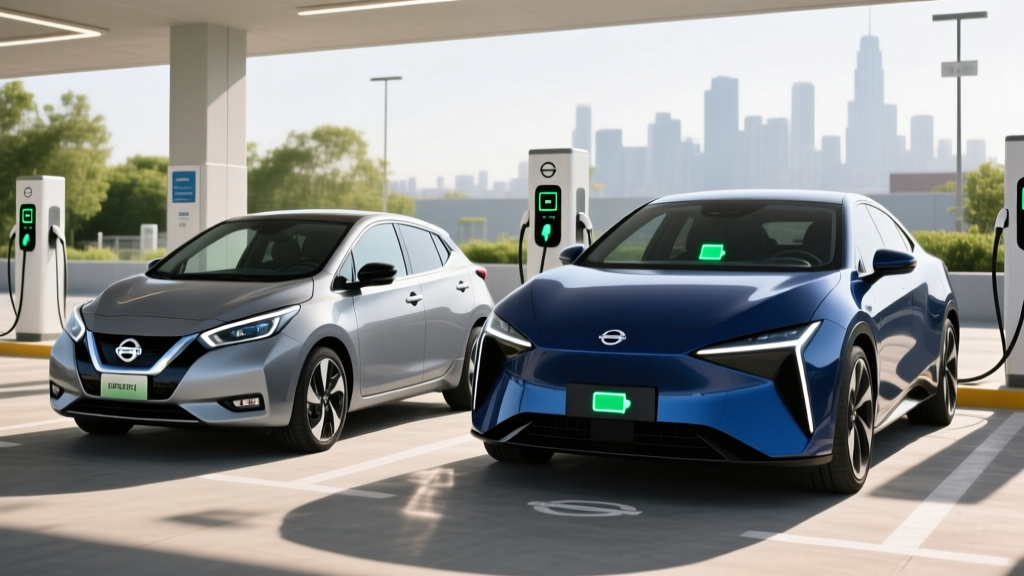
Nissan currently sells two fully electric vehicles in the U.S.: the Nissan Leaf (starting around $29,990, up to 212 miles EPA range, CHAdeMO DC charging) and the Nissan Ariya (starting around $40,490, up to 304 miles EPA range, CCS DC charging). The Leaf is a budget-friendly commuter hatchback best suited to drivers with home charging and shorter daily routes. The Ariya is a more capable family crossover with faster charging, longer range, and better road-trip viability. Neither qualifies for the full $7,500 federal §30D tax credit as of 2026 due to battery-sourcing requirements, so your effective savings depend on state incentives and lower running costs.
The 2026 Nissan EV Lineup at a Glance
Nissan was an EV pioneer — the original Leaf launched in the U.S. in 2011 — but the brand's current electric portfolio is compact: two models covering distinct buyer needs. Here is how the 2026 lineup breaks down on paper before we get into real-world ownership.
| Spec | 2026 Nissan Leaf (SV Plus) | 2026 Nissan Ariya (Empower+) |
|---|---|---|
| Base MSRP | $29,990 (S trim); $36,190 (SV Plus) | $40,490 (Engage); $46,490 (Empower+) |
| EPA Range | 149 mi (S); 212 mi (SV Plus) | 216 mi (Engage FWD); 304 mi (Empower+ FWD) |
| Battery Capacity (usable) | ~40 kWh (S); ~62 kWh (SV Plus) | 65 kWh (Engage); 91 kWh (Empower+) |
| Battery Chemistry | NMC (nickel manganese cobalt) | NMC |
| Peak DC Fast Charge Rate | ~50 kW (CHAdeMO) | ~130 kW (CCS) |
| 10–80% DC Charge Time | ~60 min (62 kWh pack) | ~35–40 min (91 kWh pack) |
| Level 2 AC Charging | 6.6 kW (J1772) | 7.2 kW (J1772) |
| Horsepower | 147 hp (S); 214 hp (SV Plus) | 214 hp (FWD); 389 hp (e-4ORCE AWD) |
| 0–60 mph | ~7.9 sec (S); ~6.5 sec (SV Plus) | ~7.5 sec (FWD); ~5.1 sec (AWD) |
| EPA Efficiency (combined) | 111 MPGe (SV Plus) | 97–109 MPGe (depending on trim) |
| Battery Warranty | 8 years / 100,000 miles | 8 years / 100,000 miles |
| DC Connector | CHAdeMO | CCS1 |
Sources: fueleconomy.gov (EPA estimates), Nissan USA official specs.
Real-World Range vs. the EPA Sticker
EPA range estimates are measured under controlled conditions. In practice, several factors compress the miles you actually get:
Nissan Leaf SV Plus (EPA 212 mi)
Expect ~160–180 mi on a highway road trip at 70 mph. In cold weather (below 30°F), range drops to roughly 140–160 mi due to battery chemistry slowdown and cabin heating demands. The Leaf lacks a heat pump, relying on resistive heating that draws significantly more energy in winter.
Nissan Ariya Empower+ (EPA 304 mi)
Expect ~240–270 mi in mixed highway driving. Cold-weather highway range falls to approximately 200–230 mi. The Ariya includes a heat pump on most trims, which reduces winter range loss compared to the Leaf — typically 15–20% rather than 25–30%.
For context, the average American drives roughly 37 miles per day according to FHWA data. Either Nissan EV covers a week of commuting on a single charge. The range gap matters primarily for road trips and for drivers without reliable home charging.
Charging Speed: Where the Leaf Falls Behind
This is the single biggest differentiator between the two models — and the Leaf's most significant limitation in 2026.
| Charging Level | Leaf SV Plus | Ariya Empower+ |
|---|---|---|
| Level 1 (120V household) | ~1.4 kW / ~4 mi/hr | ~1.4 kW / ~3 mi/hr |
| Level 2 (240V home/public) | 6.6 kW / ~20 mi/hr | 7.2 kW / ~22 mi/hr |
| DC Fast Charge | ~50 kW peak (CHAdeMO) | ~130 kW peak (CCS1) |
| DC 10–80% time | ~60 minutes | ~35–40 minutes |
Why kW matters here: kW (kilowatts) measures charging power — how fast energy flows into the battery. kWh (kilowatt-hours) measures battery capacity — how much energy the battery stores. A 50 kW charger fills a 62 kWh battery far more slowly than a 130 kW charger fills a 91 kWh battery, even proportionally.
The Leaf's CHAdeMO connector is a growing problem. The U.S. charging infrastructure has standardized on CCS1 (and increasingly NACS, the Tesla connector). CHAdeMO stations are becoming scarce — Electrify America, the largest U.S. DC fast-charging network, does not support CHAdeMO at most locations. If you buy a Leaf, you are largely limited to Nissan dealer chargers and a shrinking CHAdeMO network for road trips.
The Ariya uses CCS1, which is compatible with Electrify America, EVgo, ChargePoint, and most non-Tesla public fast chargers. With the industry's ongoing shift to NACS, adapters will be needed long-term, but CCS1 remains widely supported in 2026.
Nissan EV vs. Gas and Hybrid: Total Cost of Ownership
Let's compare five-year costs for a Nissan Ariya Empower+ against a comparably priced gas crossover (Nissan Rogue SV AWD, ~$33,000 MSRP) and a hybrid alternative (Toyota RAV4 Hybrid, ~$34,000 MSRP). Assumptions: 12,000 miles/year, $0.14/kWh home electricity, $3.50/gallon gas, and no federal tax credit applied (see tax credit section below).
| Cost Category (5 yr) | Nissan Ariya Empower+ | Nissan Rogue SV AWD | Toyota RAV4 Hybrid |
|---|---|---|---|
| Purchase Price (MSRP) | $46,490 | $33,000 | $34,000 |
| Fuel / Electricity | $2,520 (home charging) | $7,560 (28 MPG avg) | $5,250 (40 MPG avg) |
| Maintenance | ~$1,200 | ~$2,800 | ~$2,400 |
| Insurance (est. avg) | ~$9,500 | ~$7,200 | ~$7,500 |
| Estimated 5-Year Total | ~$59,710 | ~$50,560 | ~$49,150 |
| Cost Per Mile | ~$0.11/mi (energy only) | ~$0.13/mi (fuel only) | ~$0.09/mi (fuel only) |
Insurance estimates are averages — EV premiums run 15–25% higher than comparable gas vehicles due to repair costs and battery replacement risk. Actual rates vary by driver, location, and insurer.
The takeaway: The Ariya saves roughly $5,000 in fuel and $1,600 in maintenance over five years compared to the gas Rogue. However, the higher purchase price and insurance premiums erase those savings on a pure five-year TCO basis. The Ariya breaks even around year 7–8 if you keep the vehicle long-term. The RAV4 Hybrid remains the most cost-effective option over five years due to its lower purchase price, strong fuel economy, and no insurance penalty.
The equation shifts if you qualify for state incentives (e.g., California's CVRP, Colorado's $5,000 credit, or utility rebates) or if your electricity rate is below $0.10/kWh. It also shifts if you drive significantly more than 12,000 miles per year — higher mileage amplifies fuel savings.
Federal Tax Credit: What Nissan Buyers Need to Know
Under the IRS §30D clean vehicle credit, the maximum federal tax credit is $7,500, but eligibility depends on several requirements that change frequently. As of 2026:
- Battery sourcing: A percentage of critical minerals and battery components must be sourced from the U.S. or free-trade-agreement countries. As of the latest IRS guidance, neither the Leaf nor the Ariya has been confirmed to meet the full battery-component requirement, which can reduce or eliminate the credit.
- MSRP caps: Vans, SUVs, and pickups must be under $80,000 MSRP; sedans and other vehicles under $55,000. Both the Leaf and Ariya fall under these caps.
- Buyer income caps: Adjusted gross income must not exceed $150,000 (single), $225,000 (head of household), or $300,000 (joint filers).
- Point-of-sale transfer: If eligible, you can transfer the credit to the dealer at purchase for an immediate price reduction rather than waiting to claim it on your tax return.
- Assembly: The vehicle must undergo final assembly in North America. Both the Leaf (Smyrna, TN) and Ariya (Tochigi, Japan — verify current-year assembly location with your dealer) must meet this requirement. Note: Ariya assembly location has varied; confirm the VIN's assembly plant with the dealer before relying on credit eligibility.
Bottom line: Do not assume a $7,500 credit. Check the current eligibility list on IRS.gov and consult a tax professional before purchasing.
Home Charging: The Make-or-Break Factor
Home charging is where EV ownership either shines or frustrates. Here is what you need to know for each Nissan:
Level 1 (120V standard outlet): Both vehicles can charge from a regular household outlet, but at roughly 3–4 miles of range per hour. This works for the Leaf if you drive under 40 miles daily and plug in overnight. For the Ariya's larger 91 kWh battery, Level 1 adds only ~3 mi/hr — a full charge would take over 30 hours. Level 1 is a backup, not a primary strategy.
Level 2 (240V home charger): This is the standard for practical EV ownership. A 40-amp Level 2 charger (like a ChargePoint Home Flex or Wallbox Pulsar Plus, typically $400–$700 for equipment) delivers 6.6–7.2 kW to either Nissan, fully replenishing the Leaf overnight and the Ariya in roughly 12–13 hours.
| Item | Typical Cost Range |
|---|---|
| Level 2 charger (hardware) | $400 – $700 |
| Electrician labor (240V outlet or hardwire) | $500 – $2,000 |
| Electrical panel upgrade (if needed, 200A) | $1,500 – $3,500 |
| Permit and inspection | $100 – $400 |
| Total (best case, panel OK) | $1,000 – $2,700 |
| Total (with panel upgrade) | $2,500 – $6,200 |
Always hire a licensed electrician for 240V installation. Your home's existing panel capacity determines whether an upgrade is needed — older homes with 100-amp service almost always require one.
If you cannot charge at home (apartment, street parking, HOA restrictions), either Nissan becomes significantly less convenient. Public Level 2 charging costs $0.20–$0.49/kWh and DC fast charging costs $0.30–$0.60/kWh, which narrows or eliminates the fuel-cost advantage over a hybrid. The Leaf's CHAdeMO connector makes public charging even harder in this scenario.
Common Misconceptions About Electric Nissans
| Myth | Fact |
|---|---|
| "The Leaf battery degrades quickly and costs $20,000 to replace." | Early 2011–2017 Leafs with air-cooled batteries did show notable degradation. The current-generation Leaf and Ariya use liquid-cooled battery packs with improved thermal management. Nissan's battery warranty guarantees capacity retention above a defined threshold for 8 years / 100,000 miles. Full replacement costs for the 62 kWh Leaf pack are in the $7,000–$10,000 range (parts and labor), not $20,000. |
| "EVs need no maintenance at all." | EVs eliminate oil changes, spark plugs, and transmission fluid. However, you still need tire rotations (EVs are heavier and wear tires faster), cabin air filters, brake fluid checks, windshield washer fluid, and wiper blades. Budget ~$200–$300/year in maintenance, not zero. |
| "The Ariya charges as fast as a Tesla or Hyundai Ioniq 5." | It does not. The Ariya peaks at ~130 kW, while the Ioniq 5 peaks at ~240 kW and the Tesla Model Y at ~250 kW. The Ariya's 10–80% charge time of ~35–40 minutes is acceptable but not class-leading. On long road trips, you will spend more time at chargers than Ioniq 5 or Model Y owners. |
| "I'll get the full $7,500 federal tax credit." | Credit eligibility depends on battery sourcing, MSRP caps, buyer income, and North American assembly. As of 2026, Nissan's EVs face uncertainty on the battery-component requirement. Verify on IRS.gov before purchasing. |
| "Regenerative braking means I never use my brake pads." | Regen handles most deceleration, and EV brake pads do last longer (often 100,000+ miles). But brake calipers can seize from disuse, and brake fluid still needs periodic flushing. Don't skip brake inspections entirely. |
Decision Framework: Which Electric Nissan (If Any) Should You Buy?
Buy the Nissan Leaf if:
- You need the lowest-cost new EV available and can accept 212 miles max range.
- You charge at home every night and drive under 80 miles round-trip daily.
- You rarely take road trips over 150 miles one-way — or have patience for 60-minute DC fast-charge stops on a shrinking CHAdeMO network.
- You live in a mild climate where cold-weather range loss is minimal.
Buy the Nissan Ariya if:
- You need a family crossover with usable rear seat and cargo space (the Leaf's rear seat and trunk are tight).
- You want 250+ real-world highway miles and CCS charging compatibility for road trips.
- You value a modern interior with dual 12.3-inch displays, available ProPILOT Assist 2.0, and a heat pump for winter efficiency.
- You are willing to pay $40,000–$55,000 depending on trim and options.
Consider a competitor instead if:
- Fast DC charging is a priority — the Hyundai Ioniq 5 (240 kW peak, 10–80% in ~18 min) and Tesla Model Y (250 kW peak) significantly outpace the Ariya.
- You want the longest range per dollar — the Chevrolet Equinox EV and Tesla Model Y offer 300+ miles EPA at competitive prices.
- You cannot charge at home and rely entirely on public DC fast charging — the Leaf's CHAdeMO connector is a serious liability, and the Ariya's 130 kW peak means longer stops than competitors.
- A hybrid better fits your situation — if you drive 300+ miles regularly without predictable charging access, a Toyota RAV4 Hybrid or PHEV eliminates charging dependency while still cutting fuel costs.
Frequently Asked Questions
Is the Nissan Leaf being discontinued?
Nissan has announced that the current-generation Leaf will eventually be replaced by a new model built on the CMF-EV platform (the same architecture as the Ariya), likely arriving as a 2027 or 2028 model with CCS/NACS charging and longer range. The current Leaf remains on sale for the 2026 model year. If you buy now, you are purchasing a proven but aging platform with the CHAdeMO connector limitation.
How long will a Nissan EV battery last?
Nissan warranties its EV batteries for 8 years or 100,000 miles against excessive capacity loss. Industry data suggests modern liquid-cooled NMC batteries retain approximately 85–90% of original capacity after 100,000 miles. To maximize longevity, avoid routinely charging to 100% or draining to 0% — keeping the battery between 20–80% state of charge reduces stress. For the Leaf specifically, avoid repeated DC fast charging in extreme heat without preconditioning, as thermal management is less aggressive than the Ariya's.
Can I charge a Nissan Leaf at a Tesla Supercharger?
Not directly. The current Leaf uses a CHAdeMO DC connector, which is incompatible with Tesla's NACS connector and CCS adapters. There is no commercially available CHAdeMO-to-NACS adapter as of 2026. The Ariya uses CCS1, and as Tesla opens Supercharger access to CCS-equipped vehicles via the Magic Dock adapter at select stations, the Ariya may gain limited Supercharger access — check Tesla's station map for Magic Dock availability.
What does it cost to charge a Nissan EV at home?
At the U.S. average residential electricity rate of ~$0.16/kWh (EIA, 2025 data), fully charging the Leaf SV Plus (62 kWh) costs about $9.92, and the Ariya Empower+ (91 kWh) costs about $14.56. Compare that to filling a gas Rogue's 14.5-gallon tank at $3.50/gallon: $50.75. If you have access to off-peak utility rates (often $0.08–$0.10/kWh), home charging costs drop to $5–$9 per full charge.
Does the Ariya qualify for any tax credits or incentives?
Federal §30D credit eligibility is uncertain for the Ariya due to battery-sourcing rules and its assembly location. Some states and utilities offer additional incentives — check the AFDC state incentive database for your area. Point-of-sale transfer is available if you do qualify, reducing your out-of-pocket cost at the dealer.
Is Nissan's ProPILOT Assist the same as self-driving?
No. ProPILOT Assist (including ProPILOT Assist 2.0 on higher Ariya trims) is an SAE Level 2 driver-assistance system. It provides adaptive cruise control and lane-centering, but you must keep your hands on or near the wheel and remain fully engaged with driving at all times. It is not autonomous driving. ProPILOT 2.0 does allow hands-off operation under specific highway conditions (under 25 mph in congestion, for example), but the driver must still monitor the road and be ready to take over immediately.
The Bottom Line on Electric Nissans
Nissan offers two distinct entry points into EV ownership. The Leaf is one of the cheapest new EVs you can buy, making it a pragmatic commuter car if your driving is predictable and you charge at home. The Ariya is a competent electric crossover with competitive range and a more modern charging standard, but it trails rivals in DC fast-charge speed and may not qualify for the federal tax credit.
For first-time EV buyers, the critical questions are not just about the car — they are about your charging situation, your daily mileage, your climate, and your budget. If you can install a Level 2 charger at home, drive under 200 miles most days, and live in a moderate climate, either Nissan EV will serve you well and cut your fuel costs dramatically. If you road-trip frequently, lack home charging, or need the fastest possible charging, competitors like the Hyundai Ioniq 5, Tesla Model Y, or Chevrolet Equinox EV offer stronger packages in 2026.
Always verify current pricing, tax credit eligibility, and model availability with your local Nissan dealer and IRS.gov before purchasing. Specifications and incentives can change mid-model-year.