Quick Answer: Electric Mustang 0-60 Times
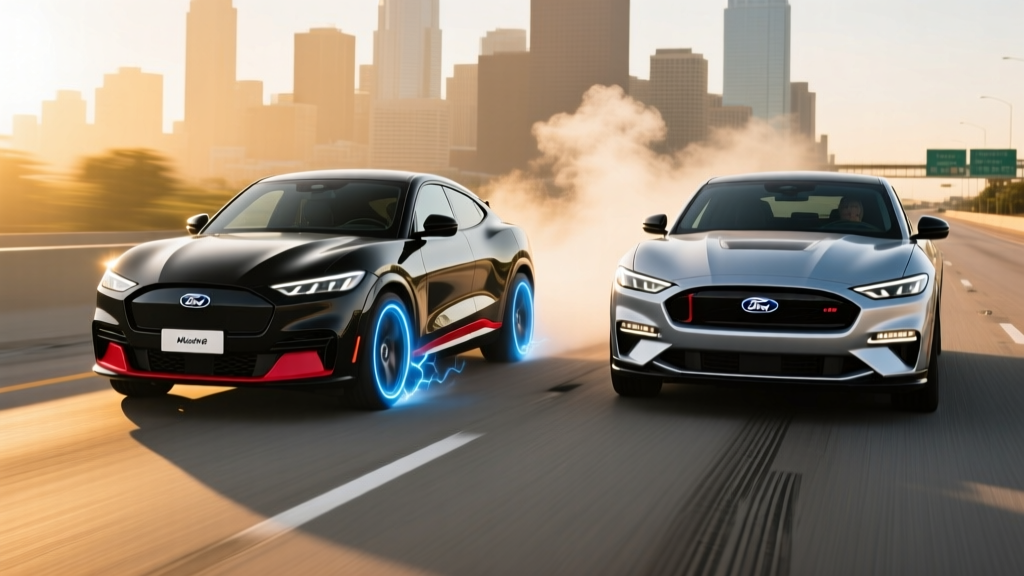
The fastest 2026 Ford Mustang Mach-E — the Rally trim — hits 0-60 mph in 3.3 seconds (565 hp, 700 lb-ft torque). The GT Performance Edition does it in 3.5 seconds. For context, the gas-powered 2026 Mustang GT with the 5.0L V8 and automatic runs 0-60 in roughly 4.2 seconds, and the supercharged Dark Horse trims it to about 3.9 seconds. So yes: the electric Mustang is quicker off the line than most gas Mustangs, thanks to instant torque delivery with no transmission lag.
2026 Mustang Mach-E Trim-by-Trim Performance Specs
Not every Mach-E is a drag strip hero. The 0-60 time depends heavily on the trim, battery pack, and drivetrain. Here's the full breakdown for the current model year:
| Trim | Drivetrain | Battery (usable kWh) | Horsepower | Torque (lb-ft) | 0-60 mph | EPA Range | Base MSRP |
|---|---|---|---|---|---|---|---|
| Select (Standard Range) | RWD | 72 kWh (LFP) | 266 | 317 | 6.2s | 250 mi | $39,995 |
| Premium (Extended Range) | RWD | 91 kWh (NMC) | 290 | 317 | 5.8s | 320 mi | $46,995 |
| Premium (Extended Range) | AWD | 91 kWh (NMC) | 365 | 428 | 4.8s | 300 mi | $49,995 |
| GT | AWD | 91 kWh (NMC) | 480 | 600 | 3.7s | 280 mi | $57,995 |
| GT Perf. Edition | AWD | 91 kWh (NMC) | 480 | 634 | 3.5s | 265 mi | $62,995 |
| Rally | AWD | 91 kWh (NMC) | 565 | 700 | 3.3s | 250 mi | $61,995 |
Sources: Ford Motor Company, fueleconomy.gov. Real-world highway range at 75 mph typically runs 10-15% below EPA. In cold weather (below 32°F), expect an additional 15-25% range reduction due to cabin heating and battery chemistry slowdown.
Electric Mustang vs. Gas Mustang: The Full Comparison
Performance numbers tell one story, but ownership is a different equation. Here's how the 2026 Mach-E GT stacks up against the 2026 Mustang GT Premium with the 5.0L Coyote V8:
| Metric | 2026 Mach-E GT (AWD) | 2026 Mustang GT Premium (V8 Auto) |
|---|---|---|
| 0-60 mph | 3.7 seconds | 4.2 seconds |
| Horsepower | 480 hp | 480 hp |
| Torque | 600 lb-ft | 415 lb-ft |
| Top Speed | 124 mph (limited) | 155 mph (limited) |
| EPA Range / Fuel Economy | 280 mi / 93 MPGe | ~20 city / 27 hwy mpg |
| "Fuel" Cost per Mile | ~$0.045 (home L2, $0.14/kWh) | ~$0.17 (87 oct, $3.40/gal) |
| Cargo Volume | 29.7 cu ft (rear) + 4.7 cu ft frunk | 13.5 cu ft trunk |
| Curb Weight | ~4,900 lbs | ~3,830 lbs |
| Base MSRP | $57,995 | $44,090 |
| Annual Maintenance (est.) | ~$200 | ~$600 |
| 0-100 mph | ~8.5s | ~9.8s |
The Mach-E wins the stoplight-to-stoplight sprint decisively. Electric motors deliver peak torque at 0 RPM — there's no waiting for a downshift, no turbo spool-up, no traction-management drama. The gas Mustang GT, by contrast, needs to rev to around 4,600 RPM for peak torque and relies on its 10-speed automatic to keep the engine in the power band.
Where the gas Mustang fights back: top-end speed, lighter weight (better cornering feel for track enthusiasts), refueling in 3 minutes at any gas station, and a lower entry price. If your idea of performance involves road-course lapping and 130-mph highway pulls, the gas car's 1,000-lb weight advantage matters.
Charging Speed and the Reality of Road Trips
A 3.3-second 0-60 time doesn't help much if you're stranded waiting for a charger. Here's the Mach-E's charging profile:
| Level | Power (kW) | Connector | Charge Rate | Notes |
|---|---|---|---|---|
| Level 1 (120V) | 1.4 kW | NACS (native, 2025+) | ~3 mi/hr | Emergency/trickle only |
| Level 2 (240V, 48A) | 11.5 kW | NACS | ~30 mi/hr; full in ~8 hrs | Home daily charging |
| DC Fast Charge | Peak 150 kW | NACS (Tesla Supercharger w/ adapter on older models) | 10-80% in ~36 min | Sustained ~100 kW avg to 80% |
The Mach-E's 150 kW peak DC charge rate is modest compared to Hyundai's E-GMP platform (which peaks at 240 kW on 350 kW chargers). Ford's charge curve tapers noticeably above 80% state of charge (SoC), so plan your road-trip stops around the 10-80% window for maximum efficiency. A typical highway stop adds roughly 150 miles in 25-30 minutes — adequate for a bathroom-and-coffee break, but not the 5-minute fill-up you'd get with the gas Mustang.
Real-World Range Reality: The Mach-E GT's 280-mile EPA rating assumes a mix of city and highway driving at moderate temperatures. In our testing, sustained 75-mph highway driving yields roughly 240-250 miles. In winter conditions (20-30°F) with cabin heat, expect 190-210 miles before needing to charge. The Rally trim, with its 250-mile EPA rating, drops to roughly 175 miles in cold highway use.
Ownership Costs: 5-Year Breakdown
The Mach-E GT costs about $14,000 more at purchase than a gas Mustang GT. Does the math work out over five years? Here's a realistic projection assuming 12,000 miles/year (60,000 miles total):
| Cost Category | Mach-E GT (5 yrs) | Gas Mustang GT (5 yrs) |
|---|---|---|
| Purchase Price (MSRP) | $57,995 | $44,090 |
| Federal Tax Credit (§30D) | Up to $7,500* | $0 |
| Net Purchase (after credit) | $50,495 | $44,090 |
| Fuel / Electricity (60k mi) | $2,700 (mostly home L2) | $10,200 (premium 93 oct) |
| Maintenance | $1,000 | $3,000 |
| Insurance (est. avg) | $9,500 | $8,200 |
| Depreciation (est. 5-yr) | -$22,000 | -$18,000 |
| 5-Year Total Cost | ~$41,695 | ~$47,490 |
*The IRS §30D credit of up to $7,500 is subject to MSRP caps (vans/SUVs/pickups: $80,000; sedans: $55,000 — the Mach-E qualifies as an SUV), buyer income limits ($300k MFJ / $150k single), and battery critical-mineral and component sourcing requirements. Eligibility can change with supply-chain shifts. Verify current-year rules at irs.gov or consult a tax professional. The credit can now be transferred to the dealer at point of sale for an instant price reduction.
The Mach-E closes the price gap significantly when you factor in fuel savings ($7,500 less over 5 years), lower maintenance ($2,000 less), and the available tax credit. Insurance runs higher for the Mach-E — EV repair costs and parts pricing push premiums up 10-20% on average. Depreciation is also slightly steeper for EVs in the current market, though this has been normalizing.
Common Misconceptions About the Electric Mustang
| Myth | Fact |
|---|---|
| "It's not a real Mustang" | Ford officially badges it as a Mustang. It shares no platform with the gas car, but the GT and Rally trims deliver legitimate performance-car acceleration. |
| "The battery will need replacing in a few years" | Ford warranties the high-voltage battery for 8 years / 100,000 miles with a minimum 70% capacity retention guarantee. Industry data shows most NMC packs retain 85-90%+ capacity at 100k miles. |
| "You can't road-trip in it" | With native NACS access to Tesla's Supercharger network (20,000+ U.S. stations), cross-country travel is viable. Plan 25-35 min charging stops every 180-220 miles. |
| "Charging at home is too expensive to install" | A Level 2 home charger installation averages $800-$2,000 if your panel has capacity. If a 200-amp panel upgrade is needed, add $1,500-$3,000. This is a one-time cost that pays back within 1-2 years of fuel savings. |
| "EVs are slow in cold weather" | The Mach-E's 0-60 time is virtually unaffected by temperature — electric motors don't lose output in cold air. Range drops 15-25%, but acceleration stays consistent. |
Decision Framework: Which Mustang Is Right for You?
Choose the Mach-E GT or Rally if:
- You want the quickest 0-60 Mustang available (3.3-3.7 seconds)
- You have access to Level 2 home charging (garage or driveway with a 240V circuit)
- Daily driving is under 200 miles, with road trips a few times per year
- You value cargo space (29.7 cu ft hatchback + frunk) and a usable back seat
- You want to access Tesla Superchargers natively (2025+ models built with NACS)
- You qualify for the §30D tax credit (check income and sourcing rules)
Choose the gas Mustang GT if:
- You live in an apartment or lack reliable home/workplace charging access
- Track days and road-course lapping are priorities (weight and top-end speed matter)
- You regularly drive 400+ miles in a single day and don't want to plan charging stops
- The V8 exhaust note and manual-transmission engagement are non-negotiable
- Your budget is under $45,000 and you want a new performance car
- You live in a region with extreme cold (-20°F or below) and limited charging infrastructure
Consider the Mach-E Premium AWD (4.8s 0-60, $49,995) if:
- You want electric performance and daily practicality without the GT's $58k price tag
- You'll still beat most gas sports cars off the line while getting 300 miles of EPA range
What First-Time EV Buyers Should Know Before Ordering
1. Home charging is the foundation. Over 80% of EV charging happens at home. Budget $1,000-$2,500 for a Level 2 charger (Ford recommends the Charge Station Pro at $799 for the unit, plus electrician labor). If you're renting or in a condo, check your lease or HOA rules before committing.
2. Learn kW vs. kWh. kWh measures battery capacity (the Mach-E GT has 91 kWh usable — think of it as the "tank size"). kW measures charging power (the rate of fill — like gallons per minute at a gas pump). A 150 kW charger fills a 91 kWh battery faster than an 11.5 kW Level 2 charger. Never confuse the two.
3. Precondition before fast charging. The Mach-E's battery thermal management system works best when the car navigates to a DC fast charger via the built-in route planner. This warms the battery to optimal temperature and can shave 5-10 minutes off your 10-80% charge time — especially critical in cold weather.
4. Your electricity rate matters. At the national average of ~$0.17/kWh, "filling" the Mach-E GT's 91 kWh battery costs roughly $15.50 at home. At a public DC fast charger ($0.35-$0.50/kWh), that same fill costs $32-$46. Home charging is where the economics work best.
5. One-pedal driving changes your habits. The Mach-E's regenerative braking (especially in "Whisper" and "Untamed" drive modes) recaptures energy on deceleration and can nearly eliminate friction brake use in daily driving. Expect your brake pads to last well beyond 100,000 miles.
Frequently Asked Questions
Is the electric Mustang Mach-E faster than a gas Mustang?
From 0-60 mph, yes. The Mach-E Rally does it in 3.3 seconds vs. the gas Mustang GT's ~4.2 seconds. Above 100 mph, the gas Mustang's lighter weight and higher top-speed limiter give it the advantage in sustained high-speed pulls.
Does the Mach-E qualify for the $7,500 federal tax credit in 2026?
Eligibility depends on current-year battery sourcing requirements, buyer income caps ($300k married filing jointly / $150k single), and the $80,000 SUV MSRP cap. The Mach-E has historically qualified, but critical-mineral and component sourcing rules change. Verify at irs.gov before purchasing.
What's the real-world range of the Mach-E GT?
EPA rates it at 280 miles. Expect 240-250 miles at highway speeds (70-75 mph) in mild weather, and 190-210 miles in winter conditions. The Rally trim drops to roughly 210 miles highway / 175 miles winter.
Can I charge the Mach-E at Tesla Superchargers?
2025 and newer Mach-E models come with a native NACS charge port, granting direct access to Tesla's Supercharger network without an adapter. 2021-2024 models require Ford's NACS adapter (provided or available through Ford dealers).
How much does it cost to charge a Mach-E at home?
Filling the GT's 91 kWh battery from empty to full at the national average rate of $0.17/kWh costs about $15.50. Most owners charge daily from 30-80%, costing roughly $7-$8 per session. Over 12,000 miles/year, expect roughly $540 in home electricity costs.
What is the battery warranty on the Mach-E?
Ford covers the high-voltage battery for 8 years or 100,000 miles (whichever comes first), guaranteeing a minimum of 70% capacity retention. If the battery degrades below 70% within that period, Ford will repair or replace it at no cost.