The Short Answer on Electric Monowheels
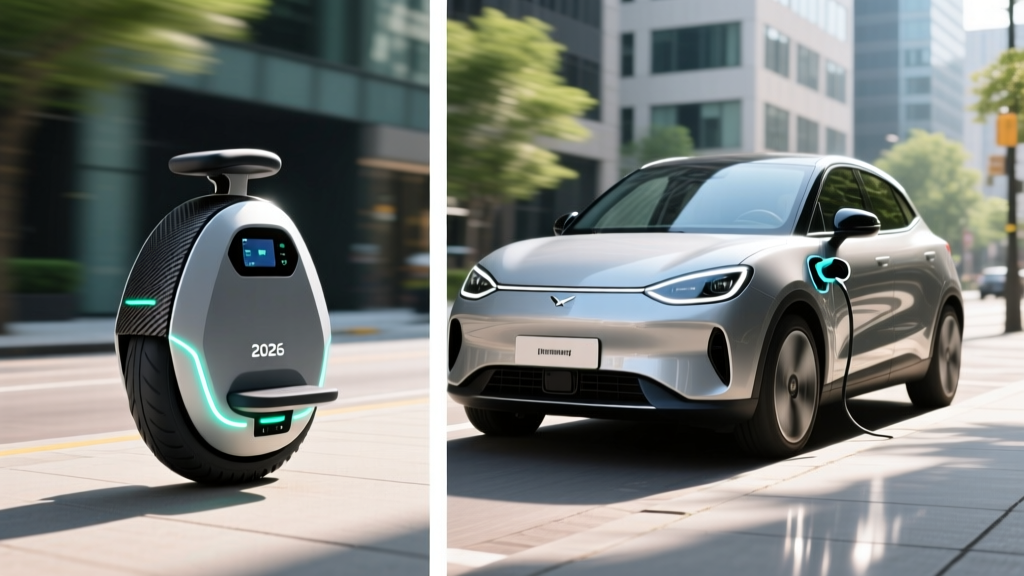
An electric monowheel (also called an electric unicycle or EUC) is a single-wheeled, self-balancing personal electric vehicle that typically costs $1,200–$3,500, offers 30–60 miles of real-world range, and charges from a standard 120V outlet in 3–6 hours. It is not a car replacement—it's a last-mile or short-commute tool for solo riders in mild climates. Compared to a compact EV like the 2026 Chevrolet Bolt EV (EPA 259 mi, ~$28,000 after incentives), a monowheel eliminates parking, insurance, and registration costs but sacrifices weather protection, cargo capacity, passenger seating, and crash safety. If your one-way commute is under 15 miles, you have safe bike-lane infrastructure, and you need a vehicle for fair-weather days only, a monowheel can be a legitimate supplement or alternative. For anything beyond that, a used or new EV remains the practical choice.
What Is an Electric Monowheel and Who Is It For?
An electric monowheel is a gyroscopically stabilized single-wheel vehicle where the rider stands on pegs flanking a hub motor enclosed by the wheel. Brands like Begode, Kingsong, Leaperkim, and Inmotion dominate the 2026 market. Unlike the Segway-style two-wheeled hoverboards of the early 2010s, modern EUCs use large-diameter wheels (16–22 inches), high-torque hub motors (2,000–4,500W peak), and lithium battery packs ranging from 800Wh to 3,600Wh.
The typical buyer is an urban professional with a 5–12 mile commute, limited parking options, and access to protected bike lanes or multi-use paths. Monowheels excel in scenarios where:
- Parking costs $150–$400/month in a downtown garage
- Public transit covers part of the commute but leaves a 2–5 mile gap
- The rider can carry the unit (40–85 lbs) onto a train or into an office
- Weather is mild for at least 7–8 months of the year
Electric Monowheel vs Compact EV: The Numbers
The most common question we get: "Should I spend $2,000 on a monowheel or $28,000+ on an EV?" The answer depends on your commute profile. Here's how a high-end 2026 monowheel (e.g., Begode Master Pro, ~$3,200) compares to a 2026 Chevrolet Bolt EV (base MSRP $28,800 before incentives) across the metrics that matter.
| Metric | EUC (Begode Master Pro-class) | 2026 Chevy Bolt EV (2LT) |
|---|---|---|
| Purchase Price | $2,800–$3,500 | $28,800 MSRP |
| Battery Capacity | 2,400–3,600Wh (NMC) | 65 kWh usable (NMC) |
| Real-World Range | 40–60 mi (at 20 mph avg) | 259 mi EPA (~220 mi highway) |
| Top Speed | 35–45 mph (governed) | 93 mph |
| Charge Time (0–100%) | 4–6 hrs (standard 120V, ~300W) | ~9.5 hrs Level 2; 10–80% in ~30 min DC fast |
| Energy Cost per Mile | ~$0.005 (0.03 kWh/mi × $0.16/kWh) | ~$0.04 (0.28 kWh/mi × $0.16/kWh) |
| Annual Insurance | $0 (not insurable as a vehicle) | $1,400–$2,200 |
| Registration / Title | None | $100–$400/year |
| Annual Maintenance | $50–$150 (tire, pads) | $300–$600 |
| Federal Tax Credit (§30D) | Not eligible | Up to $7,500 (income/MSRP/sourcing rules apply) |
| Passengers / Cargo | 1 rider, backpack only | 5 seats, 57 cu ft cargo |
| Weather Protection | None (rider exposed) | Full climate control |
| Safety (crash protection) | Helmet + pads only | NHTSA 5-star rated, airbags, ADAS |
Real Cost of Ownership: 5-Year Breakdown
Let's model a realistic 5-year ownership scenario for a commuter traveling 12 miles round-trip, 230 workdays per year (2,760 miles/year). We'll compare the monowheel against the Bolt EV, assuming the EV is also used for weekend trips (totaling 10,000 miles/year).
| Cost Category | Electric Monowheel | 2026 Chevy Bolt EV |
|---|---|---|
| Purchase Price | $3,200 | $28,800 |
| Federal Tax Credit (§30D) | $0 | –$7,500 (if eligible) |
| Net Purchase | $3,200 | $21,300 |
| 5-Year Energy Cost | $190 (13,800 mi × $0.005/mi × 5 yrs, adjusted) | $2,000 (50,000 mi × $0.04/mi) |
| 5-Year Insurance | $0 | $9,000 ($1,800/yr avg) |
| 5-Year Registration | $0 | $1,250 ($250/yr avg) |
| 5-Year Maintenance | $500 | $2,500 |
| Battery Replacement Risk | $800–$1,200 (if needed in yr 4–5) | Covered under 8-yr/100k-mi warranty |
| 5-Year Total | $4,690–$5,090 | $36,050 |
| Cost per Mile (all-in) | $0.34–$0.37 | $0.72 |
Key insight: The monowheel wins on pure cost by a massive margin—but only if it actually replaces the commute. If you still need a car for weekends, groceries, and bad-weather days, you're paying for both. Many EUC owners keep an older gas car or use car-share services for those needs.
Range, Charging, and Battery Realities
Monowheel manufacturers advertise ranges of 60–100+ miles, but those figures assume a 150-lb rider at 15 mph on flat ground in 70°F weather. Real-world results are very different.
Real-world range factors for EUCs:
- Speed: Range drops 30–40% at 30 mph vs 15 mph due to aerodynamic drag
- Rider weight: A 220-lb rider sees ~20% less range than a 160-lb rider
- Temperature: Below 40°F, expect 25–35% range loss (NMC chemistry limitation)
- Terrain: Hills can cut range by 15–25% on hilly commutes
- Battery aging: After 500–800 full cycles (roughly 2–4 years of daily use), expect 15–25% capacity loss
Charging is straightforward but slow. Most EUCs charge via a proprietary brick charger from a standard 120V outlet at 200–400W. A 2,400Wh pack takes roughly 6–8 hours from empty. Unlike EVs, there's no DC fast charging or public charging infrastructure—every charge happens at home or the office. This is both a limitation and an advantage: you never need a charging station, but you also can't "top up" mid-commute.
For comparison, the Bolt EV charges at up to 11.5 kW on Level 2 (adding ~37 miles of range per hour) and peaks at roughly 55 kW on DC fast charging, reaching 80% in about 30 minutes. The EPA's fueleconomy.gov lists the Bolt at 120 MPGe combined.
Common Misconceptions About Electric Monowheels
| Myth | Fact |
|---|---|
| "It's self-balancing so you can't fall off" | EUCs balance fore/aft but NOT side-to-side. Cutdowns (when the motor can't keep up with speed demands) cause sudden forward falls. Wrist guards and helmets are non-negotiable. |
| "It's legal everywhere" | EUCs occupy a legal gray zone. Most US states classify them as EPAMDs (Electric Personal Assistive Mobility Devices) or exclude them entirely. Sidewalk riding is often prohibited; bike-lane legality varies by city. Check local ordinances. |
| "The battery lasts forever" | NMC cells in EUCs typically endure 500–1,000 cycles before dropping below 80% capacity. With daily charging, that's 2–4 years before noticeable range loss. Replacement packs cost $600–$1,200. |
| "It's cheaper than any transportation" | Cheap to operate, but the upfront cost ($2,000–$3,500) plus protective gear ($200–$400) plus potential medical costs from falls make the total picture more nuanced. |
| "You can ride it in the rain" | Most EUCs are IP55 or IP65 rated—splash resistant but not submersible. Heavy rain risks controller damage. Wet roads also drastically reduce tire grip on a single contact patch. |
| "It qualifies for the EV tax credit" | The §30D federal credit applies only to 4-wheeled motor vehicles meeting specific battery-sourcing and MSRP requirements per IRS guidelines. EUCs do not qualify. |
Safety: The Factor Most Buyers Underestimate
This is where the monowheel vs EV comparison becomes stark. A 2026 Bolt EV carries a NHTSA 5-star safety rating, 6 airbags, automatic emergency braking, lane-keeping assist, and a steel unibody. An EUC offers zero crash structure—the rider's body is the crumple zone.
Common EUC injuries include wrist fractures, collarbone breaks, facial abrasions, and concussions. Experienced riders universally recommend:
- Full-face motorcycle helmet (not a bike helmet)
- Wrist guards with palm sliders
- Knee and elbow pads
- Armored jacket or spine protector for rides above 25 mph
There is no NHTSA crash-test data for EUCs, no IIHS rating, and no airbag equivalent. If safety is your primary concern—or if you carry children—an EV is the only responsible choice.
Decision Framework: Should You Buy an Electric Monowheel?
Choose an Electric Monowheel IF:
- Your one-way commute is 5–15 miles with protected bike lanes
- You live in a climate with 8+ months of mild, dry weather
- Parking at your workplace costs $100+/month or is unavailable
- You have another vehicle (car, car-share, transit) for bad weather and long trips
- You're comfortable with a steep learning curve (10–30 hours to ride confidently)
- Your total commuter budget is under $4,000
Choose a Compact EV (or Keep Your Current Car) IF:
- You need to carry passengers, groceries, or child seats
- Your commute exceeds 20 miles one-way or includes highways
- You live in a region with harsh winters, heavy rain, or extreme heat
- You have no safe bike-lane infrastructure on your route
- You need a single vehicle that does everything
- Safety and crash protection are top priorities
- You qualify for the §30D federal tax credit (income under $150K single / $300K joint, vehicle MSRP under $55K for sedans), reducing a Bolt EV to ~$21,300 effective cost
Frequently Asked Questions
How long does it take to learn to ride an electric monowheel?
Most riders achieve basic straight-line balance in 3–8 hours of practice. Confident commuting in traffic typically takes 20–40 hours over 2–4 weeks. The learning curve is significantly steeper than a bicycle or e-scooter. Expect falls during the learning phase—always wear full protective gear from day one.
Can I take an electric monowheel on public transit?
Most US transit agencies allow EUCs on trains and buses if they're powered off and carried or rolled. Weight is the main constraint: a 2,400Wh unit weighs 55–85 lbs, which is manageable for short carries but taxing for multi-block walks. Check your local transit authority's specific policy on battery-powered devices.
What's the real-world range of a 2,400Wh electric monowheel?
For a 180-lb rider averaging 20 mph on mixed terrain in 60–75°F weather, expect 35–50 miles from a 2,400Wh pack. At sustained 30+ mph, that drops to 20–30 miles. In cold weather (below 40°F), subtract another 25–35%. Always plan your commute with a 30% buffer below the manufacturer's stated range.
Do electric monowheels require maintenance?
Minimal but non-zero. The tire (typically a 16–20" inner-tube setup) needs replacement every 2,000–4,000 miles ($30–$80). Brake pads (if equipped with a physical brake) last 1,000–3,000 miles. The main bearing and motor are generally maintenance-free for 10,000+ miles. The biggest long-term cost is battery replacement at $600–$1,200 after 500–1,000 charge cycles.
Is an electric monowheel cheaper than an e-bike or e-scooter?
Comparable in purchase price to a mid-range e-bike ($2,000–$3,500) but cheaper to operate due to lower weight and better efficiency (~0.03 kWh/mi vs ~0.05–0.08 kWh/mi for an e-bike). However, e-bikes have broader legal acceptance, better cargo options (panniers, racks), and are easier for most people to learn. E-scooters ($500–$1,500) are cheaper upfront but offer less range (15–30 mi real-world) and smaller wheels that struggle with road imperfections.
Can I insure an electric monowheel?
Standard auto insurers do not cover EUCs. Some specialty insurers and renters/homeowners policies may offer limited theft or liability coverage for personal electric vehicles, but medical-payment and collision coverage is rare. Factor the lack of insurance protection into your risk assessment—any injury or third-party damage comes out of pocket.