The Quick Answer
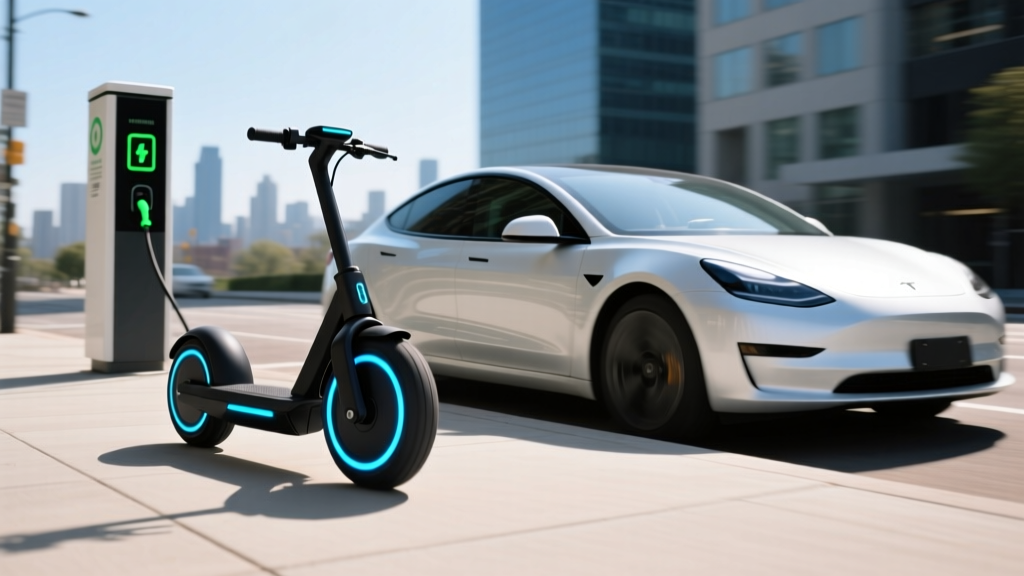
An electric monocycle (also called an electric unicycle or EUC) is a single-wheeled, self-balancing personal electric vehicle typically priced between $800 and $3,500, offering 20–60 miles of real-world range on a 0.5–2.4 kWh battery pack. It excels as a last-mile or short urban commuter (under 10 miles each way) where storage space, portability, and minimal charging infrastructure matter. However, it is not a replacement for a full-size electric car like the Chevrolet Equinox EV or Nissan Leaf for anyone carrying passengers, driving in extreme weather, commuting over 15 miles, or requiring highway speeds. Think of it as an EV supplement — not an EV substitute.
What Is an Electric Monocycle, Exactly?
The term "electric monocycle" most commonly refers to an electric unicycle (EUC) — a motorized, single-wheel vehicle where the rider stands on side platforms and uses body lean to accelerate, brake, and steer. Self-balancing gyroscopes and accelerometers keep the wheel upright. Major brands include Kingsong, Begode, InMotion, and Leaperkim, with wheel diameters ranging from 12 to 22 inches and motor outputs from 800W to over 4,000W peak.
Less commonly, "electric monocycle" describes enclosed single-wheel concepts like the now-discontinued Ford-sponsored Schaeffler E-Wheel prototype or the monorail-style monowheel. For this guide, we focus on the production-ready, commercially available EUC category — the only version you can actually buy and ride today.
It is critical to understand that an electric monocycle is classified as a personal mobility device, not a motor vehicle. It has no NHTSA crash rating, no EPA range certification, no airbags, and no eligibility for the federal §30D EV tax credit. It occupies a legal gray area in many jurisdictions — more on that below.
Electric Monocycle vs Compact EV: The Numbers Side by Side
To ground this comparison in real data, we're stacking a popular high-end electric monocycle (the Kingsong S22, representative of the premium EUC segment) against the 2026 Chevrolet Equinox EV 2LT — one of the most affordable long-range electric cars on the U.S. market.
| Specification | Kingsong S22 (EUC) | 2026 Chevy Equinox EV 2LT |
|---|---|---|
| Base Price | ~$2,499 | $33,600 (MSRP) |
| Battery Capacity | 2.22 kWh (Li-ion, 134.4V) | 85 kWh usable (NMC) |
| Claimed Range | ~60 mi (ideal conditions) | 319 mi (EPA est.) |
| Real-World Range | 25–40 mi (varies by speed/terrain) | ~250–270 mi highway; ~200 mi cold weather |
| Top Speed | ~43 mph (with tiltback warning) | ~115 mph |
| Charge Time (0–100%) | ~3 hours (standard charger, ~800W) | ~9.5 hrs Level 2 (11.5 kW); 10–80% DC in ~20 min at 150 kW |
| Motor Output | 3,300W peak | 213 hp (159 kW) FWD |
| Weight | ~75 lbs | ~5,560 lbs |
| Passengers | 1 (rider only) | 5 |
| Cargo | Backpack only | 26.4 cu ft (rear seats up) |
| Weather Protection | None (rider exposed) | Full climate control, heat pump |
| Federal Tax Credit (§30D) | Not eligible | Up to $7,500 (eligibility varies by sourcing, income, MSRP caps) |
| Safety Regulation | Unregulated (no NHTSA/IIHS) | NHTSA rated; IIHS tested |
Sources: Kingsong official specs; fueleconomy.gov for EPA data; IRS §30D guidelines.
Breaking Down the Real Costs: Monocycle, EV, and Gas Car
The sticker price tells one story. Total ownership cost over five years tells the real one. Below, we compare a premium electric monocycle used as a daily commuter against the Equinox EV and a comparable gas compact (the 2026 Honda Civic) over a 5-year/60,000-mile ownership horizon.
| Cost Category (5 yr / 60k mi) | Electric Monocycle (EUC) | 2026 Equinox EV | 2026 Honda Civic (Gas) |
|---|---|---|---|
| Purchase Price | $2,499 | $33,600 | $25,350 |
| Federal Tax Credit | $0 | Up to –$7,500* | $0 |
| Fuel / Electricity | ~$180 (at $0.16/kWh) | ~$2,880 (at $0.16/kWh, 3.2 mi/kWh) | ~$5,760 (at $3.20/gal, 33 MPG) |
| Maintenance | ~$300 (tire, pads, electronics) | ~$1,500 (cabin filter, tires, fluid checks) | ~$3,200 (oil, filters, brakes, tires) |
| Insurance | $0–$150 (rarely insurable as vehicle) | ~$7,500 (~$1,500/yr avg) | ~$6,000 (~$1,200/yr avg) |
| Safety Gear | ~$800 (helmet, pads, wrist guards) | Included | Included |
| Estimated 5-Year Total | ~$3,629 | ~$37,980 | ~$40,310 |
*§30D credit subject to buyer income caps ($150k single / $300k joint), MSRP limits ($55k cars / $80k trucks/SUVs), and battery critical-mineral sourcing rules. Confirm eligibility at irs.gov or via point-of-sale transfer at a participating dealer. Rules current as of 2026 and subject to legislative change.
The monocycle's cost advantage is dramatic — but only because it solves a different problem. It replaces a transit pass or a bicycle, not a car. If you still need a vehicle for groceries, road trips, family duties, or bad weather, the EUC is a supplement, and your total transportation spend becomes EUC + car, not EUC instead of car.
Real-World Ownership: What No Spec Sheet Tells You
Range Is Highly Speed-Dependent
An EUC rated for "60 miles" achieves that figure at roughly 15 mph on flat ground with a 150-lb rider. At 25 mph, expect 30–35 miles. At 35+ mph, you may get 20 miles before the battery management system (BMS) forces a speed-limiting "tiltback" warning. This is the EUC equivalent of range anxiety — and unlike a car, running out of battery on an EUC doesn't just strand you; it can throw you forward at speed.
Charging Is Simple but Slow
Most EUCs charge from a standard 120V wall outlet using a proprietary brick charger (typically 500W–1,200W). A full charge on the Kingsong S22's 2.22 kWh pack takes roughly 3 hours. There is no DC fast charging, no public charging network compatibility, and no NACS or CCS connector. You charge at home, at the office, or nowhere.
This is where home charging access becomes a paradox: EUCs don't need a Level 2 home charger, but they do need access to a standard outlet near where you store them — which matters for apartment dwellers who can't run a cord from a 4th-floor unit to a parking garage.
Weather Is the Dealbreaker
Rain, snow, and ice are severe limitations. While some EUCs carry IP55 or IP67 water-resistance ratings, wet roads compromise tire grip on a single contact patch. Cold weather (below 32°F) reduces lithium-ion battery capacity by 15–30%, the same physics that affects EV car batteries but with far less reserve to absorb the loss. Most experienced EUC riders in northern U.S. climates treat the device as a fair-weather, three-season commuter.
Legality Varies Wildly
EUCs exist in a regulatory gap. They're too fast for sidewalks in most cities (many exceed 20 mph), too slow and unprotected for roads, and often unclassified under state vehicle codes. Some jurisdictions treat them like e-bikes; others consider them motor vehicles requiring registration and insurance — which is effectively impossible since they lack VINs and safety equipment. Check your local ordinances before purchasing.
Common Misconceptions About Electric Monocycles
| Myth | Fact |
|---|---|
| "It qualifies for the $7,500 EV tax credit." | No. The §30D credit applies only to new clean motor vehicles with four wheels (or qualifying 2/3-wheel vehicles under §30D(b)(3) with specific speed and classification criteria). EUCs do not qualify. |
| "60-mile range means I can commute 30 miles each way." | Real-world range at commuting speeds (20–25 mph) is typically 50–60% of the claimed figure. A "60-mile" EUC realistically delivers 30–36 miles — enough for a 12–15 mile one-way commute with margin, not 30. |
| "It's basically self-driving — it balances itself." | Self-balancing refers to pitch stability (forward/backward) via gyroscopes. The rider must actively manage steering, speed, braking, and lateral balance. This is closer to riding a bicycle than any SAE Level 2+ driver-assist system. |
| "Maintenance-free compared to a car." | Lower maintenance, yes — but tires wear quickly (often 1,500–3,000 miles), control boards can fail, bearings need replacement, and battery degradation over 3–5 years reduces range by 15–25%. Budget $50–$100/year in consumables. |
| "I don't need protective gear." | Experienced riders universally recommend a full-face helmet, wrist guards, knee pads, and elbow pads. Single-wheel falls at 20+ mph cause serious injuries. There is no crumple zone, no airbag, no seatbelt. |
Decision Framework: Should You Buy an Electric Monocycle, an EV, or Both?
Choose an Electric Monocycle If:
- Your one-way commute is under 10 miles on bike-lane-friendly roads
- You live in a mild, dry climate (Southern California, Texas, Florida)
- You have secure indoor storage with outlet access at both ends of your commute
- You already own or have access to a car for inclement weather and longer trips
- Your budget is under $3,000 and you want to eliminate fuel costs for short trips
- You're comfortable with an athletic learning curve (expect 5–15 hours of practice before confident riding)
Choose a Compact Electric Car (Equinox EV, Leaf, Bolt) If:
- Your commute exceeds 15 miles one way or includes highways
- You regularly carry passengers or cargo
- You experience rain, snow, or sub-40°F winters
- You need NHTSA-rated crash safety and airbags
- You want federal tax credit eligibility (up to $7,500 via §30D, subject to income/MSRP/sourcing rules)
- You can install or access Level 2 home or workplace charging
Choose a Hybrid/PHEV (Toyota Prius, RAV4 PHEV) If:
- You want EV-like savings around town but lack reliable charging access
- Your driving mix includes frequent road trips over 200 miles
- You want a single vehicle that covers every scenario without range compromise
Choose an EUC + Car Combo If:
- You want to minimize car miles and wear by using the EUC for daily errands and short commutes
- You have a two-vehicle household and want to replace one car trip category entirely
- You're an enthusiast who values the riding experience alongside practical commuting
What a First-Time EV Buyer Should Know Before Considering an EUC
If you're researching electric monocycles alongside electric cars, you're likely evaluating the full spectrum of electrified transportation. Here's how to sequence your decisions:
- Solve your primary transportation need first. If you need a daily driver for all conditions, buy the EV (or PHEV). An EUC is a secondary device.
- Verify your charging situation. For a car: can you install a 240V Level 2 charger at home (typically $500–$2,000 including electrician and panel work)? For an EUC: do you have a standard 120V outlet at your destination?
- Check §30D eligibility before committing to a car. Income caps, MSRP limits, and battery-sourcing rules change annually. The IRS clean vehicle credit page is the authoritative source. Point-of-sale transfer is available at participating dealers as of 2026.
- Test-ride before buying an EUC. Unlike a car, an EUC demands physical skill. Many communities have EUC rider groups that offer supervised test rides. The learning curve is real — budget at least two weeks of practice before commuting.
- Buy safety gear simultaneously with the EUC. A $2,500 unicycle paired with a $50 helmet is a mistake. Budget $500–$800 for a full-face motorcycle helmet, wrist guards, knee/shin pads, and a high-visibility jacket.
Frequently Asked Questions
How fast can an electric monocycle go?
Premium EUCs like the Begode Master or Leaperkim Patton reach 40–50 mph in ideal conditions, but most manufacturers implement "tiltback" warnings that push the pedals upward at 80–90% of max speed to warn riders to slow down. Sustained commuting speed is typically 20–25 mph, which is where range and stability are optimal.
Can I ride an electric monocycle on public roads?
It depends entirely on your jurisdiction. Most U.S. states have no specific EUC legislation. Some classify them as "electric personal assistive mobility devices" (EPAMDs) limited to sidewalks and paths at low speeds. Others consider them unregistered motor vehicles, technically illegal on public roads. Always check your city and state codes before riding in traffic.
How long does an EUC battery last before replacement?
Most EUC lithium-ion packs are rated for 500–1,000 charge cycles before degrading to 80% of original capacity. At one charge cycle per day, that's roughly 2–4 years of daily use before noticeable range loss. Replacement battery packs cost $400–$900 depending on the model and capacity. Unlike EV car batteries, there is no federally mandated warranty standard — manufacturer warranties typically cover 6–12 months.
Is an electric monocycle safer than an e-bike?
Neither is categorically safer. EUCs have a single contact patch (more prone to sliding on wet surfaces or debris) but no handlebars to go over in a front-end impact. E-bikes have two wheels (more stable) but higher mass and speed in the Class 3 category. Both require helmets and protective gear. Crash data specific to EUCs is limited — NHTSA does not currently track EUC-specific incident statistics.
Can I take an electric monocycle on an airplane?
Generally, no. Most EUC batteries exceed the 160 Wh limit set by IATA and the FAA for lithium-ion batteries in carry-on or checked luggage. The Kingsong S22's 2,220 Wh pack is roughly 14× the permitted limit. Some smaller, entry-level EUCs with sub-160 Wh batteries exist but offer very limited range (5–8 miles). Check with your airline before attempting to fly with any lithium battery device.
Does an electric monocycle count toward my carbon footprint reduction?
Yes, but the impact is modest because the absolute energy use is small. An EUC consuming 0.03 kWh/mile on a U.S. grid averaging 0.85 lbs CO₂/kWh produces roughly 0.025 lbs CO₂ per mile — compared to 0.89 lbs/mile for a 25 MPG gas car. Replacing 5,000 annual car miles with EUC miles saves approximately 4,300 lbs of CO₂ per year. Meaningful, but a fraction of the savings from replacing that same mileage with a full EV (which also eliminates tailpipe emissions for its entire driving profile).