The Quick Answer: What Is an Electric Mini Jet Boat?
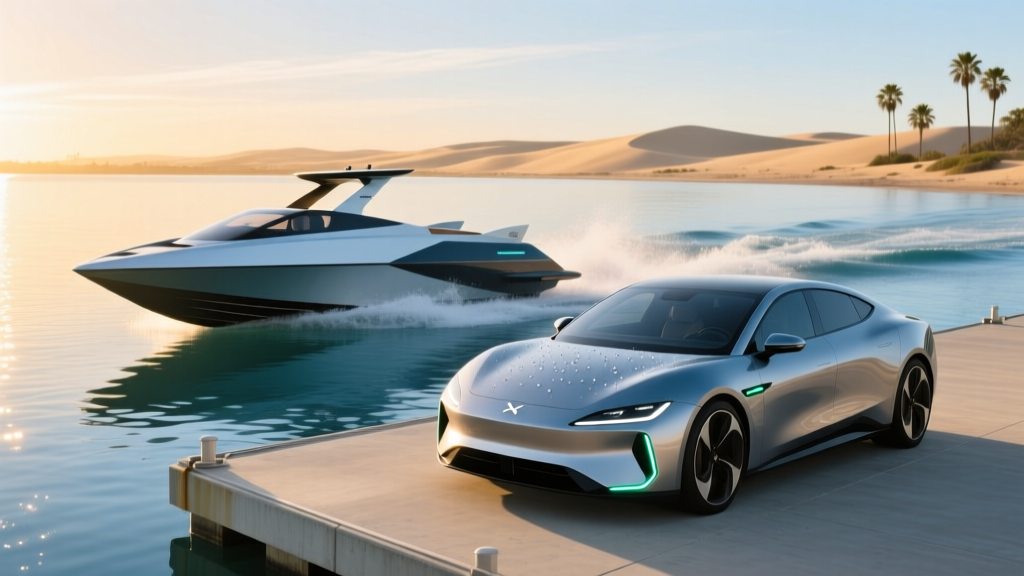
An electric mini jet boat is a compact, battery-powered watercraft (typically 8–14 feet) that uses an electric motor driving a waterjet pump for propulsion. As of 2026, leading models like the Bombardier Sea-Doo Rise and smaller personal watercraft from brands like Radinn and Lift eFoil (hydrofoil boards with jet-like propulsion) offer between 45 and 90 minutes of continuous ride time on battery packs ranging from 4 kWh to 15 kWh. Prices range from roughly $8,500 to $28,000 depending on configuration. Unlike electric cars, these watercraft are not eligible for the federal §30D EV tax credit, which applies only to highway-capable vehicles.
If you landed here searching for an electric mini jet boat, you're likely weighing whether to buy one — or whether an electric vehicle (EV) for the road makes more sense for your budget and lifestyle. This guide breaks down the real specs, costs, and ownership realities of electric mini jet boats, then puts them head-to-head with electric cars so you can make a data-driven decision.
Electric Mini Jet Boat Specs: What's Actually Available in 2026
The electric mini jet boat market has matured considerably since the early 2020s. Here's what the current landscape looks like for battery-powered personal watercraft with jet propulsion:
| Model/Category | Battery (kWh) | Motor Power (kW) | Ride Time | Top Speed | Price (MSRP) |
|---|---|---|---|---|---|
| Compact e-jet board (e.g., Radinn Explore) | 4–5 kWh (NMC) | 7–9 kW | 35–50 min | 28–35 mph | $8,500–$12,000 |
| Mid-size e-jet boat (10–12 ft) | 8–12 kWh (NMC) | 15–25 kW | 60–90 min | 30–42 mph | $15,000–$22,000 |
| Premium e-jet craft (e.g., Sea-Doo Rise concept class) | 12–15 kWh (NMC) | 25–40 kW | 75–120 min | 40–50 mph | $22,000–$28,000 |
| Gas mini jet boat (comparison baseline) | N/A (fuel tank: 6–12 gal) | 60–110 kW equivalent | 3–5 hours | 40–55 mph | $8,000–$18,000 |
Key takeaway: Electric mini jet boats currently trade endurance and peak power for near-silent operation, zero on-water emissions, and minimal maintenance. A gasoline mini jet boat will run longer and faster for less upfront money, but an electric model eliminates fuel costs, oil changes, winterization fuel stabilizer, and exhaust noise.
Electric Mini Jet Boat vs. Gas: Real Cost Comparison
The decision between electric and gas on the water mirrors the EV-vs-ICE debate on the road — but the math plays out differently because usage patterns are far more limited. Most recreational boaters use their craft 20–40 days per year, not daily like a commuter car.
| Cost Factor | Electric Mini Jet Boat | Gas Mini Jet Boat |
|---|---|---|
| Purchase price | $12,000–$25,000 | $8,000–$18,000 |
| "Fuel" cost per session (2 hrs) | $0.50–$1.80 (at $0.13–$0.15/kWh, 8–12 kWh used) | $12–$25 (at $3.50–$4.50/gal, 3–6 gal burned) |
| Annual energy cost (30 sessions) | $15–$54 | $360–$750 |
| Annual maintenance | $50–$150 (impeller inspection, battery storage care) | $300–$600 (oil, spark plugs, fuel filter, winterization) |
| 5-year fuel + maintenance total | $425–$1,020 | $3,300–$6,750 |
| Battery/engine replacement (year 7–10) | $2,500–$5,000 (NMC pack replacement) | $1,500–$3,500 (engine rebuild or repower) |
The breakeven point: At 30 sessions per year, the electric mini jet boat's fuel and maintenance savings of roughly $400–$900 annually offset the higher purchase price in approximately 5–10 years. If you boat fewer than 15 days per year, the gas model's lower upfront cost may never be recovered through electric savings.
Charging an Electric Mini Jet Boat: What You Actually Need
Unlike electric cars that tap into a growing network of DC fast chargers and home Level 2 stations, electric mini jet boats almost exclusively charge from standard 120V AC outlets (Level 1 equivalent) using included onboard chargers.
Charging realities by battery size:
- 4–5 kWh pack: Charges from 0–100% in 3–4 hours on a standard 120V/15A outlet (delivering ~1.4 kW to the battery after charger losses).
- 8–12 kWh pack: Requires 6–10 hours on 120V. Some mid-size models offer optional 240V charging (Level 2 equivalent), cutting this to 2.5–4 hours at 3.3–5 kW.
- 12–15 kWh pack: Expect 9–12 hours on 120V or 3.5–5 hours on 240V.
Common Misconceptions — Fact-Checked
| Myth | Fact |
|---|---|
| "I can fast-charge my electric jet boat at a marina." | DC fast charging infrastructure for personal watercraft essentially does not exist in 2026. You charge at home or at a dock with a standard outlet. |
| "Electric jet boats qualify for the $7,500 federal EV tax credit." | The IRS §30D credit applies only to highway-capable motor vehicles with four wheels. Watercraft are excluded. See IRS clean vehicle credit rules. |
| "The battery will die after one season." | NMC marine packs are rated for 800–1,500 full charge cycles before 80% capacity retention. At 30 sessions/year, that's 25+ years of cycle life — though calendar aging (heat, storage conditions) may require replacement in 7–12 years. |
| "Electric jet boats can't handle rough water." | Performance depends on hull design, not propulsion type. Mid-size electric jet boats handle chop comparably to gas equivalents. However, extended rough-water operation at high throttle drains the battery faster — expect 30–40% less ride time at sustained full throttle. |
Should You Buy an Electric Mini Jet Boat or an Electric Car?
This is the question many searchers actually have: Is my money better spent on an electric mini jet boat for weekends, or an electric vehicle for daily driving? Here's a framework based on real numbers.
| Factor | Electric Mini Jet Boat ($18K avg.) | Budget EV (e.g., 2026 Chevy Equinox EV, ~$33K) |
|---|---|---|
| Primary use | Recreation, 20–40 days/year | Daily commuting + road trips, 300+ days/year |
| Annual fuel savings vs. gas | $345–$696/year | $1,200–$2,000/year (varies by local electricity/gas prices and mileage) |
| Federal tax credit | $0 (not eligible) | Up to $7,500 (if MSRP, income, and battery sourcing requirements are met — check IRS §30D rules) |
| Effective cost after savings (5 yr) | $15,950–$16,275 (purchase minus fuel/maint. savings) | $25,500–$31,800 minus credit, minus fuel savings ($6,000–$10,000) |
| Insurance (annual avg.) | $300–$600 (watercraft policy) | $1,400–$2,200 (EV auto policy, typically 15–25% higher than gas equivalent) |
| Depreciation (5-year est.) | 40–55% (niche market, limited resale data) | 35–50% (improving as EV market matures) |
The practical reality: These aren't competing purchases — they serve entirely different needs. But if your budget forces a choice, the EV delivers daily financial utility and environmental benefit. The electric mini jet boat delivers recreational enjoyment with lower operating costs than gas, but no daily utility and no federal incentive.
Real-World Ownership: What First-Time Buyers Should Know
If you're serious about an electric mini jet boat, here are the practical realities that spec sheets don't highlight:
Battery Storage and Longevity
NMC batteries degrade faster when stored at 100% state of charge (SoC) in high temperatures. If you store your boat in a hot garage or outdoor shed during summer months, keep the battery at 50–60% SoC for storage. Never leave it at 100% for more than 48 hours. This single habit can add 2–3 years to pack life.
Cold-Water Performance
Lithium-ion batteries deliver reduced power output below 50°F (10°C). Expect 15–25% less ride time in cold-water conditions (late fall, early spring, northern lakes). Some premium models include battery preheating, but this is rare in the mini jet boat segment.
Trailer and Transport
Electric mini jet boats are lighter than gas equivalents (no fuel, smaller motor), typically 400–900 lbs dry weight. This makes them towable by most crossovers and SUVs — including EVs. However, towing a boat trailer will reduce your EV's range by 25–45% depending on speed and terrain, per EPA testing data on EV towing efficiency.
No Public Charging Network
Unlike the EV charging ecosystem (Tesla Superchargers, Electrify America, EVgo), there is no public fast-charging infrastructure for electric watercraft. You are 100% dependent on home/dock charging. Plan your sessions accordingly — once the battery is depleted on the water, you're done for the day or need a 6+ hour recharge.
Decision Framework: Which Is Right for You?
If/Then Buyer Guide
- If you boat 30+ days per year at a lake house with dock power → An electric mini jet boat makes financial sense. The fuel savings are meaningful, and the silence enhances the experience.
- If you boat fewer than 15 days per year → A gas mini jet boat's lower purchase price will likely never be offset by electric savings. Buy gas.
- If you want daily financial return on electrification → Buy an electric car first. The §30D tax credit, daily fuel savings, and year-round utility make the ROI far stronger.
- If you already own an EV and want to electrify your recreation → An electric mini jet boat is a great complement. You can charge it from your home solar or existing 240V circuit (with a dedicated outlet installed by a licensed electrician).
- If you need 3+ hours of continuous runtime → Gas is still the only practical option in 2026. No current electric mini jet boat exceeds ~2 hours at moderate throttle.
- If noise restrictions matter (HOA lakes, early-morning use) → Electric is the clear winner. Near-silent operation means no noise complaints and access to electric-only waterways.
Frequently Asked Questions
How long does an electric mini jet boat battery last before replacement?
NMC marine battery packs are rated for 800–1,500 charge cycles to 80% capacity. With typical recreational use (25–35 sessions/year), you can expect 7–12 years of usable service before capacity drops noticeably. Calendar aging (heat exposure, storage conditions) matters as much as cycle count. Replacement packs cost $2,500–$5,000 depending on kWh capacity.
Can I charge an electric mini jet boat from my EV's home charger?
Not directly. EV home chargers use a J1772 or NACS connector designed for cars. Electric mini jet boats use standard AC plugs (120V or 240V) with their own onboard charger. However, you can have a licensed electrician install a dedicated 240V/20A or 240V/30A outlet near your boat storage for faster charging — similar to a dryer outlet.
Are electric mini jet boats safe in saltwater?
Some models are rated for saltwater use with sealed battery compartments and corrosion-resistant components, but saltwater exposure accelerates wear on any watercraft. Rinse thoroughly with fresh water after every saltwater session. Check the manufacturer's warranty — some void coverage for saltwater damage.
What's the real ride time, not the advertised number?
Advertised ride times assume moderate throttle (50–60% power). At full throttle, expect 40–50% of the stated runtime. At conservative cruise speeds, you may exceed the stated time by 10–20%. A model rated for "90 minutes" will realistically deliver 45–55 minutes at aggressive riding or 95–110 minutes at gentle cruising.
Do electric mini jet boats hold their resale value?
The resale market is thin — electric watercraft are still a niche category. Expect 40–55% depreciation over 5 years, similar to gas personal watercraft. Battery health is the key resale factor; a boat with a recently replaced pack commands a premium. Well-known brands (BRP/Sea-Doo, established e-foil makers) hold value better than unknown imports.
AutoEdgeView covers electric and smart vehicles for road use. While this article addresses the "electric mini jet boat" search query for readers comparing electrified purchases, our core coverage focuses on EVs, PHEVs, charging infrastructure, and autonomous driving technology. For watercraft-specific reviews, consult marine publications.