Quick Answer: Are Electric Mini Boats a Practical Purchase?
Electric mini boats—compact, battery-powered watercraft typically 10–16 feet in length—are a niche but growing segment in 2026. Most models cost between $15,000 and $45,000, offer 2–6 hours of runtime on a full charge, and use 10–40 kWh battery packs. They appeal to lake-home owners, eco-conscious recreation seekers, and those tired of gas-engine maintenance. However, they are not daily transportation, they lack federal EV tax credits under §30D (which applies to highway-capable vehicles only), and charging infrastructure at marinas remains sparse. If you're weighing an electric mini boat against a first EV purchase for commuting, they solve entirely different problems—and most buyers are better served purchasing an EV first, then adding a boat later if budget allows.
What Exactly Is an Electric Mini Boat?
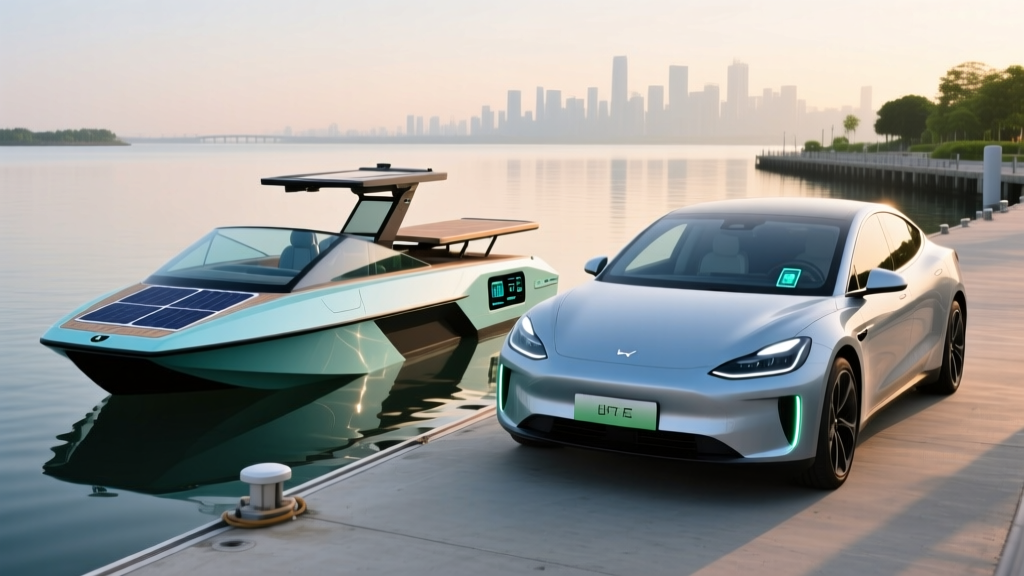
An electric mini boat is a small, fully electric watercraft powered by a lithium-ion battery pack (typically LFP or NMC chemistry) driving one or more electric motors. Unlike full-size electric boats from brands like Arc or Candela, mini boats focus on calm-water recreation: fishing, leisurely cruising on lakes, or tender use. Popular 2026 brands include X Shore (X Shore One), ElectraCraft, and newer entrants like Limestone and Veer.
Key specs to evaluate mirror those in EV shopping:
- Battery capacity: Measured in kWh (energy stored), typically 10–40 kWh
- Motor output: Measured in kW (power delivered), typically 5–30 kW continuous
- Runtime: 2–6 hours depending on speed, load, and conditions
- Top speed: Usually 15–30 mph (25–48 km/h)
- Charge time: 4–10 hours on standard 240V (Level 2 equivalent); no DC fast-charging standard exists yet for small marine craft
Electric Mini Boat vs EV: Cost and Practicality Comparison
Readers searching for "electric mini boat" are often early in their electrification journey and may be weighing this against a first EV purchase. Here's how the two stack up on cost, utility, and ownership reality:
| Factor | Electric Mini Boat (2026) | Compact EV (e.g., 2026 Chevy Equinox EV) | Gas Boat (Comparable 14 ft) |
|---|---|---|---|
| Purchase Price | $15,000–$45,000 | $33,000–$43,000 MSRP | $8,000–$20,000 |
| Federal Tax Credit (§30D) | Not eligible (not a highway vehicle) | Up to $7,500 (subject to MSRP, income, sourcing rules) | Not eligible |
| Annual Fuel/Energy Cost | $80–$250 (electricity, seasonal use) | $500–$800 (electricity, daily driving) | $600–$1,500 (gasoline, seasonal) |
| Annual Maintenance | $100–$300 (minimal) | $200–$400 (tires, cabin filter, wiper fluid) | $400–$1,000 (winterization, oil, impeller) |
| Daily Utility | Recreation only | Daily commuting, errands, road trips | Recreation only |
| Charging/Fueling Access | Home 240V; marina charging rare | Home + 65,000+ public chargers nationwide | Marinas, gas stations widely available |
The critical takeaway: an EV replaces your daily driver and can save $1,000–$2,000/year in fuel and maintenance. An electric mini boat replaces a recreational gas boat and saves mainly on maintenance and seasonal fuel—but it doesn't reduce your daily transportation costs.
Real Costs of Electric Mini Boat Ownership
Let's break down the total cost picture for a mid-range electric mini boat in 2026, compared to a comparable gas-powered aluminum fishing boat:
| Cost Category (5-Year) | Electric Mini Boat (~$28,000) | Gas Boat (~$14,000) |
|---|---|---|
| Purchase Price | $28,000 | $14,000 |
| Fuel/Energy (5 seasons, ~60 hrs/yr) | $750 ($0.15/kWh avg) | $4,500 ($5/gal, ~3 gal/hr) |
| Maintenance (5 years) | $800 | $3,500 |
| Insurance (5 years) | $2,500 | $2,000 |
| Trailer | $2,500 | $2,500 |
| Resale Value (est. after 5 yr) | -$14,000 | -$7,000 |
| Net 5-Year Cost | $20,550 | $19,500 |
At the mid-range, total cost of ownership is nearly identical over five years. The electric mini boat saves roughly $4,450 in fuel and maintenance but costs $14,000 more upfront and depreciates faster in a still-developing resale market. The break-even point versus a gas boat is typically 7–10 years—longer than most owners keep recreational watercraft.
Charging an Electric Mini Boat: What You Actually Need
This is where many first-time electric boat buyers get tripped up. Unlike EVs, which benefit from a mature public charging network, electric mini boats almost exclusively rely on home or dockside charging.
Home Charging Setup
Most electric mini boats ship with a 120V portable charger (Level 1 equivalent) that adds roughly 1–2 kWh per hour—meaning a full charge on a 30 kWh pack takes 15–30 hours. That's impractical for weekend warriors who want consecutive days on the water.
The realistic solution is a 240V outlet (NEMA 14-50 or hardwired marine-grade pedestal):
- Equipment cost: $500–$1,500 for a marine-rated 240V charger
- Electrician install: $800–$2,500 (panel upgrade may add $1,500–$3,000 if you're near capacity)
- Permit: $50–$200 depending on jurisdiction
- Total install: $1,350–$7,200
At 240V / 32A (7.7 kW), a 30 kWh pack charges in roughly 4–5 hours—enough to top off between morning and afternoon sessions.
Marina and Public Charging
Public marine charging infrastructure in 2026 remains extremely limited. A handful of forward-thinking marinas in Florida, California, and the Pacific Northwest have installed dockside 240V pedestals, but there is no national marine charging network comparable to Electrify America or Tesla Superchargers. Plan to charge at home or on your private dock.
Common Misconceptions About Electric Mini Boats
| Myth | Fact |
|---|---|
| "They qualify for the $7,500 EV tax credit." | The IRS §30D credit applies only to highway-capable vehicles with four wheels and a GVWR under 14,000 lbs. Boats do not qualify. Some states offer separate marine electrification rebates—check your state energy office. |
| "The battery will die in 2–3 years." | Modern LFP marine batteries are rated for 3,000+ cycles to 80% capacity. At 60 uses per year, that's 50+ years of cycle life. Calendar degradation will matter more—expect 80%+ capacity at 10 years with proper storage. |
| "You can't go far or fast enough." | For lake fishing and leisurely cruising (5–15 mph), a 30 kWh pack delivers 4–6 hours of runtime. Top speeds of 20–25 mph are adequate for most inland waterways. These boats aren't designed for offshore runs or water sports. |
| "Charging at any marina is easy." | Public dockside charging is rare in 2026. Most owners charge at home and trailer the boat to the water. Confirm charging access at your marina before purchasing. |
| "Electric boats are maintenance-free." | While you eliminate oil changes, impeller replacements, and winterization fuel stabilizer, you still need hull cleaning, anode replacement, trailer bearing service, and battery management system (BMS) firmware updates. |
First-Time Buyer Checklist: What to Know Before You Buy
If you're seriously considering an electric mini boat, work through this practical checklist:
- Confirm your charging situation. Do you have a garage, carport, or dock where you can install a 240V outlet? If you store the boat at a marina without shore power, an electric boat may not be viable.
- Define your use case. Calm inland lakes, slow fishing, and short day cruises are ideal. If you need 40+ mph speeds, offshore capability, or all-day range, a gas outboard still wins.
- Check your electrical panel. A 240V/40A circuit for boat charging draws 9.6 kW. If your home panel is 100A and already near capacity (EV charger, heat pump, electric range), you may need a panel upgrade costing $1,500–$3,000.
- Verify local regulations. Some lakes and waterways have horsepower or speed restrictions that actually favor electric boats. Others may require specific safety equipment.
- Budget for the trailer. Electric mini boats weigh 800–2,000 lbs (battery included). You'll need a single-axle trailer ($2,000–$3,500) and a vehicle capable of towing it.
- Research battery warranty. Look for 5–10 year warranties with a guaranteed capacity retention threshold (typically 70–80% at warranty end). Confirm whether the warranty covers marine-specific issues like submersion.
Decision Framework: Should You Buy an Electric Mini Boat or an EV First?
Choose an EV First If:
- You commute more than 15 miles daily and want to cut fuel costs
- You have access to home charging (Level 2) or reliable public charging
- You want to reduce your carbon footprint on daily transportation
- You can benefit from the §30D federal tax credit (up to $7,500, subject to IRS eligibility rules including income caps, MSRP limits, and battery sourcing requirements)
- You don't already own a reliable daily driver
Choose an Electric Mini Boat If:
- You already own a daily driver (EV or gas) and want to electrify recreation
- You boat on calm inland lakes or ponds where range/speed demands are modest
- You have dock or garage access with 240V power for charging
- You want to eliminate gas-engine maintenance (winterization, fuel stabilizer, carburetor issues)
- You value near-silent operation for fishing or wildlife observation
- You're willing to pay a premium upfront for lower ongoing costs and zero local emissions on the water
Choose Neither Yet If:
- You lack home charging access for either vehicle
- You're stretching your budget—prioritize transportation over recreation
- Your primary boating involves offshore, high-speed, or long-distance use
Top Electric Mini Boat Models to Watch in 2026
The market is still young, but several models have established track records:
- X Shore One: ~$30,000, 30 kWh LFP battery, 25 mph top speed, Scandinavian design, 4–5 hr runtime at cruising speed
- ElectraCraft 160E: ~$22,000, 16 kWh pack, pontoon-style, 12 mph top speed, ideal for calm lakes and fishing
- Veer V13: ~$18,000 (announced/preliminary), 20 kWh NMC, modular design, targeted 20 mph top speed
- Limestone 240E: ~$42,000, 40 kWh pack, 28 mph, premium build with integrated fish-finder and GPS
Note: Specs are based on manufacturer announcements as of early 2026. Verify final production specs before purchasing, as marine EV specifications can change between announcement and delivery.
Frequently Asked Questions
Can I charge an electric mini boat from a standard household outlet?
Yes, but slowly. A standard 120V/15A outlet delivers roughly 1.4 kW, meaning a 30 kWh battery takes over 20 hours to fully charge. For practical use, install a 240V outlet (7–8 kW) to charge in 4–5 hours.
Do electric mini boats qualify for any tax incentives?
Not the federal §30D clean vehicle credit—that's for highway vehicles only. Some states and local utilities offer marine electrification rebates or clean-energy equipment credits. Check your state energy office and utility provider for current programs.
How does cold weather affect an electric mini boat battery?
Lithium-ion batteries lose 15–30% of usable capacity in water temperatures below 40°F (4°C). Most marine packs include thermal management, but expect reduced runtime in early spring or late fall. Store the boat with the battery at 50–60% charge during winter months to preserve long-term health.
What happens if the battery runs out on the water?
Unlike a gas boat that can be refueled from a jerry can, a depleted electric boat must be towed or charged. Responsible owners monitor state of charge (SoC) and keep a 20% reserve. Some models offer optional solar trickle chargers or auxiliary range extenders, but plan your trips within your battery's realistic runtime.
Is an electric mini boat better for the environment than a gas boat?
At the point of use, yes—zero exhaust emissions on the water means no fuel spills, no exhaust fumes, and no noise pollution disturbing wildlife. The upstream carbon footprint depends on your local electricity grid. In regions with high renewable penetration (California, Pacific Northwest, Texas wind), the lifecycle emissions advantage is substantial. In coal-heavy grids, the advantage is smaller but still favors electric due to the higher efficiency of electric motors (~90%) versus gas outboards (~25–30%).