Quick Answer: Which Electric Mercedes Sedan Fits You?
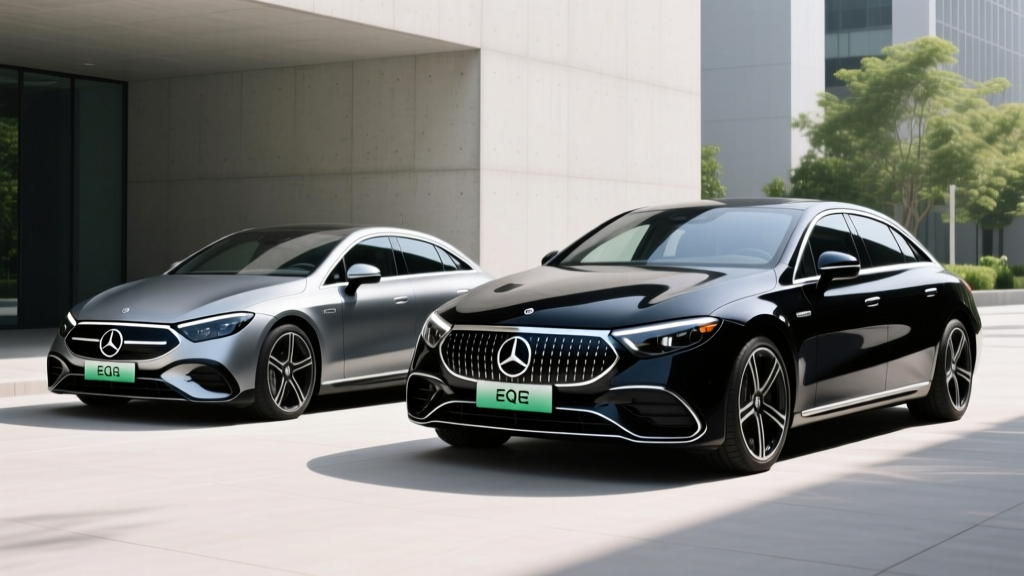
If you're shopping for an electric Mercedes sedan in 2026, you have two core choices: the midsize EQE (starting ~$76,000, EPA range up to 305 miles) and the flagship EQS (starting ~$105,000, EPA range up to 390 miles). Both use a 90.6 kWh usable NMC lithium-ion battery and support up to 170 kW DC fast charging. The EQE is the value play for daily commuting and road trips under 250 miles; the EQS justifies its premium with superior ride isolation, a hyperscreen dash, and enough range for 300-mile highway stretches between charges. Neither qualifies for the full §30D federal tax credit in 2026 due to battery-sourcing rules, but point-of-sale lease incentives may apply.
The 2026 Electric Mercedes Sedan Lineup at a Glance
Mercedes-Benz currently sells two battery-electric sedans in the U.S. market. Both sit on the dedicated EVA2 platform, share the same 90.6 kWh (usable) battery pack with NMC chemistry, and use a 400-volt electrical architecture. Here's how the core specifications compare across the most popular trims.
| Specification | 2026 EQE 350+ | 2026 EQE 350 4MATIC | 2026 EQS 450+ | 2026 EQS 580 4MATIC |
|---|---|---|---|---|
| Drivetrain | RWD | AWD | RWD | AWD |
| Horsepower | 288 hp | 288 hp | 355 hp | 536 hp |
| 0-60 mph | 6.2 sec | 5.8 sec | 5.9 sec | 4.1 sec |
| Battery (usable) | 90.6 kWh NMC | 90.6 kWh NMC | 90.6 kWh NMC | 90.6 kWh NMC |
| EPA Range | 305 mi | 277 mi | 390 mi | 345 mi |
| MPGe (combined) | 94 MPGe | 86 MPGe | 97 MPGe | 87 MPGe |
| Max DC Charge Rate | 170 kW | 170 kW | 200 kW | 200 kW |
| 10-80% DCFC Time | ~32 min | ~32 min | ~31 min | ~31 min |
| Level 2 Rate ( onboard) | 9.6 kW | 9.6 kW | 9.6 kW | 9.6 kW |
| Base MSRP | $76,050 | $79,050 | $105,550 | $125,550 |
| Battery Warranty | 10 yr / 155,000 mi | 10 yr / 155,000 mi | 10 yr / 155,000 mi | 10 yr / 155,000 mi |
Sources: fueleconomy.gov, Mercedes-Benz USA. EPA estimates; real-world range varies with temperature, speed, and terrain.
Real-World Range vs. EPA Sticker
The EQE 350+ posts an EPA 305-mile range, but expect ~250-270 miles at sustained 75 mph highway speeds in moderate weather. In sub-freezing temperatures, plan for 20-30% reduction, dropping effective range to ~190-220 miles. The EQS 450+ is more efficient thanks to its class-leading 0.20 drag coefficient: EPA 390 miles translates to roughly ~320-340 miles highway and ~260-290 miles in cold conditions. These sedans use active thermal management, which helps preserve charging speed in cold weather but consumes some energy doing so.
Charging Speeds: What You'll Actually Experience
Both the EQE and EQS use a 400V architecture (unlike the 800V systems in Hyundai/Kia's E-GMP or Porsche's Taycan). This caps their peak DC fast-charge rate at 170-200 kW — adequate but not class-leading.
| Charging Level | Power | Miles Added Per Hour | Typical Use Case |
|---|---|---|---|
| Level 1 (120V) | ~1.4 kW | ~4-5 mi/hr | Emergency top-up only |
| Level 2 (240V, 40A) | 9.6 kW | ~30-34 mi/hr | Home overnight charging (~9-10 hrs empty-to-full) |
| DC Fast (peak) | 170-200 kW | ~500-600 mi/hr (at peak) | Road trips; 10-80% in ~31-32 min |
Charging-curve reality: The 170-200 kW peak only holds between roughly 10-40% state of charge. Above 60% SoC, the rate tapers significantly — often to under 75 kW by 80%. This means the advertised 10-80% time of ~31-32 minutes is accurate, but charging from 80-100% can take nearly as long. For road trips, plan to charge to 80% and go; don't wait for a full battery.
Connector note: Both models ship with a CCS1 port for 2026. Mercedes has announced NACS adoption for future models, but current EQE/EQS buyers will use CCS at Electrify America, EVgo, and similar networks. A CCS-to-NACS adapter (provided by Mercedes for Tesla Supercharger access) is included.
Electric Mercedes Sedan vs. Gas Equivalent: Cost Comparison
The natural cross-shop for an EQE is the Mercedes E-Class (E350), and for the EQS, the S-Class (S500). Here's a five-year ownership cost comparison using national averages.
| Cost Category (5-Year) | EQE 350+ | E 350 (Gas) | EQS 450+ | S 500 (Gas) |
|---|---|---|---|---|
| Purchase Price (base MSRP) | $76,050 | $62,000 | $105,550 | $118,000 |
| Federal Tax Credit (§30D) | $0* | $0 | $0* | $0 |
| Fuel / Electricity | $4,800 | $9,500 | $4,500 | $10,200 |
| Maintenance | $2,200 | $4,800 | $2,400 | $5,500 |
| Insurance (avg) | $12,500 | $9,800 | $14,000 | $12,500 |
| Estimated Depreciation | $32,000 | $22,000 | $48,000 | $42,000 |
| 5-Year Total Cost | $127,550 | $108,100 | $176,450 | $188,200 |
Assumptions: 15,000 miles/year, $0.16/kWh home charging (national avg), $3.60/gal premium fuel, E350 at 26 MPG combined, S500 at 23 MPG combined. Depreciation estimates based on historical luxury-EV and luxury-sedan resale trends. Insurance premiums for EVs run 15-25% higher on average. Source: fueleconomy.gov.
*Tax credit note: As of 2026, neither the EQE nor the EQS qualifies for the $7,500 §30D federal EV tax credit. Both fail the critical-minerals and battery-component sourcing requirements outlined by the IRS. If you lease rather than buy, the dealer may pass through a commercial clean-vehicle credit (§45W) as a lease incentive — ask the finance desk, but don't count on it. Income caps and MSRP caps ($55,000 for sedans) also exclude both models from §30D regardless of sourcing.
Where the EV Wins — and Where It Doesn't
| Factor | Electric Mercedes Sedan Advantage | Gas Mercedes Sedan Advantage |
|---|---|---|
| Fuel cost | ~$960/yr electricity vs ~$1,900/yr premium gas | — |
| Maintenance | No oil changes, fewer brake replacements (regen) | — |
| Upfront price | — | E350 starts ~$14K less than EQE |
| Depreciation | — | Gas sedans hold value better currently |
| Insurance | — | Lower premiums for ICE models |
| Refueling flexibility | — | 5-minute fill-ups, no route planning |
| Driving experience | Instant torque, silent cabin, one-pedal driving | Familiar feel, lighter weight |
Real-World Ownership: What First-Time EV Buyers Must Know
Buying an electric Mercedes sedan involves practical considerations that go well beyond the spec sheet. Here's what experience with these platforms reveals.
Home Charging Is Non-Negotiable for Most Owners
A Level 2 home charger (240V, 40-amp circuit) adds roughly 30-34 miles of range per hour. An overnight session from 20% to 80% takes about 6-7 hours — perfect for daily use. Expect to pay $800-$2,500 for a quality Level 2 unit (ChargePoint Home Flex, Wallbox Pulsar Plus) plus $500-$2,000 for professional electrical installation, depending on whether your panel needs an upgrade to 200A. If you live in an apartment or lack garage access, public-charging dependence will add time and cost to ownership.
Cold-Weather Range Loss Is Real
NMC batteries lose efficiency in cold temperatures. Testing shows 20-30% range reduction at 20°F compared to 70°F. Both the EQE and EQS use a heat pump for cabin heating (standard), which reduces the penalty compared to resistive heaters, but it doesn't eliminate it. Preconditioning the battery while plugged in — using the Mercedes me app to set departure times — warms the pack and preserves range and charging speed.
Charging Network Reliability Varies
On road trips, you'll rely on Electrify America, EVgo, and Tesla Superchargers (via the included CCS-to-NACS adapter). Uptime on non-Tesla networks averages 85-90% nationally. Plan routes with a buffer: if a charger is down, you'll want enough range to reach the next one. The EQS's 390-mile EPA range provides a meaningful buffer that the EQE's 305-mile figure does not.
Insurance Costs More
EV insurance premiums run 15-25% higher than equivalent gas vehicles, driven by higher repair costs (specialized labor, battery proximity to crash zones) and higher replacement values. Get quotes before committing — the annual difference can be $400-$800 or more.
Common Misconceptions About the Electric Mercedes Sedan
| Myth | Fact |
|---|---|
| "The battery will need replacing in 5 years." | Mercedes warranties the battery for 10 years/155,000 miles with a 70% capacity retention guarantee. Real-world NMC degradation data shows ~10-15% loss over 100,000 miles with normal use. |
| "You can't road-trip an EV." | The EQS 450+ can cover 320+ real-world highway miles between 30-minute DC charges. With route planning via Mercedes me Navigation (which integrates charging stops), 600-mile days are practical. |
| "They qualify for the $7,500 tax credit." | Neither model qualifies under 2026 §30D rules. The MSRP cap for sedans is $55,000, and both models exceed it. Battery sourcing rules also disqualify them. |
| "Charging takes too long." | Home Level 2 charging happens while you sleep — zero active time. Road-trip DC charging adds 30 minutes for 10-80%, comparable to a meal stop. |
| "EVs are worse in the rain and snow." | 4MATIC AWD models have excellent traction. The low center of gravity (battery under the floor) improves stability. Winter tires remain recommended for snow-belt states. |
Decision Framework: Which Electric Mercedes Sedan Should You Choose?
Choose the EQE 350+ if:
- Your daily commute is under 60 miles round-trip
- You have reliable home Level 2 charging
- You want a luxury EV sedan under $80,000
- Road trips are typically under 250 miles between stops
- You prioritize a nimble, midsize footprint for city driving
Choose the EQS 450+ if:
- You regularly drive 200+ miles between charging opportunities
- You live in a cold climate where range loss matters more
- You want the quietest, most isolated ride Mercedes offers
- The MBUX Hyperscreen and rear-seat luxury are priorities
- Budget allows $105K+ and you plan to keep the car 5+ years
Choose the gas E-Class or S-Class instead if:
- You lack home charging access and can't install it
- You frequently drive in areas with sparse DC fast-charging infrastructure (rural routes, remote regions)
- Minimizing upfront cost and depreciation risk is your top priority
- You regularly tow or take very long road trips (1,000+ miles) without wanting to plan charging stops
Frequently Asked Questions
Do the EQE and EQS use LFP or NMC batteries?
Both use NMC (nickel manganese cobalt) chemistry. NMC offers higher energy density than LFP, which is why these large sedans achieve 300+ mile ranges. The trade-off: NMC degrades slightly faster than LFP over time and prefers not to sit at 100% SoC for extended periods. Set your daily charge limit to 80% and only charge to 100% before long trips.
Can I charge at Tesla Superchargers?
Yes. Mercedes includes a CCS-to-NACS adapter with 2026 EQE and EQS models. You can use Tesla Superchargers (V3 and V4) via this adapter. Charging speed is limited by the vehicle's onboard acceptance rate (170-200 kW peak), so you won't see Tesla's full 250 kW capability, but the Supercharger network's reliability is a significant road-trip advantage.
What does maintenance look like compared to a gas Mercedes?
EVs eliminate oil changes, spark plugs, transmission fluid, and exhaust system maintenance. Brake pad life extends significantly thanks to regenerative braking — many EV owners report 80,000+ miles on original pads. You'll still need cabin air filter replacements, tire rotations (EVs wear tires faster due to instant torque and heavier weight), and windshield washer fluid. Expect annual maintenance costs of $400-$500 versus $900-$1,200 for a gas equivalent.
How long does the battery last, and what does replacement cost?
Mercedes warranties the high-voltage battery for 10 years or 155,000 miles against capacity loss below 70%. Real-world data from EVA2-platform vehicles suggests 85-90% capacity retention at 100,000 miles with proper care (avoiding frequent 100% charges and DC fast-charging exclusively). Out-of-warranty replacement is estimated at $18,000-$25,000 including labor — a significant cost, but one you're unlikely to face within typical ownership periods.
Is the MBUX Hyperscreen worth the upgrade?
The Hyperscreen (a 56-inch curved glass panel spanning the dash) is standard on the EQS and optional on higher EQE trims (~$8,500). It's visually impressive and integrates navigation, media, and climate controls. However, some drivers find the touch-capacitive climate sliders distracting while driving. If you prefer physical controls or don't need the passenger display, the standard 12.8-inch OLED screen on the EQE is perfectly capable.
What's the best way to maximize range in an electric Mercedes sedan?
Five practical steps: (1) Set charge limit to 80% for daily use. (2) Use Eco drive mode, which softens throttle response and optimizes climate control. (3) Precondition the cabin and battery while plugged in via the Mercedes me app. (4) Maintain tire pressure at the door-jamb sticker spec — underinflated tires cost 2-5% range. (5) Use seat heaters instead of cabin heat when driving solo — they use far less energy.