Quick Answer: Which Electric Mercedes-Benz Should You Buy?
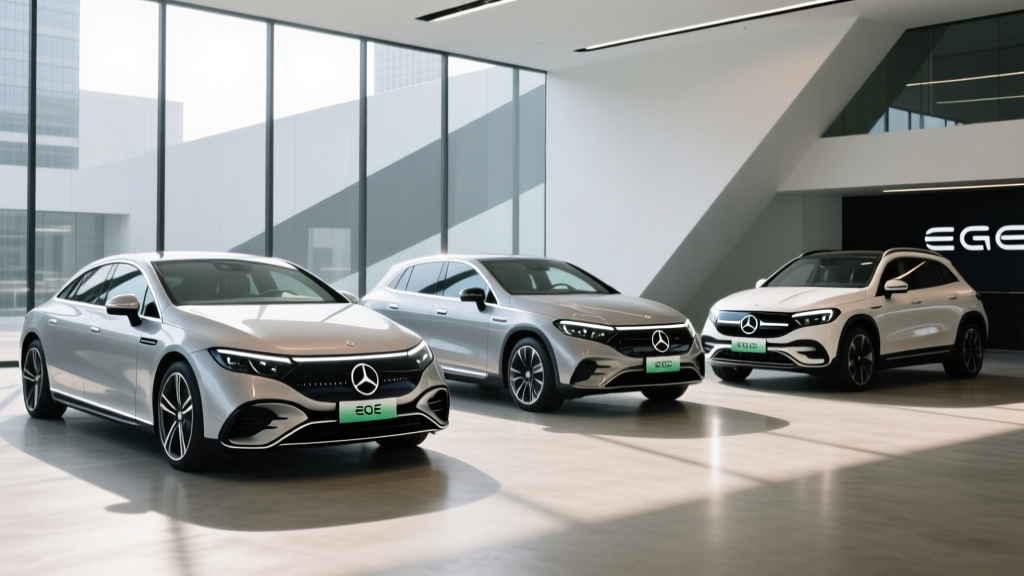
Mercedes-Benz currently offers three battery-electric vehicles in the U.S.: the EQB compact SUV (EPA range up to 251 miles, from ~$53,050), the EQE sedan and SUV (up to 305 miles, from ~$74,900), and the flagship EQS sedan and SUV (up to 390 miles, from ~$104,400). The best choice depends on your budget and daily driving needs. If you commute under 60 miles and want luxury without six-figure pricing, the EQE 350+ sedan is the sweet spot. If you need three-row seating and maximum range, the EQS 450+ sedan delivers. If cargo space and family hauling matter most, the EQB 300 4MATIC is the most practical entry point — but expect to rely on public charging unless you can install a Level 2 home charger.
The 2026 Electric Mercedes-Benz Lineup at a Glance
Mercedes has consolidated its EV naming strategy heading into the 2026 model year. The brand uses the "EQ" prefix for its battery-electric vehicles (BEVs), with model letters paralleling the gas lineup: EQB mirrors the GLB, EQE mirrors the E-Class, and EQS mirrors the S-Class. Here's how the core specs break down across the lineup.
| Model | Drivetrain | Battery (kWh usable) | EPA Range | Peak DC Charge | 10–80% Time | 0–60 mph | Base MSRP |
|---|---|---|---|---|---|---|---|
| EQB 300 4MATIC | AWD | 66.5 kWh (NMC) | 251 mi | 100 kW | ~32 min | 6.2 sec | $53,050 |
| EQB 350 4MATIC | AWD | 66.5 kWh (NMC) | 227 mi | 100 kW | ~32 min | 5.8 sec | $57,550 |
| EQE 350+ Sedan | RWD | 90.6 kWh (NMC) | 305 mi | 170 kW | ~32 min | 6.2 sec | $74,900 |
| EQE 350 4MATIC SUV | AWD | 90.6 kWh (NMC) | 279 mi | 170 kW | ~32 min | 6.4 sec | $77,900 |
| EQS 450+ Sedan | RWD | 118 kWh (NMC) | 390 mi | 200 kW | ~31 min | 5.9 sec | $104,400 |
| EQS 450 4MATIC SUV | AWD | 118 kWh (NMC) | 330 mi | 200 kW | ~31 min | 5.9 sec | $105,550 |
All models use nickel-manganese-cobalt (NMC) battery chemistry, which offers higher energy density than LFP but benefits from staying between 20–80% state of charge for daily driving to minimize long-term degradation. Mercedes provides an 8-year/100,000-mile battery warranty covering capacity loss below 70% of original — consistent with industry norms, though some competitors guarantee 70% at higher mileages.
Real-World Range vs. EPA Sticker: What to Actually Expect
EPA range is a laboratory estimate — your mileage will differ. Based on real-world testing and owner reports, here's what to plan for:
- EQB 300: EPA 251 mi → Expect ~210–230 mi in mixed driving; ~175–195 mi sustained highway at 75 mph; ~160–180 mi in freezing temperatures.
- EQE 350+ Sedan: EPA 305 mi → Expect ~265–285 mi mixed; ~240–260 mi highway; ~210–235 mi in cold weather.
- EQS 450+ Sedan: EPA 390 mi → Expect ~340–365 mi mixed; ~300–330 mi highway; ~270–300 mi in cold weather.
The EQS sedan's massive 118 kWh battery and slippery 0.20 Cd drag coefficient give it a genuine 300+ mile highway capability even in moderate conditions — a meaningful advantage for road trips. The EQB, with its smaller 66.5 kWh pack and boxier SUV shape, requires more strategic charging planning on trips over 200 miles. All models include a heat pump as standard equipment, which reduces cold-weather range loss compared to resistive heating, but physics still dictates a 20–30% reduction at temperatures below 32°F.
Source: fueleconomy.gov EV range and efficiency data
Charging Speeds, Networks, and Home Setup Costs
Understanding the difference between kW (power — how fast energy flows) and kWh (energy — how much the battery holds) is essential for ownership planning. A 170 kW DC fast charger can theoretically push 170 kilowatts of power into the battery, but the actual charge curve tapers significantly above 80% state of charge to protect battery health.
| Charging Level | Power Output | EQE (miles added/hr) | EQS (miles added/hr) | Best For |
|---|---|---|---|---|
| Level 1 (120V household) | ~1.4 kW | ~4 mi/hr | ~5 mi/hr | Overnight top-ups, emergencies |
| Level 2 (240V home/public) | 7.7–11.5 kW | 22–33 mi/hr | 28–42 mi/hr | Daily home charging, destination |
| DC Fast Charge | 100–200 kW | ~150–190 mi in 20 min | ~180–220 mi in 20 min | Road trips, quick stops |
All 2026 Mercedes EQ models come with a NACS (North American Charging Standard) port, granting native access to Tesla's Supercharger network — over 25,000 stalls nationwide — without an adapter. This is a significant practical advantage over CCS-only vehicles, which still require adapters for Supercharger access. For public DC charging outside the Supercharger network, Mercedes integrates with Electrify America, EVgo, and ChargePoint through the Mercedes me Charge app.
Home Level 2 Installation: What It Actually Costs
| Component | Typical Cost Range | Notes |
|---|---|---|
| Level 2 charger (40A–48A) | $400–$750 | Mercedes Wallbox or third-party (ChargePoint, Emporia) |
| Electrician labor (240V run) | $800–$2,500 | Depends on panel distance, conduit, local rates |
| Electrical panel upgrade (if needed) | $1,500–$3,500 | Required if existing panel lacks capacity (common in older homes) |
| Permit & inspection | $100–$400 | Varies by municipality |
| Total (no panel upgrade) | $1,300–$3,650 | |
| Total (with panel upgrade) | $2,800–$7,150 |
If you live in a condo or apartment without dedicated parking and charging access, public-only charging is viable but adds friction: expect to pay $0.30–$0.55/kWh at DC fast chargers versus $0.12–$0.18/kWh for residential electricity. Over a year of 12,000 miles, that's roughly $550–$900 on home electricity versus $1,400–$2,400 on public DC charging for an EQE 350+.
Electric Mercedes-Benz vs. Gas Mercedes: 5-Year Cost Breakdown
The upfront price of a Mercedes EV is typically higher than its gas equivalent, but operating costs are substantially lower. Here's a comparison between the EQE 350+ Sedan and the gas E 350 Sedan over 5 years and 60,000 miles.
| Cost Category | EQE 350+ Sedan (EV) | E 350 Sedan (Gas) | Difference |
|---|---|---|---|
| Purchase price (MSRP) | $74,900 | $58,900 | +$16,000 (EV) |
| Federal tax credit (§30D) | $0* | $0 | — |
| Fuel/Energy (60k mi) | $3,100 (home charging) | $9,200 (premium gas @ $4.40/gal, 25 MPG) | –$6,100 (EV saves) |
| Maintenance (60k mi) | $1,800 | $4,200 | –$2,400 (EV saves) |
| Insurance (5-yr avg) | $14,500 | $11,800 | +$2,700 (EV costs more) |
| Depreciation (est. 5-yr) | $38,000 | $27,500 | +$10,500 (EV loses more) |
| 5-Year Total Cost | ~$132,300 | ~$111,600 | +$20,700 (EV) |
*The EQE does not qualify for the §30D federal tax credit as of 2026. The credit's MSRP cap for sedans is $55,000, and its battery critical-mineral and component sourcing requirements exclude most Mercedes-Benz EVs, which are assembled in Germany or Alabama with globally sourced battery cells. Always verify current eligibility on IRS.gov §30D before purchasing.
The numbers show that an electric Mercedes-Benz costs more to own over 5 years primarily because of steeper depreciation and no federal tax credit to offset the premium purchase price. However, if you can charge at home at residential rates and drive more than 12,000 miles annually, the fuel savings narrow the gap. At 20,000 miles/year, the EQE saves roughly $3,800 more in energy costs over 5 years, bringing the total cost gap to approximately $17,000.
Federal Tax Credits and Incentives: The Honest Picture
§30D Federal EV Tax Credit — 2026 Requirements
- MSRP cap: $55,000 for sedans; $80,000 for SUVs, vans, and trucks
- Buyer income cap: $150,000 single / $300,000 joint AGI
- Battery sourcing: Critical minerals and battery components must meet escalating domestic/free-trade-partner thresholds
- Final assembly: Must occur in North America
- Point-of-sale transfer: Eligible buyers can transfer the credit to the dealer for an upfront price reduction
For Mercedes-Benz buyers, the tax credit landscape is challenging. The EQB is assembled in Germany, disqualifying it from §30D. The EQS sedan is built in Germany. The EQE and EQS SUVs are assembled in Tuscaloosa, Alabama, which satisfies the assembly requirement — but the battery sourcing rules (critical minerals and component manufacturing thresholds) have historically excluded these models from the full $7,500 credit. Some buyers may qualify for partial credits or state-level incentives. Check your state's EV rebate programs separately — California, Colorado, Massachusetts, and others offer additional rebates that may apply regardless of federal eligibility.
The used EV credit (§25E) offers up to $4,000 (30% of sale price, capped) for qualifying pre-owned EVs priced under $25,000. As 2021–2023 EQ models depreciate into this range, the used credit could make a certified pre-owned EQE or EQB significantly more attainable.
Common Misconceptions About Electric Mercedes-Benz Vehicles
| Myth | Fact |
|---|---|
| "The battery will need replacing in 5 years." | Mercedes warranties the battery for 8 years/100,000 miles at 70% capacity. Real-world data from early EQS owners shows ~5–8% degradation at 60,000 miles. A full battery replacement (out of warranty) costs $20,000–$35,000 depending on the model, but most packs outlast the car's economic life. |
| "I can't take it on road trips." | The EQS 450+ can do 300+ real highway miles and add ~180 miles in a 20-minute DC fast charge. With NACS Supercharger access, route planning is straightforward using the Mercedes me navigation system, which preconditions the battery automatically for optimal charging speed. |
| "EVs cost more to insure." | Partially true. Insurance premiums for Mercedes EVs run 15–25% higher than equivalent gas models due to higher repair costs and parts pricing. Shop quotes before purchasing — some insurers (like Tesla Insurance competitors and EV-specialty carriers) offer better rates. |
| "Level 1 charging from a regular outlet is useless." | At ~1.4 kW, Level 1 adds about 4–5 miles per hour. For an EQE owner driving 30 miles/day and plugging in for 10 hours overnight, that's 40–50 miles recovered — enough for many commuters. It's slow but functional as a fallback or for low-mileage drivers. |
| "All Mercedes EVs qualify for the $7,500 tax credit." | As of 2026, no new Mercedes-Benz EV qualifies for the full federal credit due to MSRP caps, assembly location, or battery sourcing rules. Always verify on IRS.gov before assuming eligibility. |
Ownership Practicalities: What First-Time EV Buyers Should Know
Buying an electric Mercedes-Benz means adapting a few habits. Here are the ownership realities that catch new EV buyers off guard:
Preconditioning matters. When you set a departure time in the Mercedes me app or MBUX system, the car warms or cools the battery to its optimal temperature before you drive. This preserves range in cold weather and enables faster DC charging. Without preconditioning, a cold battery in winter may accept only 50 kW at a 170 kW charger until it warms up — adding 15+ minutes to your stop.
Regenerative braking changes how you drive. All EQ models offer adjustable regen levels, including a strong one-pedal-driving mode in the EQE and EQS. You'll use the brake pedal far less, which also means less brake pad wear — many owners report original brake pads at 60,000+ miles.
Tire costs are higher. EVs are heavy (the EQS sedan weighs over 5,600 lbs) and deliver instant torque. Expect to replace tires every 25,000–35,000 miles, and budget $1,200–$2,000 for a set of OEM-spec EV-optimized tires (such as the Michelin Pilot Sport EV or Pirelli Elect series).
Software updates happen OTA. Mercedes delivers over-the-air updates that can add features, improve efficiency, or adjust charging behavior. Unlike gas cars that only change at model-year refreshes, your EQ may gain new capabilities months after purchase.
Public charging reliability varies. While Tesla's Supercharger network is consistently reliable (95%+ uptime), Electrify America and other CCS networks still experience occasional stalls that are out of service or deliver reduced power. The Mercedes me Charge app shows real-time stall status, but always have a backup charger mapped on long trips.
Decision Framework: Which Electric Mercedes-Benz Is Right for You?
Choose the EQB 300 4MATIC if:
- You need a compact luxury SUV with optional third-row seating
- Your daily commute is under 50 miles round-trip
- You have reliable home Level 2 charging
- Your budget is under $60,000
- You prioritize practicality and cargo space over range
Choose the EQE 350+ Sedan if:
- You want the best balance of range, luxury, and price in the lineup
- You commute 40–80 miles daily and take occasional road trips
- You value a quiet, refined ride over SUV ride height
- Your budget is $75,000–$85,000
Choose the EQE 350 4MATIC SUV if:
- You want EQE-level luxury and tech in an SUV form factor
- You need more cargo room than the sedan offers
- All-weather AWD capability matters in your region
- You can accept ~26 miles less range than the sedan variant
Choose the EQS 450+ Sedan if:
- Maximum range (340+ real-world miles) is a top priority
- You regularly take road trips of 300+ miles
- You want S-Class-level luxury, the Hyperscreen dashboard, and rear-axle steering
- Your budget exceeds $100,000
Choose the EQS 450 4MATIC SUV if:
- You need three rows of seating with electric powertrain
- You want flagship luxury with maximum interior space
- You can charge at home and accept ~290 real-world highway miles
- Towing is not a priority (the EQS SUV is rated for 0 lbs towing in the U.S.)
Frequently Asked Questions
Does Mercedes-Benz make a fully electric G-Wagon?
Yes. The Mercedes-Benz G 580 with EQ Technology (formerly called the EQG) is available for the 2025–2026 model years. It features four individual electric motors, a 116 kWh battery, an EPA range of approximately 239 miles, and a starting price around $164,900. It does not qualify for the federal tax credit due to its MSRP exceeding the $80,000 SUV cap.
How long does it take to charge a Mercedes EQ at home overnight?
With a 48-amp Level 2 charger (11.5 kW), the EQE 350+ (90.6 kWh battery) charges from 10% to 100% in about 8.5 hours. The EQS 450+ (118 kWh) takes roughly 11 hours from 10% to full. For most daily driving, a 6–8 hour overnight session replenishes 70–100% of what you used.
Can I use Tesla Superchargers with a Mercedes EQ?
Yes. All 2026 Mercedes-Benz EQ models sold in the U.S. are equipped with the NACS (Tesla) charging port natively. You can pull into any Tesla Supercharger and plug in directly without an adapter. The Mercedes me navigation system routes through Superchargers automatically.
What happens if the battery fails outside of warranty?
Out-of-warranty battery replacement costs between $20,000 and $35,000 depending on the model and pack size. However, NMC batteries in modern Mercedes EVs with active liquid thermal management typically retain 85–92% capacity at 100,000 miles. Complete pack failure is extremely rare; more commonly, individual modules can be replaced at lower cost.
Is the Mercedes me Charge network reliable for road trips?
The Mercedes me Charge system aggregates multiple networks (Electrify America, EVgo, ChargePoint, Tesla Superchargers). Reliability varies by network: Superchargers are the most consistent at 95%+ uptime. Electrify America has improved but still sees occasional out-of-service stalls. Always use the in-car navigation's route planner, which shows real-time charger availability and automatically preconditions the battery for the fastest charge upon arrival.
How does an electric Mercedes compare to a gas Mercedes on maintenance?
EVs eliminate oil changes, spark plugs, transmission fluid, and most brake wear (thanks to regenerative braking). Over 60,000 miles, expect to save $2,000–$3,000 on maintenance versus a gas E-Class or S-Class. The main wear items are tires (heavier vehicle + instant torque), cabin air filters, brake fluid (every 2 years), and wiper blades.
Sources: fueleconomy.gov for EPA range and efficiency data; IRS.gov §30D clean vehicle credits for tax credit eligibility; Mercedes-Benz USA official vehicle specifications.