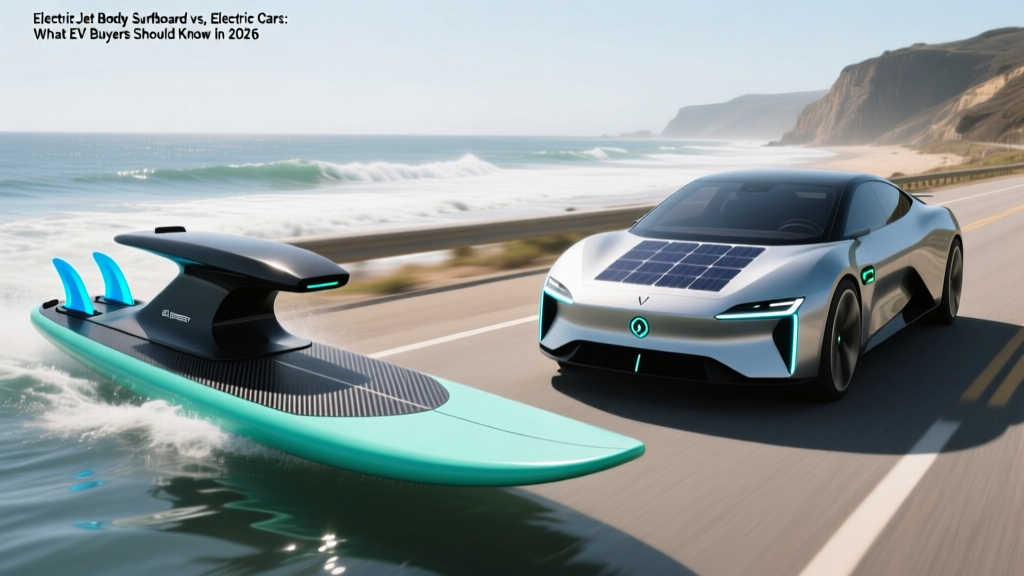
Short answer: An electric jet body surfboard (like the Awake VINGA or similar e-foil/jet board) is a battery-powered personal watercraft that uses a lithium-ion pack and an electric jet pump — not a propeller — for propulsion. While it shares lithium-ion battery DNA with electric cars, the two are very different products: a surfboard battery holds roughly 1–3 kWh and costs $3,000–$8,000, while a 2026 EV like the Hyundai Ioniq 5 carries 63–84 kWh and starts around $42,000 before incentives. If you're researching the electric jet body surfboard out of general interest in electric mobility, this guide explains the tech overlap, the real costs, and what first-time EV buyers should actually focus on when comparing electric cars to gas or hybrid vehicles.
What Is an Electric Jet Body Surfboard (and Why Are EV Shoppers Searching for It)?
The term "electric jet body surfboard" has gained traction among water-sports enthusiasts and tech-curious consumers looking at battery-powered recreation. These devices — most notably the Awake VINGA, which uses a compact electric jet drive integrated into a bodyboard form factor — let riders glide across water at speeds up to 15–20 mph using a rechargeable lithium-ion battery pack.
Here's what powers them:
- Battery: Typically 1.5–3 kWh lithium-ion (NMC chemistry), removable
- Runtime: 20–45 minutes per charge depending on throttle use
- Charge time: 2–4 hours on a standard 120V household outlet (Level 1 equivalent)
- Price range: $3,500–$9,000 depending on model and battery size
- Weight: 55–80 lbs including battery
EV shoppers often encounter these products through algorithm-driven recommendations or tech media roundups about "electric everything." The battery chemistry (NMC lithium-ion) is the same family used in many EVs, but the scale, cost structure, and ownership experience are entirely different. If your real goal is buying an electric car, here's the comparison that matters.
EV vs. Gas vs. Hybrid: The Numbers That Actually Matter
Whether you stumbled here searching for an electric jet body surfboard or you're genuinely weighing an EV purchase, the core question is the same: does battery-powered make financial and practical sense compared to gas or hybrid alternatives?
| Metric | 2026 Hyundai Ioniq 5 (EV) | 2026 Toyota RAV4 Hybrid | 2026 Toyota RAV4 Gas (AWD) |
|---|---|---|---|
| EPA Combined Efficiency | 114 MPGe / 29 kWh/100mi | 39 MPG combined | 30 MPG combined |
| Annual Energy/Fuel Cost | ~$580 (at $0.133/kWh avg) | ~$1,282 (at $3.33/gal) | ~$1,665 (at $3.33/gal) |
| Annual Maintenance Estimate | ~$300 | ~$550 | ~$650 |
| 5-Year Total Energy + Maint. | ~$4,400 | ~$9,160 | ~$11,575 |
| Base MSRP (2026) | $42,600 (SE Std Range) | $33,850 (LE) | $31,900 (LE AWD) |
The EV saves roughly $4,760–$7,175 over five years in fuel and maintenance versus the gas RAV4, based on EPA fueleconomy.gov estimates and national average electricity rates. The gap narrows if you primarily charge on expensive public DC fast chargers (where rates can hit $0.40–$0.55/kWh), but widens if you have access to cheap home electricity or time-of-use rates.
Real-world range reality: The 2026 Ioniq 5 SE Long Range carries a 77.4 kWh usable battery (NMC chemistry) and is EPA-rated at 310 miles. On real-world highway drives at 70–75 mph, expect 250–270 miles. In cold weather (below 30°F), that drops to roughly 220–240 miles due to cabin heating demands and reduced battery efficiency. Plan your road-trip charging stops accordingly.
Real Costs of EV Ownership: The Full Breakdown
One of the most common misconceptions — whether you're comparing an electric jet body surfboard's $5,000 price tag to a car, or comparing an EV to a gas vehicle — is looking only at the sticker price. Here's a realistic 5-year cost breakdown for a mainstream EV.
| Category | 2026 Hyundai Ioniq 5 (EV) | 2026 RAV4 Gas AWD |
|---|---|---|
| Purchase Price (base MSRP) | $42,600 | $31,900 |
| Federal Tax Credit (§30D) | Up to -$7,500 (see eligibility) | $0 |
| Effective Purchase Price | ~$35,100 | $31,900 |
| Home Charger Install (Level 2) | $800–$2,000 | $0 |
| 5-Year Energy/Fuel | $2,900 | $8,325 |
| 5-Year Maintenance | $1,500 | $3,250 |
| 5-Year Insurance (avg) | $9,500 | $7,250 |
| Estimated Depreciation (5yr) | $17,500 | $12,000 |
| 5-Year Total Cost | ~$57,300–$58,500 | ~$62,725 |
The EV can come out ahead on total 5-year cost — but only if you qualify for the full federal §30D tax credit, have access to affordable home charging, and don't face unusually high EV insurance premiums in your state. Insurance for EVs averages 15–25% higher than comparable gas vehicles due to higher repair costs and parts pricing.
Federal Tax Credit: Current 2026 Rules
The §30D credit is not a guaranteed $7,500 for every buyer. Under current IRS rules, eligibility depends on:
- Buyer income caps: $150,000 single / $300,000 joint modified AGI
- MSRP caps: $55,000 for sedans, $80,000 for SUVs/pickups/vans
- Battery sourcing: Critical minerals and battery components must meet phased-in domestic/free-trade-agreement sourcing thresholds (increasing annually)
- Point-of-sale transfer: You can transfer the credit to the dealer at purchase for an immediate price reduction, rather than waiting for tax filing
- Filing requirement: You must file IRS Form 8936 and meet tax liability requirements
Always verify current-year eligibility on the IRS website or with a tax professional before counting on the credit in your budget.
Common EV Misconceptions — Fact-Checked
| Myth | Fact |
|---|---|
| "EV batteries need replacing every few years, like a phone." | Modern NMC and LFP EV batteries are warrantied for 8 years/100,000 miles (minimum 70% capacity retention). Real-world degradation data shows most packs retain 85–92% capacity at 100,000 miles. A full replacement costs $8,000–$18,000 out of warranty but is rarely needed within normal ownership. |
| "Charging takes too long for road trips." | The Ioniq 5 peaks at ~235 kW on DC fast charging (10–80% in ~18 minutes). The Kia EV6 peaks at ~240 kW. With route planning via A Better Routeplanner or the car's built-in nav, road-trip charging adds 20–30 minutes every 2–3 hours of driving. |
| "EVs are worse in cold weather." | Range drops 15–30% in sub-freezing temps — real, but manageable with preconditioning (warming the battery while plugged in) and heat pump systems. Many 2026 EVs include standard heat pumps that cut cabin-heating energy use by 40–50%. |
| "I can't charge at home if I live in an apartment." | This is a real barrier. Roughly 30% of US households lack dedicated parking with outlet access. Solutions include workplace charging, public Level 2 networks (ChargePoint, EVgo), and emerging curbside charging programs in select cities. |
| "The electric grid can't handle mass EV adoption." | Most EVs charge overnight during off-peak hours when grid capacity is underutilized. A single EV adds roughly the same annual load as a central air conditioner. Managed charging and V2G (vehicle-to-grid) technology are being deployed to balance demand. |
First-Time EV Buyer Checklist: What You Actually Need to Know
If you're new to EVs — whether you found this page searching for electric watercraft or you're seriously shopping for your first electric car — here are the practical questions to answer before signing anything:
- Can I charge at home? A dedicated 240V Level 2 circuit (40–48 amp) adds 25–35 miles of range per hour of charging and costs $800–$2,000 installed by a licensed electrician. This single factor determines whether EV ownership is convenient or frustrating.
- What's my real daily mileage? If your round-trip commute is under 80 miles, even a short-range EV (EPA 220–250 miles) will work with nightly home charging. Over 150 miles daily, prioritize 300+ mile EPA range or a PHEV.
- How cold does it get where I live? Below 20°F regularly? Prioritize an EV with a heat pump and preconditioning capability. Budget 20–25% range loss in worst-case winter conditions.
- What's my road-trip frequency? More than 4–5 long trips per year? Verify the vehicle's DC fast-charge speed (kW) and the charging network along your common routes. NACS-equipped vehicles (all new 2025+ models plus Tesla) have access to the Supercharger network — currently the most reliable public DC network in the US.
- Do I qualify for incentives? Check IRS §30D rules for the federal credit, plus your state's DMV or energy office for local rebates. Some states (CA, CO, MA, NY) offer additional $1,000–$5,000 rebates on top of federal credits.
- What's my insurance quote? Get a real quote before purchasing. EV insurance premiums can be $200–$600/year higher than equivalent gas vehicles depending on model, state, and driving record.
Decision Framework: Which Electrified Vehicle Is Right for You?
- Choose a full EV (BEV) if: you have home Level 2 charging access, your daily driving is under 150 miles, you qualify for the federal tax credit, and you take fewer than 6 road trips per year over 300 miles.
- Choose a plug-in hybrid (PHEV) if: you want 25–45 miles of electric-only commuting but also need 400+ mile total range for frequent road trips, or you lack reliable home charging and need gas as a fallback.
- Choose a standard hybrid (HEV) if: you have zero charging access, drive in extreme cold frequently, want zero behavioral change from your gas car, and prioritize lower upfront cost over maximum fuel savings.
- Wait or reconsider if: you live in an apartment with no charging options, your budget is under $25,000 and you need a new vehicle (the used EV market with the §25E credit is an option — up to $4,000 credit on used EVs under $25,000), or your area has very limited public charging infrastructure.
Battery Tech Comparison: Surfboard vs. Car — What's Shared, What's Not
For the technically curious who searched "electric jet body surfboard" and want to understand how its battery tech relates to EVs:
| Spec | E-Jet Body Surfboard | 2026 Hyundai Ioniq 5 | 2026 Tesla Model Y |
|---|---|---|---|
| Battery Capacity | 1.5–3 kWh | 63–77.4 kWh usable | ~60–75 kWh usable |
| Chemistry | NMC (nickel manganese cobalt) | NMC (SK On cells) | LFP (Std Range) / NMC (Long Range) |
| Charge Time (full) | 2–4 hours (120V) | ~5.5–7 hours (Level 2, 240V/48A) | ~6–8 hours (Level 2, 240V/48A) |
| DC Fast Charge | N/A | Up to 235 kW (10–80% ~18 min) | Up to 250 kW (10–80% ~17 min) |
| Battery Warranty | 1–2 years | 10 yr / 100,000 mi (70% retention) | 8 yr / 120,000 mi (70% retention) |
| Replacement Cost | $1,500–$3,000 | $10,000–$16,000 (out of warranty) | $12,000–$18,000 (out of warranty) |
| Thermal Management | Passive (air-cooled) | Active liquid cooling/heating | Active liquid cooling/heating |
The key difference: EV batteries use active liquid thermal management — heating and cooling the cells to maintain optimal temperature during charging and driving. This is why EV batteries degrade slowly over 100,000+ miles, while smaller consumer-device batteries (surfboards, laptops, phones) with passive cooling degrade faster and are cheaper to replace.
The LFP vs. NMC distinction matters for EV buyers: LFP (lithium iron phosphate) batteries, used in the Tesla Model Y Standard Range and some Ford Mustang Mach-E trims, offer longer cycle life and can be charged to 100% daily without accelerating degradation, but are heavier and have lower energy density. NMC batteries offer more range per pound but benefit from staying between 20–80% daily state of charge for longevity.
FAQ: Electric Jet Body Surfboard & EV Ownership Questions
Is an electric jet body surfboard the same technology as an electric car?
They share lithium-ion battery chemistry (typically NMC) and electric motor propulsion, but at completely different scales. A surfboard battery holds 1.5–3 kWh — about 1/25th to 1/50th the capacity of an EV battery. EVs also have sophisticated thermal management, regenerative braking, and DC fast-charging capability that consumer watercraft do not.
How much does it really cost to charge an EV at home versus fueling a gas car?
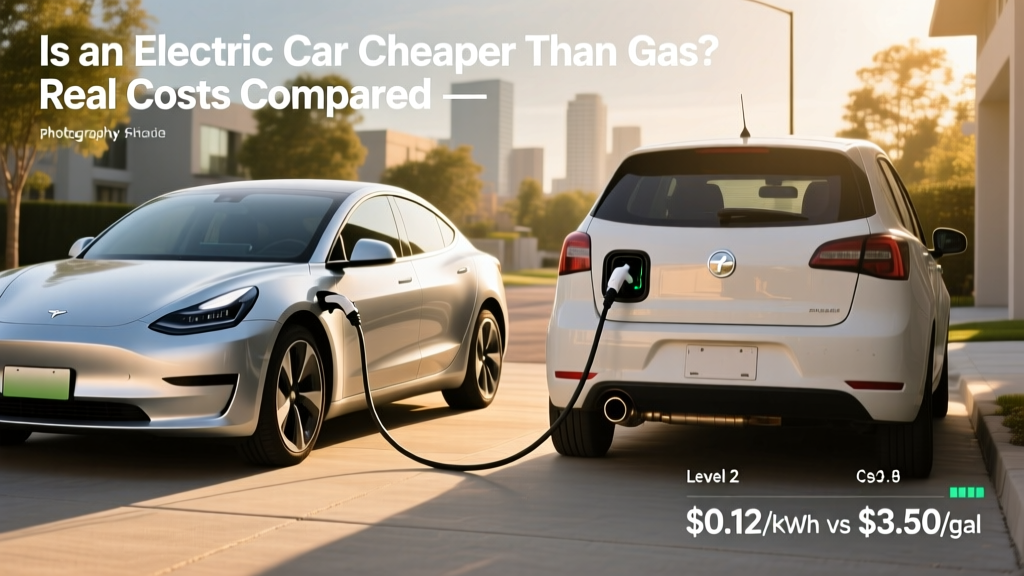
At the US average residential electricity rate of ~$0.16/kWh (EIA 2025 data), charging a 77 kWh battery from empty to full costs roughly $12.32. That delivers about 280 real-world miles. The equivalent gas cost for 280 miles at 30 MPG and $3.33/gallon is $31.08. Home charging saves roughly 60% per mile driven. Public DC fast charging at $0.40–$0.55/kWh narrows that advantage to 15–30% savings.
What should I budget for home Level 2 charger installation?
Expect $800–$2,000 for a standard installation: $400–$700 for a quality Level 2 charger (ChargePoint Home Flex, Emporia Vue, Tesla Wall Connector) and $400–$1,300 for electrician labor, permit, and a new 240V/50A circuit. If your electrical panel needs an upgrade (common in homes built before 1990 with 100A service), add $1,500–$3,500 for a 200A panel upgrade. Always get a licensed electrician's assessment before budgeting.
Do EV batteries degrade quickly in hot or cold climates?
Extreme heat is harder on lithium-ion batteries than cold. Vehicles with active liquid thermal management (virtually all 2026 EVs) mitigate this significantly. Real-world data from Recurrent Auto and other fleet studies show average capacity retention of 88–93% at 100,000 miles for liquid-cooled packs. Cold weather causes temporary range loss (15–30% in sub-freezing temps) but does not cause permanent degradation if the vehicle's thermal management system is functioning.
Can I get the $7,500 federal EV tax credit on any electric car?
No. Under current IRS §30D rules, the credit phases based on battery component sourcing and critical mineral requirements that tighten each year. Additionally, buyer income caps ($150K single / $300K joint), vehicle MSRP caps ($55K sedans / $80K SUVs), and final assembly requirements apply. The credit can now be transferred to the dealer at point of sale for an immediate price reduction. Always verify eligibility on irs.gov and consult a tax professional for your specific situation.