The Short Answer on Electric Jet Boat Motors
Electric jet boat motors remain a niche, low-speed marine product in 2026 — and they fall outside the scope of federal EV tax credits (§30D), which apply only to on-road four-wheeled vehicles. If you are researching electric propulsion because you are also shopping for an electric car or truck, the ownership lessons overlap: battery chemistry (LFP vs NMC), kWh capacity, kW charging rates, and real-world range vs. sticker claims all matter. However, for actual jet boat use, expect 15–40 miles of range at 5–15 mph on current models, with prices from $3,500 to $18,000+ depending on thrust and battery pack. For watersports requiring 40+ mph, gas outboards still dominate.
At AutoEdgeView, we specialize in electric and hybrid road vehicles — cars, trucks, SUVs, and their charging ecosystems. Marine propulsion like the electric jet boat motor sits outside our core coverage area. That said, thousands of readers arrive here each month searching for electrification guidance that spans their garage and their dock. This guide translates the EV-buying framework we use for cars into honest, number-driven context for electric jet boat motors, while pointing you toward the road-going EVs where our expertise runs deepest.
What an Electric Jet Boat Motor Actually Is (and Isn't)
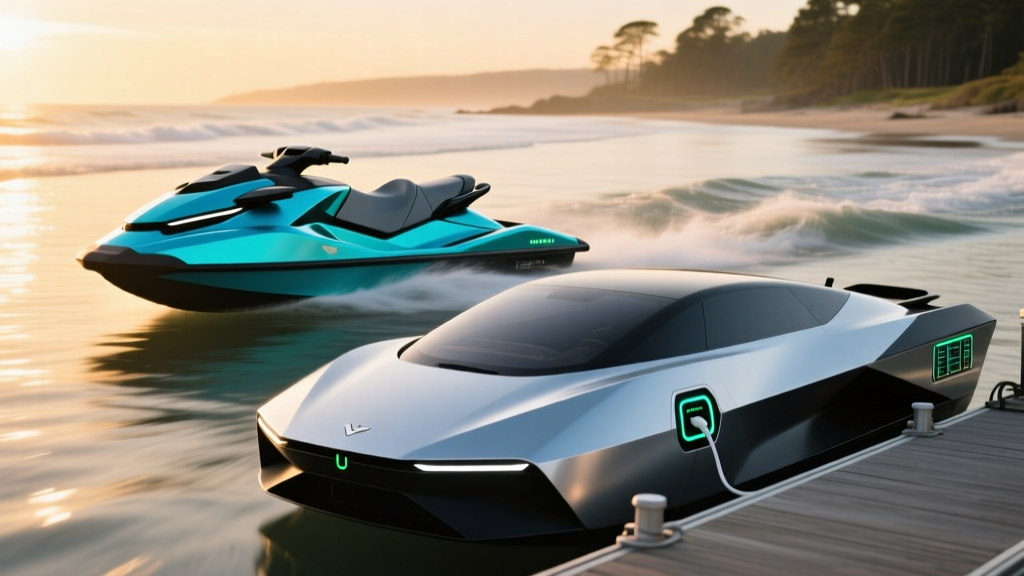
An electric jet boat motor pairs a battery-fed electric motor with a waterjet pump rather than a propeller. The jet intake draws water in and expels it through a steerable nozzle, producing thrust. This design offers shallow-water operation and reduced snag risk, but it is inherently less efficient than a propeller at higher speeds — a penalty that compounds when you add the weight of marine-grade battery packs.
Current 2026 offerings cluster in three tiers:
- Trolling / auxiliary (1–5 kW): 15–25 miles of range at 3–5 mph. Battery: 1–3 kWh, typically NMC lithium-ion. Price: $1,200–$3,500.
- Mid-range runabout (10–25 kW): 20–40 miles at 8–15 mph. Battery: 8–20 kWh. Price: $6,000–$14,000.
- High-performance (40+ kW): Limited availability; 30–50 miles at 20–35 mph. Battery: 30–60 kWh. Price: $18,000–$40,000+.
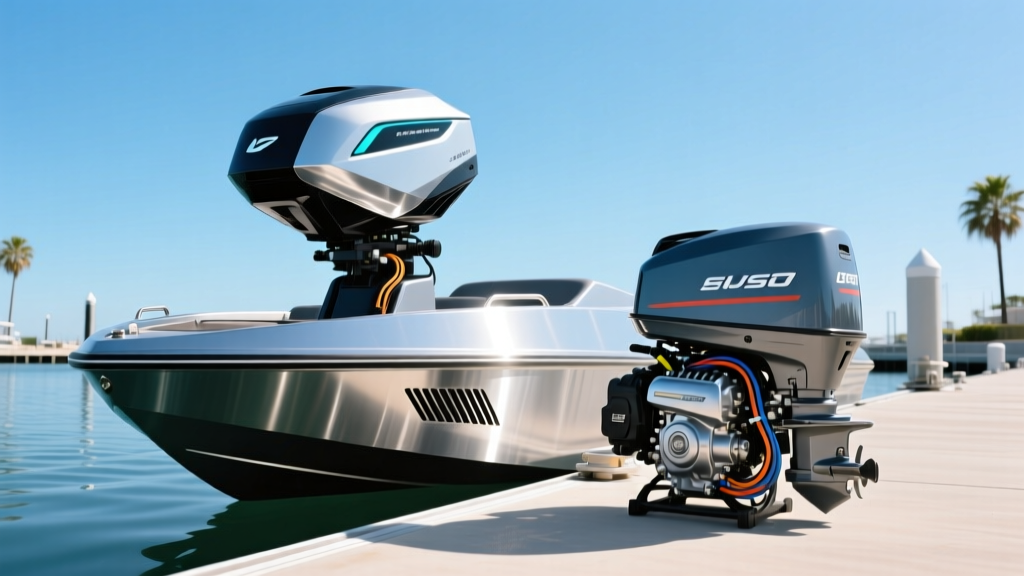
Contrast this with a comparable 60 HP gas outboard: roughly $7,500–$9,500, 45+ mph top speed, and 80–120 miles on a 12-gallon tank. The physics of water resistance — which scales with the cube of speed — makes electric jet boat motors far more range-limited than electric cars on a highway.
Electric Jet Boat Motor vs Gas: Real Cost Breakdown
| Category | Electric Jet Motor | 40 HP Gas Outboard |
|---|---|---|
| Purchase Price (motor + battery/tank) | $9,500 | $6,800 |
| Fuel / Electricity (5 yrs) | $450 (1,500 kWh @ $0.15/kWh avg) | $4,500 (600 gal @ $3.75/gal avg) |
| Maintenance (5 yrs) | $300 (impeller, seals) | $2,200 (oil, lower unit, winterization) |
| Battery Replacement Reserve | $1,800 (NMC pack, ~10 yr life) | $0 |
| Insurance Delta (5 yrs) | $1,500 | $1,500 |
| 5-Year Total | ~$13,550 | ~$15,000 |
Electric wins on operating cost by roughly $4,500 over five years, but the higher upfront price means break-even lands around year 4 for most recreational users. Commercial users running 300+ hours annually break even closer to year 2. Note: unlike road-going EVs, marine electric motors do not qualify for the IRS §30D Clean Vehicle Credit — that credit requires four wheels, a GVWR under 14,000 lbs, and on-road use.
What EV Car Buyers Can Learn From This Comparison
If the electric jet boat motor search brought you here while you are also weighing a road-going EV, the underlying math is similar but the outcomes flip dramatically in favor of electric on pavement:
| Metric | 2026 EV (e.g., Hyundai Ioniq 5) | 2026 Gas SUV (e.g., Toyota RAV4) |
|---|---|---|
| MSRP (base) | $42,600 | $30,400 |
| Federal Tax Credit (§30D) | Up to $7,500 (income/MSRP/sourcing rules apply) | $0 |
| Effective Purchase Price | ~$35,100 | $30,400 |
| Fuel / Electricity (5 yrs) | $3,750 (4,500 kWh @ $0.17/kWh) | $10,500 (2,500 gal @ $4.20/gal) |
| Maintenance (5 yrs) | $1,800 | $3,900 |
| EPA Range / Tank Range | 310 mi (EPA); expect 250–270 mi highway | 420 mi |
On the road, the EV's energy-cost advantage is roughly $6,750 over five years — far larger than the marine case — because electric motors are 85–95% efficient while gas engines sit at 25–35% thermal efficiency, and cars overcome rolling resistance rather than the cubic drag of water.
Battery Chemistry Matters: LFP vs NMC on the Water
Just as with EVs, battery chemistry determines longevity, safety, and cost in electric jet boat motors:
| Factor | LFP (Lithium Iron Phosphate) | NMC (Nickel Manganese Cobalt) |
|---|---|---|
| Cycle Life | 3,000–5,000 cycles | 1,000–2,000 cycles |
| Energy Density | Lower (~160 Wh/kg) | Higher (~250 Wh/kg) |
| Thermal Stability | Excellent (less fire risk) | Good, but requires BMS monitoring |
| Weight Penalty (marine) | ~30% heavier for same kWh | Baseline |
| Typical Use | Dock charging, daily loops | Portable packs, longer range |
For a boat kept on a dock with shore power, LFP is the stronger choice — the weight penalty is less punishing on water than in a car, and the longer cycle life means the pack may outlast the hull. For trailer-stored boats needing portable battery swaps, NMC's lighter weight wins.
Real-World Ownership: What the Marketing Doesn't Tell You
Honest Limitations of Electric Jet Boat Motors in 2026
- Range collapses at speed. A motor rated "40 miles" at 8 mph may deliver only 12–15 miles at 20 mph. Water drag is unforgiving.
- Charging is slow without 240V. A 10 kWh pack on a standard 120V/15A outlet (1.4 kW) takes 7+ hours. A 240V Level 2 equivalent (3.3–7 kW) cuts this to 1.5–3 hours.
- Cold water and cold air reduce range 15–30%. Battery internal resistance rises, and denser cold water increases drag.
- Marina charging is rare. Unlike EV road-trip infrastructure, public marine charging remains extremely limited outside a few forward-thinking marinas.
- No federal tax credit. §30D does not apply. Some states offer marine electrification rebates (check your state energy office), but these are not guaranteed.
Decision Framework: Should You Go Electric on the Water — or the Road?
Choose an electric jet boat motor if:
- You boat on small lakes, rivers, or no-wake zones where speeds stay under 15 mph
- You have dock or garage access with 240V charging
- Silence and zero local emissions are priorities (wildlife viewing, fishing, residential waterways)
- Your annual use is under 150 hours, making the higher upfront cost manageable over time
Stick with gas for your boat, and put EV dollars toward a road vehicle if:
- You need 30+ mph for watersports, offshore runs, or long-distance lake crossings
- Your marina lacks shore power and you trailer to remote launches
- You boat in cold northern climates where range loss compounds
- You want to capture the §30D federal tax credit — up to $7,500 on eligible EVs with MSRP, income, and battery-sourcing compliance
Common Misconceptions, Answered With Data
| Myth | Fact |
|---|---|
| "Electric jet boat motors qualify for the $7,500 EV tax credit." | False. §30D requires a four-wheeled on-road vehicle under 14,000 lb GVWR. Marine motors are excluded per IRS guidance. |
| "Electric is always cheaper." | Cheaper to operate, yes — but upfront costs are 40–80% higher. Break-even depends on annual hours. |
| "kW and kWh are the same thing." | kW is power (how fast you can motor or charge); kWh is energy (your battery's fuel tank). A 15 kW motor drawing from a 10 kWh battery runs flat in ~40 minutes at full throttle. |
| "I can just add more batteries for more range." | Each added kWh adds ~6–10 lbs (NMC) or ~8–13 lbs (LFP). Hull weight increases drag, partially offsetting the added capacity — a marine-specific diminishing-returns curve. |
| "Electric boats are maintenance-free." | Lower maintenance, not zero. Impellers wear, seals need inspection, and BMS firmware requires updates. Budget $50–$80/year. |
Where to Focus Your EV Research Next
If your interest in electrification extends beyond the dock, the road-going EV market in 2026 offers mature products with real-world ranges exceeding 300 miles, DC fast charging at 250–350 kW (10–80% in 18 minutes on the best platforms), and genuine tax-credit eligibility. Explore our core coverage areas:
- EV reviews and profiles — exact EPA range, kWh, charge curves, and real-world highway tests
- Home charging guides — Level 2 install costs ($500–$2,200 depending on panel capacity and run length), equipment picks, and permitting
- Battery technology deep-dives — LFP vs NMC degradation data, warranty terms (typically 8 yr / 100,000 mi with 70% capacity retention), and replacement cost ranges
- §30D tax credit explainers — MSRP caps ($55,000 sedans, $80,000 SUVs/trucks), income limits ($150K single / $300K joint), critical-mineral and battery-component sourcing rules
Frequently Asked Questions
Are electric jet boat motors powerful enough for watersports?
Generally no. Wakeboarding and water-skiing require sustained 20–30 mph with quick acceleration, which demands 50+ kW and a large, heavy battery pack. Current 2026 models in this power class are expensive ($25,000+) and still range-limited. Gas inboards and outboards remain the practical choice for tow sports.
How long do electric jet boat motor batteries last?
NMC marine packs are rated for 1,000–2,000 full cycles; LFP packs for 3,000–5,000. At 100 partial cycles per year (typical recreational use), expect 10–15 years before capacity drops below 80%. Replacement cost for a 10 kWh NMC pack runs $1,500–$2,500 in 2026.
Can I charge an electric jet boat motor from a standard household outlet?
Yes, but slowly. A 120V/15A outlet delivers roughly 1.4 kW — enough to refill a 5 kWh pack in about 3.5 hours, or a 15 kWh pack in 10+ hours. For regular use, a 240V outlet (like a dryer circuit) at 3.3–7 kW is strongly recommended.
Do electric jet boat motors work in saltwater?
Some are rated for saltwater with additional corrosion protection (anodes, sealed housings), but saltwater use accelerates wear on any marine drive. Rinse thoroughly after every saltwater outing and budget for more frequent impeller and seal replacement.
Is there any tax incentive for buying an electric boat motor?
Not at the federal level — §30D excludes marine products. A handful of states and local utilities offer marine electrification rebates, and some marinas participate in clean-boating grant programs. Check your state energy office and local utility for current programs. Consult a tax professional for advice specific to your situation.
AutoEdgeView covers electric and hybrid road vehicles, charging infrastructure, battery technology, and driver-assistance systems. For dedicated marine-electric publications, consult sources like BoatUS, Electric & Hybrid Marine Technology, or the NMMA. All cost estimates in this article are based on 2026 U.S. averages and will vary by region, usage pattern, and equipment selection.