Quick Answer: Are There Electric Jeeps?
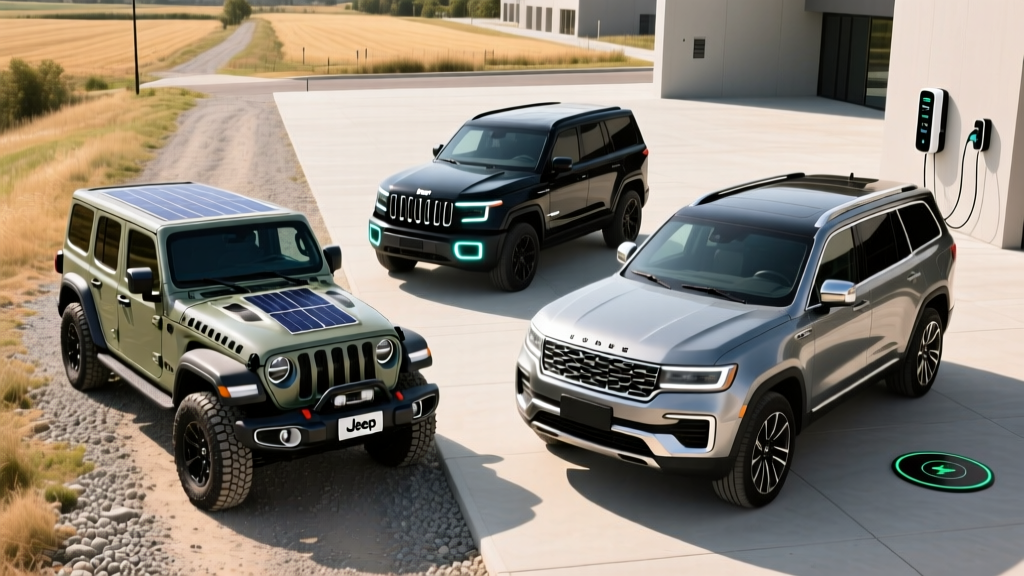
As of the 2026 model year, Jeep offers three electrified paths: the Wrangler 4xe (plug-in hybrid, 22 miles electric-only, $49,995+), the Wagoneer S (fully electric SUV, ~300 miles EPA range, $65,200+), and the Jeep Recon (fully electric off-roader, ~320 miles EPA range, starting ~$55,000 estimated). If you need a zero-emissions daily driver with home charging, the Wagoneer S or Recon is your pick. If you tow heavy, hit remote trails, or lack reliable charging, the Wrangler 4xe PHEV remains the pragmatic bridge. Here's the data to decide which electrified Jeep earns your garage spot.
The 2026 Electric Jeep Lineup at a Glance
Jeep's electrification strategy splits into two camps: plug-in hybrids wearing the "4xe" badge and full battery-electric vehicles (BEVs) built on Stellantis's STLA platforms. Understanding the difference is the first buying decision you'll make.
| Spec | Wrangler 4xe (PHEV) | Wagoneer S (BEV) | Recon (BEV) |
|---|---|---|---|
| Powertrain | 2.0L turbo I-4 + 2 e-motors | Dual-motor AWD BEV | Dual-motor AWD BEV |
| Combined HP / lb-ft | 375 hp / 470 lb-ft | 600 hp / 617 lb-ft | ~550 hp (est.) |
| Battery (usable) | 17.3 kWh (NMC) | 100.5 kWh (NMC) | ~100 kWh (NMC, est.) |
| EPA Electric Range | 22 mi (EV) / 370 mi total | ~300 mi | ~320 mi (est.) |
| EPA MPGe / Combined MPG | 49 MPGe / 20 MPG (gas) | ~95 MPGe | ~90 MPGe (est.) |
| Max DC Fast Charge | N/A (no DC fast) | ~175 kW peak | ~175 kW peak (est.) |
| Level 2 Charge Rate | 7.2 kW | 11.5 kW | 11.5 kW (est.) |
| 10–80% DCFC Time | N/A | ~27 min | ~28 min (est.) |
| 0–60 mph | 6.0 sec | 3.4 sec | ~4.0 sec (est.) |
| Towing Capacity | 3,500 lbs | ~4,000 lbs | ~5,000 lbs (est.) |
| Base MSRP | $49,995 | $65,200 | ~$55,000 (est.) |
| §30D Tax Credit Eligible | Up to $3,750 | Up to $7,500* | Up to $7,500* |
| Powertrain Warranty | 5 yr / 60,000 mi | 5 yr / 60,000 mi | 5 yr / 60,000 mi (est.) |
| Battery Warranty | 8 yr / 100,000 mi | 8 yr / 100,000 mi | 8 yr / 100,000 mi (est.) |
* Federal §30D credit eligibility depends on buyer income caps, MSRP limits (vans/SUVs ≤ $80,000), and battery critical-mineral/component sourcing rules that shift annually. Confirm current-year rules at IRS.gov or with a tax professional before purchase. Point-of-sale transfer is available at participating dealers.
Wrangler 4xe: The PHEV Compromise That Works
The Wrangler 4xe has been Jeep's electrified sales leader for a reason: it doesn't ask you to change your habits. Plug it in overnight on a standard 120V outlet (Level 1) and you'll recover roughly 10 miles of electric range in 8 hours — enough for short commutes. Install a 240V Level 2 home charger (7.2 kW) and a full charge takes about 2.5 hours.
Real-World Range: What the EPA Sticker Doesn't Tell You
EPA: 22 miles electric-only | 370 miles total (gas + electric)
Real-world highway (70 mph, mild weather): ~18–19 electric miles; ~330 total
Cold weather (below 30°F): ~14–16 electric miles; engine kicks on sooner for cabin heat
Heavy towing / off-road: Electric range drops to single digits; operate as hybrid
The 17.3 kWh battery (roughly 14–15 kWh usable to protect longevity) is small by BEV standards. That's intentional — it keeps weight and cost down while covering most suburban commutes. Once depleted, the 2.0-liter turbo takes over, returning about 20 MPG combined. That's roughly 2–3 MPG worse than a conventional gas Wrangler due to the battery's extra mass, a trade-off worth acknowledging.
Who the 4xe Actually Fits
The Wrangler 4xe shines for owners who: drive less than 25 miles round-trip on weekdays; have access to Level 2 home charging; want weekend trail capability without range planning; or tow up to 3,500 lbs without BEV range collapse. It's also the only electrified Jeep with solid front and rear axles, sway-bar disconnect, and the aftermarket ecosystem Wrangler owners expect.
Wagoneer S: Jeep's First True Electric SUV
The Wagoneer S is Jeep's entry into the premium electric SUV segment, built on the STLA Large platform. At 600 horsepower and a 3.4-second 0–60 time, it's the quickest production Jeep ever. But speed is the least interesting thing about it — the ownership experience is what matters.
Charging the Wagoneer S: Home and Road
| Level | Power | Miles Added per Hour | Full Charge Time (0–100%) |
|---|---|---|---|
| Level 1 (120V household) | ~1.4 kW | ~4 mi/hr | ~72 hours |
| Level 2 (240V home, 48A) | 11.5 kW | ~35 mi/hr | ~9 hours |
| DC Fast Charge (peak) | ~175 kW | ~400+ mi/hr (at peak) | 10–80% in ~27 min |
A critical reality about DC fast charging: the Wagoneer S will not sustain 175 kW for the entire session. Expect peak power between roughly 10–40% state of charge (SoC), tapering to ~100 kW by 60%, and ~50 kW above 80%. This charge curve taper is why we measure 10–80% times rather than 0–100%. Plan road-trip stops around 15–25 minutes at a reliable 150+ kW station — networks like Tesla Supercharger (now open to non-Tesla BEVs via NACS adapter or native port), Electrify America, and EVgo.
Real-World Range Expectations
EPA: ~300 miles
Highway (75 mph, 70°F): ~250–270 miles
Cold weather (20°F, heater on): ~210–230 miles (30% loss is normal for NMC packs without aggressive heat-pump preconditioning)
Mountain / high-elevation passes: Regen on descents recovers 5–10% — net impact less severe than gas MPG drops
The Wagoneer S's 100.5 kWh NMC (nickel-manganese-cobalt) pack offers strong energy density but is more sensitive to cold-weather range loss than LFP chemistry. Jeep includes battery preconditioning for DC fast charging — activate it via the navigation system 20–30 minutes before arriving at a charger to warm the pack and hit peak charge rates.
Jeep Recon: The Electric Wrangler Alternative
Positioned as the electric spiritual successor to Wrangler capability, the Recon is built on the STLA Large platform and features standard all-wheel drive, electronic locking differentials, and underbody protection plates. It's the first BEV Jeep designed from the ground up for off-road use.
As an announced/preliminary model ramping into 2026 production, final EPA figures and MSRP remain subject to change. Jeep has targeted approximately 320 miles of range and a starting price near $55,000 — undercutting the Wagoneer S while offering more trail hardware. Removable doors and a power-folding soft-top echo Wrangler open-air tradition, though the Recon uses unibody construction rather than body-on-frame.
If you're cross-shopping the Recon, the key question is whether unibody BEV architecture can match a Wrangler Rubicon's articulation and durability on technical trails. Early reviews suggest competent moderate terrain performance, but rock-crawling purists will note the Recon's ~5,500 lb curb weight and low ground clearance relative to a lifted Wrangler.
Electric Jeep vs Gas Jeep: The Ownership Cost Reality
Let's compare the total cost of ownership (TCO) over 5 years / 75,000 miles for the Wrangler 4xe (PHEV) versus a conventional gas Wrangler Unlimited Rubicon, and the Wagoneer S (BEV) versus a gas Grand Cherokee L. This is where the math either works for you or doesn't.
| Cost Category (5 yr / 75k mi) | Wrangler 4xe (PHEV) | Wrangler Gas (Rubicon) | Wagoneer S (BEV) | Grand Cherokee L (Gas) |
|---|---|---|---|---|
| Purchase Price (base MSRP) | $49,995 | $53,090 | $65,200 | $49,595 |
| Est. Federal Tax Credit | −$3,750 | $0 | −$7,500* | $0 |
| Net Purchase | $46,245 | $53,090 | $57,700 | $49,595 |
| Fuel / Electricity | $5,200 | $9,800 | $3,400 (home L2) | $9,200 |
| Maintenance | $3,100 | $4,500 | $1,800 | $4,200 |
| Insurance (avg) | $8,500 | $7,800 | $9,800 | $7,500 |
| Est. Depreciation | $18,000 | $19,500 | $24,000 | $18,500 |
| 5-Year TCO | $81,045 | $94,690 | $96,700 | $88,995 |
Assumptions: $3.50/gal gas, $0.14/kWh home electricity, 70% home / 30% public DCFC mix for BEV, 80% electric commuting for 4xe. Insurance premiums for BEVs run 15–25% higher on average due to repair cost data from IIHS. Depreciation estimates based on current EV resale trends; BEV depreciation remains higher than ICE but is narrowing. Your actual costs will vary by state, driving pattern, and utility rate.
The headline: the Wrangler 4xe beats its gas counterpart by roughly $13,600 over five years, primarily through fuel savings and the tax credit. The Wagoneer S is more expensive overall than the gas Grand Cherokee L due to higher insurance, depreciation, and purchase price — savings emerge in years 6–8 as fuel and maintenance gaps compound.
Home Charging Installation: The Hidden Cost
If you don't already have a 240V outlet in your garage or driveway, budget for a Level 2 home charger installation. Here's what that actually costs:
| Item | Cost Range | Notes |
|---|---|---|
| Level 2 Charger (hardware) | $300–$700 | ChargePoint Home Flex, Emporia, Wallbox |
| Electrician labor | $500–$2,000 | Depends on panel proximity, conduit run length |
| Electrical permit | $50–$300 | Varies by municipality |
| Panel upgrade (if needed) | $1,500–$4,000 | Required if existing panel is 100A or maxed out |
| Total (typical install) | $850–$3,000 | Without panel upgrade |
| Total (with panel upgrade) | $2,350–$7,000 | Older homes most likely to need this |
Always get a licensed electrician to assess your panel capacity before purchasing a charger. A 200-amp panel with spare breaker slots handles a 48-amp (11.5 kW) Level 2 circuit without issue in most modern homes. Homes with 100-amp service or heavy existing loads (electric heat, hot tubs) may need an upgrade.
Common Electric Jeep Myths — Addressed With Data
| Myth | Fact |
|---|---|
| "Electric Jeeps can't off-road." | The Recon includes locking differentials, low-range gearing simulation, and skid plates. The 4xe's instant electric torque is actually an advantage on technical rock crawls. However, extreme remote trails without any charging infrastructure remain a PHEV/gas scenario. |
| "The battery will need replacing in 5 years." | Jeep warranties the traction battery for 8 years / 100,000 miles against capacity loss below 70%. NMC degradation data from similar Stellantis packs shows ~10–12% capacity loss at 100,000 miles under normal use. Replacement costs (if out of warranty) run $12,000–$18,000 for BEV packs. |
| "I can tow just as far on electric." | Towing a 3,000+ lb trailer cuts BEV range by 35–50%. The Wagoneer S towing 4,000 lbs on the highway may deliver only 150–170 real-world miles between charges. The 4xe PHEV is far more practical for regular towing. |
| "Charging takes too long for road trips." | At 175 kW, the Wagoneer S adds ~150 miles in 20 minutes. On a 600-mile trip, plan two 25-minute stops — comparable to gas-station restroom and food breaks. The issue isn't time; it's charger reliability. Use PlugShare to vet station uptime on your route. |
| "The tax credit is a guaranteed $7,500." | Eligibility requires: buyer AGI below $150K single / $300K joint; SUV MSRP ≤ $80,000; and battery components and critical minerals meeting annual sourcing thresholds that tighten each year. Many buyers qualify for partial credits or none at all. Verify at IRS.gov. |
Decision Framework: Which Electric Jeep Is Right for You?
Choose the Wrangler 4xe (PHEV) if:
- Your daily commute is under 25 miles and you can charge at home
- You tow regularly (boats, campers, trailers up to 3,500 lbs)
- You drive remote trails where charging infrastructure doesn't exist
- You want the Wrangler aftermarket (bumpers, lifts, tires) to remain compatible
- You're not ready to fully commit to BEV ownership
Choose the Wagoneer S (BEV) if:
- You want a premium, fast daily-driver SUV with zero tailpipe emissions
- You have reliable Level 2 home charging and your commute is under 100 miles
- You prioritize acceleration, refinement, and tech over off-road hardware
- You can absorb higher insurance premiums and faster initial depreciation
- Your road trips average under 300 miles between stops
Choose the Recon (BEV) if:
- You want BEV efficiency with genuine off-road capability
- You're open to unibody architecture and don't need solid axles
- Open-air driving (removable doors, folding roof) matters to you
- You're comfortable buying a first-year model with preliminary specs
Stick with a gas Jeep if:
- You live in an apartment or street-park with zero charging access
- Your typical drive exceeds 350 miles in remote areas
- You tow over 5,000 lbs regularly
- Your budget is under $45,000 and used EV options don't fit
What First-Time Electric Jeep Buyers Must Know
If this is your first electrified vehicle, these practical realities matter more than any spec sheet:
1. kW and kWh are not the same thing. kWh measures battery capacity (how much energy the tank holds). kW measures charge rate (how fast the hose fills it). A 100 kWh battery charging at 175 kW doesn't fill in 34 minutes — the charge curve tapers as the battery fills, protecting cell health.
2. Preconditioning is non-negotiable for fast charging. Navigate to your DC fast charger using the vehicle's built-in nav. This activates battery preconditioning, warming the pack to optimal temperature. Skip this step in cold weather and your 175 kW peak may drop to 50 kW — tripling your stop time.
3. The 80% rule. Lithium-ion batteries charge fastest from 10–80% SoC. Above 80%, charging slows dramatically to protect the cells. On road trips, charge to 80% and drive on rather than waiting for a full battery. Daily home charging to 80% (not 100%) also extends long-term battery health.
4. Your utility rate determines your "fuel" cost. At $0.14/kWh (national average), the Wagoneer S costs roughly $14 to "fill" its 100.5 kWh pack for ~300 miles — about $0.047/mile. Compare that to a gas Grand Cherokee at 22 MPG and $3.50/gal: $0.159/mile. But if your utility charges $0.28/kWh or you rely on public DCFC at $0.40–$0.55/kWh, the savings shrink significantly. Check your utility's EV time-of-use rates — many offer $0.08–$0.10/kWh overnight charging.
5. Cold weather is real, and it's quantifiable. Expect 20–30% range loss below freezing in any BEV. The battery uses energy to heat itself and the cabin. A heat pump (standard on the Wagoneer S) reduces but doesn't eliminate this loss. If you live in Minnesota, Montana, or New England, size your range expectations accordingly — a 300-mile EPA rating becomes ~220 miles in January.
Frequently Asked Questions
Is there a fully electric Jeep Wrangler?
Not yet. The current Wrangler is available only as the 4xe plug-in hybrid or conventional gas. The Recon is the closest electric equivalent — it shares Jeep's off-road DNA but uses unibody construction and is a separate model, not a Wrangler variant. Jeep has not announced a battery-electric Wrangler for the 2026 model year.
Does the Wrangler 4xe qualify for the $7,500 federal tax credit?
The Wrangler 4xe qualifies for up to $3,750 under current §30D rules, not the full $7,500, because its battery sourcing and critical-mineral content may only partially meet annual thresholds. The full credit amount changes yearly as sourcing requirements tighten. Always verify eligibility at IRS.gov and confirm with your dealer's point-of-sale transfer process.
How long do Jeep EV batteries last?
Jeep warranties the high-voltage traction battery for 8 years or 100,000 miles against degradation below 70% of original capacity. Real-world data from similar NMC packs in the Stellantis lineup shows approximately 10–12% capacity loss at 100,000 miles. Many packs exceed 150,000 miles before approaching the 70% threshold. To maximize longevity: avoid frequent DC fast charging above 80%, don't let the battery sit at 0% or 100% for extended periods, and use scheduled preconditioning.
Can I charge an electric Jeep at a Tesla Supercharger?
Yes. Tesla has opened its Supercharger network to non-Tesla BEVs. The Wagoneer S and Recon use the NACS (North American Charging Standard) connector or can access Tesla stations via an approved adapter. The Wrangler 4xe, as a PHEV, charges only via J1772 Level 1/Level 2 and cannot use DC fast chargers including Superchargers.
What happens if I run out of charge on the trail?
In the Wagoneer S or Recon (BEVs), a depleted battery means a flatbed tow — there's no backup gas engine. Plan off-road excursions with range buffers and know your nearest charger. In the Wrangler 4xe, the gas engine automatically engages when the battery depletes, giving you the full 370-mile total range. For remote overlanding, the 4xe (or a gas Wrangler) remains the safer choice.
Are electric Jeeps more expensive to insure?
Yes, typically 15–25% more than their gas equivalents. Insurers cite higher repair costs, specialized parts, and battery replacement risk. The Wagoneer S, with a $65,200 MSRP and premium positioning, will carry higher premiums than a base Wrangler. Get quotes from at least three insurers before purchasing — some now offer EV-specific discounts for safe-driving telematics.
Sources: EPA efficiency data from fueleconomy.gov; federal tax credit rules from IRS.gov; manufacturer specifications from Jeep/Stellantis press materials. Recon specifications are preliminary estimates based on manufacturer announcements and may change at production. Always confirm final specs, pricing, and credit eligibility with your dealer before purchase.