Quick Answer: What Is an "Electric Hydrafoil" and Should You Buy One?
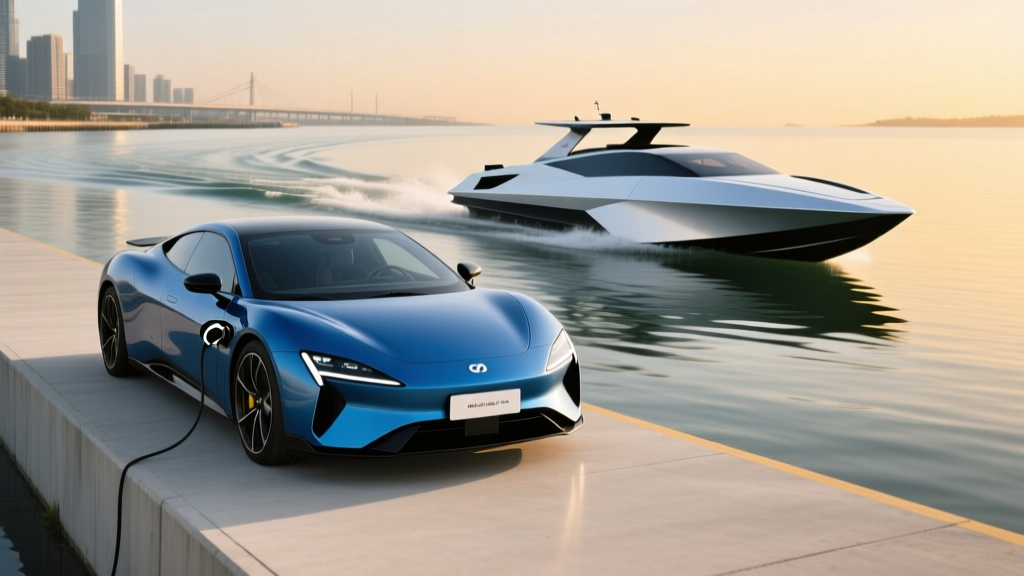
The term "electric hydrafoil" is a common misspelling of electric hydrofoil — a battery-powered boat that uses submerged wings (foils) to lift its hull above water, reducing drag and enabling high speeds with relatively small battery packs. Popular examples include the Candela C-8 (starting around $390,000) and the Navier N30. These are recreational and commercial marine vessels — not automobiles.
If you landed here researching electrified transportation, you likely fall into one of two camps:
- You're curious about electric hydrofoils as a recreational purchase or investment and want to understand costs, range, and practicality.
- You're actually shopping for an electric vehicle (EV) and the search algorithm brought you here.
This guide addresses both. We'll break down what electric hydrofoils actually cost and deliver, then pivot to a concrete EV buying framework so you can decide where your electrification dollars make the most sense in 2026.
Electric Hydrofoil Basics: Range, Speed, and Battery Specs
Electric hydrofoils use the same lithium-ion battery chemistry found in EVs — typically NMC (nickel manganese cobalt) cells — but in a marine environment where weight and waterproofing are paramount. Here's what the leading models offer:
| Spec | Candela C-8 (2025/2026) | Navier N30 | Typical Mid-Range EV (e.g., Tesla Model Y) |
|---|---|---|---|
| Battery Capacity | 69 kWh (NMC) | ~48 kWh (NMC) | 75 kWh usable (NMC) |
| Range | ~57 nautical miles at 22 knots | ~75 nautical miles at cruise | 310–330 miles (EPA) |
| Top Speed | 27 knots (~31 mph) | 35 knots (~40 mph) | 0–60 mph in 4.8 sec |
| Charge Time (DC Fast) | ~1.2 hours (50 kW peak) | ~1 hour (DC) | 10–80% in ~20 min (250 kW) |
| Base Price | ~$390,000 | ~$350,000 | ~$44,990 (Model Y Long Range) |
| Annual Operating Cost | ~$800–$1,500 (electricity + haul-out) | ~$700–$1,200 | ~$600–$900 (electricity) |
The hydrofoil advantage is efficiency: by lifting the hull out of the water, drag drops by roughly 80%, allowing a 69 kWh battery to push a 28-foot boat over 50 nautical miles. That's roughly equivalent to an EV achieving 5+ miles per kWh — something no road vehicle can match. But the trade-off is extreme upfront cost and niche utility.
Cost Comparison: Electric Hydrofoil vs EV vs Gas Car
If you have $40,000–$400,000 earmarked for electrified transport, here's how the options stack up over five years. This table assumes 12,000 miles/year for cars and 200 hours/year on the water for hydrofoils.
| Cost Category | Electric Hydrofoil (Candela C-8) | EV (Tesla Model Y LR AWD) | Gas Car (Toyota RAV4 AWD) |
|---|---|---|---|
| Purchase Price | $390,000 | $44,990 | $32,000 |
| Federal Tax Credit (§30D) | $0 (marine, not eligible) | Up to $7,500 (if eligible) | $0 |
| 5-Year Energy Cost | ~$5,000 (electricity) | ~$3,800 ($0.13/kWh avg) | ~$9,500 (gas at $3.50/gal, 28 MPG) |
| 5-Year Maintenance | ~$8,000 (haul-outs, antifouling, systems) | ~$2,000 (tires, cabin filter, fluid top-offs) | ~$4,500 (oil, brakes, transmission, belts) |
| Insurance (Annual Avg) | $4,000–$7,000 | $1,800–$2,400 | $1,200–$1,600 |
| 5-Year Total Cost of Ownership | ~$430,000+ | ~$55,000–$58,000 | ~$55,000–$58,000 |
| Depreciation (5-Year Est.) | 30–40% (niche market) | 40–50% | 45–55% |
The numbers reveal a clear picture: an electric hydrofoil is a luxury recreational purchase, not a transportation alternative. A Model Y and a RAV4 cost nearly the same over five years, but the EV eliminates tailpipe emissions and offers instant torque. The hydrofoil is a weekend toy — an extraordinary one, but a toy nonetheless.
EV vs Gas in 2026: The Real Numbers for Car Buyers
If your actual goal is choosing between an EV, a hybrid, or a gas car, here's the data-driven breakdown. We'll use three popular 2026 models as stand-ins:
| Metric | 2026 Hyundai Ioniq 5 (EV) | 2026 Toyota RAV4 Hybrid (HEV) | 2026 Honda CR-V (Gas) |
|---|---|---|---|
| MSRP (Base) | $42,600 | $33,500 | $31,500 |
| EPA Range / MPG | 318 miles (84 kWh NMC) | 41 MPG combined | 30 MPG combined |
| MPGe | 114 MPGe | N/A | N/A |
| 0–60 mph | 5.1 sec (RWD) / 3.5 sec (Dual Motor) | 7.4 sec | 7.8 sec |
| Fuel/Energy Cost per Mile | $0.042 (at $0.13/kWh) | $0.096 (at $3.50/gal) | $0.117 (at $3.50/gal) |
| DC Fast Charge (10–80%) | ~18 min at 240 kW peak | N/A | N/A |
| Battery/Powertrain Warranty | 10 yr / 100,000 mi | 10 yr / 150,000 mi (hybrid battery) | 5 yr / 60,000 mi |
| §30D Federal Tax Credit | Up to $7,500 (eligibility varies) | $0 (HEV not eligible) | $0 |
The Ioniq 5's real-world highway range drops to roughly 260–280 miles in warm weather and 230–250 miles in freezing temperatures. The 240 kW peak DC charge rate tapers above 80% State of Charge, so plan 18 minutes for a 10–80% session, not a full charge. These are the numbers that matter for road trips — not the EPA sticker alone.
Source: fueleconomy.gov for EPA data; irs.gov for §30D credit rules.
Real-World Ownership: What First-Time EV Buyers Must Know
Whether you're eyeing a hydrofoil or an Ioniq 5, the practical realities of battery-electric ownership share common ground. Here's what catches new buyers off guard:
Home Charging Is Non-Negotiable for Daily Convenience
Over 80% of EV charging happens at home. A Level 2 home charger (240V, 32–48 amps / 7.7–11.5 kW) adds 25–37 miles of range per hour and costs $800–$2,500 installed, depending on whether your electrical panel needs an upgrade. If you live in an apartment without charging access, a PHEV (plug-in hybrid) like the Toyota RAV4 Prime (42 miles electric-only range) may be a smarter bridge.
Public Charging Has Improved — But Reliability Varies
The Tesla Supercharger network (now open to NACS-equipped non-Tesla EVs) remains the gold standard for uptime. Electrify America and EVgo have expanded, but expect a 5–10% failure rate at non-Tesla chargers. Always have a backup charging stop on road trips.
Cold Weather Cuts Range 15–30%
Battery chemistry slows in freezing temperatures, and cabin heating draws significant power. EVs with heat pumps (standard on the Ioniq 5, Model Y, and most 2025+ models) recover some efficiency, but plan for 230 miles of real range from a 318-mile EPA rating when it's 20°F outside.
Insurance Costs 15–25% More for EVs
Higher repair costs (specialized body shops, battery safety protocols) push EV insurance premiums above comparable gas cars. Shop quotes before buying — the difference between insurers can be $600+/year.
Common Misconceptions: Myth vs. Fact
| Myth | Fact |
|---|---|
| "EV batteries need replacing every 5 years." | Modern NMC and LFP batteries retain 90%+ capacity at 100,000 miles. Federal warranty mandates 8 years/100,000 miles minimum. Most outlast the car. |
| "Charging takes hours on road trips." | A 240 kW DC fast charger adds 10–80% in 18–22 minutes. Combined with rest stops, total trip time adds ~20–30 minutes per 250 miles. |
| "EVs are worse for the environment because of battery mining." | Lifecycle analyses (including manufacturing) show EVs produce 50–70% fewer emissions over their lifetime vs. gas cars, even on coal-heavy grids. The gap widens as grids decarbonize. |
| "I'll save $10,000/year going electric." | Real fuel savings average $800–$1,200/year for 12,000 miles. Higher insurance and upfront cost partially offset this. TCO parity typically arrives in year 3–5. |
| "Electric hydrofoils qualify for the EV tax credit." | The §30D credit applies only to highway-capable vehicles with 4+ wheels and specific MSRP/income/battery-sourcing requirements. Marine vessels are excluded. |
| "kW and kWh are the same thing." | kW (kilowatts) = power, like water pressure from a hose. kWh (kilowatt-hours) = energy, like the total gallons in a bucket. A 240 kW charger fills a 75 kWh battery fast — but they measure different things. |
Decision Framework: Should You Buy an EV, Hybrid, or Something Else?
Use this if-then guide to narrow your choice:
- IF you have home charging access, drive under 250 miles/day, and want the lowest operating cost → Choose a BEV (battery-electric vehicle like the Ioniq 5 or Model Y).
- IF you lack reliable home charging, frequently drive 400+ miles in rural areas, or live in extreme cold → Choose a PHEV (plug-in hybrid like the RAV4 Prime with 42 miles electric-only range).
- IF you never want to plug in and drive mostly city miles → Choose an HEV (standard hybrid like the RAV4 Hybrid at 41 MPG).
- IF you have $350,000+ in discretionary funds, live on a lake or coast, and want silent, emission-free boating → An electric hydrofoil is genuinely compelling — just don't confuse it with a car purchase.
- IF you're searching "electric hydrafoil" hoping for a new type of road vehicle → No such automobile exists. The term refers to marine hydrofoils. Redirect your research to BEVs, PHEVs, or EREVs (extended-range EVs).
Federal Tax Credit Eligibility in 2026: What You Actually Qualify For
The IRS §30D Clean Vehicle Credit offers up to $7,500 for qualifying new EVs, but eligibility depends on multiple factors that change annually:
- MSRP Caps: Vans, SUVs, and trucks must be under $80,000; sedans under $55,000.
- Buyer Income Limits: Modified AGI must not exceed $300,000 (joint), $225,000 (head of household), or $150,000 (single).
- Battery Sourcing: Increasing percentages of critical minerals and battery components must be sourced from the US or free-trade-agreement partners. Many popular models partially or fully lose eligibility year-to-year.
- Point-of-Sale Transfer: As of 2024+, you can transfer the credit to the dealer for an immediate price reduction at purchase (if eligible).
Always verify current eligibility on fueleconomy.gov before committing to a purchase. Rules shift as battery supply chains evolve.
Frequently Asked Questions
Is there such a thing as an "electric hydrafoil" car?
No. "Hydrafoil" is a misspelling of "hydrofoil," which refers exclusively to watercraft that use submerged wings to lift above the surface. No automobile uses hydrofoil technology. If you're looking for an advanced EV, research models like the Tesla Model Y, Hyundai Ioniq 5, or Ford Mustang Mach-E.
How much does an electric hydrofoil boat cost?
Production electric hydrofoils start around $350,000–$400,000 (Candela C-8, Navier N30). Operating costs are low — roughly $800–$1,500/year in electricity and basic maintenance — but insurance, dockage, and haul-outs add significantly to total cost.
Can I charge an EV at home if I rent an apartment?
It depends on your building. Some apartments now install Level 2 chargers in parking areas. If not, a standard 120V outlet (Level 1) adds 3–5 miles of range per hour — enough for low-mileage drivers. Otherwise, rely on workplace or public charging, or consider a PHEV.
How long do EV batteries really last?
Data from millions of EVs on the road shows average battery degradation of 8–12% over 100,000 miles. Federal law mandates battery warranties of at least 8 years / 100,000 miles with a capacity-retention threshold (typically 70%). Many batteries outlast 200,000 miles before needing replacement.
What's the cheapest EV to own in 2026?
The Chevrolet Equinox EV (starting ~$33,000, up to $7,500 tax credit) and Nissan Leaf (starting ~$28,140, though limited to CHAdeMO charging) offer the lowest entry prices. For lowest total cost of ownership, the Tesla Model 3 and Hyundai Ioniq 5 lead in efficiency, charging speed, and residual value.
Do electric hydrofoils need special charging infrastructure?
Most electric hydrofoils charge via standard marine shore power (30A or 50A, 240V) or dedicated DC fast-charging stations at marinas. Candela's C-8 can charge at up to 50 kW DC, taking roughly 1.2 hours for a full charge. You'll need marina access with adequate electrical service.
Sources: fueleconomy.gov (EPA range and efficiency data), irs.gov (§30D tax credit rules), manufacturer specifications from Candela and Hyundai.