Quick Answer: Is There a Fully Electric Honda CR-V?
As of the 2026 model year, Honda does not sell a fully electric CR-V in the United States. The closest electrified option is the Honda CR-V Hybrid (HEV), which pairs a 2.0-liter four-cylinder engine with a two-motor hybrid system for an EPA-estimated 40 MPG combined. Honda has announced plans to launch next-generation EVs on its new 0 Series platform starting in 2026–2027, but a battery-electric CR-V equivalent remains unconfirmed for the U.S. market. If you need a compact electric SUV today, alternatives like the Hyundai Ioniq 5, Tesla Model Y, and Ford Mustang Mach-E fill that role.
What Honda Actually Offers: The 2026 CR-V Hybrid
For buyers searching for an "electric Honda CR-V," the CR-V Hybrid is the model that comes closest. It's a conventional hybrid (HEV), meaning it cannot plug in and has no meaningful electric-only range. Instead, the hybrid system recaptures braking energy and runs the engine more efficiently, delivering substantial fuel savings over the gas-only CR-V without any change to your refueling routine.
| Spec | CR-V Gas (1.5L Turbo) | CR-V Hybrid (2.0L + 2-Motor) |
|---|---|---|
| Powertrain Type | Turbocharged ICE | Series-Parallel HEV |
| Combined HP | 190 hp | 204 hp |
| EPA City MPG | 29 mpg | 43 mpg |
| EPA Highway MPG | 34 mpg | 36 mpg |
| EPA Combined MPG | 31 mpg | 40 mpg |
| Drivetrain | FWD / AWD | AWD standard |
| 0–60 mph | ~8.3 sec | ~7.6 sec |
| Cargo Volume | 36.3 cu ft (rear up) | 36.3 cu ft (rear up) |
| Starting MSRP (Sport Hybrid) | ~$33,000 (LX gas) | ~$36,500 |
| Federal Tax Credit (§30D) | Not eligible | Not eligible |
Source: fueleconomy.gov — verify trim-specific figures before purchase.
The hybrid's city MPG advantage is massive: 43 vs. 29. That's because the electric motor handles low-speed driving where gas engines are least efficient. On the highway, the gap narrows because the engine does most of the work in both versions.
CR-V Hybrid vs. True Electric SUVs: A Data-Driven Look
If you're cross-shopping the CR-V Hybrid against actual battery-electric compact SUVs, here's how the numbers stack up for the 2026 model year.
| Metric | Honda CR-V Hybrid AWD | Hyundai Ioniq 5 (Std Range) | Tesla Model Y (Long Range) |
|---|---|---|---|
| Powertrain | HEV (no plug) | BEV (58 kWh, NMC) | BEV (~82 kWh, NMC) |
| EPA Range | ~440 mi (12.4 gal tank) | 240 mi | 320 mi |
| Efficiency | 40 MPG combined | 114 MPGe / 29 kWh/100mi | 119 MPGe / 28 kWh/100mi |
| Max DC Fast Charge | N/A | ~175 kW (peak) | ~250 kW (peak) |
| 10–80% DCFC Time | N/A | ~24 min | ~20 min |
| Base MSRP | ~$36,500 | ~$42,600 | ~$46,630 |
| Federal §30D Credit Eligible | No | Varies by sourcing* | Varies by sourcing* |
| Annual Fuel/Energy Cost** | ~$1,530 (gas) | ~$580 (electricity) | ~$560 (electricity) |
| 5-Year Fuel/Energy Cost | ~$7,650 | ~$2,900 | ~$2,800 |
| Battery Warranty | N/A | 10 yr / 100,000 mi | 8 yr / 120,000 mi |
* §30D credit eligibility depends on battery sourcing, critical-mineral content, MSRP caps ($80,000 SUVs), and buyer income limits. Check current IRS rules before purchase. ** Based on 15,000 mi/yr, $3.50/gal gas, and $0.16/kWh national average electricity.
The Real Cost Picture: 5-Year Ownership Breakdown
Upfront price is only one piece. Here's a realistic five-year cost comparison assuming 15,000 miles per year, home charging access for BEVs, and no tax credit applied (to show the baseline):
| Cost Category | CR-V Hybrid ($36,500) | BEV Equivalent ($44,000) |
|---|---|---|
| Purchase Price (base) | $36,500 | $44,000 |
| Federal Tax Credit | $0 | Up to $7,500* |
| Fuel / Energy (5 yr) | $7,650 | $2,900 |
| Maintenance (5 yr) | $2,800 | $1,400 |
| Insurance (5 yr avg) | $7,500 | $8,800 |
| Home Charger Install | $0 | $800–$2,000 |
| Net 5-Year Cost | ~$54,450 | ~$49,600–$51,100 |
* Tax credit subject to IRS §30D eligibility. Insurance premiums for EVs are typically 15–25% higher due to repair costs and battery replacement risk. Maintenance savings for BEVs come from eliminating oil changes, spark plugs, and transmission fluid services.
The BEV pulls ahead on fuel and maintenance savings, but the CR-V Hybrid wins on simplicity: no charger installation, no range planning, no cold-weather range loss. Your best choice depends on your driving patterns and charging access.
Real-World Ownership: What First-Time Electrified Buyers Must Know
If You Choose the CR-V Hybrid
- No lifestyle change required. You refuel at gas stations as normal. The hybrid system is invisible in daily driving.
- Cold-weather impact is minimal. Unlike BEVs, which can lose 20–30% range in freezing temperatures, the hybrid's MPG drops only slightly because the engine generates waste heat for cabin warming.
- Maintenance is slightly lower than the gas CR-V — regenerative braking reduces brake pad wear, and the engine runs less at low speeds.
- No federal tax credit. HEVs without plug-in capability do not qualify for §30D. Some states offer small hybrid rebates, but these are rare in 2026.
If You're Considering a BEV Instead
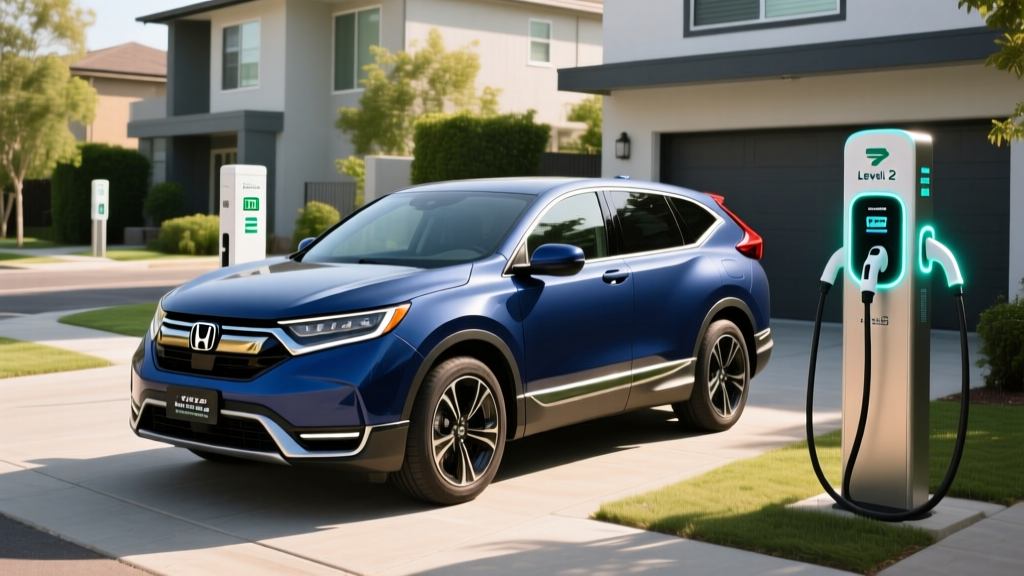
- Home charging is the make-or-break factor. If you can install a Level 2 (240V) charger, daily charging becomes effortless — plug in overnight, wake up full. Without home charging, public DCFC dependency adds time and cost.
- Cold-weather range loss is real. Expect a 20–30% range reduction below 32°F. A BEV rated at 300 miles EPA may deliver 210–240 miles in a Minnesota winter.
- Highway driving reduces range. Sustained 75+ mph driving drops efficiency 10–15% below the combined EPA figure.
- Charging curves taper above 80%. The advertised peak kW rate (e.g., 250 kW) applies only in the 10–50% range. Charging from 80–100% can take as long as 10–80%.
Common Misconceptions: Myth vs. Fact
| Myth | Fact |
|---|---|
| "The CR-V Hybrid can plug in and drive on electricity alone." | The CR-V Hybrid is a conventional HEV — no plug, no electric-only driving mode. The Toyota RAV4 Prime is a PHEV that can plug in; Honda does not currently offer a CR-V PHEV in the U.S. |
| "Honda has a fully electric CR-V I just haven't found." | Honda's current U.S. EV lineup includes the Prologue (a midsize SUV built on GM's Ultium platform). There is no battery-electric CR-V variant for 2026. |
| "Hybrids don't save enough to justify the higher price." | The ~$3,500 hybrid premium over a gas CR-V is typically recovered in 2.5–3.5 years through fuel savings at 15,000 mi/yr and $3.50/gal gas. |
| "Hybrid batteries need expensive replacement." | Honda covers the hybrid battery for 8 years/100,000 miles (10 years/150,000 miles in CARB states). Real-world data shows most hybrid batteries last 150,000+ miles before significant degradation. |
| "A BEV is always cheaper to own than a hybrid." | Not universally. Without home charging, DCFC costs ($0.30–$0.48/kWh) can erase fuel savings. Higher insurance premiums and upfront costs also narrow the gap. |
Decision Framework: Which Electrified SUV Should You Buy?
Choose the Honda CR-V Hybrid If:
- You cannot install a home charger (apartment, street parking, HOA restrictions).
- You regularly take long road trips and don't want to plan around charging stops.
- You live in an extreme cold-weather climate where BEV range loss would be painful.
- You want a lower upfront cost and don't want to navigate tax-credit eligibility rules.
- You prefer the CR-V's interior space, ride quality, and Honda Sensing safety suite and don't need electric-only driving.
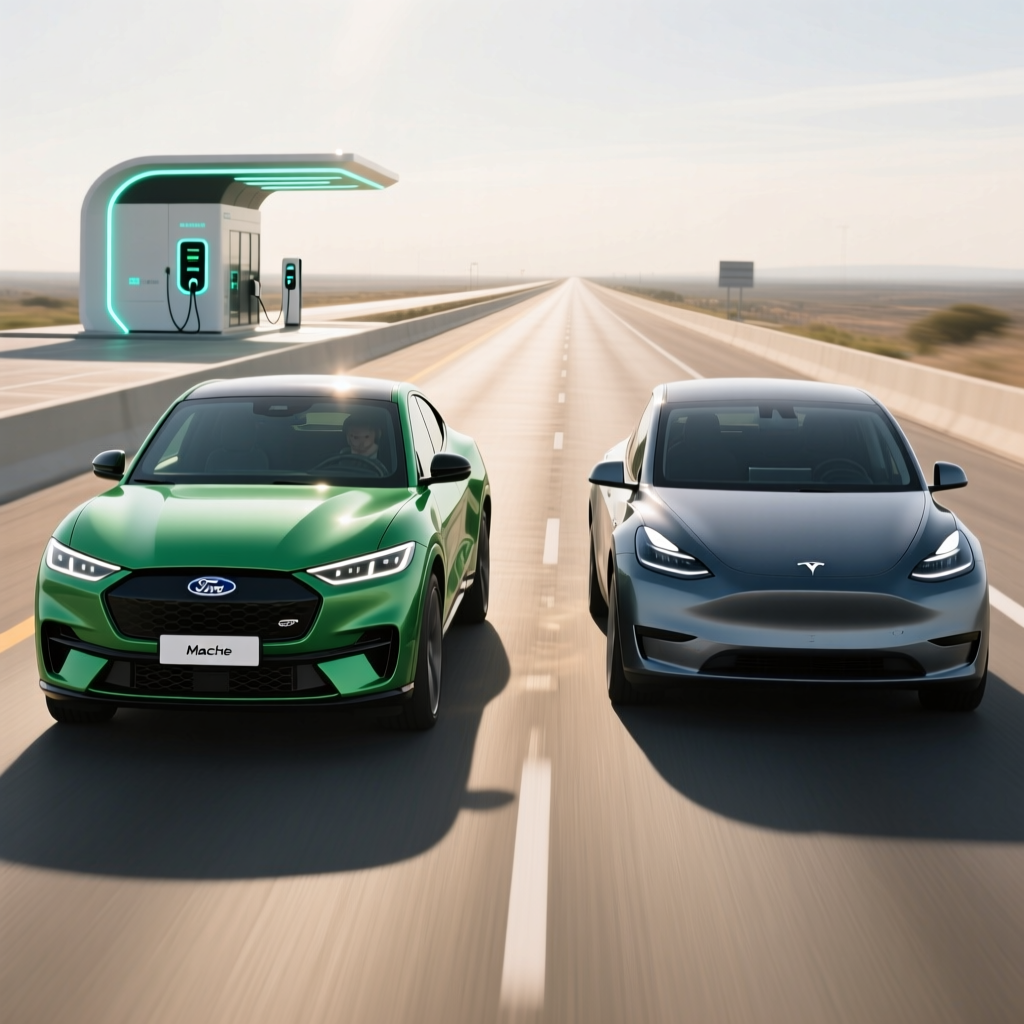
Choose a Battery-Electric SUV (Ioniq 5, Model Y, Mach-E) If:
- You have reliable home Level 2 charging access and can wake up to a full "tank" every day.
- Your daily commute is under 80 miles round-trip, meaning you rarely need DC fast charging.
- You want near-zero maintenance costs and no gasoline dependency.
- You qualify for the federal §30D credit (income under $300K joint / $150K single, vehicle MSRP under $80K for SUVs, and battery sourcing requirements met).
- You want instant torque and quiet acceleration — BEVs deliver a fundamentally different driving feel that hybrids cannot match.
Consider the Honda Prologue If:
- You want a Honda-branded electric SUV and can accept a midsize (not compact) footprint.
- The Prologue's EPA range (~296 miles for FWD) and pricing (~$48,795 base) fit your budget.
- You're comfortable with its GM Ultium underpinnings and Super Cruise-capable architecture.
Honda's EV Future: What's Coming Next
Honda's 0 Series EV platform, unveiled at CES 2024, promises a dedicated line of electric vehicles starting with a sedan and SUV in the 2026–2027 timeframe for global markets. These vehicles are expected to feature thinner battery packs, rear-wheel-drive bias, and advanced driver-assistance targeting higher SAE automation levels. However, Honda has not confirmed a compact electric SUV that would serve as a direct CR-V EV replacement for the U.S. market.
Until Honda formally announces such a model, shoppers wanting an electrified CR-V today are choosing between the proven CR-V Hybrid and rival-brand BEVs. The Honda Prologue remains the only fully electric Honda SUV currently on sale.
Frequently Asked Questions
Does Honda make a plug-in hybrid CR-V?
No. Honda does not sell a CR-V plug-in hybrid (PHEV) in the United States for the 2026 model year. The Toyota RAV4 Prime (42 miles electric-only, ~$44,000) is the closest PHEV competitor in the compact SUV segment. Honda previously sold the Clarity PHEV sedan but discontinued it after the 2021 model year.
How much does it cost to fuel a CR-V Hybrid vs. a BEV per month?
At 1,250 miles/month, $3.50/gallon gas, and 40 MPG combined, the CR-V Hybrid costs roughly $109/month in fuel. A comparable BEV at 30 kWh/100mi and $0.16/kWh home electricity costs about $48/month. However, if you rely on public DCFC at $0.40/kWh, that BEV cost jumps to approximately $120/month — actually more than the hybrid.
Will Honda release an electric CR-V eventually?
Honda has committed to expanding its EV lineup through the 0 Series platform and continued partnership with GM, but no electric CR-V has been officially announced. The Honda Prologue (midsize, GM Ultium-based) is Honda's current electric SUV offering. Any future compact electric SUV from Honda would likely arrive no earlier than the 2028 model year based on current product timelines.
Is the CR-V Hybrid worth the premium over the gas model?
Yes, for most buyers. The ~$3,500 price premium is typically recovered in 2.5–3.5 years through fuel savings alone (at 15,000 mi/yr and $3.50/gal). You also gain AWD standard (a $1,500+ option on gas trims), slightly quicker acceleration, and reduced brake wear from regenerative braking. According to fueleconomy.gov, the hybrid's annual fuel cost is approximately $1,500 vs. $1,950 for the gas AWD model.
Does the CR-V Hybrid qualify for any tax credits?
The CR-V Hybrid does not qualify for the federal §30D clean vehicle credit, which requires plug-in capability and minimum battery capacity. Some states may offer small hybrid incentives, but these are increasingly rare. For the latest eligibility rules, consult the IRS clean vehicle credits page.
What is the Honda CR-V Hybrid battery warranty?
Honda covers the CR-V Hybrid's lithium-ion battery pack for 8 years or 100,000 miles, whichever comes first. In states that follow California Air Resources Board (CARB) regulations — including California, New York, Massachusetts, and others — coverage extends to 10 years or 150,000 miles. This warranty covers defects and excessive capacity loss, though Honda does not publish a specific degradation threshold percentage.