Quick Answer: What Is the Electric Golf VW?
Volkswagen no longer sells a new electric Golf in the United States. The e-Golf was discontinued after the 2019 model year and replaced by the VW ID.4, a compact electric SUV that serves as VW's mainstream electric offering for American buyers. If you're searching for an "electric Golf VW" today, you're either looking at the used e-Golf market (2015–2019 models with 83–125 miles of EPA range) or the new 2026 ID.4 (EPA range up to 291 miles, starting around $40,790). This guide covers both paths with exact numbers.
The e-Golf Legacy: What You're Getting Used
The Volkswagen e-Golf was the brand's first serious electric vehicle for the U.S. market. Built on the familiar Golf hatchback platform, it offered a practical, no-nonsense EV experience before the industry shifted to dedicated EV architectures. Here's what the final generation delivered:
| Spec | 2015–2016 e-Golf | 2017–2019 e-Golf |
|---|---|---|
| EPA Range | 83 miles | 125 miles |
| Battery Capacity | 24.2 kWh (usable ~21.2) | 35.8 kWh (usable ~31.5) |
| Battery Chemistry | NMC | NMC |
| Motor Output | 115 hp / 199 lb-ft | 134 hp / 214 lb-ft |
| 0–60 mph | ~10.0 seconds | ~9.6 seconds |
| DC Fast Charge (CCS) | 50 kW peak | 50 kW peak |
| 10–80% DC Time | ~30 minutes | ~36 minutes |
| Level 2 Charge Rate | 3.6 kW (7.2 kW optional) | 7.2 kW |
| EPA Efficiency | 116 MPGe | 119 MPGe |
The 2017+ models with the larger 35.8 kWh battery are the ones worth considering. The 125-mile EPA range is usable for commuting, but expect 90–105 real-world highway miles and potentially 75–90 miles in cold weather (below 30°F). This is a city commuter and grocery-getter, not a road-trip vehicle.
Real-World Range Reality: e-Golf
EPA Sticker: 125 miles (2017–2019)
Real-World Highway (70 mph, 75°F): ~95–105 miles
Cold Weather (30°F, mixed driving): ~75–90 miles
Battery Degradation Factor: A 2017 e-Golf in 2026 may have lost 8–15% of original capacity depending on charging habits and climate. Budget for 100–110 effective miles on a good day.
The 2026 VW ID.4: The Modern Electric Golf Alternative
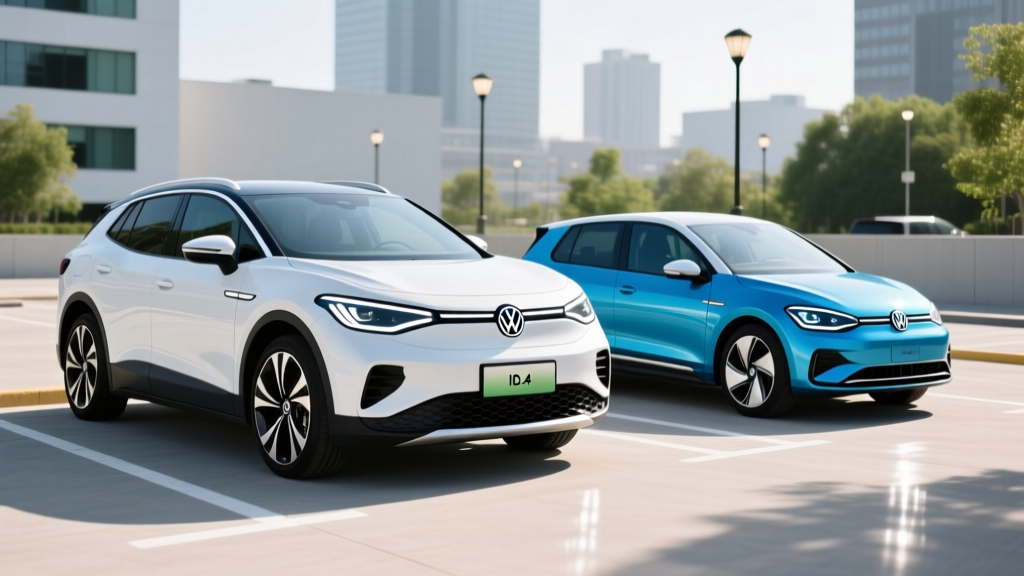
If you want a new VW electric vehicle in 2026, the ID.4 compact SUV is your option. It's built on VW's dedicated MEB EV platform — meaning the battery is a flat skateboard under the floor, yielding more interior space and better weight distribution than the e-Golf's adapted architecture.
| Spec | 2026 ID.4 Standard Range | 2026 ID.4 Pro (Extended Range) | 2026 ID.4 AWD Pro S |
|---|---|---|---|
| EPA Range | 206 miles | 291 miles | 263 miles |
| Battery (Usable) | 62 kWh (LFP) | 82 kWh (NMC) | 82 kWh (NMC) |
| Motor Output | 201 hp / 229 lb-ft | 282 hp / 339 lb-ft | 335 hp / 402 lb-ft |
| 0–60 mph | ~7.9 seconds | ~7.2 seconds | ~5.4 seconds |
| Peak DC Fast Charge | 140 kW | 175 kW | 175 kW |
| 10–80% DC Time | ~28 minutes | ~28 minutes | ~28 minutes |
| Level 2 Rate | 11 kW | 11 kW | 11 kW |
| Base MSRP | $40,790 | $45,290 | $51,490 |
| Battery Warranty | 8 yr / 100,000 mi | 8 yr / 100,000 mi | 8 yr / 100,000 mi |
Sources: fueleconomy.gov, VW USA ID.4 specs.
Real-World Range Reality: 2026 ID.4 Pro
EPA Sticker: 291 miles
Real-World Highway (75 mph, 75°F): ~235–255 miles
Cold Weather (25°F, highway): ~190–215 miles
Charge Curve Note: The 175 kW peak only sustains from roughly 10–35% SoC. Above 50%, expect ~80–100 kW; above 80%, charging slows to ~40 kW. Plan road-trip stops to 80%, not 100%.
e-Golf vs ID.4 vs Gas Golf: Cost Comparison
To understand whether buying a used e-Golf, a new ID.4, or a conventional gas Golf (or comparable compact) makes financial sense, let's run the numbers over a 5-year ownership period.
| Cost Factor (5 Years / 60,000 mi) | Used 2019 e-Golf | New 2026 ID.4 Pro | New 2026 Gas Compact (Baseline) |
|---|---|---|---|
| Purchase Price | $14,000–$18,000 | $45,290 | $28,000 |
| Federal Tax Credit (§30D) | $0 (used EV credit up to $4,000 if eligible) | Up to $7,500 (if sourcing/income requirements met) | $0 |
| Effective Purchase | $10,000–$18,000 | $37,790–$45,290 | $28,000 |
| Fuel/Energy Cost | $2,400 (home charging, $0.14/kWh avg) | $3,100 (home + some DCFC) | $7,200 (30 MPG, $3.60/gal) |
| Maintenance | $1,200 | $1,500 | $3,500 |
| Insurance (avg) | $5,500 | $7,800 | $6,000 |
| Estimated Depreciation | $4,000–$6,000 | $12,000–$15,000 | $9,000–$12,000 |
| 5-Year Total Cost | $23,100–$30,700 | $62,190–$74,690 | $53,700–$56,700 |
Key takeaway: The used e-Golf is the cheapest path to electric driving by a wide margin, but you're accepting severe range limitations. The new ID.4 costs more over 5 years than a gas compact, largely due to higher purchase price and depreciation — though fuel and maintenance savings narrow the gap each year. If you drive more than 15,000 miles annually, the ID.4's fuel savings compound faster.
For the §30D federal tax credit on the new ID.4: eligibility depends on your modified adjusted gross income (AGI limits: $150K single / $300K joint), the vehicle's MSRP cap ($80K for SUVs — ID.4 qualifies), and battery critical-mineral and component sourcing requirements that tighten each year. The credit can now be transferred to the dealer at point of sale as a down-payment reduction. Always verify current-year rules at irs.gov and consult a tax professional.
Charging at Home: What First-Time EV Buyers Must Know
Whether you're plugging in a used e-Golf or a new ID.4, home charging access determines your daily ownership experience.
| Charging Level | Power | e-Golf (Miles/Hour) | ID.4 Pro (Miles/Hour) | Typical Use |
|---|---|---|---|---|
| Level 1 (120V outlet) | 1.2–1.4 kW | ~4 mi/hr | ~4 mi/hr | Emergency / overnight trickle |
| Level 2 (240V, 32A) | 7.7 kW | ~25 mi/hr | ~25 mi/hr | Daily home charging |
| Level 2 (240V, 48A) | 11.5 kW | ~25 mi/hr (car-limited to 7.2 kW) | ~37 mi/hr | Faster home charging |
| DC Fast (CCS) | 50 kW (e-Golf) / 175 kW (ID.4) | ~125 mi in 36 min | ~185 mi in 28 min | Road trips |
Home installation cost reality: A Level 2 charger (like a ChargePoint Home Flex or Emporia Vue) costs $400–$700 for the unit. Professional electrician installation runs $500–$2,000 depending on panel proximity and whether you need a 240V circuit added. If your home's electrical panel needs an upgrade from 100A to 200A service, add $1,500–$3,000. Total realistic home charging setup: $1,000–$3,500.
Important: Not every EV buyer has access to home charging. If you live in an apartment or lack a garage/driveway, you'll rely on public Level 2 and DC fast charging networks. The e-Golf's 50 kW DC cap makes this painful — you'll spend 35+ minutes at a charger for a partial fill. The ID.4's 175 kW capability makes public charging far more practical, though still more expensive than home rates ($0.30–$0.50/kWh at public DCFC stations vs. $0.10–$0.18/kWh at home).
Common Misconceptions About VW Electric Vehicles
| Myth | Fact |
|---|---|
| "You can buy a new electric Golf in 2026." | VW discontinued the e-Golf after 2019. The ID.4 is the current U.S. electric offering. VW sells an ID.3 hatchback in Europe, but it is not available in the United States. |
| "EV batteries need replacing every few years." | Modern NMC and LFP batteries are designed for 150,000+ miles with gradual degradation (typically 10–15% loss over 8 years). VW warranties the ID.4 battery at 70% minimum capacity retention for 8 years/100,000 miles. |
| "The e-Golf is a good road-trip car." | With 125 miles EPA range (90–105 real highway) and 50 kW DC charging, the e-Golf requires planning and patience for trips beyond 80 miles. It excels as a commuter, not a traveler. |
| "EVs are always cheaper to own." | Upfront costs are higher for new EVs. Savings come from fuel and maintenance over time. A used e-Golf is genuinely cheap to own; a new ID.4 takes 5–7 years to break even against a gas compact for moderate-mileage drivers. |
| "I need a special charger for a VW EV." | Both the e-Golf and ID.4 use the CCS1 (J1772 Combo) connector for DC fast charging and J1772 for Level 2. Any CCS-compatible public charger works. The ID.4 can also use Tesla Superchargers (NACS) with an adapter, as VW has adopted the NACS standard for newer models. |
Decision Framework: Which Electric Golf VW Path Is Right for You?
Choose the Used e-Golf (2017–2019) If:
- Your daily round-trip commute is under 60 miles
- You have reliable home Level 2 charging
- You rarely drive more than 80 miles in a single day
- Your budget is under $20,000
- You want the lowest possible cost-per-mile for electric driving
- You live in a mild climate (less cold-weather range loss)
Choose the New 2026 ID.4 If:
- You need 200+ miles of real-world range for highway driving
- You take road trips of 200–400 miles and need DC fast charging
- You want a full manufacturer warranty and latest safety tech (IIHS Top Safety Pick rated)
- You qualify for the §30D tax credit (income, sourcing requirements)
- You need SUV cargo space and available AWD
- You plan to keep the vehicle 7+ years
Stick With a Gas or Hybrid Compact If:
- You have no home charging access and public charging is sparse in your area
- You regularly drive in extreme cold (below 15°F) with long distances
- You need to minimize upfront cost and can't absorb higher insurance premiums
- You frequently tow or carry heavy loads beyond EV efficiency sweet spots
Frequently Asked Questions
Can I still buy a VW e-Golf in 2026?
Only on the used market. VW discontinued the e-Golf after the 2019 model year. You'll find 2015–2019 models on dealer lots and private sales, typically priced between $10,000 and $18,000 depending on mileage, battery health, and trim. Always request a battery health report (State of Health / SoH percentage) before purchasing.
Does VW make an electric Golf hatchback for 2026?
Not for the U.S. market. VW sells the ID.3 electric hatchback in Europe, which is spiritually the e-Golf's successor, but it has never been imported to the United States. The ID.4 compact SUV is VW's primary EV for American buyers. VW has announced future smaller EVs, but nothing has been confirmed as a U.S.-market electric hatchback.
How much does it cost to charge an ID.4 at home vs. gas?
At a national average electricity rate of $0.14/kWh, fully charging the ID.4 Pro's 82 kWh battery costs roughly $11.50 for 291 EPA miles — about $0.04 per mile. A comparable gas compact at 30 MPG and $3.60/gallon costs $0.12 per mile. Over 12,000 miles per year, that's $480 in electricity vs. $1,440 in gasoline — a $960 annual savings from home charging.
What's the battery replacement cost for a VW e-Golf or ID.4?
Out-of-warranty battery replacement for the e-Golf runs approximately $8,000–$12,000 including labor. For the ID.4, the larger 82 kWh pack is estimated at $12,000–$18,000. However, catastrophic battery failure before 150,000 miles is rare. Most EV batteries degrade gradually — losing 10–15% capacity over 8–10 years — rather than failing outright. VW's 8-year/100,000-mile battery warranty covers defects and capacity loss below 70%.
Is the VW ID.4 eligible for the $7,500 federal tax credit in 2026?
It can be, but eligibility is not automatic. Under IRS §30D rules, you must meet income caps ($150K single / $300K joint MAGI), the vehicle must be under the $80,000 SUV MSRP cap (ID.4 qualifies), and the battery must meet critical-mineral and battery-component sourcing requirements that tighten annually. The credit can be transferred to the dealer at point of sale as an instant price reduction. Confirm eligibility with your dealer and a tax professional before purchase.
How does the e-Golf compare to a Chevy Bolt EV on the used market?
The 2017–2019 e-Golf (125 miles EPA) falls well short of the 2017–2022 Chevy Bolt EV (238–259 miles EPA). The Bolt offers nearly double the range, faster DC charging (55 kW, but with a more sustained curve), and a similar compact footprint. Used Bolt prices in 2026 typically run $12,000–$18,000. Unless you specifically want VW build quality and the Golf hatchback form factor, the Bolt EV is the more practical used-EV commuter.
Sources: fueleconomy.gov, VW USA, IRS §30D Clean Vehicle Credit, IIHS.