Quick Answer: Is an Electric Golf Bike Worth It?
An electric golf bike — a lightweight, single-rider electric vehicle designed for golf course use and short-distance community travel — typically offers 20–40 miles of range per charge from a 1–3 kWh lithium battery, costs $0.05–$0.15 per full charge at home, and eliminates the fuel, oil, and exhaust maintenance of a gas-powered golf cart. For golfers and planned-community residents who travel under 15 miles per day and have access to a standard 120V outlet, an electric golf bike delivers lower per-mile operating costs (roughly $0.01/mile vs. $0.08–$0.12/mile for gas carts) and near-silent operation. The main trade-off: upfront cost runs $4,000–$12,000 depending on the model, and range drops 15–25% in cold weather or hilly terrain.
What Exactly Is an Electric Golf Bike?
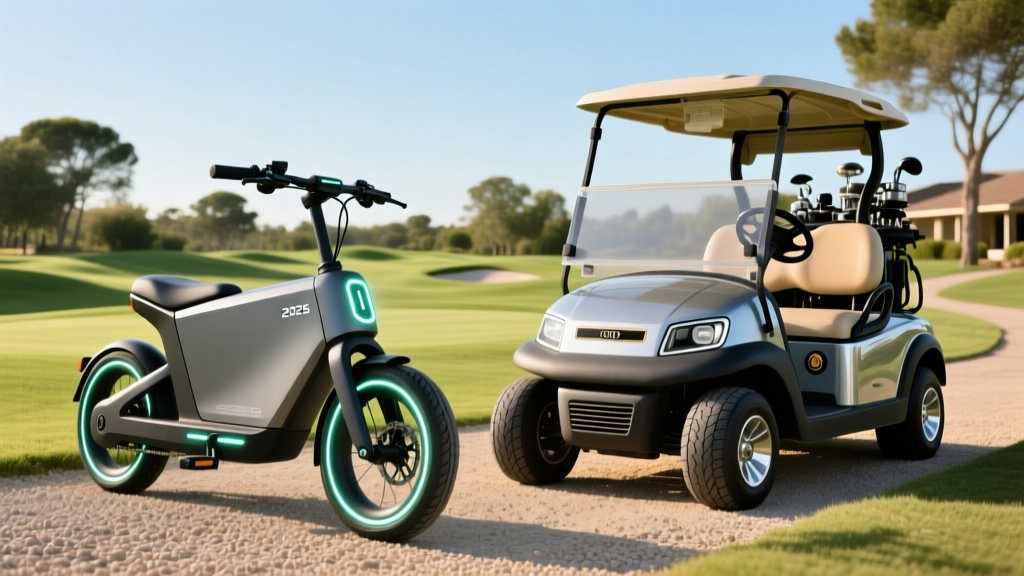
An electric golf bike (sometimes called an electric golf scooter or single-rider golf vehicle) is a compact, battery-electric vehicle built for golf course navigation, gated-community travel, and light utility use. Unlike a traditional two- or four-seat golf cart, these are typically single-rider platforms — think of a cross between an electric bicycle and a miniaturized golf cart, often with a rear cargo rack for a golf bag.
Key characteristics of the category in 2026:
- Battery capacity: 1.0–3.5 kWh (lithium-ion, typically NMC or LFP chemistry)
- Motor output: 500W–2,000W (roughly 0.7–2.7 hp)
- Top speed: 15–25 mph (many are governed to 19 mph for course/pathway compliance)
- EPA-equivalent range: 20–40 miles (varies heavily by terrain, rider weight, and temperature)
- Charge time (120V Level 1): 3–8 hours to full, depending on battery size and onboard charger rate
- Weight: 120–350 lbs (significantly lighter than a 900+ lb gas golf cart)
This is a fundamentally different vehicle class from a full-size EV like a Tesla Model Y or a highway-capable neighborhood electric vehicle (NEV). Electric golf bikes are not designed for public road use above 25 mph and do not qualify for the federal §30D EV tax credit, which applies to highway-capable four-wheeled vehicles meeting specific MSRP, income, and battery-sourcing requirements per IRS guidelines.
Electric Golf Bike vs Gas Golf Cart: The Numbers
If you're choosing between an electric golf bike and a traditional gas-powered golf cart (typically a 4-stroke, 9–14 hp engine running on gasoline), the comparison comes down to operating cost, noise, maintenance, and use case. Here's how they stack up with concrete data:
| Metric | Electric Golf Bike | Gas Golf Cart |
|---|---|---|
| Upfront cost (new) | $4,000–$12,000 | $7,000–$14,000 |
| Fuel/energy cost per mile | $0.008–$0.015 | $0.08–$0.12 |
| Annual fuel/energy (5 mi/day, 250 days) | $10–$19 | $100–$150 |
| Annual maintenance | $50–$150 (tires, brakes) | $200–$500 (oil, filters, belts, plugs) |
| Noise level | 45–55 dB (quiet conversation) | 70–85 dB (vacuum cleaner level) |
| Range per tank/charge | 20–40 miles | 80–150 miles (6–8 gal tank) |
| Refuel/recharge time | 3–8 hours (Level 1, 120V) | 2–3 minutes (gas fill-up) |
| Emissions at point of use | Zero | CO₂, NOₓ, unburned hydrocarbons |
| Typical lifespan | 8–12 years (battery replacement at 5–8 yr) | 12–20 years (engine rebuild possible) |
| Cold-weather range loss | 15–25% reduction | Minimal (5–10%) |
The bottom line: If your daily use is under 15 miles and you have access to a standard outlet for overnight charging, the electric golf bike saves $150–$400 per year in fuel and maintenance. Over a 7-year ownership period, that's $1,050–$2,800 in savings — enough to offset a significant portion of the upfront price difference.
Real-World Range: What the Sticker Doesn't Tell You
Manufacturers typically advertise electric golf bike range under ideal conditions: flat terrain, 70°F ambient temperature, a 160-lb rider, and moderate throttle use. Real-world conditions rarely match that profile.
Here's what to expect from a typical 2.0 kWh electric golf bike rated at 30 miles of range:
- Ideal conditions (flat, 70°F, moderate speed): 28–32 miles
- Hilly terrain or frequent stops: 22–26 miles
- Cold weather (below 40°F): 20–24 miles (lithium-ion batteries lose efficiency and available capacity in the cold)
- Heavy rider (220+ lbs) + golf bag (30 lbs): 22–27 miles
- Max throttle, max speed, hot day (95°F+): 18–22 miles
This mirrors the same dynamic EV buyers encounter with full-size electric vehicles: the EPA range sticker is a useful baseline, but actual range depends on driving style, climate, and payload. For a golf bike used on a relatively flat course in temperate weather, the rated range is usually achievable. For hilly communities or northern winters, budget a 20–25% range reduction.
Common Misconceptions About Electric Golf Bikes
| Myth | Fact |
|---|---|
| "The battery will die in 2 years." | Modern lithium-ion (NMC or LFP) golf bike batteries are rated for 800–2,000 charge cycles before dropping to 80% capacity. At one charge per day, that's 2.2–5.5 years of daily use, or 5–10+ years with typical 2–3 uses per week. |
| "You can't ride it in the rain." | Most 2026 models carry IP54 or IP65 water-resistance ratings for the battery and motor. They handle rain and wet grass. They are not submersible, and pressure-washing the battery compartment is not recommended. |
| "It takes all day to charge." | A 2.0 kWh battery on a standard 120V outlet (1.4 kW draw) charges in roughly 3–4 hours. Many owners plug in after a morning round and are fully charged by early afternoon. |
| "Electric golf bikes qualify for the $7,500 federal EV tax credit." | They do not. The IRS §30D credit applies to highway-capable four-wheeled vehicles with four wheels, a gross vehicle weight under 14,000 lbs, and specific battery-sourcing criteria. Golf bikes fall outside this definition. |
| "LFP batteries are worse than NMC." | LFP (lithium iron phosphate) offers lower energy density (heavier for the same kWh) but longer cycle life (2,000+ cycles vs. ~1,000 for NMC) and better thermal stability. For a golf bike where weight is less critical than in a highway EV, LFP is often the smarter choice. |
Charging and Battery Ownership: What First-Time Buyers Need to Know
Charging an electric golf bike is straightforward — but understanding the details prevents surprises.
Charging Levels and Times
| Charging Method | Power (kW) | Time to Full (2.0 kWh Battery) | Equipment Needed |
|---|---|---|---|
| Standard 120V outlet (Level 1) | 0.5–1.4 kW | 2–4 hours | Included onboard charger + standard cord |
| Dedicated 240V outlet (Level 2) | 1.5–3.0 kW | 45 min–1.5 hours | Optional fast charger ($200–$500) + 240V outlet |
| Swappable battery (some models) | N/A | 30 seconds (swap) | Spare battery ($400–$900) |
kW vs. kWh — the critical distinction: kW (kilowatts) measures the rate of energy flow — how fast you're charging. kWh (kilowatt-hours) measures total energy stored — the size of the battery. A 2.0 kWh battery charged at 1.0 kW takes roughly 2 hours. A 2.0 kWh battery charged at 0.5 kW takes roughly 4 hours. Think of kW as the width of the hose and kWh as the size of the bucket.
Battery Lifespan and Replacement Cost
Lithium-ion batteries degrade over time and charge cycles. For electric golf bikes:
- NMC chemistry: Typically rated for 800–1,200 cycles to 80% state of health (SoH). Expect 5–7 years of practical use before noticeable range reduction.
- LFP chemistry: Typically rated for 2,000–3,000 cycles to 80% SoH. Expect 8–12+ years before significant degradation.
- Replacement battery cost: $400–$1,200 depending on capacity and chemistry. This is a meaningful ownership cost that gas cart buyers don't face — though gas cart owners spend comparably on engine maintenance over the same period.
Care tips that extend battery life: Avoid storing at 100% state of charge for extended periods. If you won't ride for a week or more, store at 50–60% SoC. Never let the battery sit at 0% for days — this can cause irreversible cell damage. Charge in moderate temperatures (50–85°F) when possible.
Total Cost of Ownership: 5-Year Breakdown
Let's model a realistic 5-year ownership scenario for an electric golf bike versus a gas golf cart, assuming 5 miles of daily use across 250 days per year (1,250 miles/year).
| Cost Category | Electric Golf Bike (2.0 kWh, LFP) | Gas Golf Cart (9 hp, 4-stroke) |
|---|---|---|
| Purchase price | $7,500 | $9,500 |
| Energy/fuel (5 years) | $75 ($0.012/mi × 6,250 mi) | $625 ($0.10/mi × 6,250 mi) |
| Maintenance (5 years) | $500 (tires, brake pads, cables) | $1,750 (oil changes × 10, filters, belt, spark plugs, carb service) |
| Battery replacement (year 5) | $0 (LFP battery at ~90% SoH) | N/A |
| Insurance (5 years, if required) | $0–$600 (varies by community/HOA) | $0–$600 |
| 5-year total | $8,075–$8,675 | $11,875–$12,475 |
| Cost per mile (all-in) | $0.09–$0.10 | $0.15–$0.16 |
The electric golf bike saves roughly $3,200–$4,400 over five years in this scenario. The savings widen if electricity rates are low (under $0.12/kWh) or if you ride more than 5 miles daily. The savings narrow if you need a battery replacement within the period (more likely with NMC chemistry and heavy daily use).
Real-World Ownership Considerations
Before buying, honestly assess your situation against these factors:
Home Charging Access
You need a standard 120V outlet within cord reach of where you park the bike. A garage or covered carport is ideal — leaving a lithium battery exposed to extreme heat or cold during charging accelerates degradation. If your parking spot is more than 25 feet from an outlet, you'll need a heavy-duty outdoor-rated extension cord (12-gauge minimum) or an electrician to install a closer outlet ($150–$400).
Climate
If you live in a region with sustained sub-freezing winters (Minnesota, Maine, mountain communities), expect 15–25% range loss and slower charging speeds. LFP batteries are more affected by cold than NMC. Some owners in cold climates bring the battery indoors overnight and reinstall it before riding — feasible if the battery is removable and under 30 lbs.
Driving Patterns
The electric golf bike excels when your daily travel is predictable and under 20 miles: a round of golf (6–8 miles of course driving), a loop around a planned community, or a short commute to a nearby clubhouse or pool. If you regularly need 30+ miles in a single day, need to carry multiple passengers, or need to tow a utility trailer, a gas cart or a full-size NEV (neighborhood electric vehicle) is a better fit.
Terrain
Hilly courses and communities demand more from the battery and motor. A 500W motor will struggle on sustained 10%+ grades with a heavy rider. Look for 1,000W+ motors and 2.5+ kWh batteries if your terrain is steep. Regenerative braking — which recovers energy on downhill segments — helps, but it typically recovers only 5–15% of energy expended on the climb.
Decision Framework: Should You Buy an Electric Golf Bike?
If-Then Buying Guide
- Choose an electric golf bike if: You ride 5–15 miles daily, have a 120V outlet near your parking spot, value quiet operation (early-morning rounds, noise-sensitive communities), want minimal maintenance, and your terrain is flat to moderate.
- Choose a gas golf cart if: You need 40+ miles of range between refuels, carry multiple passengers regularly, operate in extreme cold, need towing capability, or lack reliable access to an electrical outlet.
- Choose a full-size NEV or PHEV if: You need highway-adjacent speeds (35+ mph), want a vehicle that qualifies for potential state or local incentives, or need to carry 2–4 passengers on public roads.
- Wait and reconsider if: Your community or HOA has restrictions on single-rider electric vehicles on pathways (verify first), or if you're in a region where winter temperatures regularly drop below 20°F and you need year-round daily use.
Frequently Asked Questions
Can I ride an electric golf bike on public roads?
In most US jurisdictions, electric golf bikes are classified as low-speed vehicles or off-road equipment, not street-legal vehicles. They are generally permitted on golf courses, private property, and some planned-community pathways with HOA approval. They are typically not legal on public roads with speed limits above 25 mph. Check your local and state regulations before riding on any public right-of-way.
How long does an electric golf bike battery last?
An LFP battery typically lasts 2,000–3,000 charge cycles before degrading to 80% of original capacity. At three charges per week, that's roughly 13–19 years. An NMC battery lasts 800–1,200 cycles, or roughly 5–8 years at the same usage rate. "Lasts" here means reduced range — the battery doesn't suddenly stop working at the cycle limit.
Do electric golf bikes qualify for any tax credits or incentives?
They do not qualify for the federal §30D clean vehicle tax credit, which requires a four-wheeled, highway-capable vehicle meeting specific MSRP caps ($55,000 for cars, $80,000 for SUVs/trucks), buyer income limits, and battery critical-mineral sourcing rules per IRS §30D guidelines. Some states or local utilities offer rebates for off-road electric vehicles or e-mobility devices — check your state energy office or utility provider.
What's the difference between an electric golf bike and an e-bike?
An electric golf bike is a sit-down, cart-style vehicle with a cargo rack for a golf bag, typically governed to 15–25 mph, and designed for course or community use. An e-bike (electric bicycle) is a pedal-assist or throttle bicycle, often street-legal under CPSC Class 1/2/3 definitions, with smaller batteries (0.4–1.0 kWh) and ranges of 20–60 miles. They serve different use cases — an e-bike is a transportation tool; an electric golf bike is a recreational/course vehicle.
How much does it cost to charge an electric golf bike?
At the US average residential electricity rate of approximately $0.16/kWh (per EIA data), fully charging a 2.0 kWh battery costs about $0.32. If you charge once daily for 250 days per year, your annual electricity cost is roughly $80. Compare this to $125–$188 per year in gasoline for a gas cart at the same mileage.
What should I look for when buying an electric golf bike?
Prioritize: (1) battery chemistry — LFP for longevity, NMC for lighter weight; (2) motor wattage — 1,000W+ for hilly terrain; (3) removable battery — makes indoor charging and winter storage easier; (4) IP rating — IP54 minimum for rain resistance; (5) warranty — look for 2+ years on the battery and motor; (6) local dealer support for service and replacement parts.