Quick Answer: Is an Electric Foiling Board Right for You?
An electric foiling board (eFoil) is a hydrofoil surfboard powered by a lithium-ion battery and electric motor, lifting riders above the water at speeds of 15–30 mph with 60–120 minutes of ride time per charge. Prices range from $4,500 to $15,000+ for premium setups. If you're an EV owner curious about electrified watersports, or a watersports enthusiast evaluating whether battery-powered foiling makes sense versus a gas-powered jet ski or boat, this guide breaks down the real costs, battery technology, charging logistics, and ownership realities — with the same data-driven rigor we apply to electric vehicles.
Bottom line: eFoils are a niche, high-cost hobby with genuine battery-tech crossover from the EV world. They're not transportation — they're recreation. But if you're already investing in home charging infrastructure for an EV, adding an eFoil to your garage is more practical than you might think.
What Is an Electric Foiling Board, Exactly?
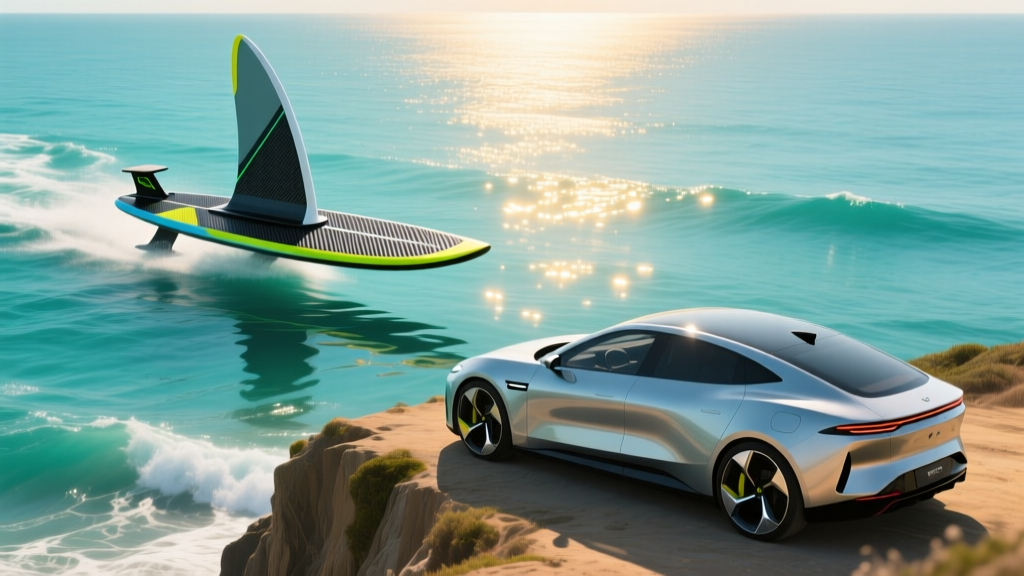
An electric foiling board — commonly called an eFoil — combines a surfboard-style deck with a submerged hydrofoil wing and a battery-powered electric motor. As the motor propels the board forward, the hydrofoil generates lift, raising the board entirely out of the water. The result is a near-silent, zero-emission ride that feels like hovering above the surface.
The major players in 2026 include Lift Foils, Fliteboard, Jetsurf (which offers both gas and electric models), and Mako. These aren't toys — they're precision-engineered machines with direct lineage to the battery and motor technology found in electric vehicles.
Here's what's under the hood:
- Battery: Typically 1.5–3.5 kWh lithium-ion packs (NMC chemistry, similar to most EV traction batteries)
- Motor: 3–8 kW brushless DC motor, direct-drive or geared
- Speed: 15–30 mph depending on rider weight, wing size, and conditions
- Ride time: 60–120 minutes per charge (varies heavily with riding style)
- Charge time: 2–4 hours on a standard 120V outlet (Level 1 equivalent)
- Weight: 55–75 lbs total (board + battery + foil assembly)
eFoil Battery Tech: How It Compares to EV Batteries
If you've read our coverage of EV battery technology, much of the eFoil battery landscape will feel familiar — with important differences in scale and application.
| Attribute | eFoil (Typical) | EV (e.g., Tesla Model Y) |
|---|---|---|
| Battery capacity | 1.5–3.5 kWh | 75–82 kWh usable |
| Chemistry | NMC (nickel manganese cobalt) | NMC or LFP |
| Voltage | 44–52V nominal | 350–400V (800V on some) |
| Thermal management | Passive (air/water cooling) | Active liquid cooling |
| Cycle life (to 80% SoH) | 300–600 cycles | 1,000–2,000+ cycles |
| Replacement cost | $1,500–$3,500 | $8,000–$20,000+ |
| Warranty | 1–2 years | 8 years / 100,000 mi (federal mandate) |
| BMS (battery management) | Basic cell balancing | Advanced thermal + cell-level monitoring |
The key difference is energy density vs. cycle life. eFoil batteries prioritize weight savings above all else — every pound matters when you're carrying the board to the water. That means NMC chemistry with aggressive discharge rates, but shorter overall lifespan compared to an EV battery with liquid thermal management and a more conservative BMS strategy.
EV owners will recognize the NMC trade-off: higher energy density, but faster degradation if you routinely discharge to 0% or charge to 100% and store at full capacity. The same storage best practices apply — keep your eFoil battery around 50–60% SoC during off-season storage.
The Real Cost of eFoil Ownership
Let's break down what owning an electric foiling board actually costs over time — and compare it to the gas-powered alternatives.
| Cost Category | eFoil (Fliteboard Ultra) | Gas Jet Ski (Sea-Doo GTX) |
|---|---|---|
| Purchase price | $12,995 | $16,500 |
| Fuel / electricity (5 yrs, 100 hrs/yr) | $375 (~$0.75/charge) | $4,500 (~$9/hr at $4/gal) |
| Maintenance (5 yrs) | $500 (seals, impeller) | $3,000 (oil, spark plugs, winterization) |
| Battery replacement (year 4) | $2,500 | $0 |
| Insurance (5 yrs) | $1,500 ($300/yr) | $2,500 ($500/yr) |
| Registration / trailer | $0–$200 (no reg in most states) | $1,500 (reg + trailer) |
| 5-year total | $17,870 | $28,000 |
| Cost per hour on water | $17.87 | $28.00 |
The eFoil wins on operating cost — dramatically. Charging a 2.5 kWh battery at the national average of $0.15/kWh costs roughly $0.38 per session. A gas jet ski burning 5–8 gallons per hour at $4/gallon costs $20–$32 per outing. Over 500 hours of riding across five years, that's a $4,000+ fuel savings alone.
However, the eFoil's battery replacement cost is the EV-equivalent of a timing belt or transmission service — a predictable, mid-life expense that gas watercraft simply don't have. Plan for it.
Charging an eFoil: What EV Owners Already Know
Here's where your EV ownership experience pays dividends. eFoil batteries charge on standard household power — no special infrastructure required.
| Charging Method | Power | Time (0–100%) | Equivalent EV Level |
|---|---|---|---|
| Standard 120V outlet | 0.3–0.5 kW | 4–6 hours | Level 1 |
| 240V outlet (with adapter) | 0.8–1.2 kW | 2–3 hours | Level 2 (scaled down) |
| Dedicated fast charger (some brands) | 1.5–2.0 kW | 1.5–2 hours | N/A |
Because eFoil batteries are 1.5–3.5 kWh (roughly 1/25th of an EV battery), even a standard 120V wall outlet charges them in a single evening. If you already have a 240V outlet installed for your EV's Level 2 charger, you can charge an eFoil battery in 2–3 hours using an appropriate adapter — just plug into the same circuit when your car isn't charging.
Practical tip: Many eFoil owners who are also EV owners charge their board battery overnight in the garage alongside their car. A 2.5 kWh eFoil charge adds roughly $0.38 to your electric bill — less than running your dishwasher.
Range, Ride Time, and Real-World Expectations
Like EVs, eFoil "range" figures deserve a reality check. Manufacturers quote maximum ride times under ideal conditions. Here's what to actually expect:
Manufacturer claim: Up to 120 minutes ride time (Fliteboard Ultra, 2.1 kWh battery, 165-lb rider, calm conditions)
Real-world expectation: 60–90 minutes for an average adult rider (170–200 lbs) in mixed conditions. Aggressive carving, heavier riders, choppy water, and cold temperatures all reduce ride time by 20–40%.
Cold-water penalty: Like EVs in winter, lithium-ion batteries lose performance in cold water (below 55°F/13°C). Expect 15–25% reduced ride time in cold conditions, and longer charge times if the battery is cold when you plug in.
For context, that 60–90 minute ride time is roughly equivalent to a solid session on the water — comparable to a 20–30 mile range in an EV around town. Most riders are physically fatigued before the battery dies.
Common Misconceptions About Electric Foiling Boards
| Myth | Fact |
|---|---|
| "eFoils are just expensive toys" | At $5,000–$15,000, they're a serious investment — but cheaper to operate than a jet ski over 5 years, with near-zero maintenance. |
| "The battery will die in a year" | Modern NMC eFoil batteries last 300–600 full cycles to 80% capacity. At 100 rides/year, that's 3–6 years before noticeable degradation. |
| "You need special electrical work to charge one" | A standard 120V outlet charges any eFoil overnight. No panel upgrade, no electrician, no permit needed. |
| "eFoils are dangerous" | Like any watersport, there's risk. But speeds are moderate (15–30 mph), there's no combustion fuel, and most injuries come from falls — not electrical or mechanical failure. |
| "It's the same as a gas jet ski experience" | Fundamentally different: silent, no wake, no exhaust fumes, rideable in no-wake zones and protected waterways where gas craft are banned. |
| "The battery isn't recyclable" | eFoil batteries use the same NMC cells as EVs and are recyclable through the same lithium-ion recycling channels (Redwood Materials, Li-Cycle). |
Decision Framework: Should You Buy an Electric Foiling Board?
Choose an eFoil if:
- You have regular access to calm, open water (lake, bay, or ocean with minimal chop)
- You already own an EV and have Level 2 home charging — the infrastructure crossover is seamless
- You value silence and zero-emission operation (no-wake zones, wildlife areas, early-morning sessions)
- You want low ongoing operating costs ($0.38/charge vs $20+/tank for gas watercraft)
- You're comfortable with a 60–90 minute ride session and don't need all-day range
- You have $5,000–$15,000 in discretionary recreation budget
Stick with gas (jet ski / boat) if:
- You need all-day range and the ability to refuel in minutes on the water
- You ride in rough, open-ocean conditions where eFoil wings are a liability
- You carry passengers (eFoils are single-rider only)
- You're in a region with no nearby eFoil dealer or service center
- Your budget is under $4,000 — entry-level eFoils start around $4,500
Consider a hybrid approach if:
- You own a boat or jet ski for towing and social riding, and want an eFoil as a solo-session complement
- You're an RV or liveaboard cruiser — eFoils pack small and charge off solar/inverter systems easily
What First-Time eFoil Buyers Should Know
If you're coming from the EV world, here are the ownership realities that don't have a direct car equivalent:
- Learning curve: Plan for 3–5 sessions before you're comfortably foiling. Unlike an EV where you drive off the lot, eFoils require balance and technique. Many dealers include a lesson with purchase.
- Storage matters: Rinse everything with fresh water after saltwater use. Store the battery at 50–60% SoC if not riding for more than 2 weeks. The same lithium-ion care principles from your EV apply.
- No federal tax credit: Unlike EVs that may qualify for the IRS §30D clean vehicle credit, eFoils are classified as recreational equipment — not motor vehicles. No $7,500 credit applies. Some states may offer sales tax exemptions for electric watercraft; check your local regulations.
- Insurance: Most homeowners or renters policies can add an eFoil rider for $200–$400/year. Specialty marine insurers also cover them. This is significantly cheaper than jet ski insurance.
- Registration: Most U.S. states do not require registration for eFoils (they're classified similarly to surfboards or paddleboards). However, some states with strict watercraft rules may require it — check with your state's boating authority.
- Safety gear: Budget $200–$400 for a helmet, impact vest, and leash. These are non-negotiable for safe riding.
Frequently Asked Questions
How long does an eFoil battery last before needing replacement?
Most eFoil batteries retain 80% of original capacity after 300–600 full charge cycles. At 100 rides per year, that translates to 3–6 years of use before you notice meaningful range loss. The battery won't suddenly "die" — it gradually holds less charge, just like an EV battery. Replacement packs cost $1,500–$3,500 depending on the brand and capacity.
Can I charge an eFoil battery from my EV's home charger?
Not directly from the EVSE (car charger), but you can use the same 240V circuit. Many EV owners install a NEMA 14-50 outlet for their Level 2 charger. When the car is fully charged or away, you can use a compatible adapter to charge the eFoil battery from that same outlet at roughly 1 kW — filling a 2.5 kWh pack in about 2.5 hours. Just don't draw both simultaneously if you're on a 40A circuit.
Is an eFoil more eco-friendly than a gas jet ski?
Yes, substantially. A gas jet ski burns 5–8 gallons per hour, emitting roughly 45–70 lbs of CO₂ per outing, plus unburned hydrocarbons directly into the water. An eFoil charged on the average U.S. grid emits roughly 1.5–2 lbs of CO₂ per charge (depending on your regional grid mix via EPA's equivalency calculator). On a solar-charged system, it's effectively zero.
What's the best eFoil for beginners in 2026?
For beginners, prioritize stability and lower top speed over performance. The Fliteboard Air (~$7,995) offers a larger, more stable board and a speed-limited beginner mode. The Lift Foils 4 (~$6,999 base) provides a modular wing system that lets you start with a large, forgiving cruiser wing and upgrade later. Both include beginner-focused app controls that limit speed and acceleration until you build confidence.
Do eFoils work in cold water?
They work, but with reduced performance. Lithium-ion batteries lose efficiency below 55°F (13°C). Expect 15–25% less ride time in cold water, and the motor may deliver less peak power. If you ride in cold water regularly (Pacific Northwest, Great Lakes, Northeast), store your battery indoors and only install it right before riding to keep it warm. A neoprene battery sleeve can help maintain temperature on the water.
Can I take an eFoil on an airplane?
This is the biggest logistical challenge. eFoil batteries typically exceed 100 Wh (they're 1,500–3,500 Wh), which puts them above FAA limits for both carry-on and checked lithium-ion batteries. You cannot fly with an eFoil battery on a commercial airline. Options include shipping the battery via ground freight (FedEx/UPS hazmat ground), driving to your destination, or renting an eFoil locally.