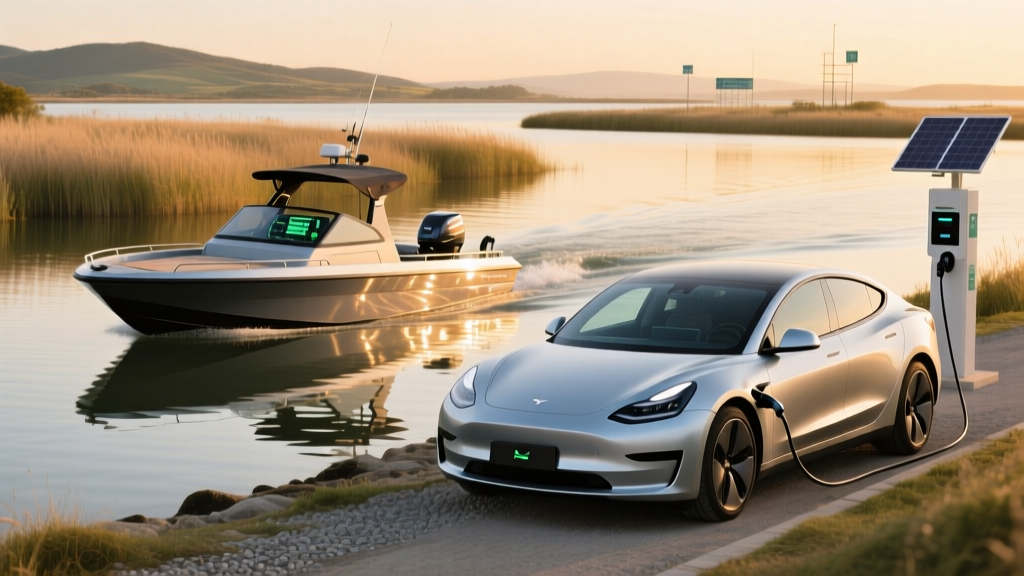
Electric fishing boats are no longer a niche experiment — in 2026, models from brands like X Shore, Greenline, and Arc Marine offer viable alternatives to gas-powered center consoles and bass boats, particularly for freshwater lakes, calm coastal waters, and short-day trips. However, they remain significantly more limited in range, more expensive upfront, and far less supported by charging infrastructure than electric vehicles (EVs). For most anglers, an EV truck paired with a traditional gas boat, or a plug-in hybrid (PHEV) SUV towing a smaller aluminum boat, delivers more practical versatility at a lower total cost. Electric fishing boats make the most sense for dock-based owners with Level 2 shore power, short fishing sessions (under 40 miles of motoring), and a tolerance for emerging technology pricing.
The Bottom Line for 2026
Electric fishing boats cost $60,000–$150,000+ for models with 30–60 nautical miles of range. They eliminate fuel costs (~$8–$15/gallon marine gas) and reduce maintenance dramatically, but charging infrastructure at marinas is sparse, cold water cuts range by 15–25%, and you cannot fast-charge on the water. Compare this to a Ford F-150 Lightning ($55,000–$80,000, 230–320 EPA miles) towing a gas boat, and the EV truck wins on versatility for most buyers.
Electric Fishing Boats: What's Actually Available in 2026
The electric boat market has matured but remains small compared to electric cars. Here's what's available for anglers as of early 2026:
| Model | Battery (kWh) | Range (nmi) | Top Speed | Base MSRP | Charge Time (L2) |
|---|---|---|---|---|---|
| X Shore Eelex 8000 | 126 kWh (NMC) | ~50 nmi (eco) | 35 knots | $329,000 | ~8 hours (22 kW) |
| Greenline 33 eDrive | 40–80 kWh | ~20–40 nmi | 10 knots | $185,000 | 4–6 hours |
| Arc Marine ONE | 226 kWh | ~45 nmi | 35+ knots | $298,000 | ~5 hours (DC) |
| Flux Marine (outboard retrofit) | 15–50 kWh | ~15–30 nmi | Varies by hull | $25,000–$55,000 | 3–5 hours |
Note: Range figures assume calm water, moderate speed (5–8 knots cruising). At planing speeds, range drops 50–70%. Source: manufacturer specifications and marine industry testing.
The critical distinction: unlike the EV market where you have 60+ models from $30,000 to $100,000, electric fishing boats cluster in the luxury tier. Affordable electric options are mostly limited to small pontoon boats, kayaks with trolling motors, or outboard motor swaps on existing hulls.
Electric Fishing Boats vs. EV Trucks Towing Gas Boats
Most anglers considering an electric boat already own or are considering an EV truck. The real question is whether to go all-electric on the water, or use the EV truck as a tow rig for a gas-powered boat. Here's how they compare:
| Factor | Electric Boat (e.g., Arc ONE) | EV Truck + Gas Boat (e.g., F-150 Lightning + 20' Bass Boat) | Gas Truck + Gas Boat |
|---|---|---|---|
| Upfront Cost | $298,000 | $55,000 (truck) + $45,000 (boat) = $100,000 | $50,000 + $45,000 = $95,000 |
| Range | 45 nmi (~52 statute miles) | 230–320 mi (truck); boat limited by 30-gal tank (~150 mi) | 400+ mi (truck); boat ~150 mi |
| Fuel/Energy Cost per Hour | ~$3–$5 (electricity at $0.15/kWh) | $0 (tow); ~$25–$40/hr (boat gas) | ~$25–$40/hr (boat); $15–$25/hr (truck) |
| Maintenance (Annual) | $500–$1,000 (no engine oil, impeller, etc.) | $800–$1,500 (boat winterization, lower unit, fuel system) | $1,200–$2,000 (boat + truck oil, filters) |
| Refueling/Recharging | 5–8 hours at dock; no on-water fast charging | 30–40 min DC fast charge (truck); 5 min gas fill (boat) | 5 min gas fill (both) |
| Noise | Near-silent | Silent tow; loud on water | Loud everywhere |
The data is clear: for anglers who fish multiple lakes, travel 100+ miles to reach water, or fish full days requiring sustained high-speed runs, the EV truck + gas boat combination dominates on range, cost, and flexibility. The electric boat wins only for dock-based owners who fish a single lake and value silence and zero wake-zone emissions.
Real-World Range: What the Sticker Doesn't Tell You
Just as EPA range estimates for EVs don't account for highway speeds, cold weather, or elevation, electric boat range figures assume ideal conditions. Here's what real-world testing and owner reports show:
- Cruising speed matters enormously: A boat rated for 50 nautical miles at 6 knots may deliver only 15–20 nautical miles at 20 knots. Hydrodynamic drag increases with the square of speed — the same physics that kills EV highway range.
- Cold water reduces battery performance: NMC batteries lose 15–25% capacity in water temperatures below 50°F (10°C), similar to how EVs lose 20–30% range in sub-freezing air.
- Currents and wind: Fighting a 2-knot current or 15-knot headwind can reduce range by 30–40%. Unlike an EV, you can't simply slow down to 25 mph to recover — you need minimum speed for steerage.
- Weight sensitivity: Fishing boats accumulate gear — coolers, tackle, bait tanks, passengers. Every 500 lbs of extra weight reduces range by 5–10%.
For context, a 45-nautical-mile rated electric boat realistically delivers 30–35 nautical miles in typical mixed-use fishing conditions (trolling, cruising to spots, idling). That's enough for a day on a 5,000-acre lake but not for open coastal water or multi-lake trips.
Charging Infrastructure: The Marina Problem
This is where electric boats face their biggest disadvantage compared to EVs. The U.S. has over 70,000 public EV charging ports (per the Alternative Fuels Data Center), but marine charging infrastructure is essentially nonexistent outside of select luxury marinas and private docks.
What you need to charge an electric boat:
- Home dock with shore power: A 240V/50A marine outlet (similar to a dryer plug) can deliver ~10 kW, adding roughly 8–12 nautical miles per hour of charging. Full recharge: 5–10 hours depending on battery size.
- Marina Level 2: Some forward-thinking marinas in Florida, California, and the Pacific Northwest now offer 22 kW marine chargers, but these remain rare. Expect to pay $0.25–$0.40/kWh — significantly more than home charging.
- DC fast charging: Essentially unavailable on the water. Arc Marine has announced partnerships for DC marine chargers, but deployment is minimal as of 2026.
If you don't have a private dock with electrical service, an electric boat is impractical. You cannot rely on public marine charging the way you can rely on Electrify America or Tesla Superchargers for road trips.
Total Cost of Ownership: 5-Year Breakdown
Let's model a realistic 5-year ownership scenario comparing three approaches, assuming 100 fishing days per year, 4 hours per trip:
| Cost Category | Electric Boat ($300K) | EV Truck + Gas Boat ($100K) | Gas Truck + Gas Boat ($95K) |
|---|---|---|---|
| Purchase Price | $300,000 | $100,000 | $95,000 |
| Fuel/Energy (5 years) | $3,500 | $18,000 (boat gas + truck electricity) | $28,000 (boat + truck gas) |
| Maintenance (5 years) | $4,000 | $7,500 | $10,000 |
| Insurance (5 years) | $18,000 | $12,000 | $11,000 |
| Depreciation (est.) | $120,000 (40%) | $40,000 (40%) | $38,000 (40%) |
| 5-Year Total | $445,500 | $177,500 | $182,000 |
The electric boat's fuel savings (~$24,000 over 5 years vs. gas) are real but dwarfed by the $200,000 higher purchase price and steeper depreciation (electric boats are unproven technology with uncertain resale values). Tax incentives also differ: the IRS §30D clean vehicle credit applies to EV trucks (up to $7,500, subject to MSRP caps, income limits, and battery sourcing rules), but does not apply to boats. Some states offer marine electrification rebates — check your local regulations.
Common Misconceptions About Electric Fishing Boats
| Myth | Fact |
|---|---|
| "Electric boats have unlimited range if you go slow." | Range improves at low speed, but you're still limited by battery kWh. A 100 kWh battery at 3 kW draw = ~33 hours at 4 knots = ~132 nmi max. That's theoretical; real-world is 60–70% of that. |
| "You can solar-charge while fishing." | Solar panels on a 20-foot boat generate ~300–500 watts. That extends range by maybe 2–3 nautical miles per day. Useful for keeping systems alive, not for meaningful propulsion. |
| "Electric boats are maintenance-free." | No oil changes or impellers, but you still need hull cleaning, anode replacement, battery management system monitoring, and eventual battery replacement ($30,000–$80,000 at 10–15 years). |
| "I can use any marina slip." | Most marina electrical systems are 30A/120V — enough for cabin lights and a battery charger, not a 100+ kWh traction battery. You need 50A/240V minimum, which many slips don't offer. |
| "Electric boats qualify for the $7,500 federal tax credit." | The §30D credit applies to on-road vehicles. Boats are not eligible. Some states (California, Washington) offer separate marine electrification incentives. |
Decision Framework: Should You Buy an Electric Fishing Boat?
Choose an Electric Fishing Boat If:
- You have a private dock with 240V/50A shore power (or can install it for $2,000–$5,000)
- You fish a single lake or protected bay, typically within 20 nautical miles of your dock
- You value near-silent operation (critical for fly fishing, sight-fishing, or wildlife photography)
- You boat in no-wake zones or emission-restricted waterways
- You have a budget above $200,000 and accept early-adopter depreciation risk
- You fish 50+ days per year, making fuel savings meaningful
Choose an EV Truck + Gas Boat If:
- You fish multiple lakes or travel 100+ miles to reach water
- You need 8+ hour fishing days with sustained high-speed runs
- You lack private dock charging access
- Your budget is under $150,000 total
- You want proven reliability and established dealer/service networks
- You also need a daily-driver truck for commuting, towing, or family use
Choose a Gas Truck + Gas Boat If:
- You fish remote areas with no electrical infrastructure
- You need maximum range and quick refueling on multi-day trips
- You're budget-conscious and want the lowest upfront cost
- You trailer your boat long distances (800+ miles) to reach seasonal fisheries
What First-Time Electric Boat Buyers Should Know
If you've decided an electric fishing boat fits your use case, here's what the brochures won't tell you:
- Battery replacement is real and expensive. Marine-grade NMC batteries degrade similarly to EV batteries — expect 10–20% capacity loss over 10 years. Replacement costs $30,000–$80,000 depending on kWh. Factor this into your 15-year ownership model.
- Marine electricians are rare. If your inverter fails or your BMS throws a fault, you can't roll into any marina and get same-day service like you can with a Mercury or Yamaha outboard. Service networks for electric marine drivetrains are concentrated in coastal tech hubs (Seattle, San Francisco, Fort Lauderdale).
- Weight distribution matters more. Batteries are heavy and low in the hull. This affects trailer weight, tow vehicle requirements, and hull performance. A 100 kWh battery pack weighs ~1,200 lbs — equivalent to 200 gallons of fuel.
- Winter storage is complicated. You can't just drain the fuel and cover the boat. Lithium batteries need to be stored at 40–60% state of charge in temperature-controlled environments. Leaving a boat in freezing water with a depleted battery can cause permanent cell damage.
- Resale value is uncertain. Unlike a 5-year-old Boston Whaler with a known depreciation curve, electric boats have almost no used-market history. Early adopters should expect 35–50% depreciation in the first 3 years.
Frequently Asked Questions
Can I convert my existing gas boat to electric?
Yes, but it's expensive and complex. Companies like Flux Marine and Elco offer electric outboard swaps ($25,000–$55,000 including batteries), but you'll lose 30–50% of your original range and may need hull modifications to support battery weight. It makes sense for small day boats (16–22 feet) used in calm water, not for offshore or high-performance applications.
Do electric fishing boats qualify for any tax incentives?
Not the federal §30D credit — that's for on-road vehicles only. However, some states offer marine electrification rebates. California's Clean Off-Road Equipment Voucher Incentive Project (Core) has included marine equipment in past funding rounds. Check your state's energy office for current programs.
How long do electric boat batteries last?
Marine NMC batteries are rated for 2,000–3,000 charge cycles before dropping to 80% capacity. At 100 cycles per year (2 fishing days per week), that's 20–30 years to 80% health. However, calendar aging and marine environmental stress (humidity, salt, vibration) may accelerate degradation. Expect 10–15 years of practical service life before replacement.
Can I fish in saltwater with an electric boat?
Yes, but corrosion protection is critical. Electric marine systems are sealed to IP67 or higher, but connectors, shore power inlets, and battery compartments need regular freshwater rinsing and anti-corrosion treatment. Saltwater use may void some warranties if maintenance logs aren't kept.
What happens if I run out of charge on the water?
Unlike a gas boat where you can carry a spare fuel can, a depleted electric boat requires a tow. Most marine assistance services (Sea Tow, BoatUS) will tow you, but response times can be 1–3 hours. Always plan trips with a 30% battery reserve, just as you'd keep a fuel reserve in a gas boat.
Sources: Manufacturer specifications (X Shore, Arc Marine, Greenline, Flux Marine); U.S. Department of Energy Alternative Fuels Data Center; IRS Clean Vehicle Credit guidelines. Pricing and availability as of January 2026.