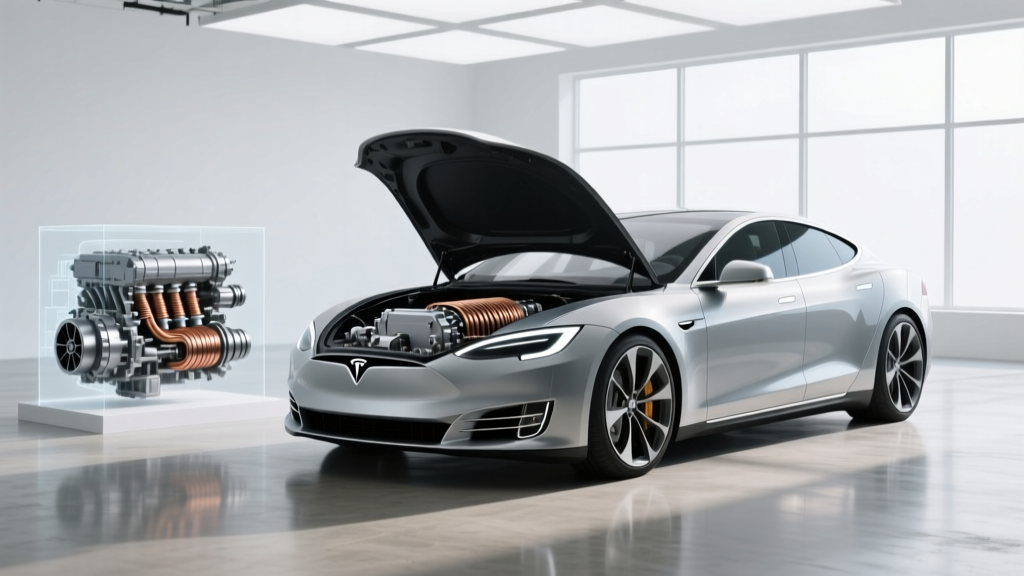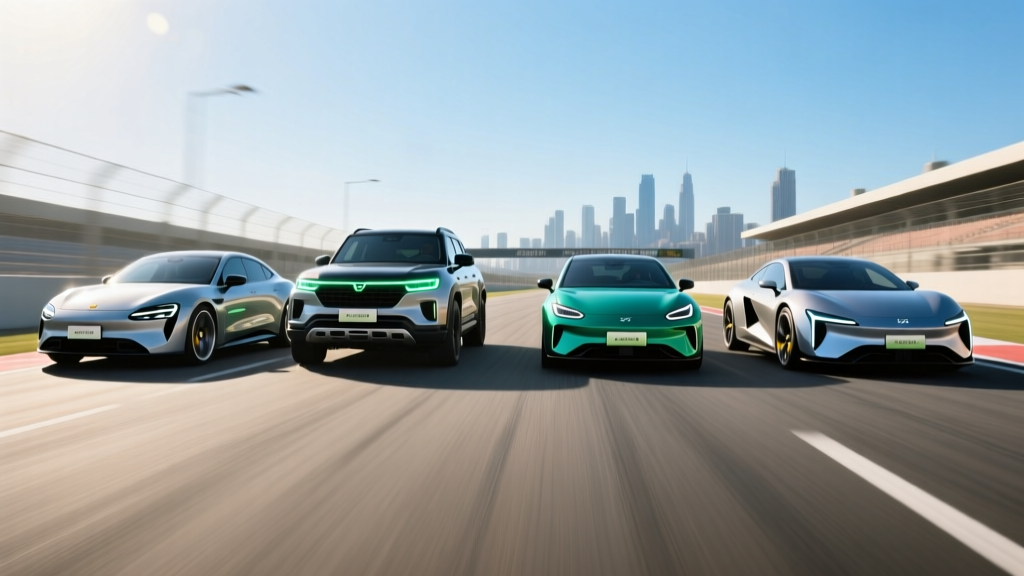
The short answer: The quickest production EVs in a standing electric drag race in 2026 are led by the Lucid Air Sapphire (0-60 mph in 1.89 seconds, 1,234 hp), the Tesla Model S Plaid (1.99s, 1,020 hp), and the Porsche Taycan Turbo GT with Weissach Package (2.1s, 1,019 hp). However, winning a drag race costs real money in purchase price, range sacrifice, and insurance premiums. A $130,000+ hyper-EV may dominate the quarter-mile, but a $52,000 Tesla Model 3 Performance (2.9s 0-60) delivers 90% of the thrill at a third of the price.
Search "electric drag race" on any video platform and you'll find Teslas embarrassing supercars, Rivian trucks outrunning sports sedans, and Hyundai Ioniq 5 N models holding their own against cars costing three times as much. Electric motors deliver instant torque from zero RPM — no turbo spool, no transmission shift delay, no power-band wait. That physics advantage makes nearly every performance EV a credible drag-race weapon.
But speed numbers on a spec sheet don't tell the full ownership story. This guide breaks down the real acceleration figures, the range and cost trade-offs, and a practical framework for deciding whether a drag-strip-capable EV makes sense for your daily life — or whether a less extreme model delivers smarter value.
The 2026 EV Drag Race Leaderboard: 0-60 Times and Specs
The table below ranks current production EVs by verified or manufacturer-claimed 0-60 mph times. Note that 0-60 times assume ideal conditions — prepped surface, warm tires, low state of charge (SoC) heat soak managed by preconditioning, and launch control engaged. Real-world street runs typically add 0.1-0.3 seconds.
| Vehicle | 0-60 mph | Horsepower | Battery (kWh) | EPA Range | Base MSRP |
|---|---|---|---|---|---|
| Lucid Air Sapphire | 1.89s | 1,234 hp | 118 kWh (NMC) | 427 mi | $249,000 |
| Tesla Model S Plaid | 1.99s | 1,020 hp | 100 kWh (NMC) | 396 mi | $89,990 |
| Porsche Taycan Turbo GT (Weissach) | 2.1s | 1,019 hp | 105 kWh (NMC) | 269 mi | $230,000 |
| Tesla Model 3 Performance | 2.9s | 510 hp | 79 kWh (NMC) | 315 mi | $52,990 |
| BMW i4 M50 | 3.3s | 536 hp | 81.5 kWh (NMC) | 282 mi | $69,700 |
| Hyundai Ioniq 5 N | 3.25s | 640 hp (N Grin Boost) | 84 kWh (NMC) | 221 mi | $67,500 |
| Rivian R1T Tri Motor | 3.0s | 850 hp | 149 kWh (NMC) | 328 mi | $99,900 |
| Audi RS e-tron GT | 3.1s | 637 hp | 93.4 kWh (NMC) | 246 mi | $149,900 |
Sources: fueleconomy.gov for EPA range; manufacturer press sites for 0-60 and pricing. All MSRPs reflect 2026 model year before destination charges.
EV vs. Gas: Why Electric Wins the Drag Race Every Time
The reason EVs dominate standing-start acceleration is fundamental physics. Internal combustion engines produce peak torque only within a narrow RPM band — typically 2,000-5,000 RPM. Getting to that band requires clutch engagement, turbo spool-up, or transmission downshifts, each introducing tenths of a second of delay.
Electric motors, by contrast, deliver maximum torque at 0 RPM. The moment you lift off the brake and apply throttle, full torque hits the wheels. There's no lag, no shift interruption, and no drivetrain slack to manage.
| Metric | Tesla Model S Plaid (EV) | Dodge Challenger Hellcat Redeye (Gas) |
|---|---|---|
| 0-60 mph | 1.99s | 3.4s |
| Quarter-mile | 9.25s @ 152 mph | 10.8s @ 131 mph |
| Peak horsepower | 1,020 hp | 797 hp |
| Drivetrain | AWD tri-motor, direct drive | RWD, 8-speed auto |
| Launch preparation | Precondition battery, engage launch mode | Brake-torque, wait for turbo spool |
| Consistency (repeat runs) | High — thermal management maintains output | Decreases — heat soak reduces power |
| Cost to "fuel" one pass | ~$0.15 (0.5 kWh) | ~$1.50 (0.3 gal premium) |
| Purchase price | $89,990 | ~$92,000 (2023 final MSRP) |
The gap is even wider at lower price points. A $52,990 Tesla Model 3 Performance (2.9s 0-60) will beat a $65,000 BMW M3 Competition (3.4s) off the line. The EV advantage isn't just about hypercars — it's baked into every dual-motor performance EV on the market.
The Real Cost of Owning a Drag-Race EV
Acceleration is free at the stoplight, but the vehicles that deliver it carry significant ownership costs. Here's a five-year cost breakdown comparing three common paths: a performance EV, a mainstream EV, and a gas sports sedan.
| Cost Category | Tesla Model S Plaid ($89,990) | Tesla Model 3 LR ($47,740) | BMW M3 Comp. (~$76,000) |
|---|---|---|---|
| Purchase price | $89,990 | $47,740 | $76,000 |
| Federal tax credit (§30D) | $0 (MSRP exceeds sedan cap; income limits apply) | Up to $7,500 (if eligible) | $0 |
| 5-year energy/fuel cost | $4,200 (electricity) | $3,500 (electricity) | $11,800 (premium gas) |
| 5-year maintenance | $2,500 | $1,800 | $6,500 |
| 5-year insurance (avg) | $18,500 | $9,200 | $12,400 |
| Tire replacement (5 yr) | $4,800 (high-performance rubber wears fast) | $2,400 | $3,600 |
| Estimated 5-yr total cost | $119,990 | $57,140 | $110,300 |
Energy costs assume $0.14/kWh national average for home charging and 15,000 miles/year. Gas cost assumes $4.20/gal premium at 19 MPG combined. Insurance estimates from industry averages for performance vehicles. Actual figures vary by state, driving record, and insurer. Federal tax credit eligibility per IRS §30D rules depends on MSRP caps ($55,000 for sedans), buyer income limits ($150K single / $300K joint), and battery sourcing requirements. Always consult a tax professional.
The critical insight: tire costs on a 1,000+ hp EV are brutal. High-performance Michelin Pilot Sport 4S or Pirelli P Zero tires on a Model S Plaid or Lucid Sapphire may last only 8,000-12,000 miles under aggressive driving. That's two to three sets over five years. The instant torque that wins drag races also shreds rubber.
Range Trade-Off: Does Speed Kill Your Miles?
The dual-motor and tri-motor powertrains that deliver sub-3-second 0-60 times add weight (typically 300-500 lbs over single-motor variants) and consume more energy at all speeds. Performance tires also increase rolling resistance.
Real-world range reality for performance EVs:
- Lucid Air Sapphire: EPA 427 mi — expect ~340 mi highway, ~290 mi in cold weather (below 32°F)
- Tesla Model S Plaid: EPA 396 mi — expect ~310 mi highway, ~260 mi cold
- Hyundai Ioniq 5 N: EPA 221 mi — expect ~170 mi highway, ~140 mi cold; track use can deplete the battery in under 30 minutes
- Porsche Taycan Turbo GT: EPA 269 mi — expect ~210 mi highway, ~175 mi cold
Aggressive driving — the kind that produces drag-race-worthy launches — can cut range by 40-60% versus EPA estimates. A single hard quarter-mile pass may consume 2-5 kWh, equivalent to 8-20 miles of normal driving.
If daily range matters more than quarter-mile times, the Tesla Model 3 Long Range (363 mi EPA, 3.7s 0-60) or the Hyundai Ioniq 6 SE Long Range (361 mi EPA, 5.1s 0-60) deliver strong-enough acceleration with far less range compromise.
Common Drag-Race EV Myths, Busted with Data
| Myth | Fact |
|---|---|
| "EVs can only do one fast pass before the battery overheats" | Modern thermal management (the Plaid's octovalve, Porsche's 800V architecture) allows 3-5 consecutive hard launches before thermal limiting kicks in. Sustained track use is a different story — the Ioniq 5 N's battery cooling is purpose-built for this. |
| "You need a prepped drag strip to get claimed 0-60 times" | Partially true. Manufacturer 0-60 figures use prepped surfaces and drag radials or performance tires at optimal temperature. Street asphalt adds 0.1-0.3s. Cold tires add more. |
| "Performance EVs have terrible resale value" | Mixed. Tesla Model S Plaid depreciation has been steep (40-50% over 3 years per Kelley Blue Book), while Porsche Taycan values hold better due to brand cachet and lower production volume. |
| "All EVs are fast, so why pay more?" | True at the low end — even a $40,000 Chevy Equinox EV does 0-60 in ~7.5s, which is quick for a crossover. But the gap between 7.5s and 2.9s is enormous in feel and passing power. Paying for performance still buys a physically different experience. |
| "EV drag racing is free because electricity is cheap" | The energy per pass is trivial (~$0.15), but tire wear, brake wear (less than gas cars due to regen, but still present), and insurance premiums are the real costs. Insurance on a Plaid averages $3,700/year — nearly double a Model 3. |
First-Time EV Buyer? What You Need to Know Before Chasing Horsepower
If you're new to EVs and tempted by the drag-race appeal, here are the ownership realities no spec sheet reveals:
Home charging is nearly mandatory for satisfaction. A Level 2 home charger (240V, 40-48A, delivering 7.7-11.5 kW) refills a 100 kWh battery overnight in 9-13 hours. Installation costs $800-$2,500 for most homes with a 200A electrical panel. If your panel is 100A or maxed out, a panel upgrade adds $1,500-$3,500. Relying solely on public DC fast charging is viable but costs 3-5x more per kWh and adds 20-40 minutes to your week.
Preconditioning matters for performance. To achieve peak acceleration, your battery needs to be at optimal temperature (typically 95-115°F at the cell level). Tesla's "Drag Strip" mode and Porsche's launch preconditioning warm the battery to the right temperature — but this takes 15-45 minutes of planning. A cold battery on a winter morning won't deliver its rated 0-60 time.
Battery degradation is modest but real. NMC batteries in performance EVs typically lose 8-12% capacity over 100,000 miles with normal use. Frequent DC fast charging and repeated hard launches accelerate degradation slightly. All manufacturers warranty the battery for 8 years/100,000 miles (10 years/150,000 in California-emissions states) against falling below 70% capacity retention. Per NHTSA and manufacturer filings, warranty claims remain rare for modern liquid-cooled packs.
Federal tax credits rarely apply to hyper-EVs. The §30D credit has a $55,000 MSRP cap for sedans ($80,000 for SUVs/trucks/vans). The Lucid Sapphire ($249K), Taycan Turbo GT ($230K), and even the Model S Plaid ($89,990) exceed these caps. The Tesla Model 3 Performance ($52,990) squeaks under the sedan cap and may qualify — but only if you meet income limits and the battery sourcing requirements check out. Always verify on irs.gov before counting on the credit.
Decision Framework: Which EV Drag-Race Path Is Right for You?
Choose the hyper-EV route (Lucid Sapphire, Model S Plaid, Taycan Turbo GT) if:
- You have $90K-$250K+ in vehicle budget and don't need a tax credit
- You want sub-2.5s 0-60 and quarter-mile times that embarrass supercars
- You have home Level 2 charging and can absorb $3,500+/year in insurance
- You accept 40-50% depreciation over 3 years (Tesla) or better retention (Porsche)
- You'll drive it regularly, not just as a weekend toy
Choose the accessible-performance route (Model 3 Performance, Ioniq 5 N, BMW i4 M50) if:
- Your budget is $52K-$70K and you want to potentially claim the $7,500 federal credit (Model 3)
- Sub-3.5s 0-60 is thrilling enough — and it is, trust us
- You want a daily-driver with 250+ miles of real-world range
- You care about practicality: back seats, trunk space, reasonable tire costs
- You want to occasionally hit a track day (the Ioniq 5 N is purpose-built for this)
Choose the sleeper-performance route (Model 3 Long Range, Ioniq 6, BMW iX xDrive50) if:
- You want strong acceleration (4.0-5.5s 0-60) without the performance-EV insurance penalty
- Range and efficiency matter more than quarter-mile bragging rights
- Your budget is $42K-$70K
- You'll still beat most gas cars off the line — you just won't embarrass a Corvette
Frequently Asked Questions
Can I actually take my EV to a drag strip?
Yes. Most NHRA and local drag strips accept EVs in their regular test-and-tune sessions. Some strips require a technical inspection for vehicles running quicker than 9.99 seconds in the quarter-mile — which means a Model S Plaid or Lucid Sapphire will need a roll cage, racing harness, and fire suit per NHRA rules. The Tesla Model 3 Performance (typically 11.0-11.5s quarter-mile) usually runs without special safety equipment.
Does repeated hard launching damage the EV battery?
Modern EVs have sophisticated thermal management that limits output if battery temperatures exceed safe thresholds. You're more likely to experience temporary power reduction ("thermal limiting") than permanent damage. That said, frequent hard launches combined with regular DC fast charging will accelerate long-term degradation. Keeping hard launches to occasional use and charging primarily at home on Level 2 is the best longevity strategy.
How does an EV's drag-race performance change in cold weather?
Significantly. At 20°F ambient temperature, expect 0-60 times to increase by 0.3-0.8 seconds unless you precondition the battery. Cold cells have higher internal resistance, which limits peak power delivery. Most performance EVs won't reach their claimed acceleration figures below 40°F without 20-45 minutes of battery preconditioning. Summer is drag-race season for EVs, just like gas cars.
Is the Hyundai Ioniq 5 N really a serious drag-race car?
It's a serious performance car with a 3.25s 0-60 and 640 hp in N Grin Boost mode, but its 221-mile EPA range is its Achilles' heel. On a drag strip, it's genuinely quick and impressively repeatable thanks to dedicated battery cooling. As a daily driver, you'll be charging more often than Model 3 or Model S owners. It's best suited as a second car or for someone with short commutes and home charging.
What's the cheapest EV that can beat a Mustang GT in a drag race?
The 2026 Tesla Model 3 Long Range AWD ($47,740 MSRP, 3.7s 0-60) beats the current Mustang GT EcoBoost (5.1s) handily and is close to the GT V8 (4.3s). For a definitive win over the V8 Mustang GT, the Tesla Model 3 Performance ($52,990, 2.9s) is the most affordable option. The used-EV market also offers 2022-2024 Model 3 Performance examples in the $30,000-$38,000 range — potentially eligible for the $4,000 used-EV tax credit.
Electric drag racing isn't a gimmick — it's a physics advantage that every EV buyer benefits from, whether they chase sub-2-second times or simply enjoy merging onto highways with effortless authority. The smart move is matching the performance tier to your actual budget, range needs, and ownership patience. The quarter-mile doesn't care about your intentions — it only measures what torque, traction, and thermal management can deliver.