Quick Answer: Which Electric Chevy SUV Should You Buy?
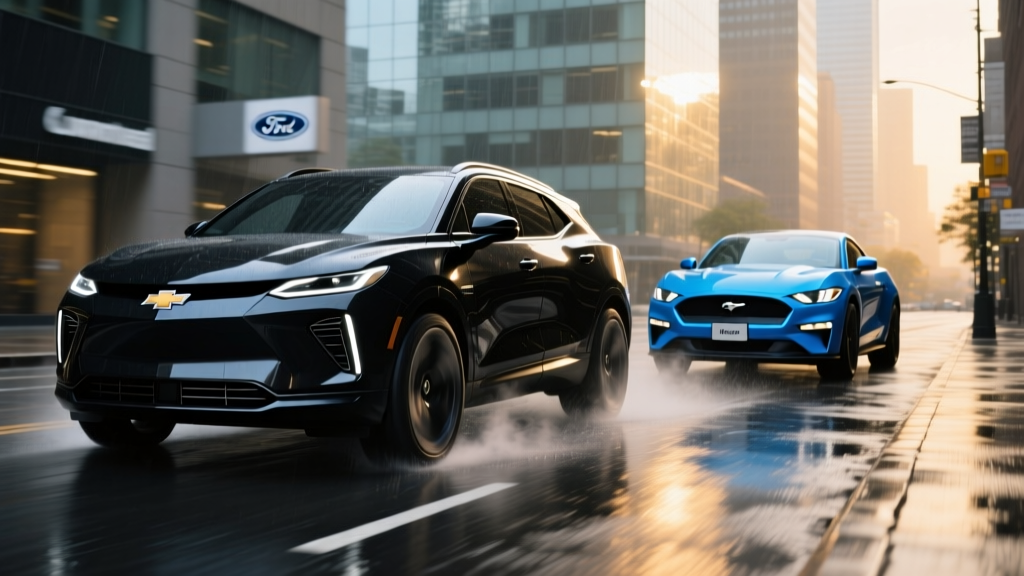
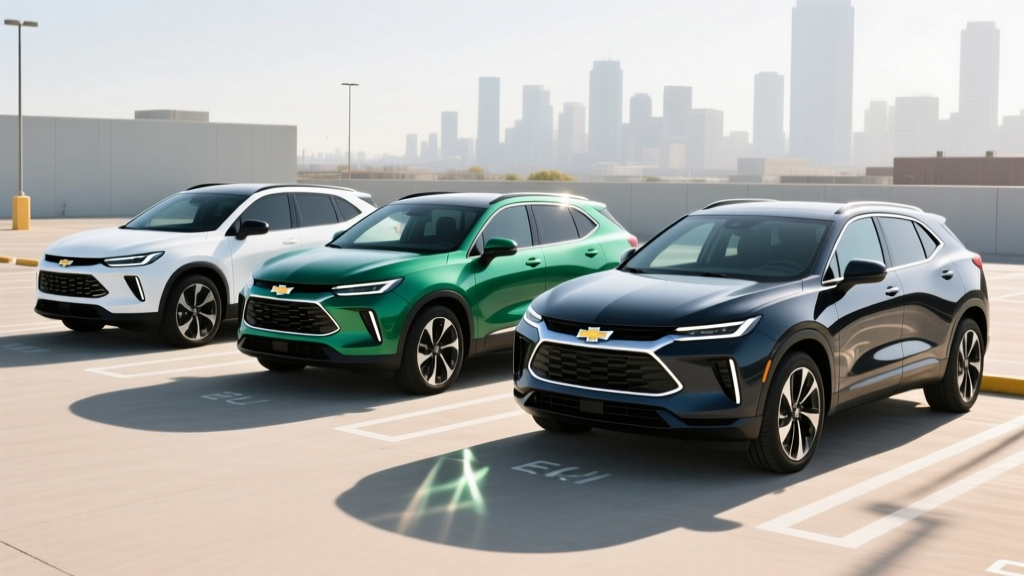
Chevrolet currently offers three electric SUVs for 2026. The Equinox EV (EPA range up to 319 miles, starting ~$33,600) is the best value and volume seller for most families. The Blazer EV (up to 324 miles, starting ~$44,600) targets buyers wanting more power, space, and premium features. The Bolt EUV (247 miles, starting ~$28,800) remains the most affordable entry point but uses older CCS charging hardware with slower DC fast-charge speeds. Your best pick depends on budget, daily mileage, and whether you need fast road-trip charging.
2026 Chevy Electric SUV Lineup at a Glance
Chevrolet's electric SUV strategy spans three distinct models built on two different platforms. The Equinox EV and Blazer EV ride on GM's dedicated Ultium (BEV3) architecture with modern NMC battery packs and available NACS charge ports. The Bolt EUV carries over on the older BEV2 platform — still practical, but with limitations in charging speed that matter for road-trippers.
| Spec | 2026 Bolt EUV | 2026 Equinox EV | 2026 Blazer EV |
|---|---|---|---|
| EPA Range (max config) | 247 mi | 319 mi | 324 mi |
| Battery (usable, kWh) | 65 kWh (NMC) | 85 kWh (NMC) | 102 kWh (NMC) |
| Peak DC Fast Charge | 55 kW | 150 kW | 190 kW |
| 10–80% DCFC Time | ~55 min | ~32 min | ~28 min |
| Level 2 Charge Rate | 11.5 kW | 11.5 kW (19.2 kW opt.) | 11.5 kW (19.2 kW opt.) |
| Horsepower (max AWD) | 200 hp (FWD) | 288 hp (AWD) | 557 hp (SS AWD) |
| 0–60 mph | ~7.2 sec | ~7.8 sec (FWD) / ~5.5 sec (AWD) | ~4.0 sec (SS) |
| Charge Port | CCS1 | NACS (native) | NACS (native) |
| Base MSRP | ~$28,800 | ~$33,600 | ~$44,600 |
| Battery/Powertrain Warranty | 8 yr / 100,000 mi | 8 yr / 100,000 mi | 8 yr / 100,000 mi |
Sources: EPA fueleconomy.gov, Chevrolet.com configurator. Specs reflect highest-range trim configurations; lower trims may vary.
Real-World Range: What the EPA Sticker Doesn't Tell You
EPA estimates are a useful baseline, but real-world range depends heavily on speed, temperature, and terrain. Here's what to expect from each model based on highway driving and cold-weather conditions:
Equinox EV (319 mi EPA, LT2 FWD)
Highway (70 mph, 72°F): Expect ~265–285 miles. Aerodynamic drag at sustained highway speed cuts range by roughly 10–15% versus the combined EPA cycle.
Cold weather (30°F, mixed driving): Expect ~225–255 miles. The Equinox EV's heat pump helps, but battery chemistry still loses efficiency below freezing.
Worst-case (70 mph, 20°F, headwind): ~200–220 miles. Plan charging stops accordingly on winter road trips.
Blazer EV (324 mi EPA, RS RWD)
Highway (70 mph, 72°F): ~270–295 miles. The larger 102 kWh pack provides a buffer, but the Blazer's wider frontal area increases drag.
Cold weather (30°F): ~235–265 miles. Heat pump is standard on most trims.
Bolt EUV (247 mi EPA)
Highway (70 mph, 72°F): ~200–220 miles. The smaller 65 kWh pack limits highway margin significantly.
Cold weather (30°F): ~170–195 miles. No heat pump — cabin heat draws directly from the battery. This is the Bolt EUV's biggest real-world limitation for northern-climate buyers.
Charging Speed and the NACS vs. CCS Divide
This is where the platform gap between the Bolt EUV and the newer Ultium models becomes critical. The Equinox EV and Blazer EV feature native NACS (North American Charging Standard) ports, meaning direct access to Tesla Supercharger stalls — the most reliable and extensive DC fast-charging network in the U.S. The Bolt EUV uses a CCS1 connector and requires an adapter for Supercharger access (available from Chevy dealers, though adapter compatibility and stall availability can vary).
| Charging Level | Power (kW) | Equinox EV (mi/hr added) | Blazer EV (mi/hr added) | Bolt EUV (mi/hr added) |
|---|---|---|---|---|
| Level 1 (120V household) | ~1.4 kW | ~4 mi/hr | ~4 mi/hr | ~4 mi/hr |
| Level 2 (240V, 48A) | 11.5 kW | ~34 mi/hr | ~35 mi/hr | ~34 mi/hr |
| Level 2 (240V, 80A optional) | 19.2 kW | ~57 mi/hr | ~58 mi/hr | N/A |
| DC Fast Charge (peak) | 150–190 kW (55 kW Bolt) | ~770 mi/hr peak | ~950 mi/hr peak | ~200 mi/hr peak |
Understanding the charge curve: Peak kW is not sustained kW. A Blazer EV hitting 190 kW at 10% SoC will taper to ~80 kW by 60% and ~40 kW above 80%. The 10–80% time (~28 minutes) is the meaningful metric. Charging from 80–100% can add another 25+ minutes — so plan to unplug at 80% on road trips unless you need every mile.
Home charging reality: Most Equinox EV and Blazer EV owners will install a Level 2 wallbox (240V, 48A). Budget $500–$800 for the charger unit and $800–$2,500 for electrician installation, depending on whether your panel needs an upgrade to 200A service. A full overnight charge from 20% to 100% takes roughly 7 hours at 11.5 kW — more than enough for daily use.
Cost of Ownership: Electric Chevy SUV vs. Gas Equivalent
Upfront, EVs still carry a price premium, but operating costs tell a different story. Here's a 5-year comparison using the Equinox EV 2LT FWD (~$36,400 MSRP) versus the gas Equinox LT AWD (~$31,000 MSRP) as a representative matchup.
| Cost Factor (5 yr / 75,000 mi) | Equinox EV 2LT | Gas Equinox LT AWD |
|---|---|---|
| Purchase Price (MSRP) | $36,400 | $31,000 |
| Est. Federal Tax Credit (§30D) | Up to $7,500* | $0 |
| Effective Purchase Price | ~$28,900 | $31,000 |
| Fuel / Electricity (75k mi) | ~$3,200 (home charging avg.) | ~$8,600 (27 MPG, $3.50/gal) |
| Maintenance (oil, brakes, filters) | ~$600 | ~$2,800 |
| Insurance (avg. premium) | ~$9,500 | ~$8,000 |
| Est. 5-Year Total Cost | ~$42,200 | ~$50,400 |
*Federal §30D tax credit eligibility depends on MSRP caps (SUVs: $80,000), buyer income limits ($150K single / $300K joint AGI), and battery critical-mineral sourcing requirements. Credit can be applied at point of sale. Verify current-year rules at IRS.gov and consult a tax professional.
Key takeaways:
- The Equinox EV's tax credit can erase the upfront price gap entirely.
- Home charging at ~$0.13/kWh yields a fuel cost of roughly $0.04/mile versus $0.13/mile for gas.
- EV insurance premiums run 15–25% higher on average — factor this into your budget.
- Regenerative braking dramatically extends brake pad life; many EV owners replace pads at 100k+ miles.
- Public DC fast charging costs more ($0.30–$0.50/kWh) — frequent road-trippers should budget accordingly.
Federal Tax Credit Eligibility for Chevy Electric SUVs
As of 2026, the IRS §30D Clean Vehicle Credit offers up to $7,500 for qualifying new EVs, but the rules are specific and subject to change:
§30D Requirements Checklist
- MSRP Cap: SUVs must be under $80,000 (all three Chevy EV SUVs qualify).
- Buyer Income Cap: Modified AGI ≤ $150,000 (single) or ≤ $300,000 (married filing jointly).
- Battery Sourcing: $3,750 of the credit requires critical minerals from the U.S. or FTA partners; the other $3,750 requires battery components manufactured in North America. GM's Ultium batteries are assembled in the U.S., but critical-mineral compliance varies by model year and trim — verify at the time of purchase.
- Point-of-Sale Transfer: Buyers can transfer the credit to the dealer at purchase, reducing the purchase price directly rather than waiting for a tax refund.
- Final Assembly: Vehicle must undergo final assembly in North America (all three models are assembled in the U.S. or Mexico — confirm VIN eligibility at fueleconomy.gov).
Misconception check: "The Bolt EUV is discontinued, so I can't get the credit." The Bolt EUV was discontinued after the 2023 model year, then reintroduced for 2025–2026 on updated terms. Always verify current model-year availability and credit eligibility at the dealer and on the IRS site before assuming.
Decision Framework: Which Electric Chevy SUV Fits You?
Choose the Bolt EUV if:
- Your budget is under $30,000 and you want the cheapest new EV SUV available.
- Your daily commute is under 60 miles round-trip and you charge at home nightly.
- You rarely take road trips over 200 miles, or you're patient with longer charge stops.
- You live in a mild climate where cold-weather range loss is minimal.
Choose the Equinox EV if:
- You want 300+ miles of EPA range and native Supercharger access for under $40,000.
- You're a first-time EV buyer looking for the best value-to-range ratio in Chevy's lineup.
- You need a practical family SUV with solid cargo space (~26 cu ft rear seats up, ~57 cu ft folded).
- You take 2–4 road trips per year and want ~30-minute charge stops, not ~55-minute ones.
Choose the Blazer EV if:
- You want performance (the SS trim does 0–60 in ~4 seconds) alongside range.
- You need more interior room, towing capacity, and a premium cabin experience.
- Your budget accommodates $45,000+ and you value the larger 102 kWh battery for highway margin.
- You want the fastest DC charging in Chevy's SUV lineup for frequent long-distance driving.
Common Misconceptions About Chevy Electric SUVs
| Myth | Fact |
|---|---|
| "EV batteries need replacing every 5 years." | GM warranties the battery pack for 8 years/100,000 miles against degradation below 70% capacity. Real-world data shows NMC packs losing ~10–15% over 8 years with normal use. |
| "I can't take road trips because charging takes too long." | The Equinox EV and Blazer EV charge 10–80% in ~28–32 minutes at DC fast chargers. Combined with Supercharger network access, a 600-mile trip requires two ~30-minute stops — comparable to gas-car rest stops. |
| "I need a special electrical panel to charge at home." | Most homes with a 200A panel and a 50A circuit can support Level 2 charging. A licensed electrician can assess your panel for $150–$300. Older 100A panels may need a $1,500–$3,000 upgrade. |
| "The Bolt EUV charges just as fast as the newer models." | The Bolt EUV peaks at 55 kW DC — roughly one-third the speed of the Blazer EV (190 kW). A 10–80% charge takes ~55 minutes versus ~28 minutes. This matters significantly on road trips. |
| "All Chevy EVs qualify for the full $7,500 tax credit." | Credit eligibility depends on battery sourcing, buyer income, and MSRP. The amount can be $0, $3,750, or $7,500 depending on current-year sourcing compliance. Always verify before purchase. |
First-Time EV Buyer Checklist
If this is your first electric vehicle, here's what to prepare before signing the purchase agreement:
- Assess home charging: Do you have a garage or driveway with access to a 240V outlet? If not, get an electrician quote for Level 2 installation before buying. Level 1 (120V) works for low-mileage drivers but adds only ~4 miles per hour of charging.
- Calculate your real daily mileage: If your round-trip commute is under 80 miles, even the Bolt EUV covers 3 days between charges. If you drive 100+ miles daily, the Equinox EV or Blazer EV gives you necessary buffer.
- Check your electrical panel: A 200A panel with available breaker slots is ideal. If your home has 100A service, budget for a potential panel upgrade ($1,500–$3,000) or consider a lower-amperage Level 2 charger (32A/7.7 kW) that still provides ~25 miles per hour of charge.
- Verify tax credit eligibility: Use the VIN tool at fueleconomy.gov and confirm your AGI falls within limits. The point-of-sale transfer option simplifies the process — your dealer applies the credit at signing.
- Plan for insurance: Get quotes before purchasing. EV premiums average 15–25% higher than gas equivalents due to repair costs and battery replacement risk. Shop multiple carriers.
- Download charging apps: PlugShare, ChargePoint, EVgo, and the Tesla app (for Supercharger access with NACS-equipped models) are essential. Check charger availability along your most common routes.
Frequently Asked Questions
Is the Chevy Equinox EV worth it over the gas Equinox?
Financially, yes for most buyers who qualify for the §30D tax credit and charge primarily at home. The effective purchase price after the credit can undercut the gas model, and you'll save ~$5,000+ in fuel and maintenance over 5 years. The trade-off is higher insurance premiums and the need for home charging access. If you can't charge at home and rely on public DC fast charging exclusively, the cost advantage narrows significantly.
Can I tow with a Chevy electric SUV?
The Blazer EV is rated for up to 1,500 lbs of towing capacity (AWD trims). The Equinox EV is rated for up to 1,500 lbs as well. The Bolt EUV is not rated for towing. Keep in mind that towing reduces range by 30–50% depending on trailer weight and aerodynamics — a Blazer EV towing a small utility trailer may see highway range drop to 170–200 miles.
How long will the battery last in a Chevy electric SUV?
GM's Ultium NMC battery packs are warranted for 8 years/100,000 miles with a capacity retention threshold of 70%. Based on degradation data from similar GM EVs, expect ~10–15% capacity loss over 8 years of typical use. That means a 319-mile Equinox EV might deliver ~270–285 miles at year eight. Battery replacement, if needed out of warranty, currently runs $12,000–$18,000 depending on the pack — though prices continue to decline.
Do the Equinox EV and Blazer EV work at Tesla Superchargers?
Yes. Both models feature native NACS charge ports and are compatible with Tesla's Supercharger network using the V3 (250 kW) and V4 stalls. This is a major advantage over CCS-equipped vehicles, as the Supercharger network has the highest uptime and coverage in the U.S. You'll use the Tesla app or in-vehicle integration to initiate sessions.
What happens if I live in an apartment and can't charge at home?
Home charging is the most convenient and cheapest way to own an EV, but it's not the only option. If your workplace offers Level 2 charging, or you have reliable public Level 2 chargers near your routine (grocery stores, gyms, libraries), an EV can still work. However, relying entirely on public DC fast charging increases your per-mile fuel cost to roughly $0.10–$0.15/mile — closer to a gas hybrid's cost — and adds time to your routine. Consider a PHEV like the Chevy Equinox-based hybrid if home charging isn't feasible.
Editorial note: Specs, pricing, and tax-credit rules reflect 2026 model-year data available at time of publication. Always confirm final pricing, credit eligibility, and vehicle availability with your local Chevrolet dealer and at IRS.gov before purchasing. Real-world range estimates are based on testing data and owner reports; your results will vary based on driving style, climate, and conditions.