Quick Answer: Which Electric Chevy Is Right for You?
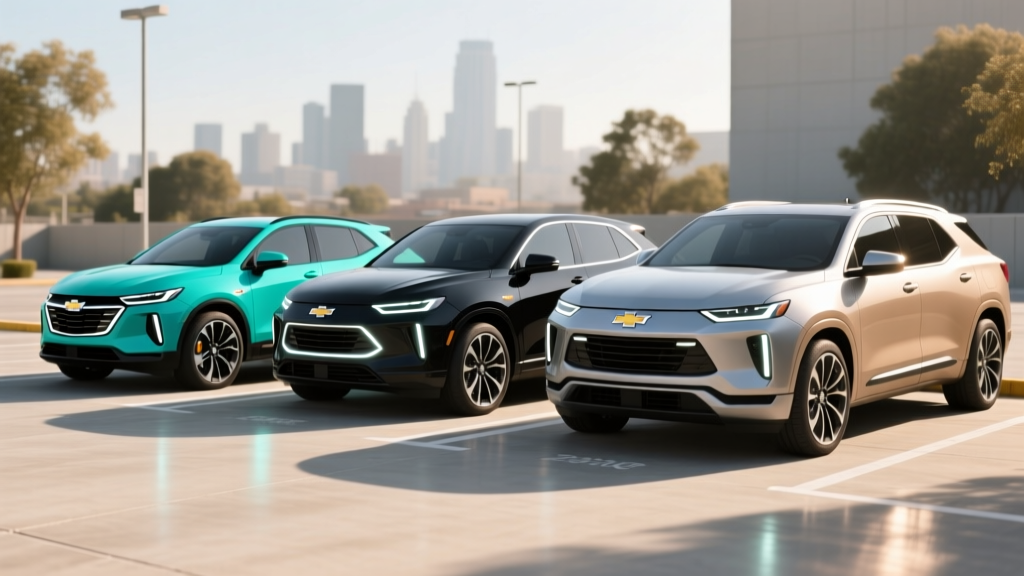
Chevrolet's 2026 EV lineup covers three distinct needs. The Equinox EV starts at $33,600 and delivers up to 319 miles EPA — the value pick for commuters and small families. The Blazer EV ($44,600) adds performance (up to 557 hp on SS) and a sportier profile with 279–324 miles range. The Silverado EV ($57,900) targets truck buyers needing 350–460 miles of range and up to 12,500 lbs towing. All three ride on GM's Ultium platform with NMC battery chemistry, DC fast charging up to 190–350 kW depending on model, and the NACS connector for native Tesla Supercharger access.
The 2026 Electric Chevy Lineup at a Glance
Chevrolet has fully committed to electrification across its highest-volume segments. Rather than a single halo car, the bowtie brand now offers a battery-electric compact crossover, midsize crossover, and full-size pickup — all sharing the Ultium battery architecture but tuned for very different buyers.
| Spec | Equinox EV | Blazer EV | Silverado EV |
|---|---|---|---|
| Body Style | Compact Crossover | Midsize Crossover | Full-Size Pickup |
| EPA Range (max) | 319 mi | 324 mi | 460 mi |
| Battery (usable) | 85 kWh (NMC) | 102 kWh (NMC) | 200 kWh (NMC) |
| Peak DC Fast Charge | 150 kW | 190 kW | 350 kW |
| 10–80% DC Charge | ~32 min | ~28 min | ~20 min |
| Level 2 Charge Rate | 11.5 kW | 11.5 kW | 19.2 kW |
| Horsepower (max) | 220 hp | 557 hp (SS) | 754 hp (4WT) |
| 0–60 mph (quickest) | ~8.2 sec | ~3.8 sec (SS) | ~4.5 sec (4WT) |
| Starting MSRP | $33,600 | $44,600 | $57,900 |
| Battery Warranty | 8 yr / 100k mi | 8 yr / 100k mi | 8 yr / 100k mi |
| Connector | NACS | NACS | NACS |
Sources: fueleconomy.gov, Chevrolet official spec sheets. Range figures reflect the highest available trim configuration; lower trims or AWD reduce range.
Real-World Range: What the EPA Sticker Doesn't Tell You
EPA estimates are a useful baseline, but real-world range in an electric Chevy depends heavily on speed, temperature, and terrain. Based on owner reports and independent testing, here's what to actually expect:
Range Reality Check
- Equinox EV (EPA 319 mi): Expect ~260–280 mi on the highway at 70 mph. In winter (below 30°F), plan for ~210–240 mi.
- Blazer EV (EPA 324 mi): Highway driving yields ~265–290 mi. Cold weather drops this to ~220–250 mi.
- Silverado EV (EPA 460 mi): Unladen highway: ~380–410 mi. Towing a 7,000-lb trailer: ~180–220 mi. Cold weather (unladen): ~320–360 mi.
These numbers assume no preconditioning. Use the Chevy app to precondition the battery while plugged in — this warms the NMC cells and can recover 10–15% of cold-weather range loss.
The Silverado EV's massive 200 kWh pack gives it a huge buffer, but that same pack is heavy — 9,200+ lbs curb weight — which is why towing range collapses. This isn't a Chevy-specific problem; every electric truck (F-150 Lightning, Rivian R1T) loses 40–60% of range under load. If you tow frequently over 200 miles, plan charging stops carefully.
Charging Speed and Infrastructure
All 2026 electric Chevy models use the NACS (North American Charging Standard) connector, meaning native access to Tesla's Supercharger network — over 25,000 stalls nationwide — without an adapter. This is a significant practical advantage over CCS-equipped vehicles that still require adapters for Supercharger access.
| Charging Level | Power | Equinox EV | Blazer EV | Silverado EV |
|---|---|---|---|---|
| Level 1 (120V) | ~1.4 kW | ~4 mi/hr | ~4 mi/hr | ~4 mi/hr |
| Level 2 (240V) | 11.5 kW | ~34 mi/hr | ~34 mi/hr | — |
| Level 2 (240V) | 19.2 kW | — | — | ~56 mi/hr |
| DC Fast Charge | Peak kW | 150 kW | 190 kW | 350 kW |
| DC 10–80% | Time | ~32 min | ~28 min | ~20 min |
Understanding the charge curve: Peak kW is the maximum rate the battery accepts — typically between 10–30% State of Charge. Above 50%, charging slows to protect the NMC cells. Above 80%, it slows dramatically (often below 40 kW). This is why 10–80% time is the metric that matters for road trips, not peak kW alone.
For home charging, a Level 2 wall connector on a 60-amp circuit (48-amp continuous) is the practical standard. The Equinox and Blazer EV will fully recharge overnight in ~8–9 hours. The Silverado EV's 200 kWh pack needs either a 19.2 kW charger (~10.5 hours) or accepts a slower 11.5 kW rate (~17 hours) on a standard Level 2 install. Budget $800–$2,200 for professional Level 2 installation depending on your panel capacity and run length.
Electric Chevy vs. Gas and Hybrid: The Cost Breakdown
The purchase price of an electric Chevy is higher than its gas equivalent, but the total cost of ownership narrows the gap significantly — especially when factoring in fuel savings, reduced maintenance, and available tax credits.
| Cost Factor (5-Year / 75,000 mi) | Equinox EV LT | Equinox Gas (1.5T AWD) | Equinox Hybrid* |
|---|---|---|---|
| Purchase Price (MSRP) | $33,600 | $28,600 | $30,100 |
| Federal Tax Credit (§30D) | Up to $7,500† | $0 | Up to $3,750† |
| Effective Purchase Price | ~$26,100 | $28,600 | ~$26,350 |
| Fuel / Electricity (75k mi) | ~$3,400 | ~$8,100 | ~$5,200 |
| Maintenance (5 yr) | ~$1,200 | ~$3,800 | ~$3,200 |
| Insurance (5 yr est.) | ~$9,500 | ~$7,800 | ~$8,200 |
| 5-Year Total Cost | ~$40,200 | ~$48,300 | ~$42,950 |
*Chevrolet does not currently offer an Equinox Hybrid for 2026; hybrid figures use a comparable segment PHEV/HEV estimate for context.
†Federal §30D tax credit eligibility depends on MSRP caps, buyer income limits, and battery component/critical mineral sourcing. The credit may be applied at point of sale. Verify current eligibility at IRS.gov or with a tax professional.
Key takeaways from this comparison:
- Fuel savings are substantial. At the national average electricity rate of ~$0.16/kWh and gas at ~$3.40/gallon, the Equinox EV saves roughly $4,700 over 5 years in energy alone.
- Maintenance is genuinely lower. No oil changes, no transmission fluid, no spark plugs, fewer brake replacements (regenerative braking reduces pad wear by 50–70%).
- Insurance costs more. EV insurance premiums run 15–25% higher on average due to higher repair costs and battery replacement risk. Get quotes before buying.
- The tax credit can flip the math. If you qualify for the full $7,500, the Equinox EV's effective purchase price undercuts the gas model. If you don't qualify (income above caps: $150k single / $300k joint), the EV still wins on 5-year total cost but with a higher upfront outlay.
Federal Tax Credit: What Electric Chevy Buyers Must Know
The §30D Clean Vehicle Credit can reduce your federal tax liability by up to $7,500 for a new electric Chevy — and since 2024, it can be transferred to the dealer as a point-of-sale discount, meaning you don't need to wait until tax day to benefit.
§30D Eligibility Checklist (2026 Rules)
- Income caps: AGI ≤ $150,000 (single) / $225,000 (head of household) / $300,000 (joint)
- MSRP caps: ≤ $55,000 for SUVs and sedans / ≤ $80,000 for trucks and vans
- Battery sourcing: Increasing percentages of critical minerals and battery components must be sourced from the US or FTA partners — requirements tighten annually
- Assembly: Vehicle must undergo final assembly in North America
- Point-of-sale transfer: You can assign the credit to the dealer for an upfront price reduction, even if you have no tax liability
The Equinox EV ($33,600 MSRP) clears the MSRP cap easily. The Blazer EV ($44,600) also qualifies. The Silverado EV ($57,900 base) qualifies under the truck cap of $80,000. However, battery sourcing requirements may reduce the credit to $3,750 (critical minerals only) or $0 depending on the specific build date and supply chain. Always verify the VIN on fueleconomy.gov before signing paperwork.
Common Misconceptions About Electric Chevys
| Myth | Fact |
|---|---|
| "The battery will need replacing in 5 years and cost $20,000." | GM's Ultium batteries carry an 8-year/100,000-mile warranty against defects and excessive degradation (below 70% capacity). Real-world data from earlier Ultium vehicles shows ~5–8% degradation at 100k miles. Replacement is rare and covered under warranty if premature. |
| "You can't take an EV on a road trip." | The Silverado EV's 460-mile range and 350 kW DC charging (adding ~200 miles in 15 minutes) make 600+ mile days feasible with one 20-minute stop. The Equinox EV requires more planning (~2 stops per 500 miles), but NACS Supercharger access means reliable, fast infrastructure. |
| "EVs are worse in cold weather." | Range drops 20–30% in sub-freezing temps — this is real. But EVs start reliably in any cold (no cranking a frozen engine), and preconditioning while plugged in mitigates most range loss. Heated seats and steering wheel use far less energy than cabin heating. |
| "Charging takes too long." | Home Level 2 charging is overnight — you wake up "full" every day, which is faster than a gas station trip for daily driving. DC fast charging adds 150–200 miles in 15–20 minutes on road trips. |
| "The power grid can't handle EVs." | Most charging happens overnight during off-peak hours when grid capacity is underutilized. Smart charging and time-of-use rates further reduce strain. A single Level 2 charger draws roughly the same as an electric oven. |
Decision Framework: Which Electric Chevy Should You Buy?
Choose the Equinox EV if:
- You commute under 60 miles round-trip and want maximum value
- Your budget is under $40,000 (before incentives)
- You prioritize low operating costs over performance
- You have Level 2 home charging and rarely drive more than 250 miles in a single day
Choose the Blazer EV if:
- You want a roomier crossover with available AWD and up to 557 hp (SS trim)
- You need faster DC charging (190 kW) for regular road trips
- Your budget is $45,000–$60,000 and you value performance alongside practicality
- You want the Super Cruise (Level 2) hands-free driving option on compatible highways
Choose the Silverado EV if:
- You need a full-size truck bed, towing capacity (up to 12,500 lbs), or work-site capability
- You want the longest range in Chevy's lineup (460 miles EPA)
- You can install a 19.2 kW Level 2 charger at home (requires a 100-amp circuit)
- Your budget is $58,000+ and you understand towing will significantly reduce range
Skip the EV and consider a hybrid if:
- You have no access to home or workplace charging
- You regularly tow heavy loads over 300+ miles in a single trip
- You live in an area with minimal DC fast-charging infrastructure
- Your budget is strictly under $28,000
First-Time EV Buyer Essentials
If this is your first electric Chevy — or your first EV period — these are the ownership realities that matter most:
Home Charging Is Non-Negotiable for Most Owners
Over 80% of EV charging happens at home. Without Level 2 access (a 240V outlet or hardwired charger in your garage or driveway), daily EV ownership becomes significantly less convenient. Before purchasing, get a quote from a licensed electrician for a 60-amp circuit installation. Costs range from $800 (short run, panel has space) to $3,500+ (panel upgrade needed, long conduit run). The Silverado EV's optional 19.2 kW charger needs a 100-amp circuit — confirm your panel supports this.
Public Charging Works, but Reliability Varies
NACS Supercharger access is the strongest public charging advantage in 2026. Tesla Superchargers consistently deliver their rated speeds with minimal downtime. Non-Tesla networks (Electrify America, EVgo, ChargePoint) have improved but still experience occasional stalls. Download the Chevy app and PlugShare before any road trip to map your route.
One-Pedal Driving Changes How You Brake
All three electric Chevys offer regenerative braking modes. In the highest regen setting, lifting off the accelerator slows the vehicle significantly — enough to avoid using the brake pedal in most city driving. This extends brake pad life dramatically (many EV owners report original pads at 80,000+ miles) but takes 1–2 weeks to fully adapt to.
Insurance: Shop Before You Buy
EV insurance premiums are higher, but the spread varies enormously by insurer. Some carriers (Geico, Progressive, State Farm) now offer EV-specific discounts. Get three quotes using the exact VIN before finalizing your purchase — the difference between the highest and lowest quote can exceed $1,500/year.
Frequently Asked Questions
Does the electric Chevy Equinox qualify for the full $7,500 tax credit?
The Equinox EV is assembled in Mexico (Ramos Arizpe), which satisfies the North American final assembly requirement. As of early 2026, it has been eligible for the full $7,500 credit, but battery component and critical mineral sourcing thresholds tighten each year. Verify the specific VIN at fueleconomy.gov or with your dealer before relying on the credit in your budget.
How long does the Ultium battery last in a Chevy EV?
GM warranties the Ultium battery for 8 years or 100,000 miles against defects and capacity loss below 70%. Independent data from early Ultium vehicles (GMC Hummer EV, Cadillac Lyriq) shows approximately 5–8% degradation at 100,000 miles — well within the warranty threshold. With proper care (avoiding frequent 100% charges, using preconditioning for DC fast charging), most owners can expect the battery to retain 85–90% capacity at 150,000 miles.
Can I charge my electric Chevy at a Tesla Supercharger?
Yes. All 2026 electric Chevy models are built with the native NACS connector, which is the same connector used at Tesla Superchargers. No adapter is needed. You'll use the Tesla app or a Chevy-integrated charging feature to initiate sessions at Supercharger stalls.
What happens if I run out of charge on the road?
The same thing that happens if you run out of gas: you call roadside assistance. Chevy includes roadside assistance coverage, and many insurers and AAA offer EV towing to the nearest charger. The vehicle's navigation system proactively routes you through charging stops when a destination exceeds your current range, making this scenario rare with basic planning.
Is the Silverado EV practical for daily driving, or is it just a range king?
The Silverado EV is surprisingly practical daily. Its 4WT (four-wheel steer) system gives it a tighter turning circle than many midsize SUVs, and the ride quality is excellent thanks to the independent rear suspension and low center of gravity from the battery pack. The trade-off is size: at over 233 inches long, it doesn't fit every garage. Measure yours before ordering. For daily commuting without towing, expect to use roughly 30–35 kWh per 100 miles, meaning a full charge lasts well over a week for most drivers.