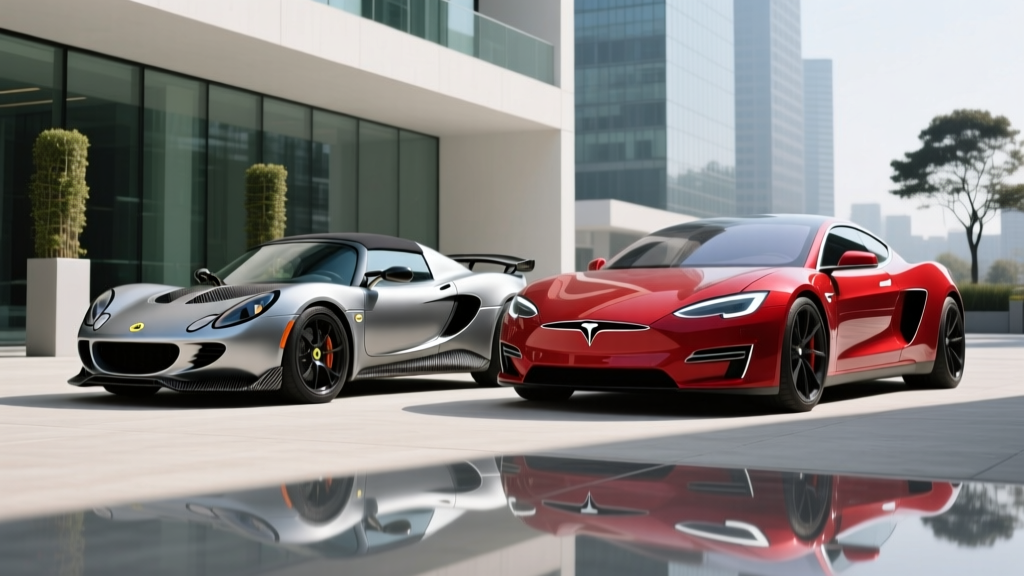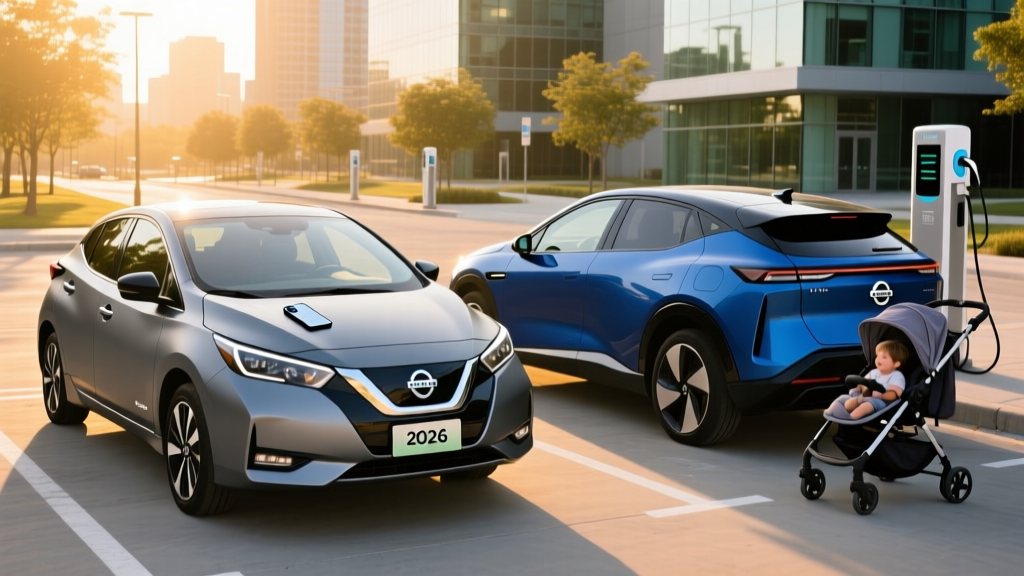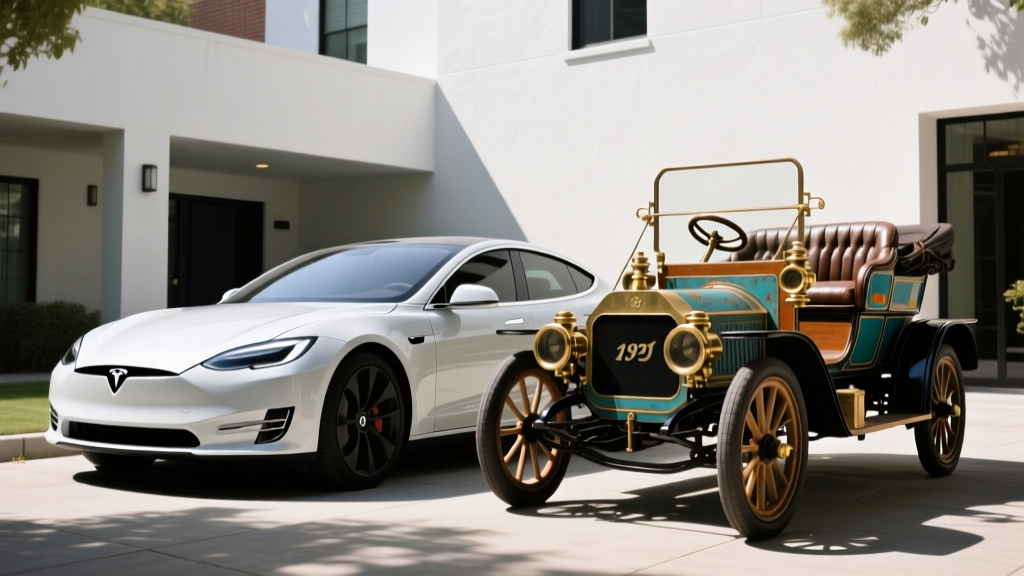
The short answer: Electric cars in the early 1900s offered roughly 30–50 miles of range at speeds under 20 mph, cost the equivalent of $75,000–$150,000 today, and were limited to urban use with overnight home charging only. The 2026 EV landscape is unrecognizable by comparison: median EPA range now exceeds 280 miles, DC fast charging adds 200+ miles in 20 minutes, and federal tax credits under IRS §30D can reduce purchase prices by up to $7,500 at the point of sale. Understanding why early EVs failed — and what has fundamentally changed — gives modern buyers a sharper framework for deciding whether a battery-electric vehicle fits their life today.
Why Electric Cars Thrived (Then Vanished) in the Early 1900s
At the turn of the 20th century, electric vehicles were not a fringe experiment — they were a market leader. In 1900, roughly 38% of all automobiles on American roads were electric, 40% were steam-powered, and only 22% ran on gasoline. The Detroit Electric, Baker Electric, and Columbia were household names among affluent urban buyers.
Early electric cars succeeded for reasons that echo in 2026 marketing: they were quiet, vibration-free, required no hand-cranking to start, and produced no exhaust. For city dwellers — particularly women, who were heavily targeted by EV makers — a Detroit Electric Model C offered clean, simple transportation with a top speed around 14–20 mph and a range of roughly 40–50 miles on a single charge of its lead-acid battery bank.
But three forces killed the early EV market by the 1920s:
- The electric starter (1912): Cadillac's introduction of the electric self-starter eliminated gasoline cars' biggest usability disadvantage — dangerous hand-cranking.
- Cheap gasoline and road expansion: Texas oil discoveries dropped fuel prices, while paved intercity roads demanded the 200+ mile range that only internal combustion could deliver.
- Henry Ford's Model T: At $650 by 1912 (versus $1,750+ for a Detroit Electric), the Model T made gas cars accessible to the middle class.
By 1935, electric cars were effectively extinct from the American market. It would take nearly 80 years — until the Nissan Leaf and Tesla Model S in the early 2010s — for the EV to return as a serious consumer product.
Early 1900s EVs vs 2026 EVs: A Spec-by-Spec Comparison
The table below compares a representative early-1900s electric car (the 1912 Detroit Electric Model 46) against three popular 2026 EVs across the metrics that matter to real buyers.
| Specification | 1912 Detroit Electric | 2026 Tesla Model Y LR | 2026 Hyundai Ioniq 5 LR | 2026 Chevy Equinox EV 3RS |
|---|---|---|---|---|
| Battery Chemistry | Lead-acid (Edison NiFe option) | NMC lithium-ion | NMC lithium-ion | NMC lithium-ion |
| Battery Capacity | ~13 kWh (estimated) | 78.1 kWh usable | 77.4 kWh usable | 85.0 kWh usable |
| EPA Range | ~45 miles (est.) | 320 miles | 318 miles | 319 miles |
| Top Speed | ~20 mph | 130 mph (electronically limited) | 115 mph | 112 mph |
| 0–60 mph | N/A (could not reach 60) | 5.0 seconds | 5.1 seconds (AWD) | 7.9 seconds |
| Charging Time (full) | ~8 hours (120V home) | ~10 hrs (L2, 11.5 kW) | ~7.5 hrs (L2, 10.9 kW) | ~9.5 hrs (L2, 11.5 kW) |
| DC Fast Charge | Did not exist | 250 kW peak, 10–80% ~22 min | 238 kW peak, 10–80% ~18 min | 190 kW peak, 10–80% ~25 min |
| Price (MSRP / inflation-adjusted) | $2,500 (~$78,000 in 2026 $) | $44,990 | $47,400 | $43,400 |
| Weight | ~3,500 lbs | 4,363 lbs | 4,663 lbs | 4,902 lbs |
The most striking takeaway: a 2026 Chevy Equinox EV offers seven times the range of a 1912 Detroit Electric at roughly half the inflation-adjusted price. Battery energy density has improved by a factor of roughly 15–20x (from ~40 Wh/kg for lead-acid to ~250–300 Wh/kg for modern NMC cells), and electric motor efficiency has climbed from roughly 70% to over 95%.
What Early EV History Teaches Today's First-Time Buyers
The failure of early-1900s electric cars was not a failure of the technology's core advantages — quietness, simplicity, home charging — but a failure of infrastructure and energy density. Those two variables have now flipped, and understanding how shapes every major buying decision in 2026.
Lesson 1: Range must exceed your worst-case day, not your average day
A Detroit Electric owner in 1912 who needed to drive 60 miles round-trip to a rural property was stranded. The modern parallel is the apartment dweller without home charging who relies on a 220-mile-range EV in a Midwestern winter. Cold weather reduces lithium-ion battery efficiency by 20–30% at 20°F or below, and highway driving at 75+ mph cuts range another 10–15% versus the EPA combined cycle.
Real-world range reality check: A 2026 Hyundai Ioniq 5 with an EPA rating of 318 miles will typically deliver 260–280 miles on a mixed highway trip at 70 mph in moderate weather. In sub-freezing conditions, expect 210–240 miles. Plan charging stops using the lower figure, not the sticker.
Lesson 2: Infrastructure determines adoption — not the car itself
Gasoline cars won in the 1910s not because they were better machines in every way, but because fuel stations appeared along every new highway. In 2026, the EPA and fueleconomy.gov list over 65,000 public charging ports in the U.S., but distribution is uneven. Urban coastal corridors are well-served; rural stretches of I-70 through Kansas or I-80 across Wyoming remain sparse.
If you cannot install a Level 2 home charger, your practical EV experience will mirror a 1912 Detroit Electric owner's — tethered to a single charging location with limited daily radius. This is not a dealbreaker for everyone, but it must be part of the calculation.
Lesson 3: Price parity changes everything
When the Model T undercut electric cars 3-to-1 on price, the EV market collapsed. Today, the gap has narrowed dramatically — and in some segments, inverted. With the IRS §30D federal tax credit offering up to $7,500 (subject to MSRP caps of $55,000 for sedans and $80,000 for SUVs/trucks, buyer income limits, and battery sourcing requirements), a 2026 Chevy Equinox EV 2LT can effectively land near $35,900 after point-of-sale transfer — competitive with a well-equipped gas Equinox.
2026 EV Ownership Cost Breakdown: EV vs Gas vs Hybrid
The table below models a realistic 5-year ownership scenario for three vehicles in the compact-SUV segment, assuming 12,000 miles/year, national-average electricity and fuel prices, and typical maintenance schedules.
| Cost Category (5-Year) | 2026 Tesla Model Y LR (EV) | 2026 Toyota RAV4 Hybrid (HEV) | 2026 Toyota RAV4 LE (Gas) |
|---|---|---|---|
| Base MSRP | $44,990 | $32,850 | $29,900 |
| Federal Tax Credit (§30D est.) | −$3,750 to −$7,500* | $0 (HEV not eligible) | $0 |
| Fuel / Electricity (5 yrs) | $3,200 (home L2 avg.) | $5,400 | $7,500 |
| Maintenance (5 yrs) | $1,200 | $2,800 | $3,400 |
| Insurance (5 yrs, avg.) | $9,800 | $7,200 | $6,800 |
| Est. Depreciation | $18,500 | $13,200 | $14,800 |
| Total 5-Year Cost | ~$38,940 – $43,440 | ~$38,250 | ~$40,800 |
| Cost per mile (all-in) | $0.65 – $0.72 | $0.64 | $0.68 |
*Tax credit amount depends on battery critical-mineral and component sourcing compliance, buyer AGI (≤$150K single / $300K joint), and MSRP cap. Verify current eligibility at irs.gov before purchase. Credit can be transferred to the dealer at point of sale under current §30D rules.
The numbers reveal what early-1900s EV makers could never achieve: a battery-electric vehicle that competes on total cost of ownership, not just operating cost. The EV's higher insurance premiums and steeper depreciation narrow the gap, but fuel and maintenance savings — roughly $4,300–$5,500 over five years versus gas — keep the Model Y in striking distance of a RAV4 Hybrid, especially when the full $7,500 credit applies.
Common EV Misconceptions — Then and Now
Many objections to modern EVs have direct parallels in the early-1900s debate. Here are the most persistent myths, addressed with data.
| Myth | Fact (with data) |
|---|---|
| "EVs have always had limited range." | Early-1900s EVs: ~45 miles. 2026 median EPA range: 280–320 miles. The Lucid Air Grand Touring achieves an EPA-estimated 512 miles. |
| "Batteries won't last." | Modern NMC and LFP batteries are warranted for 8 years/100,000 miles with ≥70% capacity retention (federal minimum). Real-world data from high-mileage Teslas shows ~8–12% degradation at 150,000 miles. Lead-acid batteries in 1912 EVs required replacement every 1–2 years. |
| "Charging takes too long." | At a 250 kW DC fast charger, a 2026 Tesla Model Y adds ~200 miles in 15 minutes (10–80% in ~22 min). Home Level 2 charging overnight (7–10 hours) fully replenishes the battery — identical in concept to how 1912 EV owners charged, but with 7× the range delivered. |
| "EVs are worse in cold weather." | Cold reduces range 20–30% at 20°F due to battery chemistry and cabin heating demands. However, EVs start reliably in extreme cold (no cranking amps needed), and preconditioning while plugged in mitigates much of the loss. Gas cars also lose 12–15% fuel economy in the same conditions per EPA data. |
| "The grid can't support mass EV adoption." |
The 2026 EV Buyer's Decision Framework
History shows that EV adoption succeeds when the vehicle matches the owner's infrastructure and driving patterns — and fails when it does not. Use this framework to evaluate your situation honestly.
Choose a battery-electric vehicle (BEV) if:
- You can install a Level 2 home charger (240V, 32–48A circuit) — expect $500–$2,500 for installation depending on panel capacity and run length.
- Your daily driving is under 80 miles round-trip, with occasional 200–300 mile road trips manageable with one DC fast-charge stop.
- You live in a moderate or warm climate, or you're willing to spec a larger battery (300+ mile EPA) to absorb cold-weather range loss.
- You want to minimize maintenance (no oil changes, fewer brake replacements due to regenerative braking) and fuel costs (~$0.12–0.16/mile on home electricity vs. $0.13–0.17/mile on gas).
- You qualify for the §30D credit (check income, MSRP, and sourcing rules at irs.gov) — this can shift the TCO decisively in the EV's favor.
Choose a plug-in hybrid (PHEV) if:
- You lack reliable home Level 2 charging but want some electric-only driving (typical PHEV electric range: 30–45 miles).
- You frequently take 400+ mile road trips through areas with sparse DC fast-charging infrastructure.
- You want to reduce fuel consumption without range-anxiety risk — a 2026 Toyota RAV4 Prime delivers 42 miles electric + 38 MPG combined on gas.
Choose a conventional hybrid (HEV) if:
- You have zero charging access at home or work.
- Your budget is under $35,000 and you prioritize lowest monthly payment over lowest fuel cost.
- You drive in extreme cold climates (below 0°F regularly) where EV range loss is most pronounced.
Wait or reconsider if:
- Your apartment building or HOA blocks charger installation and public charging within 1 mile is unavailable.
- Your typical weekly mileage exceeds 1,000 miles (e.g., long-haul sales routes), where DC charging frequency becomes a time-cost burden.
Home Charging in 2026: What Early EV Owners Could Only Dream Of
In 1912, a Detroit Electric owner charged by plugging into a household Edison-base lamp socket — effectively a 120V, ~1.4 kW trickle that took 8+ hours. The concept was identical to modern Level 1 charging, but the energy delivered was a fraction of what today's batteries require.
In 2026, home charging breaks down as follows:
| Level | Voltage / Amperage | Power (kW) | Miles of Range per Hour | Best For |
|---|---|---|---|---|
| Level 1 (standard outlet) | 120V / 12A | 1.4 kW | 3–5 miles | PHEVs, low-mileage drivers, emergency backup |
| Level 2 (dedicated circuit) | 240V / 32–48A | 7.7–11.5 kW | 25–44 miles | Daily BEV charging; 7–10 hour full recharge overnight |
| DC Fast Charge | 400–800V DC | 50–350 kW | 150–1,000+ miles/hr (peak) | Road trips; 10–80% in 15–30 minutes |
Home Level 2 installation cost reality: Expect $1,200–$2,500 total for a typical installation (48A hardwired charger, 60A dedicated circuit, 20–40 foot conduit run from panel). If your home's electrical panel is at capacity (common in older homes with 100A service), a panel upgrade to 200A adds $1,500–$3,500. Always get a quote from a licensed electrician — do not rely on online estimates for your specific property.
This infrastructure advantage is precisely what the 1912 EV lacked. Early electrics were not out-engineered; they were out-infrastructured. The modern home Level 2 charger transforms a BEV into a vehicle that starts every morning with a "full tank" — something a gas car owner visiting a weekly fuel station cannot match for convenience.
Frequently Asked Questions
Why did electric cars disappear in the early 1900s?
Three converging factors: the 1912 invention of the electric starter eliminated gasoline cars' worst usability flaw; cheap Texas oil and expanding paved highways made gas cars practical for long-distance travel; and Ford's mass-produced Model T undercut EV prices by 3-to-1. Electric cars, limited to ~45 miles of range with no fast-charging infrastructure, could not compete outside dense urban areas.
Are modern EVs truly better than early 1900s electric cars, or just bigger batteries?
The improvement is systemic, not just capacity-based. Modern lithium-ion cells offer ~15–20× the energy density of lead-acid (250–300 Wh/kg vs. ~40 Wh/kg). Brushless AC motors achieve 95%+ efficiency vs. the ~70% DC motors of 1912. Regenerative braking recovers kinetic energy that early EVs wasted as heat. And 800V architecture enables DC fast charging at 250–350 kW — a concept that simply did not exist a century ago.
How much does it cost to charge an EV at home versus fueling a gas car?
At the 2026 U.S. average residential electricity rate of ~$0.17/kWh, fully charging a 78 kWh battery (Tesla Model Y) costs roughly $13.30 and delivers ~320 miles of EPA range — approximately $0.042 per mile. A 30 MPG gas car at $3.40/gallon costs $0.113 per mile. Over 12,000 annual miles, that's $504 in electricity vs. $1,356 in gasoline — a savings of ~$850/year. Savings are larger if you have access to off-peak utility rates or solar.
Will my EV battery need expensive replacement like early 1900s batteries?
Unlikely within normal ownership. Lead-acid batteries in 1912 EVs required replacement every 1–2 years at significant cost. Modern lithium-ion packs are warranted for 8 years/100,000 miles (federally mandated minimum) with a capacity-retention threshold of 70%. Real-world fleet data shows most NMC batteries retain 85–92% capacity at 100,000 miles. Full pack replacement, if needed out of warranty, runs $8,000–$18,000 depending on the vehicle — but is statistically rare within the first 150,000 miles.
Do I qualify for the $7,500 federal EV tax credit?
Eligibility under IRS §30D depends on multiple factors: your modified adjusted gross income must not exceed $150,000 (single) or $300,000 (joint); the vehicle MSRP must be ≤$55,000 for sedans or ≤$80,000 for SUVs, trucks, and vans; the battery must meet critical-mineral and component-sourcing thresholds that tighten annually; and the vehicle must undergo final assembly in North America. Credit amounts range from $3,750 (meeting one requirement) to $7,500 (meeting both). Check the current eligible vehicle list at irs.gov and consult a tax professional for your specific situation. The credit can be transferred to the dealer as a point-of-sale discount under current rules.
What's the biggest mistake first-time EV buyers make?
Buying based on EPA range alone without accounting for real-world conditions. A 250-mile EPA rating may deliver only 190–210 miles on a 75-mph highway drive in 25°F weather with the heater running. First-time buyers should: (1) spec at least 50 miles more EPA range than their longest typical trip; (2) confirm home Level 2 charging feasibility before purchase; and (3) test-drive in conditions matching their daily commute, not just on a sunny weekend loop.