Electric Car vs Petrol Car: The Complete Cost Comparison Guide
Choosing between an electric car & a petrol car is one of the biggest financial decisions modern drivers face. While sticker prices tell only part of the story, the true cost of ownership spans fuel expenses, maintenance schedules, insurance premiums, depreciation curves, & available incentives. This in-depth comparison breaks down every major cost factor so you can make a confident, data-driven decision.
At AutoEdgeView, we test & analyze vehicles across every dimension that matters to your wallet. Whether you are browsing our best electric cars rankings or comparing traditional options in our EV reviews section, understanding the real-world cost gap between electric & petrol vehicles is essential.
Overview: Electric Cars vs Petrol Cars
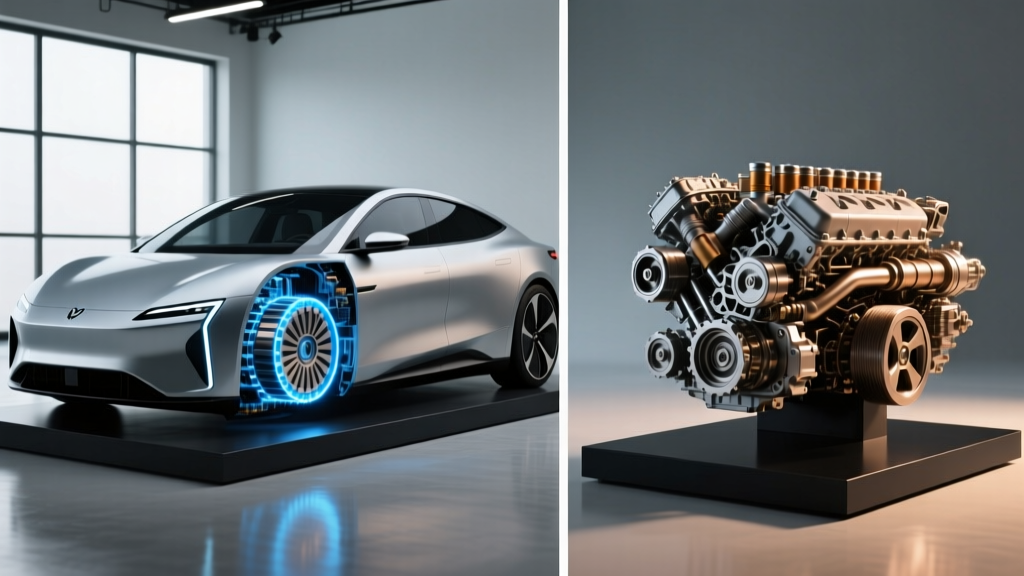
Electric vehicles (EVs) use one or more electric motors powered by a rechargeable battery pack. They produce zero tailpipe emissions, deliver instant torque, & have far fewer moving parts than internal combustion engine (ICE) vehicles. Petrol cars, on the other hand, rely on decades of engineering refinement, an extensive refueling infrastructure, & generally lower upfront purchase prices.
The debate is rarely about which technology is superior in isolation. Instead, it comes down to your driving habits, budget, access to charging, & how long you plan to keep the vehicle. A commuter who drives 30 miles per day & charges at home will have a vastly different cost experience than a road-tripper who regularly covers 400-mile stretches.
Let us examine the numbers side by side before diving into each cost category in detail.
Side-by-Side Cost Comparison Table
| Cost Factor | Electric Car (Average) | Petrol Car (Average) |
|---|---|---|
| Purchase Price (MSRP) | $35,000 – $55,000 | $25,000 – $40,000 |
| Federal / Regional Incentives | Up to $7,500 | None |
| Fuel / Energy Cost per Mile | $0.03 – $0.06 | $0.10 – $0.16 |
| Annual Fuel / Energy Cost (12,000 mi) | $360 – $720 | $1,200 – $1,920 |
| Annual Maintenance | $300 – $500 | $800 – $1,200 |
| Insurance (Annual Average) | $1,800 – $2,400 | $1,400 – $2,000 |
| Depreciation (5-Year Average) | 45% – 55% | 40% – 50% |
| Estimated 5-Year Total Cost of Ownership | $38,000 – $52,000 | $35,000 – $50,000 |
Note: Figures represent averages across popular mainstream models. Actual costs vary by vehicle, region, driving behavior, & energy prices. Sources include EPA Fuel Economy data & independent analyses from Consumer Reports & the AAA Your Driving Costs study.
Purchase Price & Incentives: The Upfront Cost Gap
The most immediate difference between electric & petrol cars is the sticker price. On average, EVs carry a premium of $5,000 to $15,000 over comparable petrol models. This gap exists primarily because battery packs remain expensive to manufacture, even as costs have fallen dramatically over the past decade.
According to BloombergNEF battery price surveys, the average lithium-ion battery pack cost has dropped from over $1,000 per kWh to below $140 per kWh, making EVs increasingly competitive. Models like the Chevrolet Bolt, Nissan Leaf, & base Tesla Model 3 have pushed entry-level EV pricing closer to the $30,000 mark, narrowing the gap with well-equipped petrol sedans.
Federal & Regional Incentives
One of the most significant advantages EVs hold is eligibility for government incentives. In the United States, qualifying electric vehicles can receive a federal tax credit of up to $7,500, depending on battery capacity & the manufacturer's sales volume. Many states & local utilities offer additional rebates ranging from $1,000 to $5,000, which can substantially reduce the effective purchase price.
For example, a buyer purchasing a $40,000 EV with a $7,500 federal credit & a $2,000 state rebate effectively pays $30,500 — a figure that competes directly with mid-range petrol cars. Always check the EPA's incentive database for the latest eligibility details.
Petrol cars, by contrast, receive no comparable purchase incentives. What you see on the window sticker is generally what you pay, minus any dealer discounts or manufacturer rebates.
Financing Considerations
Higher sticker prices mean higher loan amounts, which translates to more interest paid over the life of a car loan. However, some lenders offer preferential rates for EV purchases, & the lower running costs can offset the higher monthly payment. Use our EV buying guide for tips on negotiating the best deal.
Fuel & Energy Costs: Where EVs Shine
This is the category where electric vehicles deliver their most compelling financial advantage. The cost of electricity per mile is dramatically lower than petrol in nearly every market worldwide.
Calculating Cost per Mile
The U.S. Environmental Protection Agency (EPA) rates vehicles using MPGe (miles per gallon equivalent) for EVs & standard MPG for petrol cars. A typical modern EV achieves between 100 & 130 MPGe combined, while an efficient petrol sedan averages 28 to 35 MPG combined.
At a national average electricity rate of approximately $0.15 per kWh & an average consumption of 3 to 4 miles per kWh, the cost to drive an EV works out to roughly $0.04 to $0.05 per mile. For a petrol car averaging 30 MPG at $3.50 per gallon, the cost is approximately $0.12 per mile — roughly two to three times higher.
Home Charging vs Public Charging
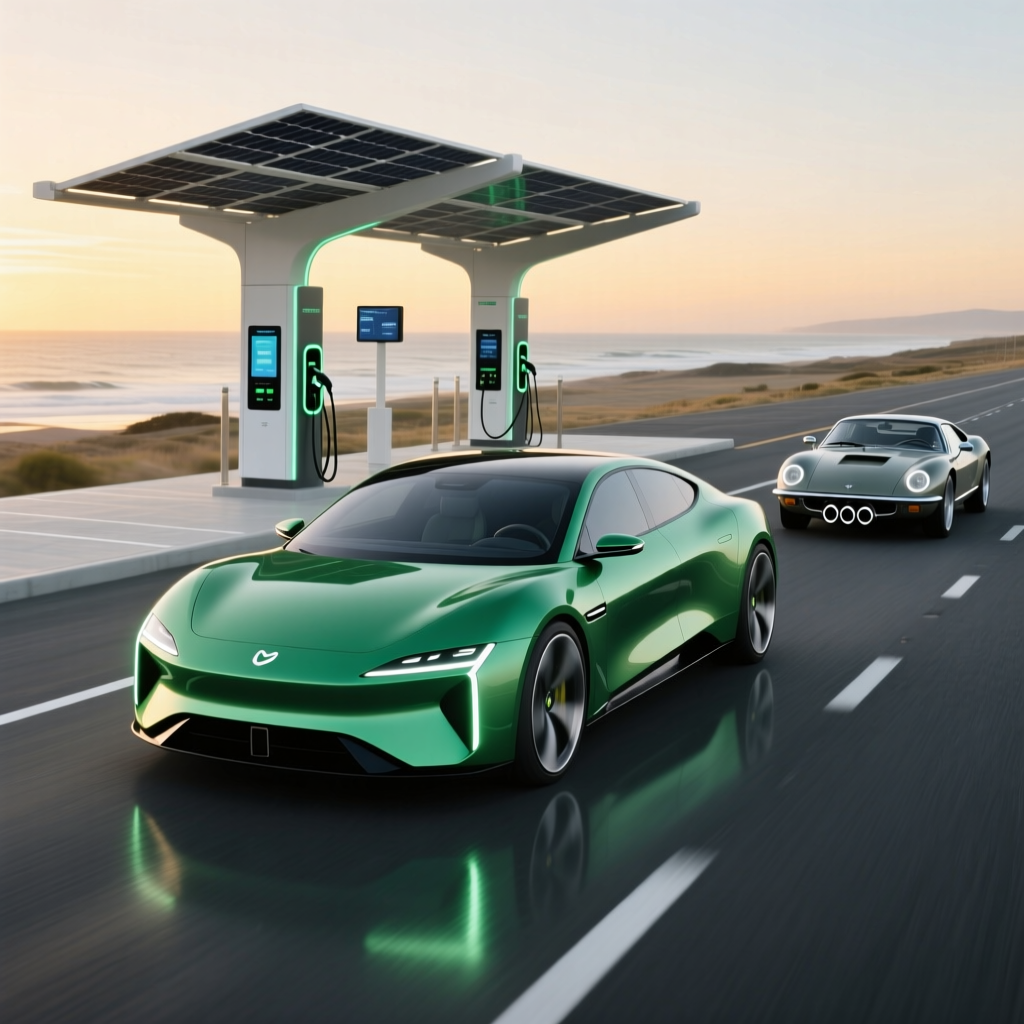
The savings are most pronounced when you charge at home. Residential electricity rates are typically the cheapest way to power an EV. Installing a Level 2 home charger costs between $500 & $2,000, but this one-time investment unlocks years of low-cost driving.
Public DC fast charging networks, such as Electrify America or Tesla Superchargers, charge higher rates — often $0.25 to $0.50 per kWh. Even at these elevated prices, the per-mile cost usually remains below that of petrol. However, frequent reliance on public fast charging can erode the cost advantage.
Annual Savings Over Time
For a driver covering 12,000 miles annually, the fuel savings alone can range from $800 to $1,500 per year. Over a typical five-year ownership period, that translates to $4,000 to $7,500 in savings — enough to offset a significant portion of the EV's purchase price premium.
The Consumer Reports EV ownership study found that lifetime fuel savings for an average EV owner could exceed $9,000 compared to a comparable petrol vehicle, depending on local energy & fuel prices.
Maintenance & Repair Costs: Fewer Parts, Lower Bills
Electric vehicles have a fundamental mechanical advantage: simplicity. A typical EV drivetrain contains around 20 moving parts, compared to nearly 2,000 in a petrol engine & transmission assembly. This difference has profound implications for long-term maintenance spending.
What EVs Do Not Need
Electric cars eliminate many of the routine maintenance items that petrol car owners take for granted:
- No oil changes (saving $150 to $300 annually)
- No spark plug replacements
- No timing belt or chain service
- No exhaust system repairs
- No fuel filter replacements
- No emissions testing in most jurisdictions
What EVs Still Require
EVs are not maintenance-free. Owners still need to budget for:
- Tire rotations & replacements: EVs are heavier & deliver instant torque, which can accelerate tire wear. Expect to replace tires every 25,000 to 40,000 miles.
- Brake fluid checks: While regenerative braking extends pad life dramatically, brake fluid still requires periodic flushing.
- Cabin air filter replacement: Typically every 15,000 to 20,000 miles.
- Coolant system service: Battery thermal management systems require occasional coolant checks.
- Windshield wipers & washer fluid: Universal to all vehicles.
Brake Pad Longevity
One of the most impressive maintenance benefits of EVs is brake pad life. Because regenerative braking handles most deceleration, traditional friction brakes see far less use. Many EV owners report original brake pads lasting 100,000 miles or more — a figure almost unheard of in petrol vehicles, where 30,000 to 60,000 miles is typical.
According to the AAA Your Driving Costs study, the average annual maintenance cost for an EV is approximately 30% to 40% lower than for a petrol car. Over five years, this can save $2,000 to $4,000.
Battery Replacement Concerns
The most common concern about EV maintenance is the battery pack. While replacement costs can range from $5,000 to $20,000 depending on the vehicle, modern lithium-ion batteries are designed to last the life of the car. Most manufacturers warranty their battery packs for 8 years or 100,000 miles. Data from Geotab's fleet battery study shows that average battery degradation is approximately 2.3% per year, meaning most EVs retain 85% to 90% of their original range after five years.
Insurance, Depreciation & Resale Value
Insurance Costs
Insurance premiums for electric vehicles tend to be 10% to 25% higher than for equivalent petrol cars. This is driven by several factors:
- Higher repair costs due to specialized parts & trained technicians
- Higher vehicle values mean higher replacement costs
- Limited historical claims data for newer EV models
However, the insurance gap is narrowing as EVs become more common & repair networks expand. Some insurers now offer dedicated EV policies with competitive rates. It is always worth shopping around & comparing quotes from multiple providers.
Depreciation & Resale Value
Depreciation is the single largest cost of vehicle ownership, & this is where the picture becomes nuanced. Historically, EVs depreciated faster than petrol cars due to rapid technology advances, range anxiety, & battery degradation concerns.
However, the landscape has shifted significantly. Popular EVs from established brands now hold their value more competitively, particularly as used EV demand grows. According to iSeeCars depreciation data, mainstream EVs now depreciate approximately 45% to 55% over five years, compared to 40% to 50% for petrol cars. The gap continues to narrow as the used EV market matures.
Factors that help EV resale value include:
- Growing consumer demand for used EVs
- Transferable warranties on battery packs
- Increasingly strict emissions regulations making petrol cars less desirable long-term
- Lower mileage averages on used EVs (many are second cars or commuter vehicles)
Charging Speed, Range & Practicality
While not direct cost factors, range & charging speed influence how practical an EV is for your lifestyle — & practicality has a cost dimension when it affects your daily routine.
Range Comparison
Modern EVs typically offer between 200 & 400 miles of EPA-rated range, with premium models exceeding 400 miles. A petrol car with a 14-gallon tank averaging 30 MPG delivers roughly 420 miles per fill-up. The range gap has narrowed considerably, & for the vast majority of daily driving — which FHWA data shows averages around 37 miles per day — even a modest-range EV is more than sufficient.
Charging Speed
Home Level 2 charging (240V) adds approximately 25 to 40 miles of range per hour of charging, meaning most EVs fully replenish overnight. DC fast charging can add 100 to 200 miles of range in 20 to 30 minutes, depending on the vehicle & charger capability.
Petrol cars refuel in approximately 3 to 5 minutes, which remains an advantage for long road trips. However, the expanding network of fast chargers — now numbering in the tens of thousands across North America & Europe — is reducing this gap for most routes.
The Time Cost Factor
Consider the "time cost" of refueling. Petrol car owners visit gas stations roughly 30 to 40 times per year, spending about 10 minutes each visit. That is 5 to 7 hours annually spent at gas stations. EV owners who charge at home spend virtually zero time refueling — they simply plug in when they arrive home & wake up to a full battery every morning.
Performance, Interior Space & Technology
Performance
Electric vehicles deliver instant torque from zero RPM, resulting in brisk acceleration that often outperforms petrol cars in the same price bracket. A mid-range EV can typically achieve 0-60 mph in 4 to 6 seconds, rivaling sporty petrol sedans that cost significantly more.
Petrol cars, however, tend to offer more engaging driving dynamics at higher speeds & on winding roads, thanks to lighter overall weight & the involvement of a multi-speed transmission. Enthusiasts may prefer the sensory experience of a petrol engine, though this is subjective & not a cost factor per se.
Interior Space
EVs often benefit from packaging advantages. Without a bulky engine, transmission tunnel, & exhaust system, designers can maximize interior volume. Many EVs feature a flat floor, a front trunk (frunk), & more generous rear-seat legroom compared to petrol counterparts on the same platform.
That said, the battery pack typically sits beneath the floor, which can raise the seating position & slightly reduce cargo height in some models. Overall, interior space is comparable or superior in most EVs when compared to similarly sized petrol vehicles.
Technology & Features
EVs tend to ship with more advanced technology as standard, including:
- Over-the-air software updates that add features & improve performance over time
- Advanced driver assistance systems (ADAS)
- Large touchscreen infotainment systems
- Smartphone app integration for remote climate control, charging monitoring, & trip planning
- Vehicle-to-load (V2L) capability in some models, allowing you to power external devices
Petrol cars are increasingly adopting these technologies, but EVs have been the primary platform for cutting-edge automotive software innovation. Browse our EV technology guide for deeper dives into specific features.
Warranty Coverage & Long-Term Reliability
Warranty coverage provides a financial safety net, & EVs generally offer stronger protections in the area that matters most: the battery.
Standard Warranties
Most EVs come with a basic bumper-to-bumper warranty of 3 to 5 years / 36,000 to 60,000 miles, comparable to petrol vehicles. However, the battery & electric drivetrain are typically covered for 8 years or 100,000 miles — and in some states with California Air Resources Board (CARB) requirements, up to 10 years or 150,000 miles.
Petrol car powertrain warranties typically cover 5 years or 60,000 miles, which is shorter than the EV battery warranty. This means EV owners have longer protection against their most expensive potential repair.
Long-Term Reliability Data
Independent reliability data from sources like Consumer Reports shows that EVs generally have fewer mechanical problems than petrol cars, particularly in the powertrain category. The simplicity of electric motors & single-speed transmissions eliminates many common failure points found in ICE vehicles.
However, some EV models have experienced issues with build quality, software glitches, & ancillary components. As with any vehicle purchase, researching model-specific reliability data is essential. Our EV reviews cover reliability findings for every model we test.
The Verdict: Which Is Right for You?
There is no universal winner in the electric car vs petrol car cost comparison. The right choice depends entirely on your circumstances. Here is our recommendation by buyer type:
Choose an Electric Car If:
- You can charge at home: Home charging unlocks the lowest possible per-mile energy cost & the convenience of a "full tank" every morning.
- You commute 20 to 80 miles daily: This is the sweet spot where EV range is never an issue & fuel savings accumulate rapidly.
- You plan to keep the car 5+ years: The longer you own an EV, the more the fuel & maintenance savings offset the higher purchase price.
- You qualify for incentives: Federal, state, & utility rebates can reduce the effective purchase price by $5,000 to $12,000 or more.
- You value low maintenance: If you dread oil changes & surprise repair bills, the EV's mechanical simplicity is a major quality-of-life improvement.
Choose a Petrol Car If:
- You lack reliable charging access: Without home or workplace charging, EV ownership becomes significantly less convenient & more expensive.
- You frequently drive long distances: If you regularly cover 300+ miles in a day, petrol refueling speed & infrastructure remain advantageous.
- Your budget is tight upfront: Petrol cars remain more affordable at the point of purchase, particularly in the sub-$25,000 segment.
- You drive very few miles annually: Below 6,000 miles per year, the fuel savings from an EV may not justify the higher purchase price within a reasonable timeframe.
- You live in an extremely cold climate: EV range can decrease 20% to 40% in sub-freezing temperatures, which may be a concern if your daily driving needs are near the vehicle's range limit.
The Bottom Line
For the average driver covering 12,000 miles per year with access to home charging, an electric car will typically reach cost parity with a petrol car within 3 to 5 years of ownership — & then continue to save money for every additional year you keep it. The total cost of ownership gap is narrowing every year as battery costs decline, charging infrastructure expands, & more affordable EV models enter the market.
Explore our best electric cars rankings to find the top-value EVs currently available, or read our complete EV buying guide for step-by-step purchasing advice.
Frequently Asked Questions
Is an electric car cheaper to own than a petrol car overall?
Over a five-year ownership period, an electric car can be cheaper to own than a petrol car when you factor in fuel savings, lower maintenance costs, & available tax incentives. The Consumer Reports total cost of ownership analysis found that most EV owners save between $6,000 & $10,000 over the life of the vehicle compared to a comparable petrol car. However, the answer depends on your annual mileage, local electricity & fuel prices, access to home charging, & how long you keep the vehicle. Short ownership periods & low mileage favor petrol cars, while high mileage & long ownership favor EVs.
How much does it cost to charge an electric car at home versus buying petrol?
Charging an EV at home using the national average electricity rate of approximately $0.15 per kWh costs roughly $0.04 to $0.05 per mile driven. Filling a petrol car averaging 30 MPG at $3.50 per gallon costs approximately $0.12 per mile. This means home EV charging is about 60% to 70% cheaper per mile than petrol. For a driver covering 12,000 miles annually, that translates to savings of roughly $800 to $1,200 per year on energy costs alone. The exact savings depend on your local utility rates, the efficiency of your specific EV, & regional petrol prices, which can vary significantly.
Do electric cars cost more to insure than petrol cars?
Yes, electric cars typically cost 10% to 25% more to insure than comparable petrol vehicles. This is primarily because EVs have higher repair costs (specialized parts & labor), higher initial values, & less historical claims data for insurers to draw from. However, the insurance gap is shrinking as EVs become more mainstream & repair networks expand. Some insurance companies now offer EV-specific policies with competitive rates. It is advisable to obtain quotes from multiple insurers before purchasing, as premiums can vary by hundreds of dollars between providers for the same vehicle.
Will I save money buying a used electric car instead of a new petrol car?
A used electric car can be an excellent value proposition. Because EVs have historically depreciated faster than petrol cars, you can often find lightly used models at significant discounts — sometimes 30% to 45% below their original MSRP after three years. Combined with the ongoing fuel & maintenance savings, a used EV can deliver a lower total cost of ownership than a new petrol car. Key considerations include checking the battery health report (most dealerships can provide this), ensuring the remaining battery warranty is transferable, & verifying that the vehicle's range still meets your daily needs. Our used EV buying guide provides a detailed checklist for evaluating pre-owned electric vehicles.