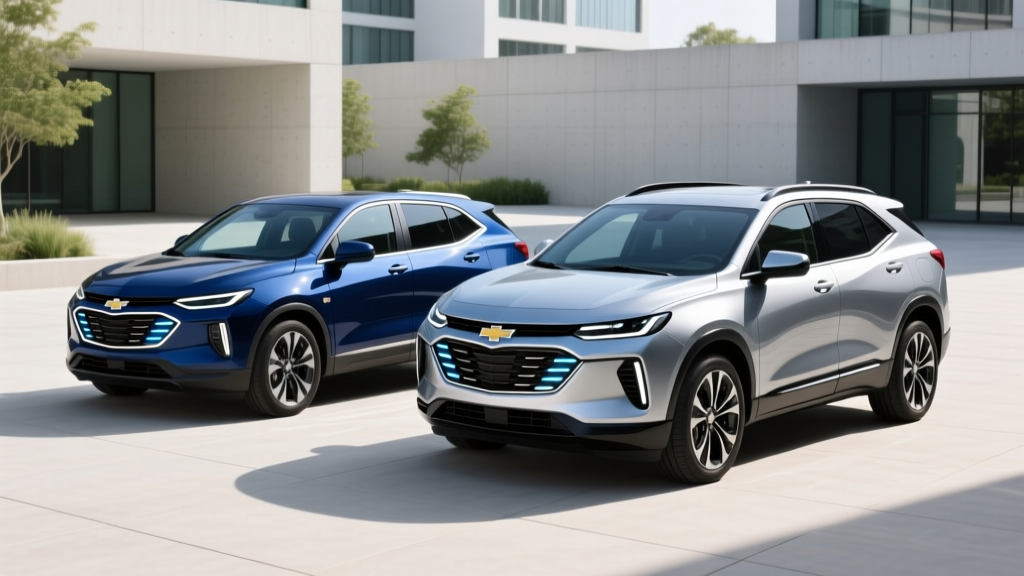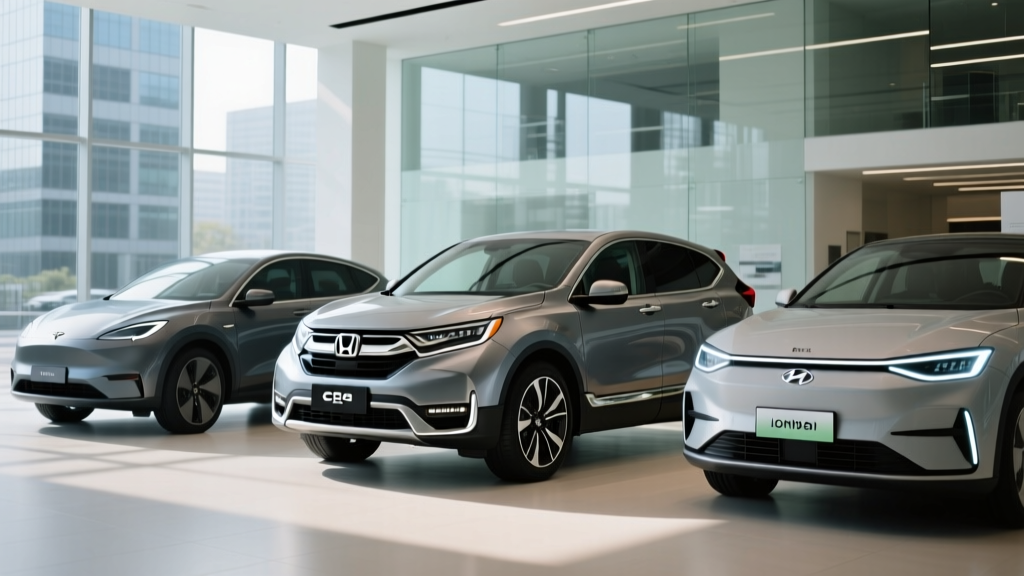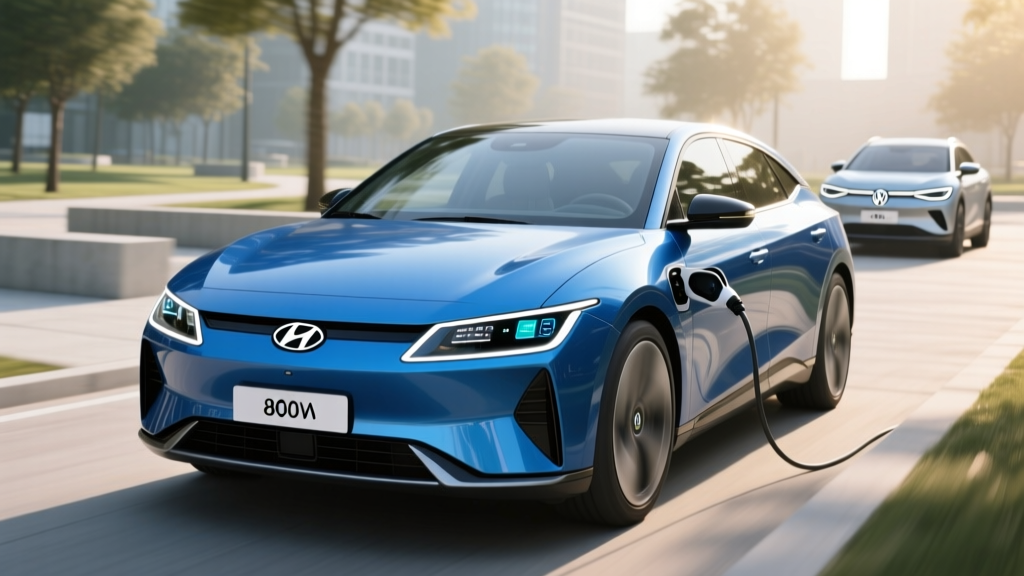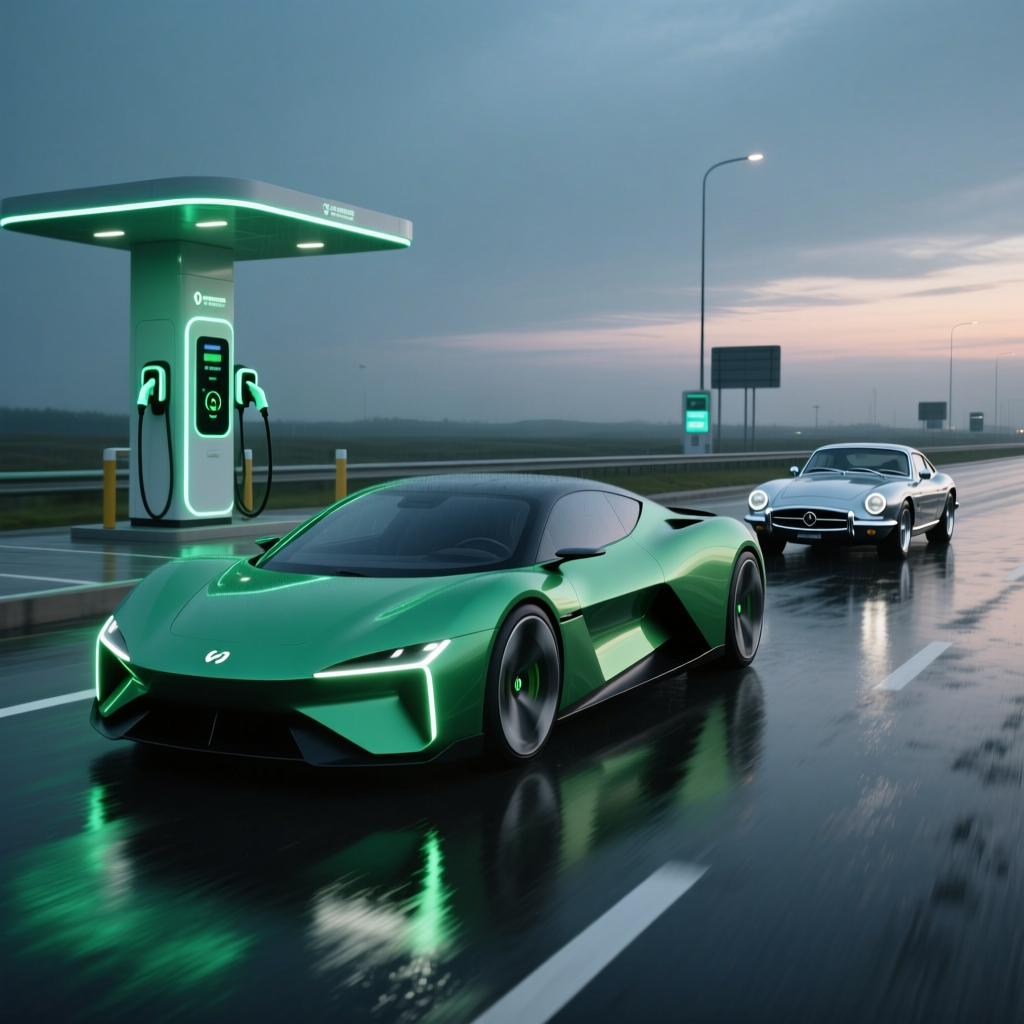
The automotive world has never offered drivers more choice. On one side, the traditional internal combustion engine (ICE) vehicle continues to evolve with improved fuel efficiency, refined powertrains, and decades of refueling infrastructure. On the other, battery electric vehicles (EVs) are rapidly closing the gap in range, performance, and affordability while promising lower running costs and zero tailpipe emissions. Choosing between an electric car and a gas car is no longer a fringe question — it is one of the most consequential purchasing decisions modern drivers face.
In this comprehensive comparison, we break down every major factor that matters: purchase price, fueling versus charging, real-world range, performance, interior space, onboard technology, warranty coverage, and long-term cost of ownership. Whether you are a daily commuter, a road-trip enthusiast, or a budget-conscious buyer, this guide will help you make a confident, informed decision. For more in-depth analysis, explore our best electric cars rankings and our best gas-powered vehicles to see which specific models lead their respective categories.
Overview: Electric Cars vs Gas Cars
Electric cars are powered entirely by a rechargeable battery pack and one or more electric motors. They produce zero tailpipe emissions, deliver instant torque from a standstill, and require far fewer moving parts than a gas-powered vehicle. Charging happens at home, at public stations, or at workplace chargers, and the cost per mile is generally much lower than gasoline. The trade-offs include higher upfront purchase prices (though this gap is shrinking), charging times that are longer than refueling, and range anxiety in areas with sparse charging infrastructure.
Gas cars, by contrast, rely on an internal combustion engine that burns gasoline or diesel to generate power. They benefit from a vast, mature refueling network — there are over 145,000 gas stations in the United States alone — and refueling takes just a few minutes. Gas vehicles span every price point and body style, from budget compacts to luxury SUVs. However, they produce tailpipe emissions, have higher per-mile fuel costs, and require more routine maintenance such as oil changes, transmission fluid replacements, and exhaust system repairs.
Both powertrains have matured significantly. Modern EVs routinely achieve 250 to 400 miles of EPA-estimated range, while modern gas cars are more fuel-efficient and cleaner than ever before. The right choice depends on your driving habits, budget, access to charging, and personal priorities.
Side-by-Side Spec Comparison
The table below provides a generalized comparison of typical specifications for mainstream electric cars and gas cars available today. Individual models will vary, but these figures represent the current market averages across popular segments.
| Specification | Electric Car (Typical) | Gas Car (Typical) |
|---|---|---|
| EPA-Estimated Range | 250–370 miles | 350–500 miles |
| Starting MSRP | $30,000–$45,000 | $22,000–$38,000 |
| Fuel / Energy Cost Per Mile | $0.03–$0.06 | $0.10–$0.16 |
| Refueling / Charging Time | 15–45 min (DC fast charge 10–80%) | 3–5 minutes |
| Home Charging (Level 2) | 7–12 hours (full charge) | N/A |
| 0–60 mph Acceleration | 3.0–7.5 seconds | 5.5–9.0 seconds |
| Horsepower | 200–500+ hp | 150–400 hp |
| Drivetrain Options | RWD, AWD | FWD, RWD, AWD |
| Cargo Space (Sedan Avg.) | 15–23 cu ft (incl. frunk) | 12–16 cu ft |
| Basic Warranty | 3–5 yr / 36,000–60,000 mi | 3–5 yr / 36,000–60,000 mi |
| Battery / Powertrain Warranty | 8 yr / 100,000 mi (battery) | 5–10 yr / 60,000–100,000 mi |
| Annual Maintenance Cost | $300–$500 | $800–$1,200 |
Range & Refueling: How Far Can You Go?
Range is often the first concern for buyers considering an electric car. The good news is that modern EVs have made enormous strides. Many popular models now deliver between 250 and 370 miles on a single charge according to EPA estimates. Independent testing by organizations such as Edmunds and Kelley Blue Book has confirmed that real-world range can vary based on temperature, driving style, and terrain, but most drivers will find the EPA figures reasonably accurate for mixed driving conditions.
Gas cars still hold an advantage in total range, with many sedans and SUVs capable of 400 to 500 miles on a full tank. More importantly, refueling takes just three to five minutes at any of the thousands of gas stations nationwide. This makes gas cars the more convenient choice for long road trips through rural areas or regions with limited charging infrastructure.
However, EV owners who charge at home effectively start every day with a "full tank." For daily commutes and routine errands — which make up the vast majority of driving — an EV's range is more than sufficient. The real question is how often you take trips that exceed your EV's range and how comfortable you are with planning charging stops. Our longest-range electric vehicles guide highlights the top performers for drivers who need maximum distance between charges.
Price & Total Cost of Ownership
The sticker price of electric cars tends to be higher than comparable gas vehicles, primarily due to the cost of large battery packs. A mainstream electric sedan or crossover typically starts between $30,000 and $45,000, while a similarly sized gas car may start between $22,000 and $38,000. However, the purchase price is only part of the equation.
When you factor in fuel savings, reduced maintenance, and available federal or state incentives, the total cost of ownership for an EV can be competitive with — or even lower than — a gas car over a five-to-ten-year period. According to data from the U.S. Department of Energy, electricity costs roughly the equivalent of $1.20 per gallon of gasoline on a national average, translating to just $0.03 to $0.06 per mile. Gasoline, at typical prices, costs $0.10 to $0.16 per mile depending on the vehicle's fuel economy.
Maintenance savings are significant as well. EVs have no engine oil, spark plugs, timing belts, exhaust systems, or multi-speed transmissions to service. Regenerative braking reduces wear on brake pads. Studies have estimated that EV owners save an average of $400 to $700 per year on maintenance compared to gas car owners.
Federal tax credits of up to $7,500 may be available for qualifying new EVs, and many states offer additional rebates, reduced registration fees, or HOV lane access. Be sure to check current eligibility requirements, as incentive programs evolve. For a curated list of affordable options, see our best affordable electric cars roundup.
Charging Speed vs Refueling Convenience
Charging speed remains one of the most visible differences between electric and gas cars. At a DC fast-charging station, a modern EV can typically recharge from 10% to 80% in 15 to 45 minutes, depending on the vehicle's charging architecture, battery size, and the charger's power output. Vehicles equipped with 800-volt architectures can achieve exceptionally fast charge times, with some models adding 100 miles of range in under ten minutes.
Level 2 home charging, which uses a 240-volt outlet similar to a clothes dryer, fully replenishes most EV batteries in 7 to 12 hours. This is perfectly suited for overnight charging, meaning you wake up to a full battery every morning without ever visiting a fueling station. Level 1 charging on a standard 120-volt outlet adds roughly 3 to 5 miles of range per hour and serves as a useful backup option.
Gas cars win on pure speed: a fill-up takes three to five minutes, and stations are ubiquitous. For drivers who regularly cover long distances in a single day — think sales representatives, delivery drivers, or families who take frequent cross-country road trips — the convenience of quick refueling is a meaningful advantage. That said, the public charging network is expanding rapidly, with major providers continuously adding stations along highway corridors and in urban centers. You can explore how different models handle charging in our individual EV reviews.
Performance & Driving Dynamics
Electric cars deliver a fundamentally different driving experience than gas cars, and in many ways, it is one that performance enthusiasts appreciate. Electric motors produce maximum torque instantly from zero RPM, resulting in brisk, linear acceleration without the lag, gear shifts, or power-band surges associated with internal combustion engines. Even mainstream EVs frequently achieve 0–60 mph times in the 4-to-6-second range, rivaling sporty gas-powered vehicles that cost significantly more.
The low placement of the battery pack gives EVs a low center of gravity, which improves handling and reduces body roll through corners. The weight distribution is often near 50/50, contributing to balanced, predictable dynamics. On the downside, EVs are generally heavier than their gas counterparts due to the battery mass, which can be felt during hard cornering and increases tire wear over time.
Gas cars offer their own performance charms. The sound and feel of a high-revving engine, the engagement of a manual or dual-clutch transmission, and the lighter overall weight of many sports sedans and coupes create an analog driving experience that many enthusiasts prefer. Turbocharged and hybrid gas powertrains have also become remarkably efficient while delivering strong power. Ultimately, the "better" performance experience is subjective — EVs excel at effortless, silent speed, while gas cars offer mechanical engagement and auditory drama. Compare top performers in our fastest electric cars ranking.
Interior Space & Practicality
One of the hidden advantages of electric vehicles is packaging efficiency. Without a bulky engine, transmission tunnel, and exhaust system, EV designers can push wheels to the corners and create flatter floors. Many electric sedans and crossovers offer generous rear legroom and cargo capacity that rivals or exceeds larger gas-powered vehicles. Additionally, the absence of an engine creates space for a front trunk, or "frunk," which adds 2 to 6 cubic feet of secure, enclosed storage.
Gas vehicles, particularly those built on dedicated ICE platforms, often have transmission tunnels that intrude into rear-seat footroom and reduce cargo flexibility. However, gas-powered SUVs and trucks still dominate in maximum towing capacity and heavy-duty utility. If you need to tow a trailer or boat that weighs over 5,000 pounds, a gas or diesel truck remains the more practical choice for now.
For families and daily commuters, the interior space offered by modern EVs is more than adequate, and the flat floor creates a more comfortable middle seating position in the rear. Cargo volumes in popular electric crossovers typically range from 25 to 35 cubic feet behind the rear seats, comparable to compact and midsize gas crossovers. See how specific models stack up in our best electric SUVs guide.
Technology & Features
Electric cars have become synonymous with cutting-edge technology. Because EVs are often designed as "software-defined vehicles," they tend to feature large touchscreen infotainment systems, over-the-air (OTA) updates that add features and improve performance after purchase, and advanced driver-assistance systems (ADAS). Many EVs offer sophisticated route planning that automatically incorporates charging stops, preconditioning the battery for optimal charging speed when you arrive at a station.
Features like one-pedal driving (using regenerative braking to slow the car without touching the brake pedal), vehicle-to-load (V2L) capability that lets you power external devices or even your home during an outage, and smartphone apps that allow remote climate control and charge monitoring are common across EV lineups. The technology-forward nature of EVs attracts buyers who want the latest innovations.
Gas cars are by no means technologically backward. Modern ICE vehicles feature advanced infotainment, wireless smartphone integration, adaptive cruise control, lane-keeping assist, and sophisticated turbocharged or hybrid powertrains. However, OTA updates are less common, and the driving experience is inherently more mechanical. If you prioritize the newest digital features and the ability to improve your car remotely, an EV is likely the stronger choice.
Warranty & Long-Term Reliability
Warranty coverage is an important consideration for any vehicle purchase, and EVs come with a notable advantage: federally mandated battery warranties. In the United States, EV battery packs must be covered for a minimum of 8 years or 100,000 miles (10 years/150,000 miles in California Air Resources Board states). Many automakers meet or exceed this requirement, giving buyers confidence that the most expensive component in an EV is protected for the long haul.
Basic and powertrain warranties for EVs and gas cars are broadly similar, typically ranging from 3 to 5 years / 36,000 to 60,000 miles for bumper-to-bumper coverage and 5 to 10 years / 60,000 to 100,000 miles for powertrain coverage. The difference is that an EV's "powertrain" has far fewer wear items. There are no timing chains to stretch, no turbochargers to fail, and no complex multi-speed transmissions to rebuild.
Long-term reliability data for EVs is still accumulating, but early evidence is encouraging. Consumer surveys and fleet data suggest that EVs experience fewer mechanical failures than gas cars on average, largely because they have fewer moving parts. Brake wear is significantly reduced thanks to regenerative braking. The main long-term concern is battery degradation, but most modern lithium-ion packs are engineered to retain 70–80% of their original capacity after 150,000 to 200,000 miles. For reliability insights on specific models, visit our detailed vehicle reviews.
The Verdict: Which Should You Buy?
There is no universal winner in the electric car vs gas car debate — the right answer depends on your lifestyle, driving patterns, and priorities. Here is our recommendation based on common buyer profiles:
Choose an electric car if:
- You have access to home or workplace charging
- Your daily commute and errands fall within 200 miles round-trip
- You want to minimize fuel costs and maintenance expenses
- You value instant torque, smooth acceleration, and a quiet cabin
- Reducing your environmental footprint is a priority
- You enjoy cutting-edge technology and over-the-air updates
Choose a gas car if:
- You frequently drive long distances through areas with sparse charging infrastructure
- You need maximum towing capacity for trailers, boats, or heavy loads
- Your budget requires the lowest possible upfront purchase price
- You live in an apartment or lack reliable access to charging
- You prefer the sound, feel, and mechanical engagement of a combustion engine
- You want the flexibility to refuel in minutes anywhere in the country
Consider a plug-in hybrid (PHEV) if: you want the best of both worlds — short electric-only commutes of 25–50 miles combined with a gas engine for longer trips. PHEVs are an excellent bridge for buyers who are not yet ready to go fully electric but want to reduce their fuel consumption and emissions. Browse our best plug-in hybrid vehicles list for top recommendations.
Ultimately, both electric and gas vehicles are better than ever, and the gap between them continues to narrow. Test-driving vehicles from both categories is the best way to determine which powertrain feels right for your daily life.
Frequently Asked Questions
Are electric cars really cheaper to own than gas cars?
Over a typical ownership period of five to ten years, electric cars can be cheaper to own despite a higher initial purchase price. The savings come from significantly lower fuel costs (electricity is roughly one-third the cost of gasoline per mile), reduced maintenance (no oil changes, fewer brake replacements, no exhaust repairs), and available tax credits or rebates. According to multiple independent analyses, the break-even point where an EV's total cost of ownership undercuts a comparable gas car typically occurs within three to seven years, depending on how much you drive and local electricity rates. High-mileage drivers tend to see savings sooner.
How long do electric car batteries last?
Modern EV batteries are engineered for longevity. Most automakers warranty their battery packs for 8 years or 100,000 miles, and real-world data suggests that many packs will last well beyond 150,000 to 200,000 miles before degrading to a point where range is meaningfully reduced. Battery degradation is gradual — most EVs retain 85–90% of their original range after five years of typical use. Factors that affect battery health include extreme temperatures, frequent use of DC fast charging, and consistently charging to 100% or draining to 0%. Following manufacturer charging recommendations can help maximize battery lifespan.
Can I take a road trip in an electric car?
Absolutely. With ranges of 250 to 370 miles and a growing network of DC fast-charging stations along major highways, road-tripping in an EV is more practical than ever. Planning tools built into most EV navigation systems automatically route you through charging stops and estimate arrival times. A typical fast-charging stop adds 15 to 30 minutes to your trip, which many drivers use for meal breaks or rest stops. The experience is different from the grab-and-go convenience of a gas station, but millions of EV owners make road trips regularly. For the most remote routes with limited charging infrastructure, a gas car or plug-in hybrid may still be the more practical choice.
Is charging an electric car at home expensive to set up?
Home charging setup costs vary depending on your electrical infrastructure. If you already have a 240-volt outlet (like one used for a clothes dryer or electric oven), you may only need to purchase a Level 2 charging unit, which typically costs $300 to $700. If you need a new 240-volt circuit installed by an electrician, expect to pay $500 to $2,000 depending on the complexity of the installation and the distance from your electrical panel to the charging location. Many utility companies offer rebates for home charger installations, and some automakers include complimentary home charging equipment or installation credits with the purchase of a new EV. Once installed, home charging is the most convenient and cost-effective way to fuel an electric car.