Electric Car Reviews NZ: Tesla Model Y vs BYD Atto 3 Head-to-Head Comparison
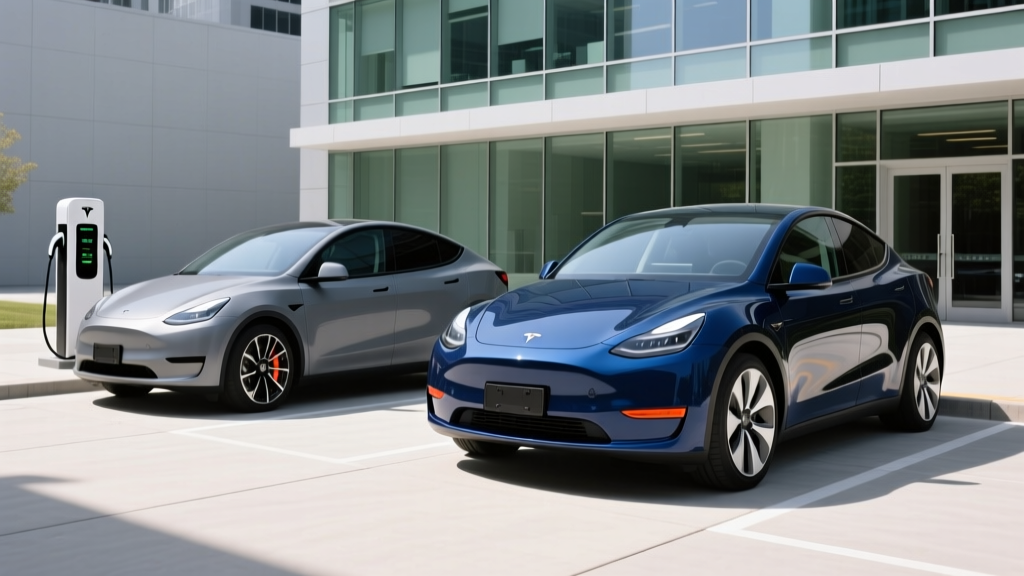
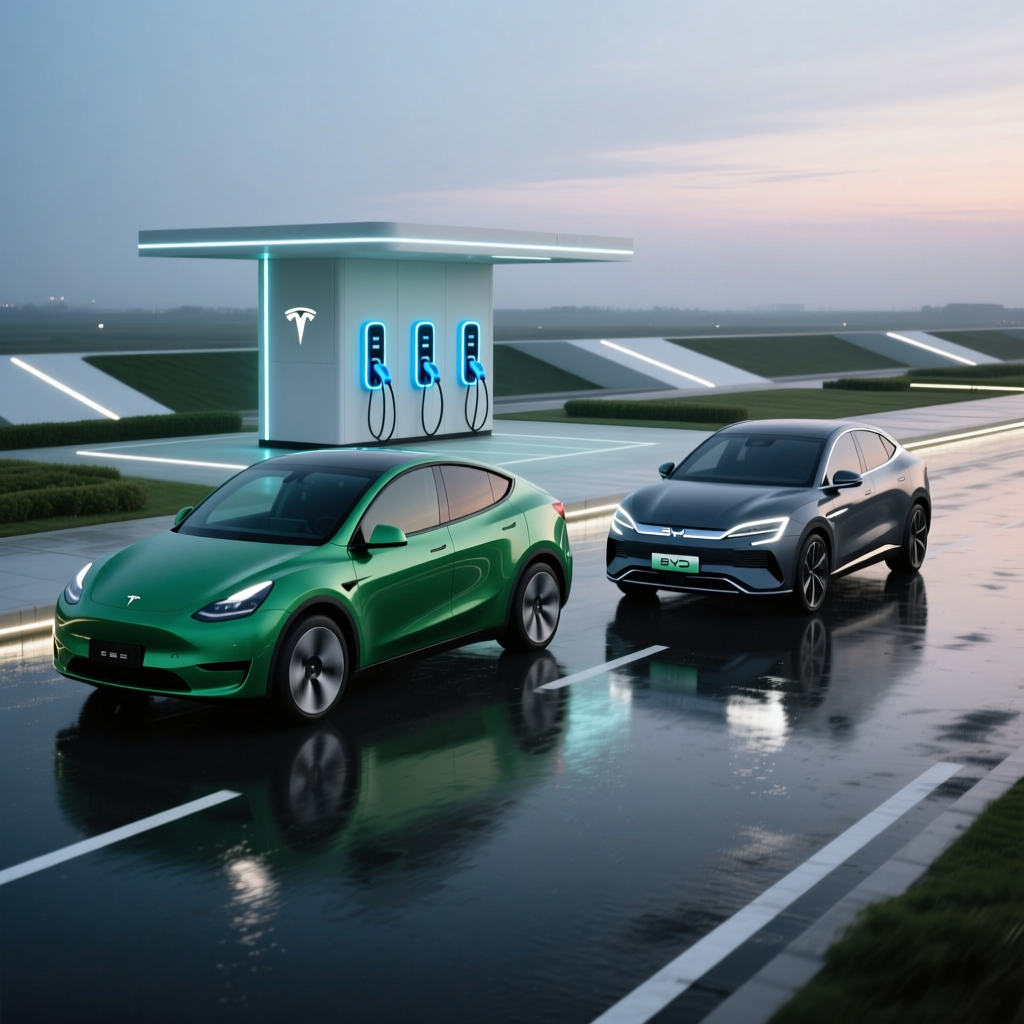
New Zealand's transition to electric mobility has accelerated rapidly, transforming the way Kiwis commute, tour, and tackle the country's diverse and often demanding landscapes. When browsing through electric car reviews NZ, two names consistently dominate the conversation: the Tesla Model Y and the BYD Atto 3. Both vehicles have redefined what drivers can expect from a battery-electric SUV, but they approach the market with distinctly different philosophies. The Tesla Model Y arrives as the established, tech-forward benchmark with an unrivaled charging network, while the BYD Atto 3 steps in as the value-packed, quirky challenger that punches well above its weight class.
Choosing between these two segment leaders requires looking beyond the brochure. New Zealand's unique driving conditions—characterized by steep coastal highways, winding mountain passes, and varying weather patterns—demand an EV that offers more than just impressive straight-line acceleration. In this comprehensive head-to-head comparison, we will dissect every critical aspect of both vehicles, from real-world range and charging infrastructure to interior practicality and long-term warranty coverage. Whether you are upgrading from a traditional internal combustion vehicle or looking to cross-shop the best EV SUVs on the market, this guide will provide the clarity you need to make an informed decision.
Vehicle Overviews: The Benchmark vs The Challenger
The Tesla Model Y is a global phenomenon for a reason. Built on the same platform as the Model 3, this mid-size crossover offers a minimalist, software-centric experience paired with class-leading efficiency and performance. In the New Zealand market, the Rear-Wheel Drive (RWD) and Long Range All-Wheel Drive (AWD) variants are the most popular, offering a compelling mix of daily usability and cross-country touring capability. Tesla's vertical integration means that everything from the powertrain to the infotainment system is designed in-house, resulting in a seamless, albeit sometimes polarizing, user experience. For a deeper dive into its specific quirks and features, be sure to read our full Tesla Model Y review.
On the other side of the ring is the BYD Atto 3, a vehicle that has taken the New Zealand market by storm. Built on BYD's dedicated e-Platform 3.0, the Atto 3 utilizes the brand's proprietary Blade Battery technology, which prioritizes safety and longevity. Unlike Tesla's stark minimalism, the Atto 3 embraces a highly stylized, gym-inspired interior that is packed with physical buttons, rotating screens, and unique textural elements. It positions itself as a more traditional, approachable crossover that appeals to buyers who want EV running costs without feeling like they are piloting a spaceship. You can explore more of its unique characteristics in our dedicated BYD Atto 3 review.
Side-by-Side Specification Comparison
Before diving into the nuanced driving experiences, it is essential to understand how these two EVs stack up on paper. The following table compares the standard-range, rear-wheel-drive equivalent models that serve as the entry points into their respective lineups.
| Specification | Tesla Model Y (RWD) | BYD Atto 3 (Extended Range) |
|---|---|---|
| Battery Capacity | ~60 kWh (LFP) | 60.48 kWh (LFP Blade) |
| WLTP Range | 455 km | 420 km |
| Power Output | 220 kW | 150 kW |
| Torque | 440 Nm | 310 Nm |
| 0-100 km/h | 6.9 seconds | 7.3 seconds |
| Boot Space (Seats Up) | 854 L | 440 L |
| Frunk (Front Trunk) | 117 L | None |
| Tow Rating (Braked) | 1,600 kg | 750 kg |
Range & Efficiency in New Zealand Conditions
Range anxiety remains a primary concern for prospective EV buyers, particularly in a country where inter-city travel often involves crossing vast, remote stretches of the South Island or navigating the hilly terrain of the North Island. While New Zealand officially adopts WLTP ratings for vehicle efficiency, comparing these with EPA ratings and independent test data provides a more conservative and often more accurate reflection of real-world driving.
The Tesla Model Y RWD boasts a WLTP range of 455 km. However, independent testing and real-world NZ highway driving—where speeds often hover around 100 km/h and headwinds are common—suggest a realistic highway range of approximately 330 to 360 km. Tesla's thermal management system and heat pump are exceptionally efficient, allowing the Model Y to retain more of its range in cold, alpine conditions compared to many rivals. The vehicle's regenerative braking system is also highly aggressive, allowing for true one-pedal driving that can significantly extend range in stop-start city traffic or on winding downhill descents.
The BYD Atto 3 Extended Range features a slightly larger 60.48 kWh Blade Battery but yields a WLTP range of 420 km. In real-world New Zealand conditions, drivers can expect around 300 to 330 km on the open highway. The Atto 3's efficiency is slightly hampered by its less aerodynamic profile and heavier curb weight relative to its battery size. Furthermore, while the Atto 3 does feature regenerative braking, its implementation is less refined than Tesla's, offering a softer deceleration curve that some drivers prefer for comfort, but which yields slightly less energy recapture on hilly routes. Ultimately, the Model Y holds a distinct edge in energy efficiency and real-world highway endurance.
Price, Value & Market Positioning
When analyzing electric car reviews NZ, price is inevitably a massive factor. The New Zealand EV market is highly sensitive to pricing shifts, government policies, and global supply chain dynamics. Historically, the BYD Atto 3 has undercut the Tesla Model Y by a significant margin, making it an incredibly attractive option for budget-conscious families and first-time EV buyers. The Atto 3 offers a compelling value proposition: you get a well-equipped, comfortable crossover with premium-feeling materials, a panoramic sunroof, and a suite of advanced driver assistance systems (ADAS) for a price that competes with mid-tier petrol SUVs.
The Tesla Model Y, while more expensive upfront, justifies its premium through sheer scale, performance, and software capabilities. You are paying for a larger vehicle with vastly superior cargo capacity, a more powerful powertrain, and access to Tesla's proprietary ecosystem. Additionally, Tesla vehicles tend to hold their resale value remarkably well, and the over-the-air (OTA) update capability means the car can literally improve and gain new features long after it has been driven off the lot. If you are evaluating the best electric cars purely on a dollars-per-kilometer-of-range basis, the BYD is a strong contender, but the Model Y offers a higher ceiling of overall utility and tech integration.
Charging Speed & Infrastructure
An electric vehicle is only as good as the network that supports it, and this is where the Tesla Model Y asserts one of its most significant advantages. Tesla's Supercharger network in New Zealand is extensive, reliable, and incredibly fast. The Model Y can accept peak charging rates of up to 170 kW (RWD) or 250 kW (Long Range), allowing drivers to add up to 200 km of range in just 15 minutes. Furthermore, the integrated navigation system automatically preconditions the battery when a Supercharger is selected, ensuring optimal charging speeds upon arrival. While Tesla has begun opening select Superchargers to non-Tesla EVs in NZ, the seamless plug-and-charge experience remains exclusive to Tesla owners.
The BYD Atto 3 relies on the broader public charging infrastructure, such as the ChargeNet network and various regional council chargers. The Atto 3's maximum DC fast-charging speed is capped at 80 kW. While this is adequate for topping up around town, it means that long-distance road trips will require longer stops. Charging from 10% to 80% on a compatible rapid charger takes roughly 40 to 45 minutes, compared to the Model Y's 25 to 30 minutes. For home charging, both vehicles support standard AC wallbox charging, with the Atto 3 offering an 11 kW onboard charger and the Model Y offering 11 kW to 22 kW depending on the specific variant and phase setup. For a comprehensive look at how to navigate the country's networks, consult our EV charging guide.
Performance & Driving Dynamics
New Zealand's roads are famously twisty, undulating, and occasionally unforgiving. The Tesla Model Y is engineered with a low center of gravity and a highly responsive dual-motor or single-motor setup that delivers instant, linear torque. The RWD model sprints to 100 km/h in a brisk 6.9 seconds, but it is the handling that truly impresses. The steering is precise, and the chassis remains remarkably flat through corners. However, the trade-off is a firm ride quality; the Model Y transmits sharp bumps and road imperfections directly into the cabin, which can become fatiguing on poorly maintained rural roads.
The BYD Atto 3 takes a decidedly different approach to driving dynamics. With 150 kW and 310 Nm of torque sent exclusively to the front wheels, it completes the 0-100 km/h dash in 7.3 seconds. While it lacks the visceral punch of the Tesla, the Atto 3 is more than quick enough for safe highway overtaking and merging. Where the BYD truly shines is in ride comfort. Its suspension tuning is softer and more forgiving, absorbing potholes, speed bumps, and gravel driveways with a plushness that the Tesla simply cannot match. The steering is lighter and more relaxed, making it an excellent daily commuter, though it lacks the athletic engagement of the Model Y on winding mountain passes.
Interior Space, Practicality & Cargo
Practicality is often the deciding factor for families browsing electric car reviews NZ. The Tesla Model Y is a masterclass in spatial efficiency. It offers a cavernous 854 liters of cargo space behind the rear seats, which expands massively when the 60/40 split rear seats are folded flat. Additionally, the Model Y features a 117-liter front trunk (frunk), perfect for storing charging cables, groceries, or a weekend bag. The rear passenger area is equally generous, with ample legroom and headroom, though the minimalist dashboard and lack of rear climate control screens in the base model can feel a bit sparse to some passengers.
The BYD Atto 3 is classified as a compact SUV, and its interior dimensions reflect this. The boot offers 440 liters of space, which is adequate for weekly groceries and a couple of suitcases, but it falls short of the Model Y's hauling capabilities. There is no frunk, as the space under the hood is occupied by traditional automotive components and the 12V battery. However, the rear passenger cabin is surprisingly spacious, featuring a flat floor and comfortable, supportive seating. The Atto 3's interior design is highly expressive, featuring muscle-fiber-inspired door panels, guitar-string door pockets, and a treadmill-style center console. It is a cabin that sparks conversation and feels distinctly more traditional and tactile than the Tesla's screen-dominated environment.
Technology, Safety & Warranty
Tesla's technological prowess is undeniable. The 15-inch central touchscreen controls virtually every function of the car, from the glovebox release to the windshield wipers. The software is lightning-fast, intuitive, and supported by regular OTA updates. Tesla's Autopilot suite provides excellent adaptive cruise control and lane-keeping assistance, though drivers must remain vigilant, as the system can sometimes struggle with New Zealand's faded lane markings and temporary roadworks. Safety ratings are top-tier globally, with the Model Y achieving maximum scores in rigorous crash tests.
The BYD Atto 3 features a unique 12.8-inch rotating touchscreen that can switch between landscape and portrait modes depending on the app being used. The software is functional but can occasionally feel laggy compared to Tesla's operating system. The ADAS suite includes adaptive cruise control, lane departure warning, and blind-spot monitoring, but the lane-keeping assist can be overly intrusive, often requiring the driver to disable it on narrow, winding NZ roads. Both vehicles utilize Lithium Iron Phosphate (LFP) batteries, which are renowned for their thermal stability and long lifespans. BYD offers an extensive 8-year/160,000 km battery warranty, while Tesla provides an 8-year/160,000 km (or 192,000 km for Long Range) warranty, giving buyers of both brands excellent peace of mind regarding battery degradation.
The Verdict: Which EV is Right for You?
The choice between the Tesla Model Y and the BYD Atto 3 ultimately comes down to your budget, lifestyle, and driving preferences. The Tesla Model Y is the undisputed choice for buyers who prioritize maximum range, cutting-edge technology, blistering performance, and the unmatched convenience of the Supercharger network. It is the ideal vehicle for families who frequently embark on long road trips across the country and need the cargo space to match. It is a premium, highly capable machine that sets the standard for the industry.
Conversely, the BYD Atto 3 is the perfect recommendation for budget-conscious buyers, urban commuters, and those who prefer a more traditional, comfortable, and quirky interior. It offers exceptional value for money, a softer ride quality that is better suited to rougher local roads, and a highly safe Blade Battery. If your daily driving consists mostly of city commutes and weekend trips within a 200 km radius, the Atto 3's slower charging speed and shorter range will rarely be an issue, making it a phenomenal entry point into electric mobility.
Frequently Asked Questions
What is the most reliable electric car in New Zealand?
Reliability in the EV space is heavily tied to battery chemistry and software stability. Based on current market data and owner feedback, the Tesla Model Y and BYD Atto 3 both rank highly due to their use of LFP (Lithium Iron Phosphate) batteries, which are less prone to degradation and thermal runaway than older NMC chemistries. Tesla's powertrain reliability is well-documented globally, while BYD's vertical manufacturing process ensures rigorous quality control over its proprietary Blade Batteries.
How long do EV batteries last in NZ conditions?
Modern EV batteries are designed to outlast the mechanical components of the vehicle. Both the Tesla Model Y and BYD Atto 3 use LFP batteries, which can easily endure 3,000 or more charge cycles before significant degradation occurs. In real-world terms, this translates to hundreds of thousands of kilometers. New Zealand's temperate climate is actually highly beneficial for battery health, as extreme heat or freezing cold—common in other parts of the world—are the primary catalysts for accelerated battery wear.
Is it worth buying an electric car in New Zealand?
Absolutely. Despite fluctuations in government incentives, the fundamental economics of EV ownership in NZ remain highly favorable. Electricity costs per kilometer are significantly lower than petrol or diesel, and EVs require vastly less routine maintenance (no oil changes, fewer moving parts, and regenerative braking saves brake pad wear). Furthermore, the expansion of fast-charging networks across both the North and South Islands has made inter-city EV travel more accessible than ever.
Which EV has the best charging network in NZ?
Tesla currently offers the most seamless and reliable charging experience in New Zealand through its proprietary Supercharger network. These chargers are strategically located along major state highways, offer high-speed charging, and require no RFID cards or third-party apps to activate. However, the broader CCS2 public network, managed by providers like ChargeNet, is rapidly expanding and provides excellent coverage for non-Tesla EVs like the BYD Atto 3, ensuring that no matter what you drive, you are never far from a charge.