Electric Car Reviews in India: The Ultimate Head-to-Head EV Comparison
The Indian electric vehicle market has undergone a remarkable transformation, evolving from a niche segment into one of the most competitive automotive landscapes in the world. With an ever-growing lineup of electric cars from both domestic manufacturers and global brands, choosing the right EV can feel overwhelming. Whether you are a daily commuter seeking affordability, a family looking for space and comfort, or an enthusiast craving performance, this comprehensive comparison guide breaks down the most popular electric cars available in India across every metric that matters.
In this article, we pit the leading electric vehicles against each other — covering range, pricing, charging speed, performance, interior space, technology features, and warranty coverage — so you can make an informed decision. For individual deep-dives, be sure to explore our best electric cars rankings and dedicated model reviews.
Overview of the Contenders
The Indian EV market is dominated by several key players that cater to different buyer segments. On one side, you have the Tata Nexon EV, India's best-selling electric SUV, which offers a compelling blend of practicality, ground clearance, and value. Competing closely is the MG ZS EV, a globally positioned electric SUV that brings premium features and a refined driving experience. In the sedan segment, the Tata Tigor EV serves as an accessible entry point, while the Hyundai Kona Electric targets buyers who prioritize range and efficiency. Rounding out the comparison are the Mahindra XUV400, a performance-oriented electric SUV, and the Citroën eC3, a budget-friendly hatchback designed for urban commuters.
Each of these vehicles represents a distinct philosophy: Tata focuses on value and ruggedness, MG emphasizes premium comfort, Hyundai prioritizes efficiency, Mahindra delivers performance, and Citroën targets affordability. Understanding where each car excels — and where it falls short — is the key to finding the perfect EV for your needs. You can also check our EV buying guide for additional context on choosing the right electric vehicle.
Side-by-Side Specification Comparison
| Specification | Tata Nexon EV | MG ZS EV | Hyundai Kona Electric | Mahindra XUV400 | Tata Tigor EV | Citroën eC3 |
|---|---|---|---|---|---|---|
| Battery Capacity | 30.2 kWh / 40.5 kWh | 50.3 kWh | 39.2 kWh | 34.5 kWh / 39.4 kWh | 26 kWh | 29.2 kWh |
| Claimed Range (ARAI) | 325 km / 465 km | 461 km | 452 km | 375 km / 456 km | 306 km | 320 km |
| Real-World Range | 250–350 km | 350–400 km | 350–400 km | 280–370 km | 200–250 km | 230–280 km |
| Motor Power | 95 kW (127 hp) | 130 kW (174 hp) | 100 kW (134 hp) | 110 kW (147 hp) | 55 kW (74 hp) | 42 kW (56 hp) |
| Torque | 245 Nm | 280 Nm | 395 Nm | 310 Nm | 170 Nm | 143 Nm |
| 0–100 km/h | ~9.9 s | ~8.5 s | ~9.7 s | ~8.3 s | ~13.5 s | ~16.0 s |
| Fast Charging (10–80%) | ~60 min (50 kW DC) | ~60 min (50 kW DC) | ~57 min (50 kW DC) | ~50 min (50 kW DC) | ~65 min (25 kW DC) | ~57 min (25 kW DC) |
| Starting Price (Ex-Showroom) | ₹14.49 Lakh | ₹18.98 Lakh | ₹23.97 Lakh | ₹15.49 Lakh | ₹12.49 Lakh | ₹11.50 Lakh |
Note: Prices and specifications are indicative and may vary by variant and region. Always verify with the manufacturer or authorized dealer for the most current information. ARAI range figures represent standardized test conditions; real-world results depend on driving style, terrain, climate control usage, and ambient temperature.
Range & Efficiency: Which EV Goes the Farthest?
Range anxiety remains one of the most significant barriers to EV adoption in India, and for good reason — the charging infrastructure, while expanding rapidly, is still developing across highways and tier-2 cities. Understanding the real-world range of each vehicle is therefore critical to making the right choice.
The MG ZS EV leads this comparison in real-world range, consistently delivering between 350 and 400 kilometers on a single charge under mixed driving conditions. Its 50.3 kWh battery pack provides ample energy reserves, and the vehicle's regenerative braking system — with multiple intensity levels — helps extract maximum distance from every kilowatt-hour. Independent testing by automotive journalists has confirmed that the ZS EV can comfortably handle inter-city trips of up to 300 kilometers without requiring a mid-journey charge, making it a strong contender for those who frequently travel between nearby cities.
The Hyundai Kona Electric matches the ZS EV closely, with real-world figures hovering in the 350–400 km band. Hyundai's battery management system is widely regarded as one of the most efficient in the industry, and the Kona's aerodynamic design contributes to lower energy consumption at highway speeds. According to efficiency data comparable to EPA-style ratings, the Kona achieves approximately 18–20 kWh per 100 km in combined driving — a figure that translates to lower electricity costs over the vehicle's lifetime.
The Tata Nexon EV Max (40.5 kWh variant) delivers a respectable 300–350 km in real-world conditions, while the standard Nexon EV (30.2 kWh) manages around 250–280 km. For urban commuters who drive 40–60 km daily, the standard variant is more than sufficient, but highway-heavy drivers should consider the Max variant. The Mahindra XUV400 with its larger 39.4 kWh battery offers similar real-world performance to the Nexon EV Max, while the Citroën eC3 and Tata Tigor EV are best suited for city driving with real-world ranges of 200–280 km.
For a deeper analysis of efficiency and range optimization, check our tips for maximizing EV range.
Price & Value: Getting the Most for Your Money
Pricing in the Indian EV market spans a wide spectrum, and value is determined not just by the sticker price but by what you get in terms of features, build quality, and long-term ownership costs.
At the entry-level end, the Citroën eC3 and Tata Tigor EV offer the most affordable gateway into electric mobility. The eC3, priced starting around ₹11.50 lakh (ex-showroom), is the cheapest four-wheeled EV from a mainstream manufacturer in India. It strips away some premium features to hit that price point — you get manual air conditioning, a basic infotainment system, and steel wheels on lower variants — but the fundamental electric drivetrain is solid and reliable. The Tigor EV, at roughly ₹12.49 lakh, offers a more conventional sedan form factor with a usable boot and slightly better interior quality.
Moving up, the Tata Nexon EV (starting at ₹14.49 lakh) represents what many consider the sweet spot in the Indian EV market. It offers SUV ground clearance — crucial for Indian roads — a spacious cabin, a feature-rich interior with connected car technology, and the backing of Tata's extensive service network. The Nexon EV's total cost of ownership, when factoring in lower fuel and maintenance costs compared to petrol alternatives, makes it financially compelling over a five-year ownership period.
The Mahindra XUV400 slots in at a similar price point and offers more power and a sportier driving experience, though its interior quality and feature list don't quite match the Nexon EV. The MG ZS EV, priced around ₹18.98 lakh, commands a premium but justifies it with a larger battery, more refined ride quality, panoramic sunroof, and advanced safety features including six airbags on higher variants.
At the top of this comparison sits the Hyundai Kona Electric at approximately ₹23.97 lakh. While it is the most expensive option here, it offers superior efficiency, a globally proven platform, and Hyundai's reputation for reliability. Buyers considering the Kona should evaluate whether the additional range and efficiency gains justify the premium over the ZS EV or Nexon EV Max. Our best budget EVs roundup highlights more affordable alternatives worth considering.
Charging Speed & Infrastructure Compatibility
An electric car is only as practical as your ability to charge it conveniently, and charging speed plays a pivotal role in the ownership experience — especially for those who rely on public fast-charging networks for longer trips.
All six vehicles in this comparison support CCS2 (Combined Charging System) DC fast charging, which is the standard adopted across India's growing public charging network operated by companies like Tata Power, Ather Grid, Fortum, and others. However, the maximum charging speeds and the time required to go from 10% to 80% state of charge vary significantly.
The Mahindra XUV400 edges ahead in this department, capable of accepting up to 50 kW of DC power and reaching 80% charge in approximately 50 minutes. The Tata Nexon EV, MG ZS EV, and Hyundai Kona Electric all achieve 10–80% charging in roughly 57–60 minutes at 50 kW DC chargers. This means that on a highway trip, a quick lunch stop is sufficient to replenish enough charge for another 200–250 kilometers of driving.
The Tata Tigor EV and Citroën eC3 are limited to 25 kW DC fast charging, which extends the 10–80% charging window to around 57–65 minutes. While this is manageable for city dwellers who primarily charge at home overnight, it does mean longer stops on highway journeys. Both vehicles support AC home charging, with a full charge from a standard 15A socket taking approximately 8–10 hours — easily accomplished overnight.
For home charging, all manufacturers offer either a complimentary or optional AC wall-box charger (typically 7.2 kW), which can fully recharge these vehicles in 6–9 hours depending on battery capacity. Installing a home charger is highly recommended and transforms the EV ownership experience — waking up to a full "tank" every morning eliminates range anxiety for daily commuting. Learn more in our home EV charging setup guide.
Performance & Driving Dynamics
Electric vehicles are renowned for their instant torque delivery, and even modest EVs can surprise first-time drivers with their responsiveness off the line. However, the performance character of each vehicle in this comparison differs meaningfully.
The MG ZS EV is the most powerful vehicle here, producing 174 horsepower and 280 Nm of torque. This translates to a 0–100 km/h time of approximately 8.5 seconds and effortless overtaking ability on highways. The ZS EV's three driving modes — Eco, Normal, and Sport — allow drivers to tailor the throttle response and regenerative braking to their preferences. In Sport mode, the acceleration is genuinely thrilling, while Eco mode maximizes efficiency for daily commuting. The ride quality is plush, and the suspension absorbs bumps with a maturity that reflects its global engineering pedigree.
The Mahindra XUV400 is a close second in performance, with 147 horsepower and an impressive 310 Nm of torque. Its 0–100 km/h time of around 8.3 seconds makes it the quickest vehicle in this group, and the torque surge at low speeds provides an engaging, sporty character. Mahindra has tuned the suspension on the firmer side, which benefits handling on twisty roads but can feel slightly jiggly over broken surfaces.
The Tata Nexon EV and Hyundai Kona Electric occupy the middle ground. The Nexon EV's 127 horsepower is adequate for most situations, and its elevated ground clearance (209 mm) makes it uniquely capable on rough roads and during monsoon waterlogging. The Kona Electric, with 134 horsepower and a substantial 395 Nm of torque, offers the most linear and refined power delivery in this group, though its low ground clearance is a concern on uneven Indian roads.
The Citroën eC3 and Tata Tigor EV are not performance-oriented vehicles. With 56 hp and 74 hp respectively, they are designed for relaxed urban driving. That said, the instant torque characteristic of electric motors means both feel peppy in stop-and-go traffic, even if their top-end performance is modest. The eC3 deserves special mention for its ride quality — Citroën's suspension tuning is class-leading, offering a remarkably comfortable experience over potholes and speed breakers.
Interior Space, Comfort & Practicality
Interior space is a critical consideration for Indian families, and the vehicles in this comparison span a range of body styles that directly impact passenger comfort and cargo capacity.
The MG ZS EV offers the most spacious and premium interior in this group. As a proper mid-size SUV, it provides generous legroom and headroom for rear-seat passengers, and the flat floor (a benefit of the electric skateboard platform) means the middle rear passenger isn't straddling a transmission tunnel. The boot offers approximately 488 liters of cargo space — enough for a family weekend trip with luggage for four. The materials, while not luxury-grade, feel upscale with soft-touch surfaces on the dashboard and door pads.
The Tata Nexon EV is slightly more compact but still offers comfortable seating for four adults. Rear-seat space is adequate for average-height passengers, though taller individuals may find legroom tight on long journeys. The boot capacity of approximately 350 liters is reasonable for a sub-compact SUV. Where the Nexon EV excels is in its elevated seating position and commanding view of the road — attributes that Indian buyers particularly value.
The Mahindra XUV400, despite being based on a compact platform, offers surprisingly good interior space thanks to its extended wheelbase compared to the XUV300. Rear-seat legroom is generous, and the boot capacity of around 378 liters is practical. The interior design is modern, though some hard plastics are evident on lower door panels.
The Hyundai Kona Electric compromises on rear-seat space and boot capacity (approximately 332 liters) due to its battery placement and crossover form factor. It is best suited for couples or small families. The Tata Tigor EV, as a sub-compact sedan, offers a surprisingly usable 316-liter boot and adequate rear-seat space for city use. The Citroën eC3 provides decent front-seat comfort but rear-seat space is tight, and the boot (319 liters) is adequate for daily needs.
Technology, Features & Safety
Modern electric vehicles are technology platforms as much as they are transportation devices, and the feature sets available across these models reflect the competitive intensity of the Indian market.
The MG ZS EV leads in technology with its large 10.1-inch touchscreen infotainment system, connected car features via the i-SMART app (remote vehicle monitoring, geo-fencing, remote climate control), a panoramic sunroof, wireless phone charging, and a 360-degree surround-view camera. On the safety front, higher variants come equipped with six airbags, electronic stability control, hill descent control, and a tire pressure monitoring system. The ZS EV's ADAS (Advanced Driver Assistance Systems) features on top variants — including adaptive cruise control, lane keep assist, and autonomous emergency braking — represent segment-leading technology.
The Tata Nexon EV counters with its own connected car platform (ZConnect) offering over 35 connected features, including remote lock/unlock, live vehicle tracking, and over-the-air updates. The infotainment system features a 7-inch touchscreen with Android Auto and Apple CarPlay, a premium Harman audio system, and a digital instrument cluster. Safety equipment includes dual front airbags, ABS with EBD, and a reinforced body structure that has earned commendable crash test performance.
The Mahindra XUV400 features a 7-inch touchscreen with wireless Android Auto and Apple CarPlay, connected car technology via AdrenoX, and multiple drive modes. However, it falls slightly behind the ZS EV and Nexon EV in terms of feature richness and software polish. Safety features include dual airbags, ABS, and rear parking sensors with a camera.
The Hyundai Kona Electric brings global technology standards to India, including a 10.25-inch digital instrument cluster, a 7-inch touchscreen with connected car features, ventilated front seats (a rarity in this segment), and a heads-up display on higher variants. Safety is comprehensive with six airbags, vehicle stability management, and a virtual engine sound system for pedestrian awareness.
The Citroën eC3 and Tata Tigor EV offer more basic technology packages — functional touchscreens with smartphone mirroring, basic connected features, and essential safety equipment. They cover the fundamentals well but lack the premium features found in higher-priced competitors. For a full breakdown of features across all EVs, visit our EV features comparison tool.
Warranty, After-Sales Service & Battery Longevity
Long-term ownership peace of mind depends heavily on warranty coverage and the quality of the manufacturer's service network — especially for a technology as new as electric vehicles.
The Tata Nexon EV benefits from Tata Motors' extensive service network — one of the largest in India with over 1,000 touchpoints across the country. Tata offers a standard vehicle warranty of 3 years or 1,25,000 km (whichever is earlier) and an 8-year or 1,60,000 km warranty on the battery pack and motor. This battery warranty is particularly important, as the battery is the single most expensive component in an EV.
The MG ZS EV comes with a 4-year/50,000 km standard warranty and an 8-year/1,50,000 km battery warranty. MG's service network is smaller than Tata's but is expanding rapidly, and the brand has earned a reputation for responsive customer service and premium dealership experiences.
The Hyundai Kona Electric is backed by Hyundai's robust 3-year/unlimited km warranty and an 8-year/1,60,000 km battery warranty. Hyundai's service network is widespread and well-regarded for quality and consistency. The Mahindra XUV400 offers a 3-year/1,00,000 km vehicle warranty and an 8-year/1,50,000 km battery warranty, supported by Mahindra's large rural and urban service footprint.
For the Citroën eC3, the standard warranty is 3 years/1,25,000 km with an 8-year/1,00,000 km battery warranty. Citroën's service network is still growing in India, which may be a consideration for buyers in smaller cities. The Tata Tigor EV shares the Nexon EV's warranty structure and benefits from the same extensive network.
Battery longevity is a common concern, but real-world data from early EV adopters in India suggests that modern lithium-ion battery packs with active thermal management systems retain 85–90% of their original capacity even after 5 years of regular use. Proper charging habits — avoiding frequent 100% charges and deep discharges — can further extend battery life. Read our EV battery longevity guide for best practices.
The Verdict: Which Electric Car Should You Buy?
After evaluating each vehicle across every critical dimension, here are our recommendations based on buyer type:
- Best Overall Value: The Tata Nexon EV remains the default recommendation for most Indian EV buyers. It offers the best combination of range, ground clearance, features, service network, and pricing. If you can only test-drive one EV, make it the Nexon EV.
- Best for Families & Long Trips: The MG ZS EV is the ideal family electric SUV. Its spacious interior, long real-world range, premium features, and comfortable ride make it perfect for those who regularly carry passengers and luggage.
- Best for Performance Enthusiasts: The Mahindra XUV400 delivers the quickest acceleration and most engaging driving dynamics in this group, all at a competitive price point.
- Best for Budget-Conscious Buyers: The Citroën eC3 offers the lowest entry price and outstanding ride comfort, making it an excellent city car for first-time EV buyers.
- Best for Efficiency & Global Pedigree: The Hyundai Kona Electric is the efficiency champion with proven global reliability, though its higher price and low ground clearance are trade-offs.
- Best Entry-Level Sedan: The Tata Tigor EV is the right choice for buyers who prefer a sedan body style and want an affordable, practical EV for daily commuting.
No single EV is perfect for everyone, but the Indian market now offers genuine choice across multiple price points and body styles. We recommend test-driving at least two or three models on this list to determine which one aligns best with your driving habits, family needs, and budget. Explore our complete India EV reviews hub for more detailed individual reviews.
Frequently Asked Questions
Are electric cars practical for Indian road conditions?
Yes, modern electric cars are increasingly well-suited to Indian road conditions. Vehicles like the Tata Nexon EV offer 209 mm of ground clearance, which handles speed breakers, potholes, and monsoon waterlogging effectively. The instant torque from electric motors also helps in stop-and-go traffic, and the absence of a combustion engine means no air filter or oil changes — reducing maintenance headaches caused by dusty conditions. However, buyers should consider their specific route: if you frequently drive on highways with limited charging infrastructure, choosing a vehicle with longer real-world range (350+ km) is advisable. Our EV charging station map can help you assess infrastructure coverage on your regular routes.
How much does it cost to charge an electric car at home in India?
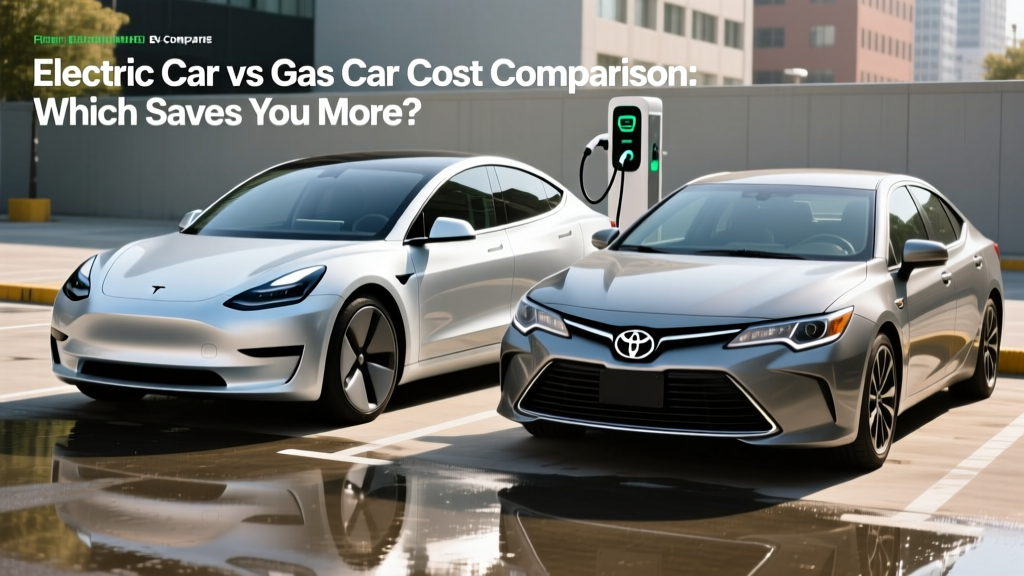
Charging an electric car at home in India is remarkably affordable. With average domestic electricity rates ranging from ₹6 to ₹10 per kWh (depending on your state and slab), fully charging a 40 kWh battery costs between ₹240 and ₹400. Compare this to filling a petrol tank for ₹3,000–₹4,000, and the savings become immediately apparent. Over a year of driving 15,000 km, an EV owner typically spends ₹8,000–₹15,000 on electricity versus ₹60,000–₹90,000 on petrol for an equivalent ICE vehicle. Installing a dedicated home charger (7.2 kW wall box) costs approximately ₹15,000–₹30,000 including installation and ensures convenient overnight charging every day.
What happens if the EV battery degrades over time?
Battery degradation is a natural process in all lithium-ion batteries, but modern EV batteries are engineered for longevity. Most manufacturers in India provide an 8-year battery warranty that guarantees the pack will retain at least 70% of its original capacity. In practice, real-world data from early Indian EV adopters shows that batteries with active liquid cooling (as found in the Nexon EV Max, ZS EV, and Kona Electric) retain 85–90% capacity after five years of regular use. If degradation exceeds warranty thresholds, manufacturers will repair or replace the battery at no cost. To maximize battery life, avoid routinely charging to 100%, minimize fast-charging sessions, and try to keep the state of charge between 20% and 80% for daily use. For more details, see our comprehensive EV battery maintenance guide.
Is it worth buying an electric car in India right now?
For most urban and semi-urban drivers, the answer is a resounding yes. The total cost of ownership for an EV is significantly lower than a comparable petrol or diesel car when you factor in fuel savings, reduced maintenance costs, and potential tax benefits. The charging infrastructure is expanding rapidly along major highways and in metropolitan areas, and home charging eliminates the need for public stations for daily use. However, if your primary use case involves frequent long-distance highway travel through areas with sparse charging infrastructure, or if you live in a region with extreme temperatures and unreliable electricity supply, you may want to consider a plug-in hybrid or wait for infrastructure to mature further. The key is matching the right EV to your specific driving patterns — and this comparison guide is designed to help you do exactly that.