Electric Car Review Singapore: BYD Atto 3 vs Tesla Model Y
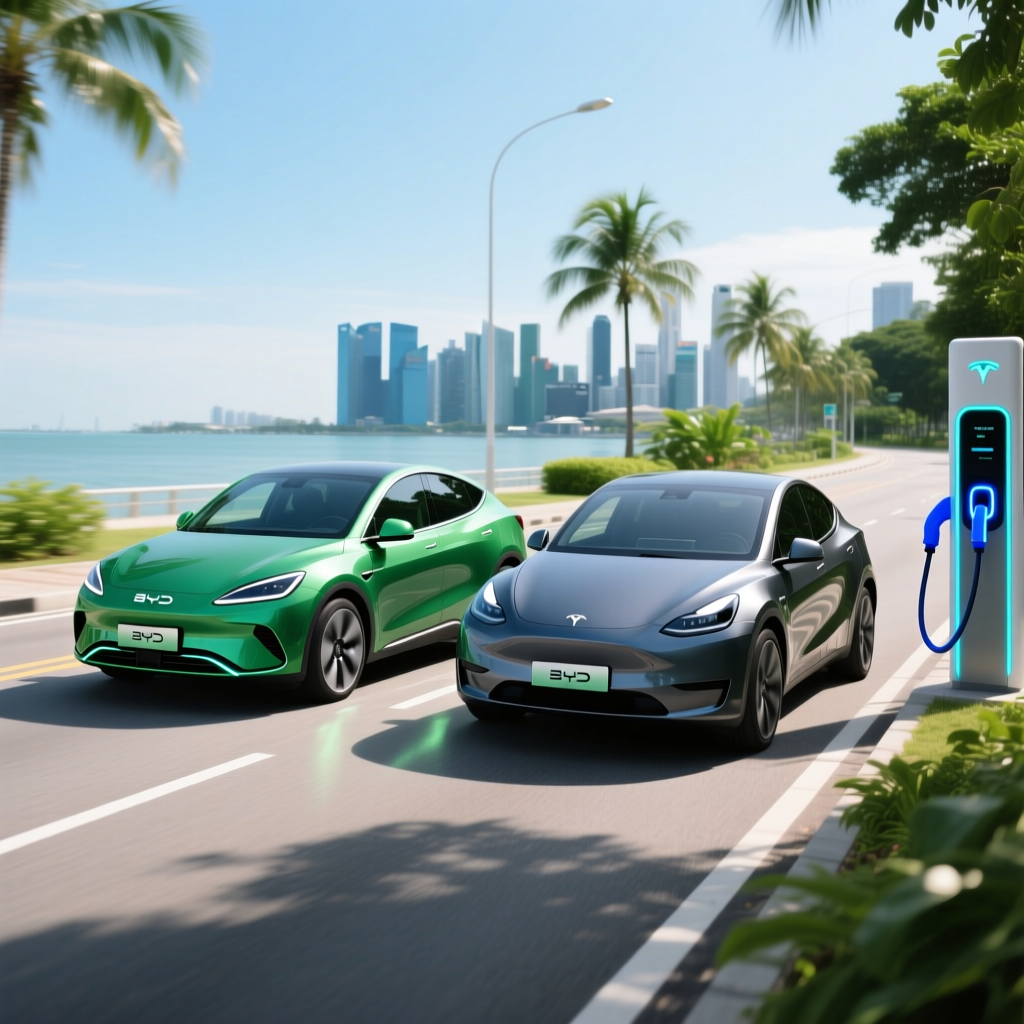
The transition to electric mobility in Singapore has accelerated rapidly, transforming the local automotive landscape. For prospective buyers navigating the unique complexities of the Certificate of Entitlement (COE) system, the Vehicle Emission Scheme (VES), and the evolving charging infrastructure, finding the right electric vehicle (EV) requires careful consideration. In this comprehensive electric car review for the Singapore market, we pit the two undisputed market leaders against each other: the BYD Atto 3 and the Tesla Model Y. Both vehicles dominate the local sales charts, but they cater to slightly different needs, budgets, and lifestyles.
Whether you are upgrading from a traditional internal combustion engine (ICE) vehicle or looking to optimize your running costs amidst fluctuating petrol prices, this head-to-head comparison will provide the insights you need. We will evaluate range, pricing structures, charging capabilities, performance, interior practicality, and technology to help you determine which EV deserves a spot in your HDB or condominium car park. For a broader look at the market, be sure to check out our best EV SUVs guide and our latest best-pick rankings.
Overview: The Contenders
The BYD Atto 3 has taken Singapore by storm, offering a compelling blend of affordability, quirky design, and impressive standard equipment. As a compact SUV, it is specifically tailored to navigate the narrow streets and tight parking spaces of the city-state. BYD’s proprietary Blade Battery technology provides peace of mind regarding safety and longevity, making it a favorite among pragmatic family buyers. You can read our dedicated BYD Atto 3 full review for a deeper dive into its standalone merits.
On the other side of the ring is the Tesla Model Y, the global benchmark for electric SUVs. The Model Y brings Tesla’s industry-leading software ecosystem, Supercharger network access, and minimalist luxury to the table. It offers more interior volume and a slightly more premium badge, appealing to tech-savvy professionals and growing families who prioritize space and cutting-edge autonomous driving features. Explore our Tesla Model Y full review for more details on the American automaker's flagship crossover.
Side-by-Side Specification Comparison
Before diving into the nuances of daily driving in Singapore, let us examine the core specifications of both vehicles. Note that specifications may vary slightly based on the specific trim levels imported by local distributors.
| Specification | BYD Atto 3 (100kW Cat A Variant) | Tesla Model Y (RWD Cat A Variant) |
|---|---|---|
| Battery Capacity | 60.48 kWh (LFP Blade) | ~60 kWh (LFP) |
| WLTP Range | 420 km | 455 km |
| Power Output | 100 kW (134 hp) | 110 kW (147 hp) |
| Torque | 310 Nm | 350 Nm |
| 0-100 km/h | 12.1 seconds | 6.9 seconds |
| Max DC Charging | 88 kW | 170 kW |
| AC Charging (Type 2) | 7 kW | 11 kW |
| Boot Space | 440 Liters | 854 Liters (incl. frunk) |
Range & Efficiency in Tropical Climates
Range anxiety is a common concern for new EV adopters, though it is largely mitigated by Singapore's compact geography. The island is roughly 50 kilometers wide, meaning a full charge can easily cover multiple cross-island trips. However, Singapore's tropical climate means that air conditioning is running at maximum capacity year-round, which impacts battery efficiency.
The BYD Atto 3 boasts a WLTP range of 420 km. In real-world Singaporean conditions, independent test data suggests a realistic range of around 340 to 360 km when accounting for heavy traffic, frequent stop-and-go driving, and constant climate control usage. The Tesla Model Y RWD offers a slightly higher WLTP rating of 455 km. Thanks to Tesla's exceptional thermal management system and aerodynamic efficiency, real-world testing often yields around 380 to 400 km under similar local conditions.
While local buyers rely heavily on WLTP figures, it is worth noting that EPA ratings from the United States often provide a more conservative and sometimes more accurate reflection of mixed driving conditions. Under EPA testing cycles, the Model Y consistently outperforms the Atto 3 in energy efficiency (measured in MPGe or kWh/100km). For the average Singaporean driver covering 15,000 km annually, both vehicles will require charging only once or twice a week, making them highly practical for daily commutes.
Price, COE Categories & Value Proposition
Pricing in Singapore is uniquely dictated by the COE system, the Additional Registration Fee (ARF), and government incentives like the VES and the EV Early Adoption Incentive (EEAI). To make EVs more accessible, the Land Transport Authority (LTA) adjusted the power output threshold for COE Category A to 110kW. Both BYD and Tesla offer specific variants tailored to fit just under this limit, allowing buyers to benefit from the generally lower premiums of Category A compared to Category B.
The BYD Atto 3 is positioned as the more budget-friendly option. Even with the Category A COE, its base price before incentives is significantly lower than the Tesla. After applying maximum VES rebates and EEAI incentives, the Atto 3 becomes an incredibly attractive proposition for mass-market buyers transitioning from Japanese or Korean ICE compact SUVs. It represents outstanding value, offering premium features like a panoramic sunroof, synthetic leather seats, and a 360-degree camera as standard.
The Tesla Model Y, while also available in a Category A-compliant 110kW RWD variant, commands a higher base price. You are paying a premium for the Tesla badge, the proprietary software ecosystem, and superior cargo capacity. However, when comparing the total cost of ownership over a 10-year COE cycle, the Model Y's higher initial outlay is somewhat offset by its superior energy efficiency, lower depreciation curve, and access to the Tesla Supercharger network. For buyers stretching their budgets into Category B, the Dual Motor Long Range variants of both vehicles offer significantly more power and all-wheel-drive capabilities, though the Tesla maintains a slight edge in overall resale value.
Charging Speed & Local Infrastructure
Charging infrastructure in Singapore has expanded rapidly, with the LTA and HDB rolling out charging points across public housing estates, and private operators like SP Group, Shell Recharge, and Charge+ populating malls and condominiums. Understanding how these vehicles interact with local chargers is crucial.
The BYD Atto 3 is limited to a maximum DC fast-charging rate of 88 kW. On a standard 50 kW public charger found in many HDB carparks, it will charge from 20% to 80% in about 45 minutes. If you find a 120 kW or higher charger, the Atto 3 will still peak at 88 kW, taking roughly 30 to 40 minutes for the same 20-80% top-up. Its AC charging is capped at 7 kW, meaning a full overnight charge at home or at a destination charger takes roughly 9 to 10 hours.
The Tesla Model Y shines in charging versatility. It supports up to 170 kW on DC fast chargers, allowing it to absorb electrons much faster on high-output stations, achieving a 10-80% charge in under 30 minutes. Furthermore, Tesla owners in Singapore have the added benefit of accessing the expanding network of Tesla Superchargers located at key destinations like Marina Bay Sands, Orchard Road, and various suburban malls. These Superchargers offer seamless plug-and-charge functionality without the need for third-party apps or RFID cards. For AC charging, the Model Y supports 11 kW (three-phase), which is highly beneficial if your condominium or landed property is equipped with a three-phase power supply, cutting home charging times significantly. For more tips on navigating the local network, read our EV charging guide.
Performance & Driving Dynamics
When restricted to the 110kW Category A limit, the performance characteristics of these two SUVs diverge noticeably. The BYD Atto 3 produces 100 kW and 310 Nm of torque, resulting in a 0-100 km/h time of 12.1 seconds. While it feels punchy off the line due to instant electric torque, it runs out of breath at highway speeds. The suspension is tuned strictly for comfort, soaking up speed bumps and uneven roads with ease, but it exhibits noticeable body roll during spirited cornering.
The Tesla Model Y RWD, pushing the Category A limit with 110 kW and a healthier 350 Nm of torque, sprints to 100 km/h in a brisk 6.9 seconds. The acceleration is thrilling and makes overtaking on the PIE or AYE effortless. Tesla’s chassis engineering is notably firmer, providing a sportier, more engaging driving experience with minimal body roll. However, this stiffer setup means you will feel the imperfections of older Singaporean roads more acutely than in the plush BYD.
If you opt for the Category B variants, the BYD Atto 3 (150kW) drops the century sprint to 7.3 seconds, while the Tesla Model Y Long Range Dual Motor achieves a supercar-rivaling 5.0 seconds, accompanied by the added traction and stability of all-wheel drive, which is particularly useful during the heavy monsoon rain seasons.
Interior Space, Comfort & Practicality
Interior packaging is where the Tesla Model Y asserts its dominance as a mid-size SUV compared to the compact BYD Atto 3. The Model Y offers a cavernous 854 liters of total cargo space, including the rear boot and the front trunk (frunk). The rear seats fold completely flat, creating a massive sleeping or hauling area that is perfect for IKEA runs or camping trips to East Coast Park. Rear passengers enjoy ample legroom and headroom, though the lack of a traditional instrument cluster and the reliance on the central screen for climate controls can be polarizing.
The BYD Atto 3, despite its smaller footprint, maximizes interior volume brilliantly. The cabin feels airy thanks to the large panoramic sunroof. The boot offers a respectable 440 liters, which is sufficient for weekly groceries and family luggage. The interior design is highly unconventional, featuring muscle-fiber-inspired door panels, guitar-string door pockets, and treadmill-style armrests. While some find it quirky and fun, others may prefer the austere minimalism of the Tesla. The Atto 3 retains physical buttons for essential functions like climate control and volume, which many drivers find safer and more intuitive to use while navigating busy traffic.
Technology & Safety Features
Tesla is widely regarded as a tech company that happens to build cars, and the Model Y reflects this. The 15-inch central touchscreen is incredibly responsive, featuring a bespoke infotainment system with built-in navigation, Spotify, Netflix, and YouTube (viewable while parked). Tesla’s Autopilot suite is standard, offering excellent adaptive cruise control and lane-keeping assistance that handles the stop-and-go traffic of the CTE exceptionally well. Furthermore, Tesla’s Over-The-Air (OTA) updates frequently introduce new features and performance enhancements long after the car has left the showroom.
The BYD Atto 3 features a unique 12.8-inch rotating touchscreen that can switch between landscape and portrait modes depending on the app being used. The UI is functional but can feel slightly cluttered compared to Tesla’s polished interface. A major advantage for Singaporean drivers is the native integration of local apps and the seamless pairing with Android Auto and Apple CarPlay, which Tesla currently lacks. In terms of safety, both vehicles boast 5-star ANCAP/Euro NCAP ratings. The Atto 3 includes a comprehensive ADAS suite, though its lane-keeping assist can be overly sensitive and intrusive on narrow local roads compared to the more natural feel of Tesla’s Autopilot.
Warranty & After-Sales Support
Peace of mind is critical when adopting new automotive technology. The BYD Atto 3 is backed by the local authorized distributor, offering a comprehensive vehicle warranty and an extensive 8-year or 160,000 km warranty on the Blade Battery. The local distributor network has expanded its service centers across the island to meet the high demand, though wait times for appointments can occasionally be lengthy due to the sheer volume of cars on the road.
Tesla operates on a direct-to-consumer model in Singapore. The vehicle warranty is typically 4 years or 80,000 km, with the battery and drive unit covered for 8 years or 192,000 km. Tesla’s service model relies heavily on mobile rangers who can fix minor issues at your home or office, reducing the need to visit the physical service center in Alexandra or Changi. However, for major bodywork or complex hardware failures, securing a service slot can sometimes require patience. Both brands utilize Lithium Iron Phosphate (LFP) batteries in their standard-range models, which are renowned for their longevity and ability to be charged to 100% daily without significant degradation.
The Verdict: Which EV is Right for You?
Choosing between the BYD Atto 3 and the Tesla Model Y ultimately comes down to your budget, lifestyle, and technological preferences. Both are exceptional vehicles that have rightfully earned their spots at the top of the Singaporean EV sales charts.
Choose the BYD Atto 3 if: You are a pragmatic buyer seeking maximum value for money. It is the ideal choice for those who want a comfortable, easy-to-drive compact SUV with a quirky interior, physical buttons, and seamless Apple CarPlay/Android Auto integration. It is perfectly suited for city driving, HDB car park charging, and buyers who want to minimize their initial COE and ARF outlay while still enjoying a premium EV experience.
Choose the Tesla Model Y if: You prioritize interior space, cutting-edge technology, and superior driving dynamics. The Model Y is the better pick for growing families who need maximum cargo capacity, tech enthusiasts who want the best native software and OTA updates, and road-trippers who value the convenience and speed of the Tesla Supercharger network. It is also the superior choice for those who frequently drive at highway speeds and appreciate a firmer, more engaging chassis.
Frequently Asked Questions
Can I charge my EV at HDB public car parks?
Yes, the LTA and HDB have been aggressively rolling out EV charging points across public housing estates. Most HDB car parks now feature AC chargers (typically 7 kW to 22 kW) managed by operators like SP Group, Charge+, and Shell Recharge. These are ideal for overnight charging. You will need to download the respective operator's app to activate the charger and pay for the electricity consumed. For a complete guide on public charging etiquette and locations, refer to our EV charging guide.
How does the 110kW COE Category A limit affect these cars?
To qualify for the generally more affordable Category A COE, electric cars must have a maximum power output of 110kW (approx. 147 hp). Both BYD and Tesla offer specific variants for the Singapore market that are electronically or mechanically limited to this threshold. While this reduces the 0-100 km/h acceleration times compared to their global counterparts, it makes the vehicles significantly more affordable to purchase and register. If you desire the full performance and all-wheel-drive capabilities, you will need to bid for a Category B COE.
Are EVs compatible with Singapore's ERP system?
Yes, all officially imported EVs in Singapore are fully compatible with the Electronic Road Pricing (ERP) system. They are equipped with the necessary In-vehicle Unit (IU) or the newer On-Board Unit (OBU) for the upcoming ERP 2.0 system. You will need to insert your NETS CashCard or link your credit card to the OBU to pay for ERP charges and public car park parking fees seamlessly, just as you would in a traditional petrol or hybrid vehicle.
What are the maintenance costs compared to petrol cars?
Electric vehicles generally have significantly lower maintenance costs than internal combustion engine cars. EVs do not require engine oil changes, spark plug replacements, or transmission fluid flushes. The primary maintenance items are cabin air filters, wiper blades, brake fluid checks, and tire rotations. Furthermore, regenerative braking drastically reduces the wear and tear on brake pads. On average, Singaporean EV owners report saving 30% to 50% on routine servicing costs compared to their previous petrol vehicles, making the total cost of ownership highly attractive over a 10-year COE cycle.