BYD Atto 3 vs MG 4 EV: The Ultimate Electric Car Review & Comparison in the Philippines
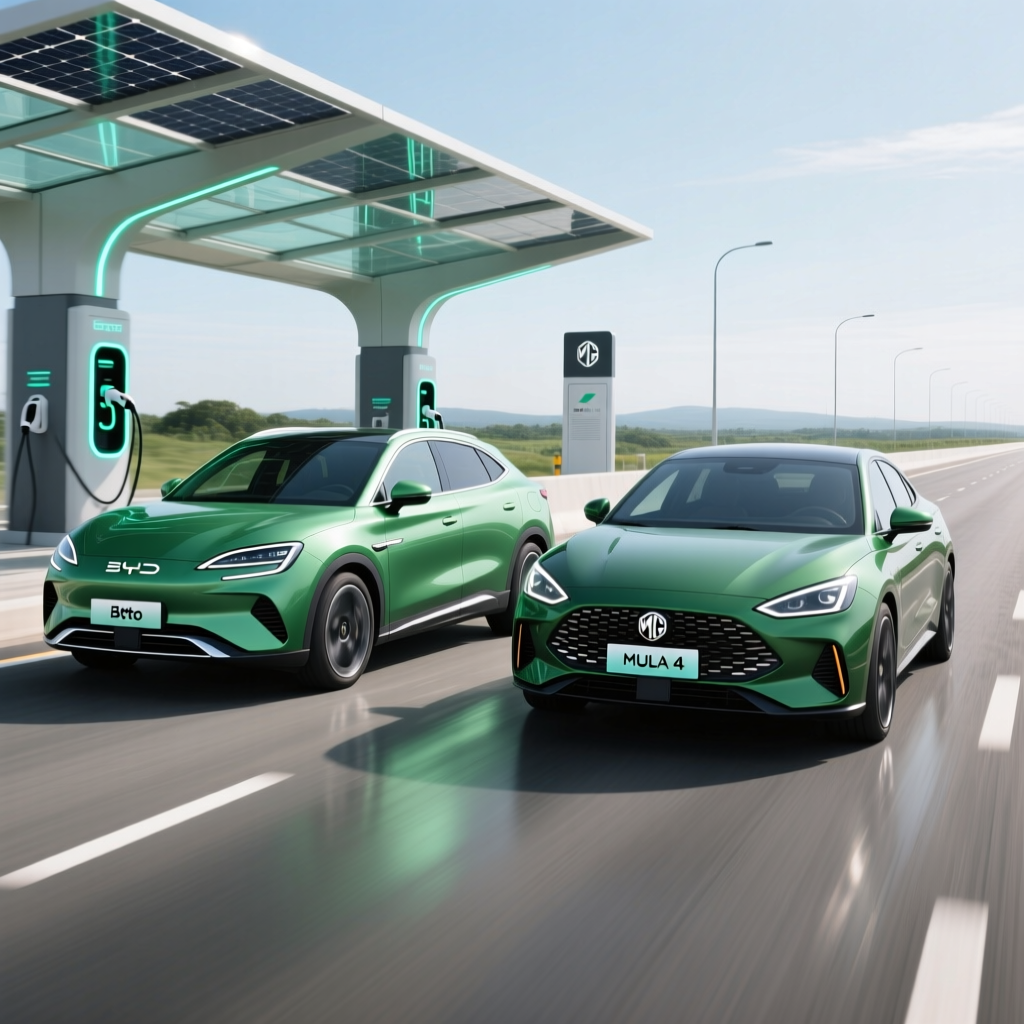
The Philippine automotive landscape is undergoing a monumental shift. Driven by fluctuating fuel prices, growing environmental awareness, & supportive government legislation like the Electric Vehicle Industry Development Act (EVIDA), Filipino drivers are increasingly looking toward electric vehicles (EVs) as their primary mode of transportation. However, transitioning to an EV in a country known for heavy metropolitan traffic, diverse road conditions, & unique geographical challenges requires careful consideration. If you are searching for a comprehensive electric car review in the Philippines, you have likely narrowed your sights on the two undisputed market leaders: the BYD Atto 3 & the MG 4 EV.
Both vehicles represent the new wave of globally competitive, Chinese-manufactured electric cars that offer premium technology, impressive range, & aggressive pricing. But which one is the right fit for your daily commute along EDSA, your weekend road trips to Baguio, or your family errands across the metro? In this detailed head-to-head comparison, we dissect every aspect of these two EV heavyweights to help you make an informed decision.
Overview: BYD Atto 3 vs MG 4 EV
The BYD Atto 3 is a compact crossover SUV that has taken the global market by storm. It leverages BYD’s proprietary e-Platform 3.0 & features the highly acclaimed Blade Battery, known for its exceptional safety & thermal stability. The Atto 3 is designed with families in mind, offering a quirky, gym-inspired interior, a comfortable ride, & a high ground clearance that is particularly useful for navigating flooded streets during the Philippine typhoon season. For a deeper dive into its unique characteristics, check out our BYD Atto 3 comprehensive review.
On the other hand, the MG 4 EV is a compact hatchback built on MG’s Modular Scalable Platform (MSP). It targets a younger, more dynamic demographic by offering rear-wheel-drive (RWD) dynamics, sharp European-inspired styling, & an incredibly competitive entry price. The MG 4 EV prioritizes driving engagement & practicality, proving that EVs do not have to be boring. You can read more about its sporty credentials in our MG 4 EV detailed breakdown.
Side-by-Side Specification Comparison
Before we hit the roads, let us look at the raw numbers. The table below compares the top-tier variants of both vehicles available in the Philippine market.
| Specification | BYD Atto 3 (Premium) | MG 4 EV (Luxury / XPOWER) |
|---|---|---|
| Body Style | Compact Crossover SUV | Compact Hatchback |
| Battery Capacity | 60.48 kWh (LFP Blade) | 64 kWh (LFP) |
| WLTP Range | 420 km | 435 km |
| Motor Output | 150 kW (201 hp) / 310 Nm | 150 kW (201 hp) / 250 Nm (Luxury) |
| Drivetrain | Front-Wheel Drive (FWD) | Rear-Wheel Drive (RWD) |
| 0-100 km/h | 7.3 seconds | 7.7 seconds (Luxury) / 3.8s (XPOWER) |
| DC Fast Charging | 88 kW (Max) | 135 kW (Max) |
| Ground Clearance | 175 mm | 150 mm |
Range & Battery Efficiency
Range anxiety remains the primary concern for Filipino EV adopters. According to WLTP testing standards, the BYD Atto 3 offers a maximum range of 420 kilometers, while the MG 4 EV pushes slightly further to 435 kilometers. However, real-world conditions in the Philippines tell a different story.
Driving in Metro Manila involves relentless stop-and-go traffic, frequent idling, & the constant, heavy use of air conditioning due to the tropical climate. As noted by EPA electric vehicle basics, extreme climate control usage can reduce EV range by 15% to 20%. In heavy EDSA traffic, expect the Atto 3 to deliver around 330 to 350 kilometers of real-world range, while the MG 4 EV achieves roughly 340 to 360 kilometers. Both vehicles utilize Lithium Iron Phosphate (LFP) battery chemistry, which is highly durable, resistant to thermal runaway, & can be charged to 100% daily without degrading the battery health—a massive advantage for daily commuters.
Pricing & Value for Money
The pricing strategy for both vehicles has disrupted the local automotive market. Thanks to the EVIDA law, which provides significant tax exemptions & import duty reductions for EVs, both the Atto 3 & the MG 4 EV are priced competitively against traditional internal combustion engine (ICE) rivals like the Honda HR-V, Toyota Corolla Cross, & Mazda CX-30.
The MG 4 EV takes the crown for sheer affordability. Its entry-level trims offer an unparalleled gateway into electric mobility, making it an attractive option for first-time EV buyers & budget-conscious professionals. The BYD Atto 3, while slightly more expensive, justifies its premium with a more upscale interior finish, a larger physical footprint, & the added peace of mind that comes with the globally renowned Blade Battery technology. When calculating the total cost of ownership, both vehicles offer massive savings on fuel & maintenance, easily offsetting their initial purchase price over a five-year period.
Charging Speed & Infrastructure Compatibility
The Philippine charging infrastructure is expanding rapidly, with major networks installed across Ayala Malls, SM Supermalls, & various expressway service areas. Both the BYD Atto 3 & the MG 4 EV utilize the CCS2 charging standard, ensuring compatibility with virtually all public DC fast chargers in the country.
Where they differ is in peak charging speeds. The MG 4 EV supports up to 135 kW of DC fast charging, allowing it to charge from 10% to 80% in approximately 26 minutes under optimal conditions. The BYD Atto 3 caps at 88 kW, taking roughly 35 to 40 minutes for the same 10-80% top-up. While the MG 4 is technically faster, both vehicles are perfectly suited for road trips along SLEX or NLEX, where a 30-minute lunch break is all you need to add 200 kilometers of range. For home charging, both support 7 kW AC wall boxes, which will fully replenish the battery overnight in about 9 to 10 hours. For more tips on setting up your home grid, read our complete EV charging guide.
Performance & Driving Dynamics
The driving experiences of these two EVs are fundamentally different, catering to distinct preferences. The BYD Atto 3 is tuned for comfort. Its Front-Wheel Drive (FWD) layout & soft suspension soak up the uneven road surfaces, potholes, & speed bumps commonly found in Philippine subdivisions & provincial roads. The steering is light, making it effortless to maneuver through tight parking spaces & crowded city streets.
Conversely, the MG 4 EV is a driver’s car. Its Rear-Wheel Drive (RWD) architecture provides a balanced weight distribution & a more engaging, sporty feel. The steering is sharper, & the chassis is remarkably agile, making it incredibly fun to drive on winding roads like those leading up to Tagaytay or Baguio. However, the stiffer suspension means you will feel more of the road's imperfections. Furthermore, the Atto 3 boasts a higher ground clearance (175 mm vs 150 mm), giving it a distinct advantage when navigating flooded streets during the monsoon season.
Interior Space, Comfort & Cargo
Step inside the BYD Atto 3, & you are greeted by one of the most unique interiors in the automotive world. The gym-inspired theme features muscle-fiber door panels, guitar-string door pockets, & a treadmill-style center console. Beyond the quirky design, it is incredibly spacious. The rear seats offer generous legroom, & the 440-liter boot is highly practical for family grocery runs or weekend luggage.
The MG 4 EV adopts a minimalist, functional European design. The cabin is uncluttered, with a floating infotainment screen & a sleek center console. While it feels slightly more premium in its material choices, the rear seat space is marginally tighter than the BYD, & the 363-liter boot is adequate but smaller. However, the MG 4’s hatchback design offers a wide opening, making it easy to load bulky items. For Filipino families prioritizing cabin space & ride comfort, the Atto 3 is the clear winner, while the MG 4 appeals to singles or couples who prioritize style & urban agility.
Technology, Safety & Warranty
Both vehicles are loaded with modern technology, but their execution varies. The BYD Atto 3 features a signature 12.8-inch rotating infotainment screen that switches between landscape & portrait modes depending on the app. It includes a 360-degree camera, wireless phone charging, & a comprehensive suite of Advanced Driver Assistance Systems (ADAS). The MG 4 EV uses a fixed 10.25-inch screen with a highly intuitive interface & physical shortcut buttons, which many drivers prefer for ease of use while driving.
Regarding safety, both cars have achieved 5-star Euro NCAP ratings. However, ADAS calibration in the Philippines can be challenging. Features like Lane Keep Assist & Adaptive Cruise Control often struggle with the unpredictable nature of local traffic, such as jeepneys stopping abruptly or tricycles weaving without warning. Most local drivers find themselves turning off lane-centering features on busy roads.
Warranty coverage is a critical factor for EV adoption. Both brands offer extensive battery warranties (typically 8 years or 160,000 kilometers), ensuring long-term peace of mind. BYD’s local distributor network has grown exponentially, providing robust after-sales support, while MG leverages its long-established dealer network across the archipelago.
The Verdict: Which EV Should You Buy?
Choosing between the BYD Atto 3 & the MG 4 EV ultimately comes down to your lifestyle, driving habits, & priorities. Both are phenomenal vehicles that have rightfully earned their spots on our list of the best EVs in the Philippines.
Choose the BYD Atto 3 if: You are a family-oriented buyer who values interior space, ride comfort, & higher ground clearance. It is the ultimate daily commuter & family hauler, offering a quirky but highly practical cabin, excellent battery safety, & a suspension setup perfectly tuned for imperfect roads.
Choose the MG 4 EV if: You are a driving enthusiast or a young professional who values dynamic handling, sporty aesthetics, & faster DC charging speeds. Its RWD layout makes it the most engaging EV in its price bracket, & its aggressive pricing makes it an undeniable bargain for those who do not need SUV-level cargo space.
Frequently Asked Questions (FAQ)
Are electric cars practical for provincial driving in the Philippines?
Yes, but they require route planning. While the charging infrastructure in Metro Manila, Cebu, & Davao is robust, provincial routes & long expressway stretches (like the TPLEX or SCTEX) still have gaps between charging stations. Both the Atto 3 & MG 4 EV have enough real-world range to handle trips from Manila to Baguio or Batangas on a single charge, provided you manage your speed & air conditioning usage. It is highly recommended to use EV routing apps to locate DC fast chargers at gas stations & malls along your route before embarking on long provincial road trips.
How does the Philippine charging network support the BYD Atto 3 & MG 4 EV?
The local charging network relies heavily on the CCS2 standard, which both vehicles use. Major real estate developers like Ayala Land & SM Prime have integrated EV charging stations into their malls, office buildings, & residential hubs. Additionally, independent charging networks & oil companies are rapidly deploying DC fast chargers along major toll roads. For daily use, the vast majority of Filipino EV owners rely on home charging setups, utilizing off-peak electricity rates to charge their vehicles overnight at a fraction of the cost of gasoline.
What are the maintenance costs compared to traditional gas cars?
EVs have significantly fewer moving parts than internal combustion engine vehicles. You will never need to pay for oil changes, spark plug replacements, transmission fluid flushes, or exhaust system repairs. Routine maintenance for the BYD Atto 3 & MG 4 EV is generally limited to cabin air filter replacements, windshield wiper fluid, brake fluid checks, & tire rotations. Because EVs use regenerative braking, brake pads & rotors last substantially longer than those on gas cars. Overall, routine maintenance costs are estimated to be 50% to 70% lower than equivalent gas-powered SUVs & hatchbacks.
Which EV offers better resale value in the local market?
Historically, EVs suffered from steep depreciation due to battery degradation fears. However, the adoption of LFP batteries in both the BYD Atto 3 & MG 4 EV has largely mitigated this concern, as LFP chemistry is proven to last well beyond the lifespan of the vehicle itself. Furthermore, the EVIDA law & rising fuel costs have created a strong demand for used EVs in the Philippines. Currently, the BYD Atto 3 holds a slight edge in resale value due to its immense popularity, brand recognition, & the high demand for compact crossovers in the local second-hand market. However, as MG continues to expand its dealer network & prove the reliability of the MG 4, its residual values are steadily improving.