Quick Answer: What Kind of Electric Car for Kids Makes Sense?
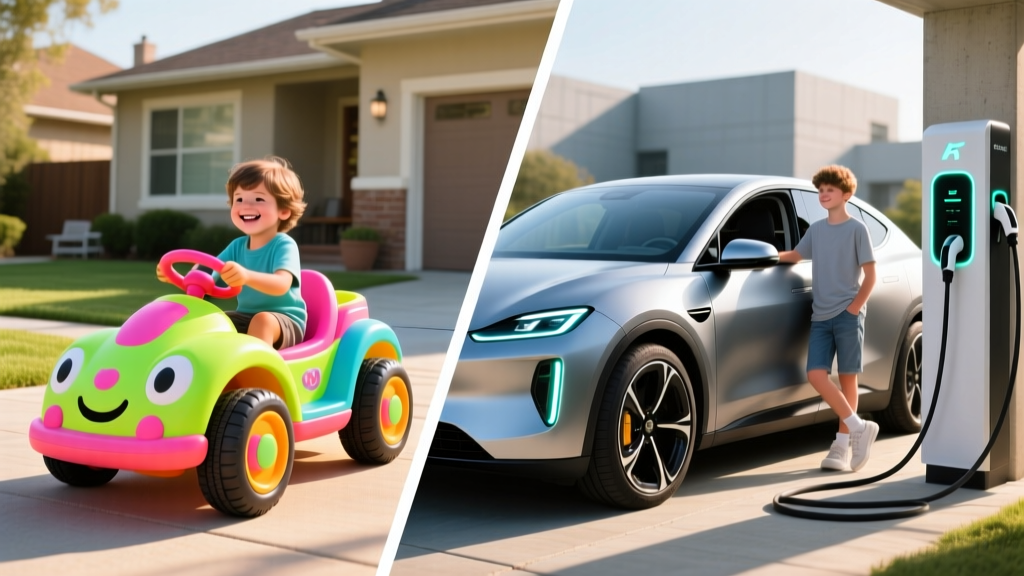
An electric car for kids usually means one of two things: a battery-powered ride-on toy for ages 2–8 (typically 6V, 12V, or 24V, priced $100–$450), or a real highway-legal EV for a newly licensed teen driver. For ride-ons, a 12V model with parent remote override, 2–4 mph top speed, and 45–90 minutes of run time fits most driveways. For teens, a used or new compact EV like the 2026 Chevrolet Equinox EV (EPA 319 mi, starting ~$33,600 before incentives) is a practical first car — but only if you have reliable home Level 2 charging.
Searches for "electric car for kids" spike every holiday season and graduation month, but the phrase hides two completely different buying decisions. Parents of toddlers want a safe, durable ride-on that won't tip on the sidewalk. Parents of 16-year-olds want a first car that's cheap to run, safe in a crash, and won't strand their teenager at a DC fast charger. This guide covers both — with real specs, costs, and the ownership math most roundups skip.
Ride-On Electric Cars for Young Kids (Ages 2–8)
These are toy-grade vehicles, not transportation. They run on sealed lead-acid (SLA) batteries — the same chemistry in UPS backups — and are measured in volts (6V, 12V, 24V), not kilowatt-hours. Higher voltage generally means more torque, higher top speed, and better hill-climbing.
| Voltage | Top Speed | Run Time | Max Rider Weight | Typical Price | Best For |
|---|---|---|---|---|---|
| 6V | 2–2.5 mph | 30–45 min | 45 lb | $80–$160 | Toddlers 2–3, flat surfaces |
| 12V | 3–5 mph | 45–90 min | 80–100 lb | $150–$350 | Ages 3–6, slight inclines |
| 24V | 6–10 mph | 45–75 min | 130–150 lb | $300–$500 | Ages 5–8, grass/gravel |
What to actually check before buying
- Parent remote override. A 2.4 GHz remote lets you kill the motor or steer from 50+ feet away. Non-negotiable near streets.
- Soft-start controller. Cheap 12V cars jerk forward; soft-start ramps up over 1–2 seconds and prevents tip-backs.
- Battery access. SLA batteries last 1–3 seasons. If the battery compartment requires tools you don't own, skip it.
- Seat belt type. Lap belts are common; a 3-point harness is rare but meaningfully safer on 24V models.
- Charge time. Expect 8–14 hours for a full charge on the included wall wart. There is no fast-charging a toy SLA battery.
Real costs of ownership
A 12V/7Ah ride-on battery costs $20–$35 to replace and lasts roughly 200–400 charge cycles before capacity drops below 70%. Over three summers, budget ~$60 in replacement batteries and under $5/year in electricity. Total three-year cost of a $250 ride-on: roughly $315. Compare that to a pedal car (zero ongoing cost) or a gas-powered mini bike ($150–$300/year in fuel and maintenance).
When "Electric Car for Kids" Means a Real EV for a Teen Driver
Once your kid hits 16, the conversation shifts from toy to transportation. A used or entry-level new EV can be a strong first car — lower running costs, no gas station trips on a learner's permit, and strong crash-test performance from the low center of gravity. But it only works if three conditions are met:
- You have home Level 2 charging (240V, 32–48A circuit). Apartment dwellers without workplace charging should reconsider.
- Daily driving is under ~60 miles round trip, leaving a 2× buffer on the EPA range.
- Your climate isn't brutally cold without a garage — expect 20–35% range loss at 20°F and below.
Best real EV picks for teen drivers in 2026
| Model | EPA Range | Battery | DC Fast Peak | 10–80% Time | Starting MSRP | IIHS Rating |
|---|---|---|---|---|---|---|
| 2026 Chevy Equinox EV LT | 319 mi | 85 kWh (NMC) | ~150 kW | ~30 min | $33,600 | Top Safety Pick |
| 2026 Hyundai Ioniq 5 SE Std Range | 240 mi | 58 kWh (NMC) | ~175 kW | ~18 min | $42,600 | Top Safety Pick+ |
| 2025 Nissan LEAF SV Plus (used) | 212 mi | 62 kWh (NMC) | ~100 kW | ~45 min | ~$16k–$22k used | Good (IIHS) |
| 2026 Volvo EX30 Core | 275 mi | 69 kWh (NMC) | ~153 kW | ~26 min | $36,350 | Pending |
Source: fueleconomy.gov and manufacturer press sites. Real-world highway range at 75 mph is typically 10–15% below EPA; add another 15–25% loss in sub-freezing weather.
EV vs Gas vs Hybrid: What a First Car Actually Costs
The sticker price favors gas. The five-year math often favors EVs — but only with home charging and moderate annual miles. Here's a head-to-head for a teen driving 10,000 miles/year in a state with $0.14/kWh residential electricity and $3.40/gallon gas:
| Cost Category | 2026 Equinox EV | 2026 Toyota Prius (HEV) | 2026 Honda Civic (Gas) |
|---|---|---|---|
| Purchase (MSRP, no incentives) | $33,600 | $28,550 | $25,650 |
| Fuel/Energy (5 yrs) | $2,330 | $5,950 | $7,550 |
| Maintenance (5 yrs) | ~$1,200 | ~$2,400 | ~$3,100 |
| Insurance (teen, avg) | $11,500 | $10,200 | $10,000 |
| 5-Year Total (before incentives) | $48,630 | $47,100 | $46,300 |
| Federal §30D credit (if eligible) | –$7,500 | N/A | N/A |
| 5-Year Total (after credit) | $41,130 | $47,100 | $46,300 |
The EV wins on total cost if you qualify for the full IRS §30D clean vehicle credit. That credit has hard caps: vehicle MSRP under $55,000 for sedans / $80,000 for SUVs, buyer AGI under $150k single / $300k joint, and battery-critical-mineral plus component sourcing thresholds that change yearly. Confirm eligibility on the IRS site before signing a deal — point-of-sale transfer is available at participating dealers.
Insurance is the hidden cost. EVs typically cost 10–20% more to insure than comparable gas cars due to higher repair costs and specialized body-shop requirements. Get quotes from three carriers before committing.
What a First-Time EV Buyer (or Their Parent) Must Know
| Myth | Fact |
|---|---|
| "The battery will die in 5 years and cost $20k." | Federal law mandates 8 years / 100,000 miles of battery warranty (10 yrs in CARB states). Most NMC packs retain 85–92% capacity at 100k miles. |
| "You can charge on any outlet." | A standard 120V outlet (Level 1) adds ~3–5 miles per hour — fine for plug-in hybrids, inadequate for daily BEV use over 40 miles. |
| "EPA range is what you'll get." | Sustained 75 mph highway driving cuts 10–15%. Sub-30°F weather with cabin heat can cut 25–35% without a heat pump. |
| "EVs are self-driving." | Every consumer EV today is SAE Level 2 — hands on wheel, eyes on road. No Tesla, Ford, or GM system is autonomous. |
| "Used EVs are a bad deal." | A 2–4 year-old EV with a battery health report showing >90% SoH is often the best value in the market. |
Home charging: the make-or-break factor
Before buying any EV for a teen, confirm you can install a 240V / 40–50A circuit in your garage or driveway. Typical costs:
- Level 2 charger (hardware): $400–$700 (ChargePoint Home Flex, Emporia Vue, Wallbox Pulsar Plus)
- Electrician + permit: $600–$2,500, depending on panel proximity
- Panel upgrade (if needed): $1,500–$3,500 for a 200A service upgrade on older homes
If you can't charge at home and don't have a workplace charger or reliable public DC fast charger within 10 minutes of your route, a hybrid (Prius, Corolla Hybrid) is the safer call. Public charging reliability remains uneven — NHTSA and J.D. Power data consistently show 15–25% failure rates on non-Tesla DC fast networks.
Decision Framework: Which "Electric Car for Kids" Is Yours?
If the driver is under 10 years old → buy a 12V ride-on with parent remote, soft start, and a user-replaceable SLA battery. Budget $200–$350 total.
If the driver is 16+ and you have home Level 2 charging → consider a 2026 Equinox EV or used LEAF; run the §30D eligibility check; get three insurance quotes first.
If the driver is 16+ and you live in an apartment or cold climate without a garage → choose a hybrid (Prius, Hyundai Ioniq Hybrid). You'll get 50+ MPG without charging infrastructure.
If the teen drives <30 miles/day and you want minimum cost → a used 2019–2022 LEAF or Bolt EV on Level 1 (120V) charging can work, but confirm battery State of Health >90% on the dealer scan tool.
FAQ: Electric Car for Kids
Is a 24V ride-on safe for a 4-year-old?
Generally no. Most 24V models are rated for ages 5–8 and hit 6–10 mph — too fast for a preschooler's reaction time. Stick with 12V and a parent remote until at least age 5.
Can a teen take an EV on a road trip?
Yes, with planning. A 319-mile Equinox EV can handle most interstates using DC fast chargers every 200–220 miles. The catch: add 20–30 minutes per stop, and confirm the charger is operational via PlugShare or the network app before you commit to the route.
Do EVs cost more to insure for teen drivers?
Typically 10–20% more than an equivalent gas car. The gap is narrowing as body shops gain EV certification. Always quote insurance before purchase — don't assume.
What happens if the ride-on battery dies mid-driveway?
Most 12V/24V ride-ons freewheel when power cuts, so you can push them. Keep a spare charged SLA battery ($20–$35) on hand during heavy-use weekends.
Should I buy a Tesla Model 3 for my teen?
The 2026 Model 3 starts around $38,990 and qualifies for partial §30D credit depending on battery sourcing. It's a capable car, but Autopilot is SAE Level 2 — not self-driving — and insurance on a Tesla for a teen driver is often the highest in the segment. Compare quotes against the Equinox EV and Ioniq 5 before deciding.
Where can I verify a used EV's battery health?
Ask the dealer for a State of Health (SoH) printout from the OEM scan tool. Independent services like Recurrent Auto also offer battery reports. Anything below 85% SoH on a sub-$20k used EV is a negotiation point or walk-away signal.
Whether you're shopping for a plastic Jeep Wrangler that tops out at 4 mph or a real compact EV for a new driver, the decision comes down to three things: the driver's actual age and skill, your home charging situation, and the five-year math — not the sticker price alone. Get the numbers right and either choice holds up.