The Quick Answer on Electric Car Flying
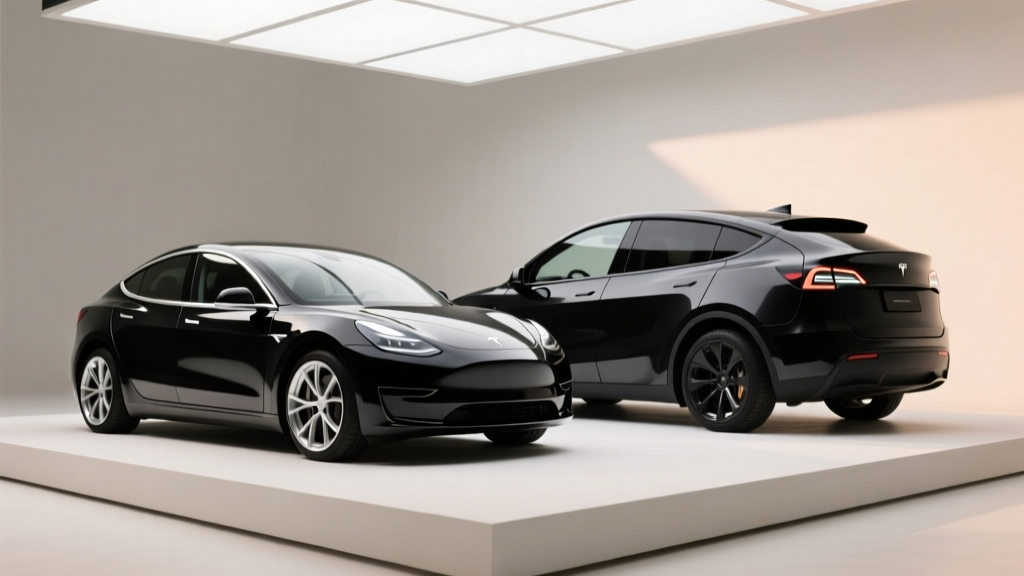
If you searched "electric car flying" hoping to buy a drivable aircraft today, the honest answer is: you cannot purchase a street-legal flying electric car in 2026. What does exist are two distinct categories — eVTOL aircraft (electric vertical takeoff and landing vehicles like the Joby S4 and Archer Midnight) that are entering limited commercial air-taxi service in select cities, and ground-based battery electric vehicles (BEVs) you can buy at a dealership right now. The flying vehicles are not cars; they are piloted aircraft regulated by the FAA, with no consumer purchase path. For daily transportation in 2026, a ground EV like the Hyundai Ioniq 6 (EPA 361 miles, $39,650 base) or Tesla Model Y (EPA 320 miles, $44,990) delivers real, purchasable, tax-credit-eligible electric mobility today.
What "Electric Car Flying" Actually Means in 2026
The term "electric car flying" conflates several very different technologies. Understanding what's real versus what's hype is essential before you make any transportation spending decision.
eVTOL Air Taxis — Not Cars, Not for Sale
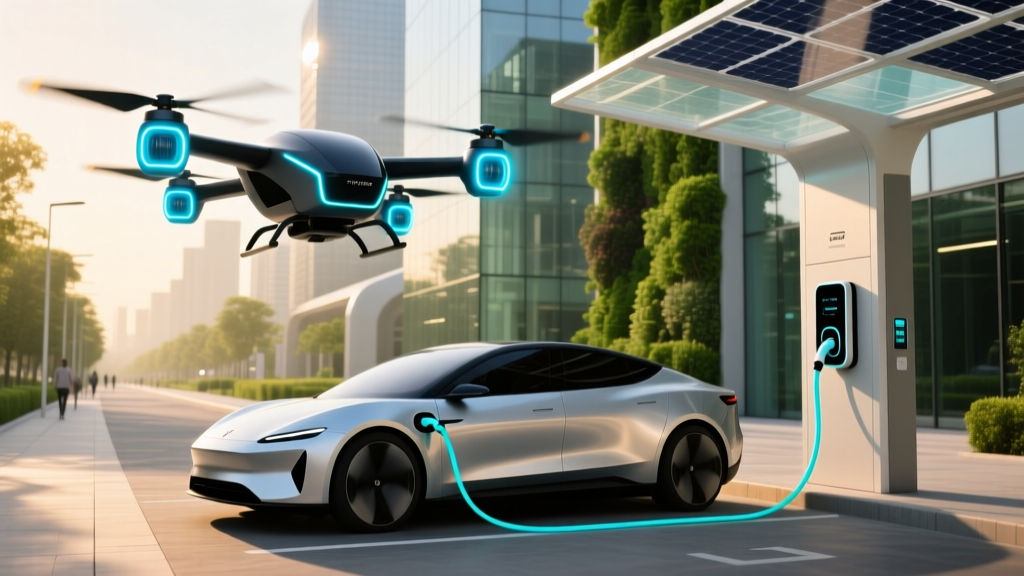
Companies like Joby Aviation and Archer Aviation have received FAA type certification milestones for their eVTOL aircraft. These are aircraft, not automobiles. They carry 4-5 passengers, are flown by licensed pilots, and operate under commercial air-service regulations. You cannot buy one, park one in your garage, or drive one to the grocery store.
- Joby S4: ~100-mile range, cruise speed ~200 mph, 6 rotors, pilot + 4 passengers
- Archer Midnight: ~100-mile range, targeting 20-minute urban hops, pilot + 4 passengers
- Availability: Limited commercial routes announced for cities like New York, Los Angeles, and Dubai — but these are air-taxi services, not consumer products
- Consumer purchase: Not available. These are multi-million-dollar aircraft operated by certified carriers
Ground-Based EVs — Real, Buyable, Practical
Meanwhile, the EV market in 2026 offers dozens of models with 250-400+ miles of EPA range, DC fast charging from 150-350 kW, and federal tax credit eligibility up to $7,500 (with income, MSRP, and battery-sourcing caveats per IRS §30D rules).
Real EVs You Can Buy vs. Flying Concepts
Let's put concrete numbers on what ground-based electric vehicles deliver right now, compared to the theoretical promise of eVTOL commuting.
| Metric | 2026 Hyundai Ioniq 6 SE (Long Range) | 2026 Tesla Model Y Long Range | 2026 Toyota Camry (Gas Baseline) | eVTOL Air Taxi (Projected Service) |
|---|---|---|---|---|
| EPA Range / Distance | 361 miles | 320 miles | ~510 miles (14.5 gal × 35 MPG) | ~100 miles per charge |
| Energy / Fuel Capacity | 77.4 kWh usable (NMC) | ~75 kWh usable | 14.5 gal gasoline | Not publicly disclosed kWh |
| Peak Charge Rate | 240 kW DC (10-80% ~18 min) | 250 kW DC (10-80% ~20 min) | Refuel in ~3 min | ~30-40 min turnaround (estimated) |
| Base MSRP | $39,650 | $44,990 | $28,400 | Not for sale (per-ride pricing TBD) |
| Fed. Tax Credit Eligibility | Up to $7,500 (verify sourcing) | Up to $7,500 (verify sourcing) | None | N/A |
| Cost Per Mile (Energy) | ~$0.04-$0.06 (home L2) | ~$0.04-$0.06 (home L2) | ~$0.10-$0.14 (gas) | Estimated $3-$8 per mile (air taxi) |
| Can You Buy It Today? | Yes | Yes | Yes | No — ride service only, limited cities |
Sources: fueleconomy.gov, manufacturer spec sheets. Tax credit eligibility depends on buyer income, vehicle MSRP caps, and battery-sourcing requirements per current-year IRS rules. Always verify at irs.gov before purchase.
Real Costs and Savings: Ground EV Ownership in 2026
Since flying electric cars aren't purchasable, here's what actual EV ownership costs look like — with honest numbers.
| Annual Cost Category | EV (Home L2 Charging) | Gas Vehicle (35 MPG Avg) | Notes |
|---|---|---|---|
| Energy / Fuel (12,000 mi/yr) | $480-$720 | $1,200-$1,680 | EV at $0.12-$0.18/kWh; gas at $3.50-$4.90/gal |
| Maintenance | $200-$400 | $600-$1,200 | EVs skip oil changes, fewer brake replacements (regen) |
| Insurance | $1,400-$2,200 | $1,100-$1,800 | EV premiums run 10-25% higher on average |
| Depreciation (Year 1-3 avg) | $4,000-$7,000/yr | $3,000-$5,500/yr | EV depreciation improving but still steeper for some models |
| Home Charger Install (one-time) | $500-$2,500 | $0 | 240V/40A Level 2; panel upgrade adds $1,000-$3,000 |
5-year net comparison: An EV charged primarily at home typically saves $3,000-$5,000 in fuel and maintenance over five years compared to a gas car, but higher insurance and depreciation can erode $2,000-$4,000 of that. The federal tax credit of up to $7,500 — available as a point-of-sale reduction at the dealer — often tips the balance decisively in the EV's favor, depending on your eligibility.
Common Misconceptions About Flying Electric Cars
| Myth | Fact |
|---|---|
| "I can buy a flying electric car in 2026" | No consumer eVTOL is available for purchase. Only commercial operators can acquire them under FAA certification. |
| "Flying cars will replace ground EVs within 5 years" | eVTOLs serve niche urban air-taxi routes (~20-50 miles). Ground EVs handle 99% of daily driving needs with 300+ mile range and established infrastructure. |
| "eVTOLs will be affordable for regular commuters" | Early per-seat pricing is projected at $5-$12 per mile — comparable to Uber Black, not a Honda Civic. Ground EVs cost $0.04-$0.06 per mile at home. |
| "Ground EVs can't handle long trips" | A 2026 Ioniq 6 with 361 miles EPA and 240 kW DC charging handles a 600-mile trip with one 20-minute stop. Real-world highway range ~290-310 miles. |
| "EV batteries won't last" | Modern NMC and LFP batteries retain 85-95% capacity at 100,000 miles. Federal law mandates warranty coverage of at least 8 years / 100,000 miles for battery capacity. |
Real-World EV Ownership: What First-Time Buyers Must Know
If the "electric car flying" dream sent you here, and you're now considering a ground-based EV, these are the practical realities no brochure will highlight.
Home Charging Access Is the Make-or-Break Factor
Over 80% of EV charging happens at home. If you have a garage or driveway with access to a 240V outlet (or can install one), EV ownership is seamless — you wake up every morning with a "full tank." If you live in an apartment without charging access, public DC fast charging works but costs 2-3× more ($0.30-$0.55/kWh at Electrify America or Tesla Superchargers) and adds wear from repeated high-rate charging.
Cold Weather Cuts Range 15-30%
That EPA 361-mile Ioniq 6? Expect ~260-290 miles in freezing temperatures on the highway. EVs with heat pumps (standard on most 2026 models from Hyundai, Tesla, BMW) mitigate this, but physics is physics — batteries are less efficient in cold, and cabin heating draws significant energy.
Charging Curves Matter More Than Peak kW
A vehicle advertising "350 kW charging" rarely sustains that rate. Most EVs peak briefly then taper. The more useful metric is 10-80% time: a good 2026 EV achieves this in 18-25 minutes. Above 80% State of Charge (SoC), speeds drop sharply to protect battery health — a 10-80% session might take 20 minutes, but 80-100% can add another 25 minutes.
Tax Credit Eligibility Is Not Guaranteed
The §30D federal credit of up to $7,500 requires meeting all of these criteria (current-year rules — verify before purchasing):
- Vehicle MSRP under $55,000 (sedans/wagons) or $80,000 (SUVs/trucks/vans)
- Buyer AGI under $150,000 (single) / $300,000 (joint)
- Battery components and critical minerals must meet North American sourcing thresholds (these tighten annually)
- Vehicle must be assembled in North America
Many popular EVs partially or fully lose eligibility as sourcing rules tighten. Always check the fueleconomy.gov tax credit tracker for the specific trim you're buying.
Decision Framework: What Should You Actually Buy?
Choose a Ground EV If:
- You need daily transportation now, not in 2030
- You have (or can install) home Level 2 charging
- Your typical daily driving is under 100 miles round-trip
- You qualify for the federal tax credit (check income + MSRP + sourcing)
- You want $0.04-$0.06/mile fuel cost and minimal maintenance
Consider a PHEV (Plug-In Hybrid) If:
- You lack reliable home charging but want some electric driving
- You regularly take 400+ mile road trips and don't want to plan charging stops
- Models like the Toyota RAV4 Prime (42 miles electric, $43,690) bridge both worlds
Wait on eVTOL / "Flying Car" Services If:
- You're hoping for a personal flying vehicle — this is decades away from consumer reality
- You're in a city with announced air-taxi routes (NYC, LA) and want to try a premium ride service when commercially available
- You understand per-mile costs will be 50-100× higher than ground EV ownership
Frequently Asked Questions
Can I buy a flying electric car in 2026?
No. eVTOL aircraft from Joby, Archer, and others are certified for commercial air-taxi operations, not consumer purchase. They are piloted aircraft regulated by the FAA, priced in the millions, and operated by licensed carriers. No street-legal flying car exists for consumer purchase.
How much would a flying car cost if I could buy one?
eVTOL aircraft are estimated to cost $1-5 million per unit for commercial operators. Even future personal eVTOL concepts (like the Alef Model A, which is in early prototype) are projected at $300,000+, with no FAA certification timeline for consumer sales.
What's the best ground EV I can buy right now?
For range and value: the 2026 Hyundai Ioniq 6 SE Long Range offers 361 miles EPA, 240 kW DC charging, and starts at $39,650 (potentially ~$32,150 after the $7,500 tax credit). For an SUV: the Tesla Model Y Long Range at 320 miles EPA and $44,990 remains a benchmark, with access to the Supercharger network.
Are eVTOL air taxis available to ride yet?
Limited commercial operations are expected to begin in 2026-2027 in select cities (New York, Los Angeles, Dubai). These will be short-hop, premium-priced services — think airport-to-downtown in 10 minutes for $50-$100+ per seat. This is not a replacement for personal vehicle ownership.
Is an EV cheaper to own than a gas car over 5 years?
Often yes, but it depends. With home charging and tax credit eligibility, a 5-year ownership period can save $2,000-$8,000 net vs. a comparable gas car. Without home charging, the savings shrink significantly due to higher public charging costs. Factor in higher EV insurance premiums (10-25% more) and steeper initial depreciation for some models.
What about EV battery replacement costs?
Full battery replacements range from $8,000-$20,000+ depending on the vehicle, but are rare. Most 2026 EV batteries are warrantied for 8 years/100,000 miles with a capacity retention threshold of 70%. Real-world data shows most modern NMC and LFP packs retain 85-95% capacity at 100,000 miles, making out-of-warranty replacement unlikely during typical ownership.