The Real Math Behind Electric Car Electricity Cost in 2026
Strip away the marketing and the forum debates, and the decision to buy an electric vehicle comes down to arithmetic. How much will you actually spend per mile? What does five years of ownership look like when you add up charging, insurance, maintenance, and depreciation? And do the federal and state incentives actually offset the higher sticker price?
This guide runs the numbers using 2026 pricing, current IRS §30D tax credit rules, and real-world charging rates. We'll compare a representative EV — the 2026 Hyundai Ioniq 6 SE (EPA-estimated 361 miles of range, 84 kWh usable battery, starting at $38,650) — against a similarly sized gas sedan, the 2026 Toyota Camry LE (EPA 32 MPG combined, starting at $29,995). The goal: a clear-eyed look at where EVs save you money and where they cost more.
Charging vs. Gas: Cost Per Mile Compared
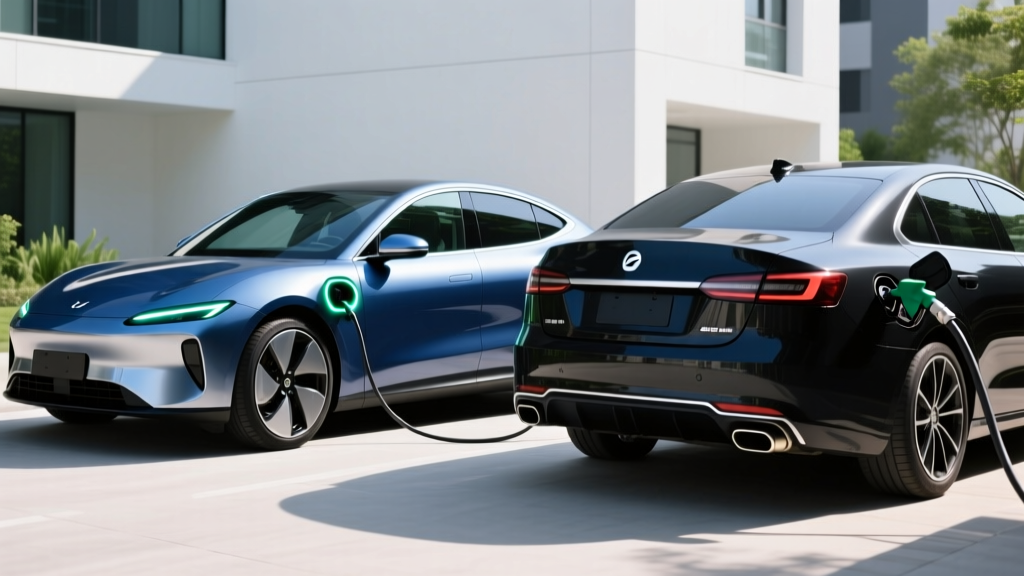
The single biggest operating-cost advantage of an EV is fuel. But "electricity is cheaper than gas" is only true if you quantify it. Here's the side-by-side using national averages for 2026:
| Metric | 2026 Hyundai Ioniq 6 SE (EV) | 2026 Toyota Camry LE (Gas) |
|---|---|---|
| Energy efficiency | 25 kWh / 100 miles (EPA combined) | 32 MPG combined (EPA) |
| Fuel/energy price | $0.16/kWh (home, national avg.) / $0.48/kWh (DC fast, avg.) | $3.45/gallon (national avg. regular) |
| Cost per mile (home charging) | $0.040/mile | $0.108/mile |
| Cost per mile (public DC fast) | $0.120/mile | $0.108/mile |
| Annual fuel cost (12,000 mi, 80% home) | $576 | $1,296 |
The takeaway: If you charge primarily at home on a standard residential rate (~$0.16/kWh), the Ioniq 6 costs roughly $0.04 per mile — less than half the per-mile cost of the Camry. Over 12,000 miles annually, that's a $720 fuel savings.
However, if you rely entirely on public DC fast charging at $0.48/kWh, your per-mile cost actually exceeds the gas car. This is why home charging access is the single most important variable in EV economics. Before buying, confirm you can install a Level 2 charger at home or have reliable access to affordable workplace or community charging.
Source: Efficiency data from fueleconomy.gov; electricity rates from EIA; gas prices from AAA national average.
5-Year Total Cost of Ownership: EV vs. Gas
Fuel is just one line item. Here's a full 5-year / 60,000-mile ownership comparison, assuming purchase at MSRP, 80% home charging for the EV, and average insurance and maintenance costs:
| Cost Category | 2026 Ioniq 6 SE (EV) | 2026 Camry LE (Gas) | Notes |
|---|---|---|---|
| Purchase price (MSRP) | $38,650 | $29,995 | Before incentives |
| Federal tax credit (§30D) | –$7,500 | $0 | If eligible (see rules below) |
| Effective purchase price | $31,150 | $29,995 | EV premium narrows to $1,155 |
| Fuel / electricity (5 yr) | $2,880 | $6,480 | 12,000 mi/yr, 80% home charging |
| Maintenance (5 yr) | $1,800 | $3,200 | EV: no oil, fewer brakes, cabin filter, tire rotation |
| Insurance (5 yr) | $11,400 | $8,700 | EV premiums typically 20–30% higher |
| Depreciation (est. 5 yr) | $17,500 | $12,000 | EVs depreciate faster currently |
| Total 5-Year Cost | $64,730 | $60,375 |
Even with the full $7,500 federal credit and significant fuel and maintenance savings, the EV costs roughly $4,355 more over five years in this scenario — driven primarily by higher insurance premiums and steeper depreciation. But this is a snapshot with specific assumptions. Your results depend heavily on three variables: whether you qualify for the full tax credit, how much you pay for electricity, and how long you keep the car.
Keep the EV for 8–10 years and the math shifts dramatically. The fuel savings compound ($720/year becomes $5,760 over 8 years), depreciation flattens, and you avoid thousands in gas-car maintenance (timing chains, transmission fluid, exhaust system repairs) that tend to hit in years 6–10.
Federal Tax Credit: Do You Actually Qualify?
The IRS §30D Clean Vehicle Credit offers up to $7,500 for qualifying new EVs, but it is not a blanket benefit. The rules are layered, and eligibility depends on your income, the vehicle's MSRP, and where the battery materials are sourced. As of 2026, the key requirements are:
- Income caps (modified AGI): $150,000 single filer / $225,000 head of household / $300,000 married filing jointly
- MSRP caps: $55,000 for sedans, wagons, and hatchbacks / $80,000 for SUVs, trucks, and vans
- Battery sourcing: The credit splits into two halves — $3,750 requires a percentage of critical minerals sourced from the U.S. or FTA partners; the other $3,750 requires battery components manufactured or assembled in North America. These percentages increase annually.
- Foreign Entity of Concern (FEOC) restriction: Vehicles with battery components from a FEOC (primarily China, Russia, North Korea, Iran) are disqualified. This has narrowed the list of qualifying vehicles significantly.
- Point-of-sale transfer: As of 2024, you can transfer the credit to the dealer at purchase, reducing your out-of-pocket cost immediately rather than waiting to claim it on your tax return. The dealer must be IRS-registered.
- One vehicle per VIN, one credit per taxpayer per year.
For the Ioniq 6 SE ($38,650 MSRP, sedan), the vehicle clears the $55,000 MSRP cap. Whether you receive the full $7,500, a partial $3,750, or nothing depends on your income and the specific battery-sourcing compliance for that model year. Hyundai has confirmed North American battery assembly for U.S.-built Ioniq 6 models, but critical-mineral sourcing compliance can shift. Always verify current eligibility at fueleconomy.gov and confirm with your tax professional before relying on the credit.
Source: IRS §30D guidance
State, Local, and Utility Incentives
Beyond the federal credit, many buyers can stack additional incentives:
- State rebates: States like Colorado offer up to $5,000 in point-of-sale rebates for qualifying EVs. California's CVRP program provides up to $7,000 for income-eligible buyers. New York, Massachusetts, and others have their own programs with varying income and price caps.
- Utility rebates: Many electric utilities offer $250–$1,500 rebates for purchasing an EV, and an additional $250–$500 for installing a Level 2 home charger. Some utilities (like PG&E, Xcel Energy, and ConEdison) also offer time-of-use rate plans that drop electricity to $0.05–$0.08/kWh during overnight hours, making home charging even cheaper.
- HOV lane access: Several states grant solo HOV lane access to EVs — a non-monetary benefit worth hundreds of hours and dollars in congested metro areas.
- Used EV credit: The §25E credit offers up to $4,000 (30% of sale price, capped) for qualifying used EVs priced under $25,000, with lower income caps ($75,000 single / $150,000 joint).
Combined, a buyer in Colorado with utility rebates and the full federal credit could reduce a $38,650 Ioniq 6 to an effective cost near $24,000–$26,000 — well below the gas alternative. But this is a best-case scenario. Research your specific zip code before budgeting.
Maintenance Savings: Where EVs Quietly Win
EVs have far fewer moving parts than internal combustion vehicles — no engine oil, no transmission fluid, no spark plugs, no timing belt, no exhaust system, no catalytic converter. Here's how typical 5-year maintenance costs break down:
| Maintenance Item | EV (Ioniq 6) | Gas (Camry) |
|---|---|---|
| Oil changes | $0 (none needed) | $450 (5 changes @ $90) |
| Brake pads | $0–$200 (regen braking extends life 2–3x) | $600–$900 (1–2 replacements) |
| Transmission fluid | $0 (single-speed reducer, sealed) | $150–$250 |
| Cabin air filter | $150 (3 replacements) | $150 (3 replacements) |
| Tire rotation | $250 (5 rotations) | $250 (5 rotations) |
| Coolant / other fluids | $100 | $200 |
| Tire replacement (5 yr) | $1,100 (EVs are heavier; tires wear ~15% faster) | $900 |
| 5-Year Total | $1,850 | $3,250 |
The EV saves roughly $1,400 in maintenance over five years. The biggest caveat: tires. EVs are 300–600 lbs heavier than comparable gas cars and deliver instant torque, which accelerates tire wear. Budget for EV-specific tires (like the Michelin e.Primacy or Hankook iON) and expect replacement intervals of 30,000–40,000 miles rather than 45,000–55,000.
Insurance: The Cost Nobody Talks About
EV insurance premiums are typically 20–30% higher than equivalent gas vehicles. For the Ioniq 6 vs. Camry comparison, that translates to roughly $2,700 more over five years ($2,280 vs. $1,740 annually for a typical driver profile).
Why the premium? Three factors:
- Higher repair costs: EV battery packs are expensive to replace if damaged ($8,000–$20,000+), and even minor collisions can trigger battery safety inspections. Repair shops need specialized EV training and equipment.
- Higher vehicle value: Insurers base premiums partly on replacement cost. A $38,650 EV costs more to replace than a $29,995 gas car.
- Limited repair network: Fewer body shops are certified for high-voltage EV repairs, which drives up labor rates and claim processing times.
Shop around aggressively. Insurers like Geico, Progressive, and Tesla Insurance (available in select states) have started offering EV-specific policies, and the gap is narrowing as EVs become more common. Some manufacturers (including Hyundai) bundle complimentary maintenance or insurance discounts into purchase incentives.
Depreciation and Resale Value: The EV Wildcard
EVs have depreciated faster than comparable gas vehicles over the past several years. A 2026 Ioniq 6 might retain 45–50% of its value after five years, versus 55–60% for a Camry. On our $38,650 EV, that's roughly $17,500 in depreciation versus $12,000 for the gas car.
Several factors drive this gap:
- Rapid technology cycles: Newer EVs with longer range, faster charging, and NACS connectors make older models feel outdated faster than gas-car generational updates.
- Price wars: Aggressive manufacturer price cuts (led by Tesla in 2023–2024) immediately reduced resale values for all EVs on the market.
- Battery health uncertainty: Used-EV buyers discount for battery degradation risk, even though most modern packs are warranted for 8 years/100,000 miles at 70% capacity retention.
- Tax credit distortion: When new EVs effectively cost $7,500 less via point-of-sale credits, used EVs must drop further to remain competitive.
The counter-argument: if you plan to keep the car 8–10 years, depreciation becomes less relevant. The car's value converges toward its utility value, and the cumulative fuel and maintenance savings outweigh the resale gap. Depreciation hurts most if you trade in every 3–4 years.
Frequently Asked Questions
How much does it really cost to charge an EV per month?
For a driver covering 1,000 miles per month in an Ioniq 6 (25 kWh/100mi) charging at home at $0.16/kWh, the monthly electricity cost is approximately $40. The same distance in a 32 MPG Camry at $3.45/gallon costs about $108. If you use time-of-use rates and charge overnight at $0.07/kWh, the EV monthly cost drops to roughly $18.
Do I qualify for the full $7,500 federal EV tax credit?
You qualify for the full $7,500 if: (1) your modified AGI is under $150K single / $300K joint, (2) the vehicle MSRP is under $55K for sedans or $80K for SUVs/trucks, (3) the vehicle meets both critical-mineral and battery-component sourcing requirements for the current year, and (4) the vehicle is not disqualified under FEOC rules. Many popular EVs qualify for only $3,750 (half credit) or nothing. Verify at fueleconomy.gov and consult a tax professional.
Are EVs really cheaper to maintain than gas cars?
Yes, by approximately $1,000–$2,000 over five years for routine maintenance. You eliminate oil changes, transmission fluid, spark plugs, and most brake pad replacements (regenerative braking handles 70–90% of deceleration). However, EV tires wear faster due to vehicle weight and instant torque, partially offsetting the savings.
Why is EV insurance more expensive?
EV insurance costs 20–30% more on average because of higher repair costs (specialized high-voltage training, expensive battery replacements), higher vehicle purchase prices, and a smaller network of certified EV body shops. The gap is narrowing as EV market share grows and more shops gain certification.
How well do EVs hold their resale value?
Currently, EVs depreciate faster than comparable gas vehicles — roughly 50–55% value loss over 5 years versus 40–45% for gas cars. Rapid tech improvements, price cuts on new models, and buyer concerns about battery health drive this gap. If you plan to own the car 8+ years, depreciation matters less as the vehicle's utility value dominates.
Does public DC fast charging erase the fuel cost advantage?
Partially. At $0.48/kWh (average DC fast-charging rate), an Ioniq 6 costs about $0.12/mile — slightly more than a 32 MPG gas car at $3.45/gallon ($0.108/mile). If more than 50% of your charging is on expensive public DC fast chargers, the fuel savings shrink significantly. The economics strongly favor home or workplace Level 2 charging.
Can I transfer the tax credit to the dealer at purchase?
Yes. Since 2024, the §30D credit can be transferred to an IRS-registered dealer as a point-of-sale reduction, lowering your drive-off price immediately. You don't need to wait until tax filing. However, if your income exceeds the cap when you file, you must repay the credit to the IRS. Confirm your projected AGI before electing the transfer.