Electric Car Comparison: Tesla Model Y vs. Ford Mustang Mach-E
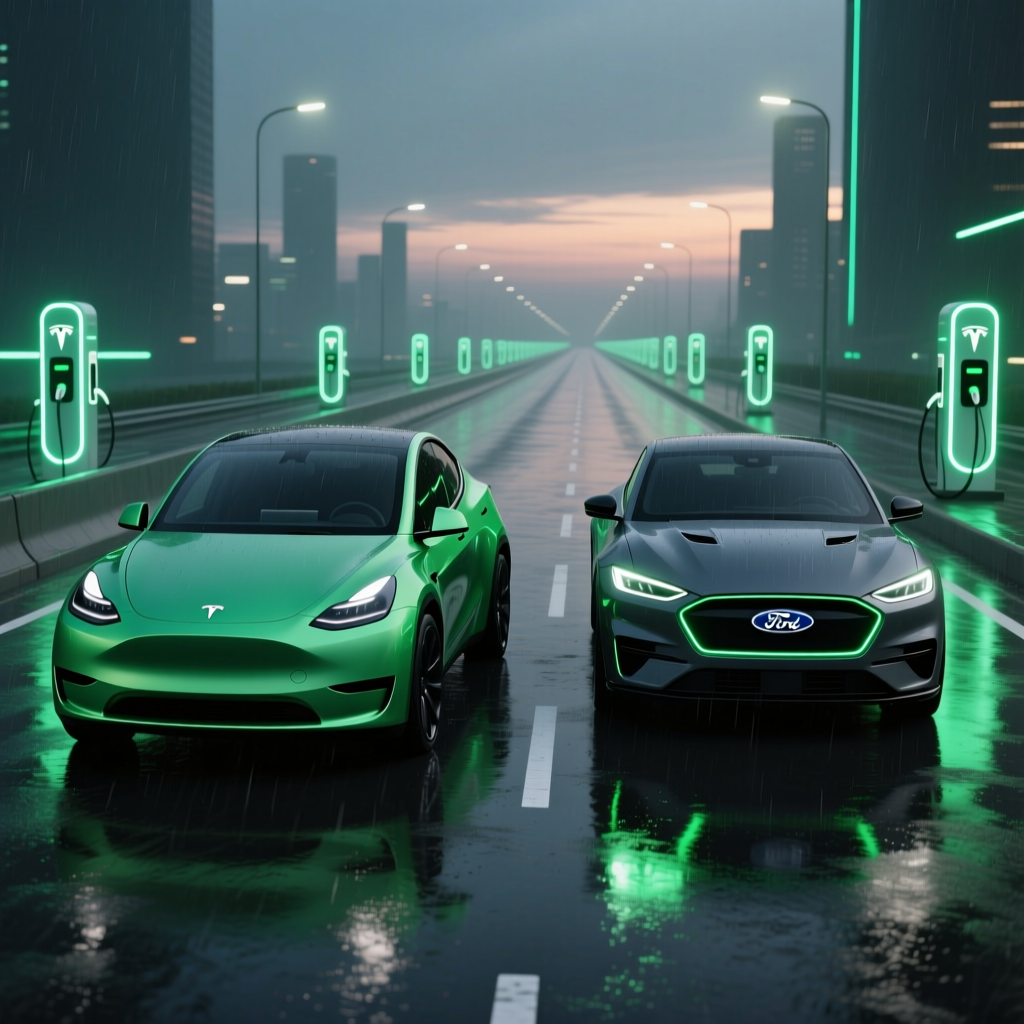
The transition to electric mobility has fundamentally transformed the automotive landscape, shifting the focus from traditional internal combustion metrics to battery efficiency, software integration, and charging infrastructure. When shoppers begin their journey into the EV market, they are inevitably drawn to the most prominent nameplates in the industry. In this comprehensive electric car comparison, we are putting the segment-defining Tesla Model Y head-to-head against its most formidable mainstream rival, the Ford Mustang Mach-E. Both vehicles consistently top our list of the best electric SUVs, but they achieve their acclaim through vastly different engineering philosophies.
Whether you are prioritizing cutting-edge software, maximum cargo utility, driving dynamics, or charging network reliability, this detailed breakdown will help you determine which electric crossover best aligns with your lifestyle. For a deeper dive into each vehicle individually, be sure to check out our dedicated Tesla Model Y review and Ford Mustang Mach-E review.
Overview: The Benchmark vs. The Challenger
The Tesla Model Y is the undisputed benchmark of the electric crossover segment. Built on a dedicated EV architecture that prioritizes interior volume, aerodynamic efficiency, and software supremacy, the Model Y offers a minimalist, tech-forward experience. It is the vehicle that forced legacy automakers to accelerate their electrification timelines. Its integration with the Supercharger network and industry-leading energy efficiency make it the default choice for many first-time EV buyers.
Conversely, the Ford Mustang Mach-E represents the establishment's answer to Silicon Valley. Ford leveraged its century of automotive manufacturing experience to create an EV that feels familiar yet distinctly modern. The Mach-E blends traditional automotive ergonomics with a dedicated EV platform, offering a more engaging driving experience, a conventional interior layout with physical controls, and a highly competitive range. It proves that legacy automakers can build compelling, desirable electric vehicles that challenge the status quo.
Side-by-Side Specification Comparison
Before diving into the nuances of daily ownership, let us examine the raw numbers. The following table compares the most popular dual-motor, all-wheel-drive, long-range configurations of both vehicles.
| Specification | Tesla Model Y (Long Range AWD) | Ford Mustang Mach-E (Extended Range AWD) |
|---|---|---|
| EPA Estimated Range | Up to 330 miles | Up to 320 miles |
| Battery Capacity (Usable) | ~75 kWh | ~91 kWh |
| Peak DC Fast Charging | 250 kW | 150 kW |
| 0-60 MPH Acceleration | 4.8 seconds | 5.1 seconds |
| Cargo Volume (Behind Rear Seats) | 30.2 cu. ft. | 29.7 cu. ft. |
| Front Trunk (Frunk) Volume | 4.1 cu. ft. | 4.7 cu. ft. |
| Basic Warranty | 4 years / 50,000 miles | 3 years / 36,000 miles |
| Battery Warranty | 8 years / 120,000 miles | 8 years / 100,000 miles |
Range & Efficiency
Range anxiety remains a primary concern for prospective EV owners, making this a critical category in any electric car comparison. According to EPA ratings, the Tesla Model Y Long Range achieves an impressive 330 miles on a single charge. However, the true marvel of the Model Y is not just the size of its battery, but its phenomenal efficiency. Tesla's industry-leading heat pump, advanced thermal management system, and aerodynamic slipperiness allow it to extract more miles per kilowatt-hour than almost any other vehicle in its class.
The Ford Mustang Mach-E Extended Range AWD counters with an EPA-estimated 320 miles. To achieve this, Ford utilizes a significantly larger battery pack. While the Mach-E is slightly less efficient in terms of miles-per-kWh, the real-world difference in range is negligible for most drivers. Independent test data from various automotive journalists shows that both vehicles perform admirably on highway road trips, though the Model Y tends to hold a slight edge in extreme cold weather due to its superior cabin and battery heating strategies. If maximizing efficiency and minimizing charging stops is your top priority, the Tesla retains a narrow but measurable advantage.
Pricing & Value
Pricing in the EV sector is notoriously volatile, with manufacturers frequently adjusting MSRPs in response to battery cost fluctuations and market demand. Historically, the Tesla Model Y has been priced aggressively, often undercutting legacy rivals while offering premium-level performance and tech. Tesla's direct-to-consumer sales model also eliminates dealership markups, providing a transparent, albeit sometimes unpredictable, purchasing experience. Furthermore, the Model Y's high residual value and low maintenance costs contribute to an excellent total cost of ownership.
The Ford Mustang Mach-E is positioned as a premium mainstream offering. While its starting MSRP is often slightly higher than the base Model Y, Ford frequently offers attractive lease deals, retail incentives, and favorable financing rates through traditional dealerships. For buyers who prefer the tactile experience of negotiating at a local showroom and value the security of a legacy brand's service network, the Mach-E presents a compelling value proposition. When factoring in potential federal and state tax incentives—which buyers should verify based on their specific tax situation and the vehicle's current eligibility—the out-of-pocket costs for both crossovers can be remarkably similar.
Charging Speed & Infrastructure
An electric vehicle is only as good as the network that supports it, and this is where the Tesla Model Y historically secured its biggest moat. Tesla's proprietary Supercharger network is widely regarded as the most reliable, expansive, and user-friendly charging ecosystem in the world. The Model Y can accept peak charging rates of up to 250 kW, allowing it to add roughly 200 miles of range in just 15 minutes under optimal conditions. The plug-and-play simplicity of the Supercharger network remains a massive draw for frequent road-trippers.
The Ford Mustang Mach-E utilizes the CCS (Combined Charging System) standard natively, with peak charging speeds capped at around 150 kW. While this means longer stops on road trips compared to the Tesla, Ford has aggressively partnered with third-party networks to improve the public charging experience. Furthermore, the entire industry is currently undergoing a massive shift toward the North American Charging Standard (NACS). Ford has secured access to Tesla's Supercharger network for its EV lineup via adapters and native NACS integration in newer production runs. This monumental shift effectively neutralizes Tesla's exclusive infrastructure advantage, making the Mach-E an equally viable option for cross-country travel. For a complete breakdown of how to navigate public charging, consult our comprehensive EV charging guide.
Performance & Driving Dynamics
Electric motors provide instant torque, ensuring that both of these crossovers are genuinely quick off the line. The Tesla Model Y Long Range AWD sprints from 0 to 60 mph in a brisk 4.8 seconds. The acceleration is linear, relentless, and accompanied by a heavy, confidence-inspiring steering feel. However, the Model Y's suspension tuning has traditionally been on the firmer side. While this minimizes body roll in corners, it can result in a slightly harsh ride over broken pavement and expansion joints, though recent manufacturing updates have introduced a more compliant suspension setup.
The Ford Mustang Mach-E takes a different approach to performance. Despite being slightly heavier and carrying a larger battery, the Extended Range AWD model achieves a 0-60 mph time of roughly 5.1 seconds. Where the Mach-E truly shines is in its chassis tuning. Ford's engineers have imbued this EV with a playful, engaging character that honors the Mustang badge. The steering is communicative, the suspension beautifully balances comfort and sportiness, and the available one-pedal driving mode is among the most intuitive in the industry. For driving enthusiasts who prioritize ride quality and cornering dynamics over sheer straight-line dominance, the Mach-E is the clear winner.
Interior Space & Cargo Utility
As family haulers, interior volume and cargo flexibility are paramount. The Tesla Model Y's dedicated EV skateboard architecture, combined with its sloping roofline and minimalist cabin, yields an astonishing amount of usable space. The rear seats offer ample legroom, and the panoramic glass roof creates an airy, open environment that makes the cabin feel larger than its exterior dimensions suggest. The rear cargo area is massive, and the optional third-row seat (best suited for small children) adds a layer of versatility that the Ford cannot match.
The Ford Mustang Mach-E features a more traditional SUV silhouette, which translates to excellent headroom and a slightly more upright, comfortable seating position for rear passengers. The interior materials feel slightly more premium and tactile than Tesla's ultra-minimalist approach, featuring high-quality synthetic leathers and soft-touch plastics. While the Mach-E's rear cargo volume is slightly less than the Model Y's, it features a brilliantly designed front trunk (frunk). The Mach-E's frunk is larger, lined with plastic, and includes a drain plug, making it perfect for storing wet gear, groceries, or acting as an impromptu cooler for tailgating.
Technology, Warranty & Ownership
Tesla is fundamentally a software company that builds cars, and the Model Y's interior reflects this. The massive 15-inch center touchscreen controls everything from the windshield wipers to the glovebox. Tesla's infotainment system is blisteringly fast, features an excellent native navigation system with real-time Supercharger routing, and offers a robust suite of games and streaming apps. Tesla's Autopilot and optional Full Self-Driving (FSD) capabilities represent the cutting edge of camera-based advanced driver assistance systems (ADAS), though they require constant driver supervision. Over-the-air (OTA) updates are frequent, often adding significant new features and performance tweaks long after the vehicle has left the factory.
Ford counters with the SYNC 4A system, displayed on a large, vertically oriented 15.5-inch touchscreen. Unlike Tesla, Ford retains a dedicated digital instrument cluster behind the steering wheel, which many drivers prefer for glancing at speed and range without looking to the center console. The Mach-E's BlueCruise hands-free driving system is exceptional, offering true hands-free operation on pre-mapped divided highways, a feature that many reviewers find more relaxing and natural than Tesla's Autopilot. Regarding ownership peace of mind, both vehicles offer an 8-year battery warranty, but Tesla edges out Ford with a slightly longer basic vehicle warranty and a more extensive battery mileage allowance.
The Verdict: Which EV is Right for You?
Choosing between the Tesla Model Y and the Ford Mustang Mach-E ultimately comes down to your personal priorities and lifestyle. Both are phenomenal vehicles that have earned their spots at the top of the best electric cars rankings.
Choose the Tesla Model Y if:
- You prioritize maximum energy efficiency and class-leading cargo space.
- You want the most seamless, integrated software and infotainment experience.
- You frequently take long road trips and value the plug-and-play simplicity of the Supercharger network (though this gap is closing).
- You prefer a minimalist, ultra-modern interior aesthetic.
Choose the Ford Mustang Mach-E if:
- You value engaging driving dynamics, superior ride comfort, and traditional automotive ergonomics.
- You prefer a dedicated instrument cluster and physical controls for climate and volume.
- You want access to Ford's BlueCruise hands-free highway driving system.
- You appreciate the utility of a large, drainable front trunk for outdoor adventures.
Frequently Asked Questions
Is it cheaper to charge a Tesla or a Ford?
The cost to charge either vehicle depends primarily on your local electricity rates and whether you charge at home or in public. Because the Tesla Model Y is slightly more energy-efficient (requiring fewer kilowatt-hours to travel the same distance), it will generally be marginally cheaper to charge at home. However, public DC fast-charging costs vary wildly by network, time of day, and membership tiers. Both vehicles support scheduled off-peak home charging, which is the most cost-effective way to own any EV.
Which electric SUV has better long-term reliability?
Long-term reliability in the EV sector is heavily tied to battery degradation and software stability. Tesla has a massive advantage in real-world data collection and battery thermal management, which historically results in excellent long-term battery health retention. However, Tesla has faced criticism for inconsistent panel gaps and interior trim quality. Ford's build quality and panel consistency are generally more uniform, benefiting from decades of mass-manufacturing expertise. According to independent test data and consumer surveys, both vehicles perform adequately, but Tesla's powertrain reliability often edges out legacy automakers, while Ford's interior assembly tends to be more robust.
Can I use Tesla Superchargers with non-Tesla vehicles?
Yes. The automotive industry has largely adopted the North American Charging Standard (NACS), which was pioneered by Tesla. Tesla has opened its Supercharger network to non-Tesla EVs. Ford Mustang Mach-E owners can access the Supercharger network using approved adapters for older CCS-equipped models, or natively if they purchase a newer model equipped with the NACS charge port from the factory. This integration ensures that Mach-E owners enjoy the same rapid, reliable charging experiences as Tesla drivers.
How does regenerative braking compare between the two?
Tesla offers a very aggressive regenerative braking profile that enables true one-pedal driving, allowing the vehicle to come to a complete stop without touching the brake pedal in most scenarios. The Ford Mustang Mach-E also offers a one-pedal driving mode, but it is generally tuned to be slightly more progressive and forgiving. Additionally, the Mach-E features steering-wheel-mounted paddle shifters that allow the driver to manually adjust the level of regenerative braking on the fly, a feature beloved by driving enthusiasts who want more control over the vehicle's deceleration.