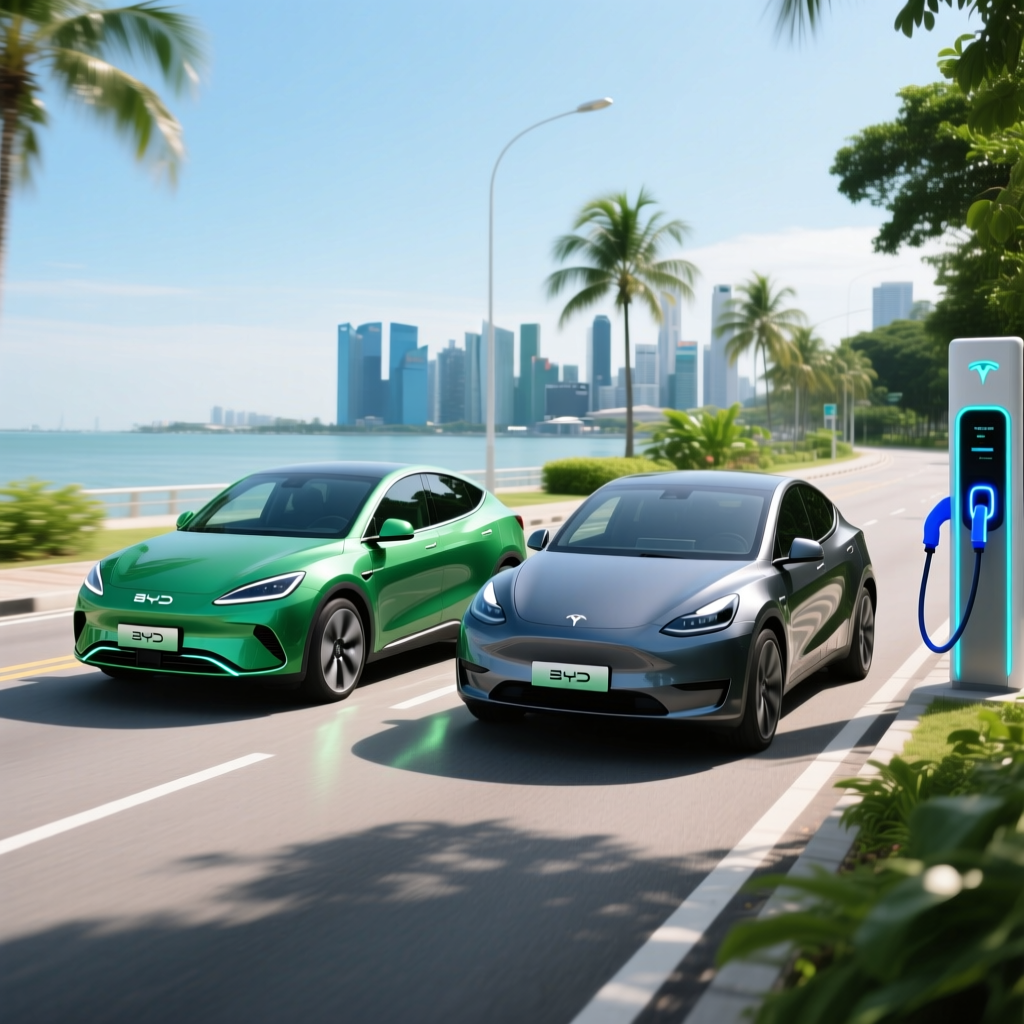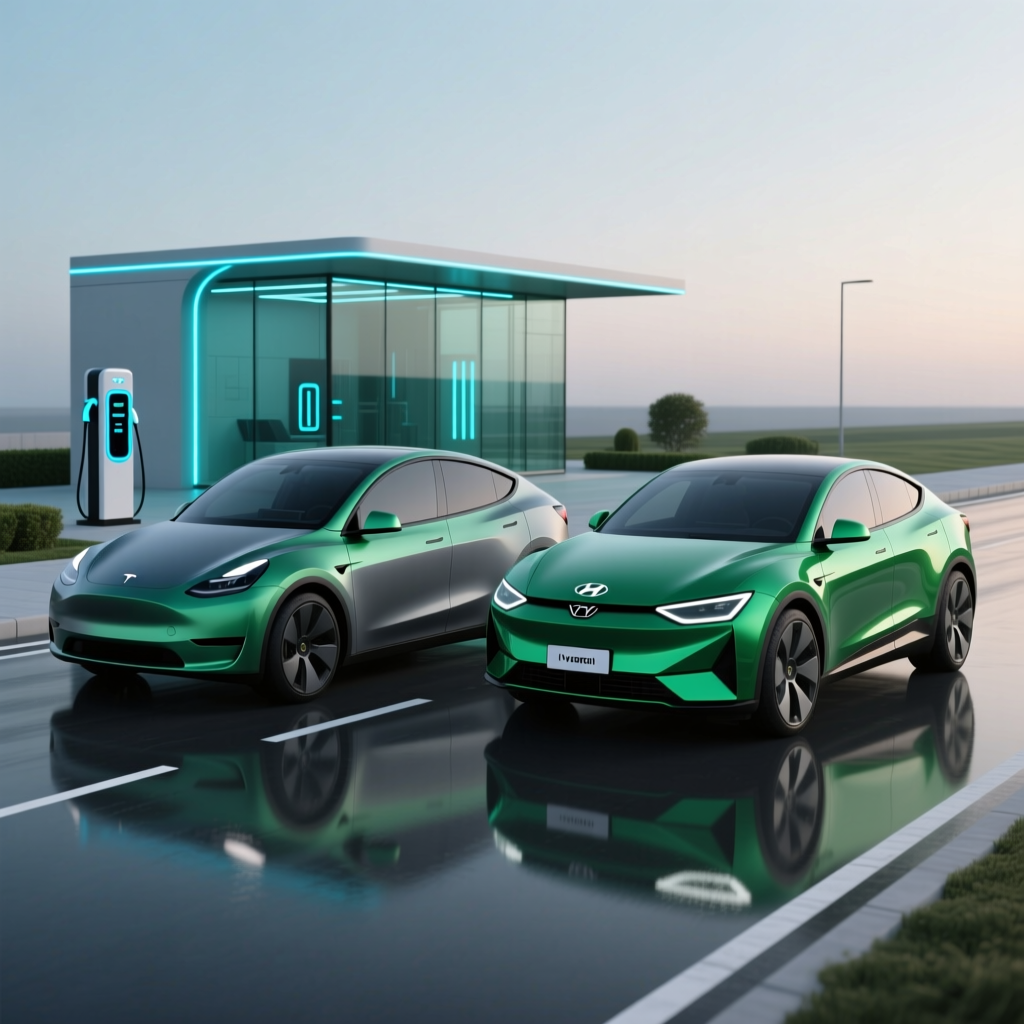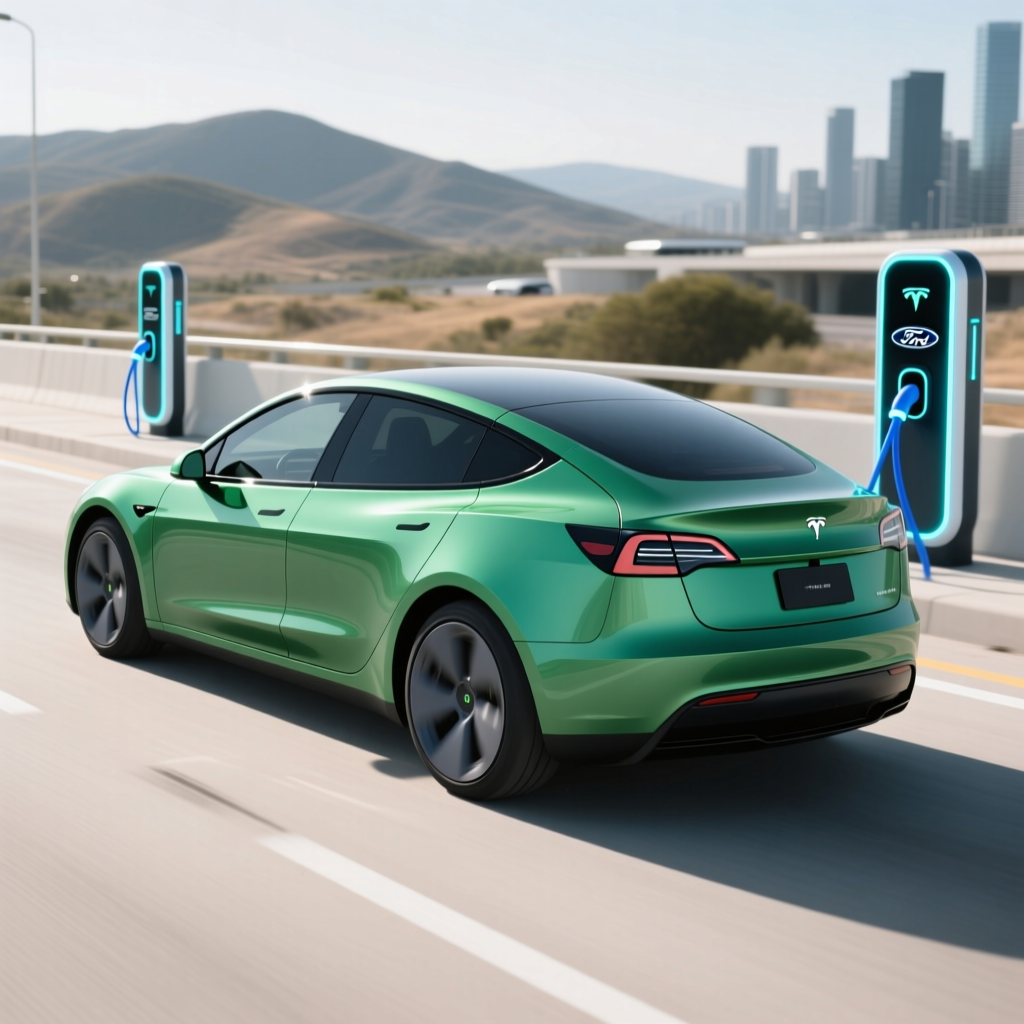
Choosing the right electric vehicle (EV) can feel overwhelming given the rapidly expanding market. Utilizing a comprehensive electric car comparison tool is the most effective way to cut through the marketing noise and evaluate how top contenders stack up against one another in real-world scenarios. In this head-to-head analysis, we are putting two of the most popular electric crossover SUVs on the market to the test: the Tesla Model Y and the Ford Mustang Mach-E.
Whether you are prioritizing maximum range, cutting-edge autonomous technology, charging infrastructure, or interior practicality, this detailed comparison will help you determine which EV deserves a spot in your driveway. For deeper dives into each vehicle, be sure to check out our full Tesla Model Y review and our comprehensive Ford Mustang Mach-E review.
Vehicle Overviews
The Tesla Model Y is the benchmark by which all other electric crossovers are measured. Built on the same foundational architecture as the Model 3, the Model Y offers a minimalist aesthetic, class-leading cargo capacity, and access to Tesla's industry-leading Supercharger network. It is designed for buyers who prioritize software integration, over-the-air updates, and seamless long-distance travel.
The Ford Mustang Mach-E, on the other hand, represents a legacy automaker's bold pivot into the electric era. Leveraging the iconic Mustang nameplate, Ford has delivered an EV that focuses heavily on driving dynamics, traditional automotive ergonomics, and a more conventional, yet highly modernized, interior layout. It appeals to drivers who want an engaging driving experience without sacrificing the familiarity of a traditional car brand.
Side-by-Side Spec Comparison
Below is a snapshot of how these two EV giants compare on paper. Note that specifications reflect the most current Long Range and Extended Range all-wheel-drive (AWD) configurations available.
| Feature | Tesla Model Y (Long Range AWD) | Ford Mustang Mach-E (Extended Range AWD) |
|---|---|---|
| EPA Estimated Range | 330 miles | 312 miles |
| Peak Charging Speed | 250 kW | 150 kW |
| 0-60 mph Acceleration | 4.8 seconds | 5.1 seconds |
| Cargo Volume (Rear Seats Up) | 30.2 cu ft | 29.7 cu ft |
| Front Trunk (Frunk) | 4.1 cu ft | 4.7 cu ft |
| Infotainment Display | 15.0-inch Touchscreen | 15.5-inch Vertical Touchscreen |
| ADAS System | Autopilot / FSD | Ford BlueCruise |
Range & Efficiency
Range anxiety remains a primary concern for EV adopters, making this a critical category in any electric car comparison tool. According to the EPA fuel economy database, the Tesla Model Y Long Range AWD achieves an impressive 330 miles of estimated range. Tesla's highly efficient powertrain and advanced thermal management system allow it to extract maximum mileage from its battery pack, even in varying weather conditions.
The Ford Mustang Mach-E Extended Range AWD follows closely behind with an EPA-estimated 312 miles. While slightly lower on paper, independent automotive testers have noted that the Mach-E's real-world highway range is highly competitive, often matching or exceeding its EPA estimates under optimal conditions. However, the Model Y maintains a slight edge in overall efficiency, measured in miles per gallon equivalent (MPGe), thanks to its lighter curb weight and highly aerodynamic teardrop silhouette.
For buyers who frequently embark on cross-country road trips, the Model Y's superior efficiency means fewer stops and less time spent tethered to a charger. For daily commuters and regional travelers, the Mach-E's range is more than adequate to handle a full week of driving without needing to plug in.
Pricing & Value Proposition
Pricing in the EV segment is notoriously volatile, with frequent adjustments from manufacturers. Historically, the Tesla Model Y and Ford Mustang Mach-E have been locked in a fierce pricing battle, often undercutting one another to capture market share. Both vehicles generally start in the mid-to-high $40,000 range for their base rear-wheel-drive models, climbing into the $50,000s for fully loaded performance variants.
When evaluating value, it is crucial to factor in potential federal and state incentives. Both vehicles frequently qualify for the federal EV tax credit, provided they meet the current battery component and critical mineral sourcing requirements outlined by the IRS. We highly recommend consulting our guide to EV tax credits to understand how these incentives can drastically reduce your out-of-pocket costs.
The Mach-E often provides a more traditional dealership experience, allowing for negotiation and immediate inventory pickup. Tesla operates on a direct-to-consumer model with fixed pricing, which eliminates haggling but requires ordering and waiting for delivery. Ultimately, the value proposition depends on whether you prefer the streamlined, albeit rigid, Tesla buying process or the traditional Ford dealership network.
Charging Speed & Infrastructure
An EV is only as good as its ability to recharge quickly and reliably. Here, Tesla holds a distinct advantage. The Model Y supports peak DC fast-charging rates of up to 250 kW, allowing it to recover up to 200 miles of range in just 15 minutes under ideal conditions. More importantly, it natively accesses the Tesla Supercharger network, widely regarded as the most reliable, extensive, and user-friendly charging infrastructure in the world.
The Ford Mustang Mach-E peaks at around 150 kW on DC fast chargers, meaning a 10% to 80% charge takes slightly longer—typically around 30 to 35 minutes. Ford has been aggressively expanding its charging partnerships, and newer Mach-E models are being equipped with or adapted for the North American Charging Standard (NACS) port, granting them access to Tesla's Supercharger network via adapters or native ports. For a deeper understanding of connector types, read our EV charging guide.
While the gap in infrastructure is closing rapidly as the industry standardizes around NACS, Tesla's native integration and superior charging curve management still give the Model Y the edge in long-distance convenience.
Performance & Driving Dynamics
Electric motors provide instant torque, making both of these crossovers remarkably quick off the line. The Tesla Model Y Long Range AWD sprints from 0 to 60 mph in a brisk 4.8 seconds. The steering is heavy and precise, and the low center of gravity keeps body roll in check. However, the Model Y's suspension tuning is notoriously stiff, which can result in a harsh ride over broken pavement and expansion joints.
The Ford Mustang Mach-E Extended Range AWD completes the 0 to 60 mph dash in roughly 5.1 seconds. Where the Mach-E truly shines is in its chassis tuning. Ford's engineers have prioritized driving engagement, resulting in a steering feel that is communicative and a suspension setup that expertly balances sporty handling with everyday ride comfort. The Mach-E feels more like a traditional, well-sorted sports crossover, whereas the Model Y feels more like a tech appliance that happens to be very fast.
Both vehicles offer excellent regenerative braking systems. Tesla's one-pedal driving is highly aggressive and intuitive, while Ford offers customizable regen levels, including a one-pedal mode, allowing drivers to tailor the deceleration to their personal preferences.
Interior Space & Cargo Capacity
As family haulers, interior volume and cargo practicality are paramount. The Tesla Model Y is a masterclass in spatial efficiency. It offers generous rear legroom, a massive panoramic glass roof that creates an airy cabin feel, and an industry-leading 30.2 cubic feet of cargo space behind the second row. Fold the rear seats down, and you are greeted with over 72 cubic feet of space. Additionally, the Model Y features a deep rear sub-trunk and a 4.1 cubic foot front trunk (frunk).
The Ford Mustang Mach-E is no slouch in the practicality department, offering 29.7 cubic feet of cargo space behind the rear seats and a slightly larger 4.7 cubic foot frunk. The rear seats are comfortable and offer ample headroom, though the sloping roofline slightly compromises rear visibility compared to the Model Y. The Mach-E's interior materials feel slightly more traditional, with a mix of soft-touch plastics and sustainable materials, whereas Tesla relies heavily on vegan leather and minimalist hard plastics.
For buyers who prioritize maximum cargo hauling and camping capabilities, the Model Y is the undisputed winner. For those who prefer a more conventional cockpit layout with a driver-focused instrument cluster, the Mach-E provides a more familiar and ergonomic environment.
Technology, Safety & Warranty
Technology is the battleground where these two EVs diverge most significantly. The Tesla Model Y features a stark, minimalist interior dominated by a single 15.0-inch horizontal touchscreen. There is no traditional instrument cluster; all vehicle functions, including speed and climate controls, are routed through the central display. Tesla's software is lightning-fast, and the inclusion of a built-in dashcam, Sentry Mode, and a robust app ecosystem is unparalleled. Tesla's Autopilot is standard, with the option to purchase Full Self-Driving (FSD) capability, though it remains a Level 2 driver-assist system.
The Ford Mustang Mach-E utilizes a massive 15.5-inch vertical touchscreen powered by Ford's SYNC 4A system. Unlike Tesla, the Mach-E retains a dedicated digital instrument cluster behind the steering wheel, which many drivers prefer for safety and ease of use. Ford's BlueCruise system is a standout feature, offering true hands-free driving on pre-approved sections of divided highways, a feature that has consistently earned high marks from independent safety testers like the IIHS.
Regarding warranties, both manufacturers offer competitive coverage. Tesla provides a 4-year/50,000-mile basic warranty and an 8-year/120,000-mile battery and drive unit warranty. Ford matches the basic warranty but offers an 8-year/100,000-mile battery warranty. Both brands provide extensive over-the-air (OTA) update capabilities, ensuring the vehicles continue to improve long after they leave the lot.
The Verdict: Which EV is Right for You?
Using an electric car comparison tool reveals that there is no single "best" EV; rather, there is the best EV for your specific lifestyle. Both the Tesla Model Y and the Ford Mustang Mach-E consistently rank at the top of our best electric SUVs list, but they cater to slightly different priorities.
Choose the Tesla Model Y if:
- You prioritize maximum cargo space and interior efficiency.
- You want access to the native Supercharger network for stress-free road trips.
- You prefer a minimalist, tech-forward cabin and industry-leading software.
- Peak charging speed and overall energy efficiency are your top metrics.
Choose the Ford Mustang Mach-E if:
- You value engaging driving dynamics and a more comfortable, compliant ride.
- You prefer a traditional automotive interior layout with a dedicated instrument cluster.
- You want hands-free highway driving via Ford BlueCruise.
- You prefer the traditional dealership buying and servicing experience.
Frequently Asked Questions (FAQ)
How does an electric car comparison tool calculate real-world range?
A high-quality electric car comparison tool uses EPA estimates as a baseline but factors in variables such as battery chemistry, aerodynamic drag, vehicle weight, and thermal management systems. Real-world range is heavily influenced by driving habits, ambient temperature, and highway speeds. Independent testing often reveals that while some EVs fall short of their EPA estimates on the highway, others, particularly those with advanced heat pumps and efficient motors, can exceed them in mixed driving conditions.
Which EV holds its value better over time?
Historically, Tesla vehicles have enjoyed strong residual values due to high brand demand, the desirability of the Supercharger network, and continuous software improvements. However, widespread price cuts and market saturation can impact depreciation rates. The Ford Mustang Mach-E, backed by a legacy automaker with a massive dealer network, offers strong long-term support and parts availability, which can stabilize its resale value. Checking current market trends and certified pre-owned programs is always recommended before purchasing.
Can I use a comparison tool to evaluate charging costs?
Yes, advanced comparison tools allow you to input your local electricity rates and typical driving patterns to estimate monthly charging costs. Generally, charging at home using Level 2 equipment is significantly cheaper than fueling a gas-powered car. However, relying exclusively on public DC fast-charging networks can increase your costs, sometimes rivaling the price of gasoline. Both the Model Y and Mach-E support scheduled charging, allowing you to take advantage of off-peak utility rates to maximize savings.
What is the difference between NACS and CCS charging standards?
The Combined Charging System (CCS) has been the standard for most non-Tesla EVs in North America, utilizing a larger, heavier connector. The North American Charging Standard (NACS), developed by Tesla, is significantly smaller, lighter, and has proven to be highly reliable. The automotive industry is currently undergoing a massive transition toward NACS. When comparing EVs, it is vital to check whether the vehicle comes with a native NACS port or requires an adapter to access the expanding Supercharger network.