Electric Car Price Comparison: Which EV Gives You the Most for Your Money?
Shopping for an electric vehicle often starts with one critical question: how much does it really cost? With the EV market expanding rapidly, buyers now face an overwhelming array of choices spanning budget-friendly compacts to premium luxury sedans and SUVs. Understanding the true cost of ownership — not just the sticker price — is essential for making a smart decision.
In this comprehensive guide, we break down electric car pricing across multiple segments, compare total cost of ownership, and help you determine which EVs deliver the best value at every price point. Whether you are cross-shopping affordable daily commuters or weighing premium options, this comparison will help you navigate the landscape with confidence.
For a broader look at our top recommendations, check out our best electric cars rankings and our best electric SUVs guide.
Overview: The EV Pricing Landscape
The electric vehicle market has matured significantly, with prices ranging from under $30,000 for entry-level models to well over $100,000 for high-performance luxury EVs. Several factors influence these prices, including battery capacity, drivetrain configuration, available technology, and brand positioning.
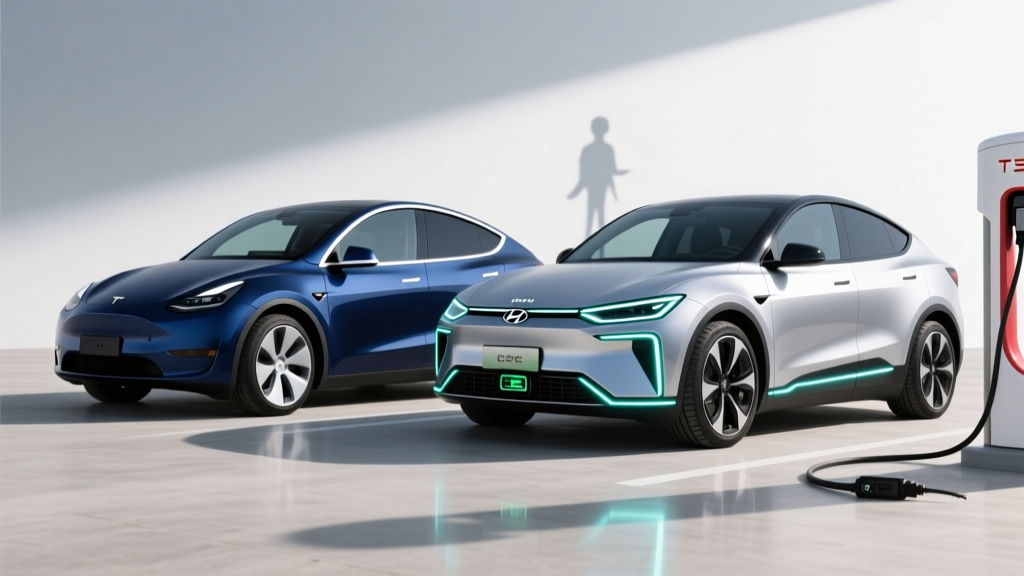
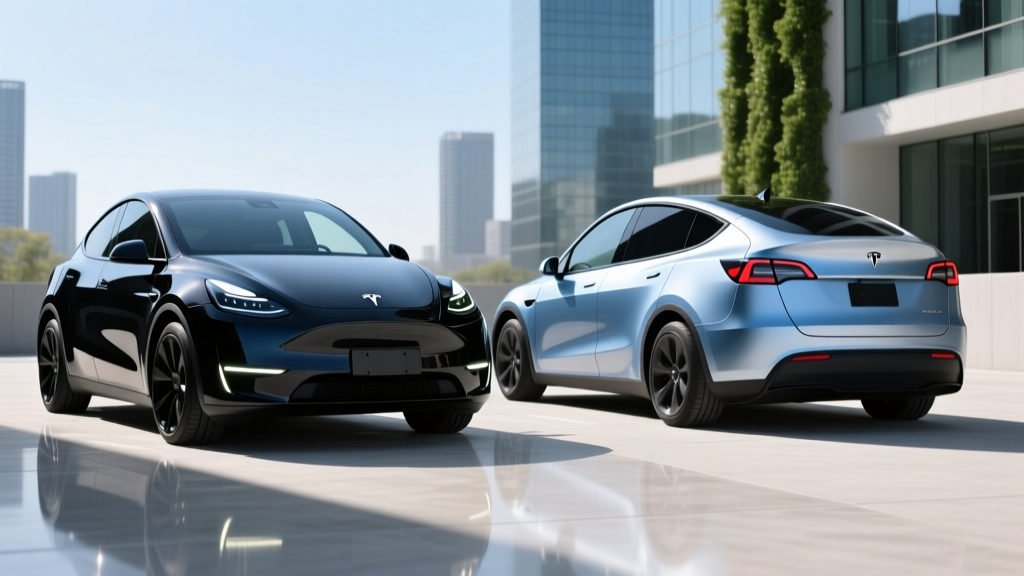
At the budget end, vehicles like the Nissan Leaf and Chevrolet Bolt EV have long served as accessible gateways into electric mobility. Moving up, the Tesla Model 3, Hyundai Ioniq 5, and Ford Mustang Mach-E compete fiercely in the mainstream mid-price segment. At the premium tier, the BMW i4, Mercedes-Benz EQE, and Tesla Model S push the boundaries of performance and luxury.
What makes price comparison particularly important for EVs is that the purchase price tells only part of the story. Federal and state incentives, lower fueling costs, reduced maintenance expenses, and varying depreciation rates all play a role in the long-term financial picture. Let us dive into a detailed head-to-head comparison across the most important categories.
Side-by-Side Spec Comparison Table
The following table compares representative models across three major price tiers to give you a quick snapshot of what your money buys at each level. All figures reflect EPA ratings and manufacturer-published data.
| Specification | Budget Tier (Nissan Leaf / Chevrolet Bolt EV) | Mid-Range Tier (Tesla Model 3 / Hyundai Ioniq 5) | Premium Tier (BMW i4 / Tesla Model S) |
|---|---|---|---|
| Starting MSRP | $28,140 – $36,500 | $38,990 – $45,500 | $52,200 – $74,990 |
| EPA Range | 149 – 259 miles | 272 – 341 miles | 300 – 405 miles |
| Battery Capacity | 40 – 65 kWh | 58 – 77.4 kWh | 70 – 100 kWh |
| Horsepower | 147 – 214 hp | 283 – 510 hp | 335 – 670 hp |
| 0–60 mph | 6.5 – 7.9 seconds | 3.1 – 6.1 seconds | 2.3 – 5.6 seconds |
| DC Fast Charging | 50 – 100 kW | 150 – 250 kW | 200 – 250 kW |
| Drivetrain | FWD | RWD / AWD | RWD / AWD |
| Cargo Space | 23.6 – 57.3 cu ft | 22.0 – 64.9 cu ft | 25.6 – 64.9 cu ft |
| Warranty (Powertrain) | 5 yr / 60,000 mi | 10 yr / 100,000 mi | 4 yr / 50,000 mi (8 yr battery) |
Price & Value: What Does Your Budget Actually Get You?
Price is the starting point for every EV comparison, but value is what truly matters. Let us examine what each tier delivers relative to its cost.
Budget Tier: Affordable Entry Points
Vehicles in the $25,000 to $37,000 range are designed for buyers who want to transition to electric without a massive financial commitment. The Nissan Leaf remains one of the most affordable new EVs available, with its base model offering a practical 149 miles of EPA-rated range — enough for most daily commutes. The Chevrolet Bolt EV steps up with 259 miles of range, making it a standout value proposition in this segment.
However, budget-tier EVs often make compromises in charging speed. The Leaf relies on CHAdeMO connectors and caps DC fast charging at around 50 kW on lower trims, which means longer stops on road trips. The Bolt EV supports faster charging but still trails mid-range competitors. For buyers who primarily drive locally and can charge at home overnight, these trade-offs are often perfectly acceptable.
Be sure to explore our best budget electric cars list for more affordable options.
Mid-Range Tier: The Sweet Spot
The $38,000 to $48,000 bracket is where most EV buyers find the best balance of range, performance, and technology. The Tesla Model 3 continues to dominate sales in this segment thanks to its combination of 341 miles of range (Long Range AWD), access to the Supercharger network, and industry-leading software. The Hyundai Ioniq 5 counters with striking design, ultra-fast 800-volt charging architecture, and a more spacious interior.
The Ford Mustang Mach-E also competes here, offering SUV practicality with engaging driving dynamics. When comparing price-to-range ratios, the mid-range tier consistently delivers the most miles per dollar spent, which is why it represents the best value for the majority of buyers.
Premium Tier: Luxury & Performance
At $52,000 and above, buyers gain access to premium materials, advanced driver assistance systems, longer range, and blistering performance. The BMW i4 brings traditional luxury sedan refinement with an electric powertrain, while the Tesla Model S Plaid redefines what is possible with a 0–60 mph time under 2 seconds. The Mercedes-Benz EQE offers a serene, technology-laden cabin that rivals its internal-combustion siblings.
The question at this tier shifts from "is it worth it?" to "which luxury priorities matter most to you?" Performance seekers gravitate toward Tesla and Porsche, while comfort-oriented buyers prefer Mercedes-Benz and BMW. Our best luxury electric cars ranking breaks down these options in detail.
Range vs. Price: Finding the Best Cost-Per-Mile Ratio
One of the most useful metrics for comparing EV prices is the cost per mile of EPA-rated range. This simple calculation reveals how efficiently each vehicle converts your dollars into drivable distance.
- Chevrolet Bolt EV (259 mi range, ~$36,500): Approximately $141 per mile of range
- Nissan Leaf SV Plus (212 mi range, ~$35,000): Approximately $165 per mile of range
- Tesla Model 3 Long Range (341 mi range, ~$42,990): Approximately $126 per mile of range
- Hyundai Ioniq 5 Long Range (303 mi range, ~$45,500): Approximately $150 per mile of range
- BMW i4 eDrive40 (301 mi range, ~$52,200): Approximately $173 per mile of range
- Tesla Model S Long Range (405 mi range, ~$74,990): Approximately $185 per mile of range
By this metric, the Tesla Model 3 Long Range and Chevrolet Bolt EV emerge as clear winners. The Model 3 delivers exceptional range per dollar while also providing strong performance and technology. The Bolt EV, despite its lower starting price, offers competitive cost-per-mile efficiency thanks to its generous EPA range rating.
Keep in mind that real-world range varies based on driving conditions, temperature, and speed. Independent testing by Edmunds EV Range Testing has shown that most EVs achieve 85–95% of their EPA-rated range in mixed driving. Cold weather can reduce range by 20–40%, a factor that disproportionately affects smaller-battery vehicles in the budget tier.
Charging Speed & Infrastructure Cost Considerations
The price of an electric car extends beyond the dealership. How quickly and cheaply you can charge has a significant impact on your ownership experience and total spending.
Home Charging Costs
Charging at home is the most cost-effective method for most EV owners. According to the U.S. Energy Information Administration, the national average residential electricity rate hovers around $0.16 per kWh. Using this figure:
- Charging a 65 kWh battery (budget tier): Approximately $10.40 for a full charge
- Charging a 77 kWh battery (mid-range tier): Approximately $12.32 for a full charge
- Charging a 100 kWh battery (premium tier): Approximately $16.00 for a full charge
Compared to gasoline at $3.50 per gallon, electric fueling costs are typically 50–70% lower on a per-mile basis. Over five years and 75,000 miles, this can translate to $4,000–$7,000 in fuel savings — a significant offset to a higher purchase price.
DC Fast Charging Speeds & Public Charging Costs
When traveling, DC fast charging speed determines how long you wait and how much you pay. Public charging networks like Electrify America and EVgo typically charge $0.30–$0.48 per kWh, making fast charging more expensive than home charging but still competitive with gasoline for many vehicles.
The Hyundai Ioniq 5 and Kia EV6 stand out with their 800-volt architecture, enabling 10–80% charging in approximately 18 minutes at a 350 kW station. The Tesla Model 3 and Model S achieve similar results through the proprietary Supercharger network, which remains one of the most reliable and widespread fast-charging infrastructures available. Budget-tier vehicles with slower charging speeds may require 45–60 minutes for a comparable charge, which can be a meaningful inconvenience on longer trips.
Learn more about optimizing your charging setup in our home EV charging guide.
Performance & Driving Experience by Price Tier
Electric motors deliver instant torque regardless of price, which means even budget EVs feel surprisingly quick off the line. However, the performance gap widens considerably as you move up the price ladder.
Budget Tier Performance
The Nissan Leaf produces 147 horsepower in its base form and 214 horsepower in the SV Plus trim. Acceleration is adequate for city and highway merging, with 0–60 mph times between 7 and 8 seconds. The front-wheel-drive layout and relatively soft suspension tuning prioritize comfort over sportiness. These vehicles excel as composed, predictable daily drivers.
Mid-Range Tier Performance
This is where EVs start to feel genuinely exciting. The Tesla Model 3 Performance rockets to 60 mph in approximately 3.1 seconds, rivaling sports cars that cost twice as much. Even the standard Model 3 RWD, with its 6.1-second 0–60 time, outpaces most gasoline-powered competitors in its class. The Hyundai Ioniq 5 offers up to 320 horsepower in its dual-motor AWD configuration, delivering confident acceleration and surprisingly sharp handling for a crossover.
The Ford Mustang Mach-E GT takes performance further with 480 horsepower and a 0–60 time of 3.5 seconds, proving that electric SUVs can be genuine performance machines. For more on performance-oriented EVs, see our fastest electric cars roundup.
Premium Tier Performance
At the top of the market, performance becomes extraordinary. The Tesla Model S Plaid generates 1,020 horsepower and achieves a verified 1.99-second 0–60 mph time, making it one of the quickest production cars ever built. The BMW i4 M50 delivers 536 horsepower with the precision handling expected from the M division. The Porsche Taycan, though not featured in our primary comparison table, sets the benchmark for driving dynamics in the luxury EV segment with its two-speed transmission and adaptive air suspension.
Interior Space, Technology & Build Quality
Interior quality and technology features are areas where price differences become immediately apparent.
Interior Materials & Space
Budget-tier EVs use hard plastics and cloth upholstery to keep costs down, though the Chevrolet Bolt EUV offers a surprisingly roomy cabin with ample rear-seat legroom. The Nissan Leaf provides comfortable seating for five but limited cargo flexibility compared to crossover-style competitors.
Mid-range vehicles introduce premium touches: vegan leather upholstery, heated and ventilated seats, panoramic glass roofs, and more sophisticated sound insulation. The Hyundai Ioniq 5 features a flat-floor architecture enabled by its dedicated EV platform, creating an airy, spacious cabin with a sliding center console that enhances versatility. The Tesla Model 3 takes a minimalist approach with its single-screen dashboard, which some buyers love and others find too sparse.
Premium-tier EVs deliver genuine luxury with real wood and aluminum trim, massaging seats, advanced climate control systems, and whisper-quiet cabins at highway speeds. The Mercedes-Benz EQE and BMW i4 rival their gasoline-powered counterparts in fit and finish, with some arguing that electric powertrains enhance the luxury experience by eliminating engine noise and vibration.
Technology & Driver Assistance
Tesla continues to lead in software integration, offering over-the-air updates, a robust app ecosystem, and its Autopilot driver assistance suite (with Full Self-Driving available as a costly add-on). The Hyundai Ioniq 5 and Ford Mustang Mach-E feature modern infotainment systems with wireless Apple CarPlay and Android Auto, large touchscreens, and comprehensive driver assistance packages including adaptive cruise control, lane-keeping assist, and blind-spot monitoring.
Premium vehicles add features like augmented-reality head-up displays, 360-degree camera systems, semi-autonomous driving capabilities, and premium audio systems from brands like Burmester and Harman Kardon. These technology packages can add $5,000–$10,000 to the final price, making it important to evaluate which features you genuinely need versus those that simply sound impressive.
For a deeper dive into EV tech features, visit our best EV technology features guide.
Warranty, Maintenance & Total Cost of Ownership
The total cost of owning an EV includes purchase price, fuel, maintenance, insurance, depreciation, and any applicable tax incentives. Understanding these factors is critical for making an apples-to-apples price comparison.
Warranty Coverage
Hyundai and Kia lead the industry with their 10-year/100,000-mile powertrain warranties, which include the battery pack. Tesla offers 8-year/100,000–120,000-mile battery and drive unit warranties depending on the model. BMW provides a 4-year/50,000-mile limited warranty with an 8-year/80,000-mile battery warranty. Nissan covers the Leaf battery for 8 years/100,000 miles against excessive capacity loss.
Longer warranties reduce financial risk and can significantly improve the value proposition, particularly for buyers who plan to keep their vehicles for many years.
Maintenance Savings
Electric vehicles have far fewer moving parts than internal-combustion vehicles. There are no oil changes, spark plug replacements, timing belt services, or exhaust system repairs. According to Consumer Reports, EV owners spend approximately 50% less on maintenance over the life of their vehicles compared to gasoline car owners. This translates to savings of $4,600–$9,200 over the vehicle's lifetime.
Depreciation & Resale Value
EV depreciation has historically been steeper than gasoline vehicles due to rapid technology advancement and battery degradation concerns. However, as the market matures and battery longevity proves itself, resale values are stabilizing. Tesla vehicles have historically held their value well, while some earlier-generation EVs experienced steep drops. When comparing prices, factor in estimated depreciation using resources like Kelley Blue Book to understand the true long-term cost.
Tax Incentives & Rebates
Federal, state, and local incentives can dramatically reduce the effective purchase price of an EV. The federal clean vehicle credit provides up to $7,500 for qualifying new EVs and up to $4,000 for qualifying used EVs, though eligibility depends on battery sourcing requirements, MSRP caps, and buyer income limits. Many states offer additional rebates ranging from $1,000 to $7,500. Always check current incentive availability, as programs change frequently.
Verdict: Which EV Price Tier Is Right for You?
After analyzing price, range, charging speed, performance, interior quality, technology, and total cost of ownership across the EV market, here are our recommendations based on buyer type:
Best for Budget-Conscious Buyers
If your primary goal is minimizing upfront cost while gaining the benefits of electric driving, the Chevrolet Bolt EV is the clear winner. Its 259 miles of EPA-rated range, combined with an accessible price point, makes it the best value-per-mile vehicle in the budget segment. It is ideal for commuters, second-car buyers, and anyone who charges primarily at home.
Best for Mainstream Buyers Seeking Value
The Tesla Model 3 Long Range offers the strongest combination of range, performance, technology, and charging infrastructure access in the mid-price segment. Its cost-per-mile-of-range ratio is among the best in the entire market. The Hyundai Ioniq 5 is a close second for buyers who prioritize interior space, fast charging, and a more conventional crossover design. Both vehicles represent excellent long-term value when you factor in fuel and maintenance savings.
Best for Luxury & Performance Buyers
If budget is less of a concern and you want the ultimate EV experience, the BMW i4 delivers traditional luxury with electric efficiency, while the Tesla Model S offers unmatched range and performance. Buyers who value brand prestige and build quality should test-drive the BMW and Mercedes-Benz options, while those who prioritize cutting-edge technology and acceleration should lean toward Tesla.
Best for Families
Families need space, safety, and range. The Ford Mustang Mach-E and Hyundai Ioniq 5 in the mid-range tier offer excellent cargo capacity, top safety ratings, and enough range for family road trips. For larger families or those who frequently tow, consider stepping up to the best electric SUVs in the premium tier, such as the Kia EV9 or Tesla Model X.
No matter which tier you choose, the key takeaway is that electric vehicles now offer compelling value at virtually every price point. The best deal is the one that aligns with your driving habits, charging access, and long-term ownership plans.
Frequently Asked Questions
What is the cheapest electric car worth buying?
The cheapest electric car worth buying depends on your needs, but the Chevrolet Bolt EV consistently ranks as the best value among affordable EVs. With 259 miles of EPA-rated range, a spacious hatchback design, and a starting price around $36,500 (before incentives), it offers more range per dollar than nearly any competitor. The Nissan Leaf is cheaper but offers significantly less range in its base trim, making it better suited for drivers with short commutes and reliable home charging.
Do more expensive electric cars last longer?
Not necessarily. Battery longevity is influenced more by thermal management systems, charging habits, and chemistry than by vehicle price. Tesla's liquid-cooled battery packs have demonstrated excellent long-term durability, with many high-mileage examples retaining over 90% of original capacity. Hyundai and Kia back their batteries with 10-year warranties, providing strong peace of mind regardless of price tier. Proper charging practices — avoiding frequent 100% charges and extreme temperatures — matter more for longevity than the vehicle's sticker price. Independent long-term tests by Recurrent Auto provide excellent data on real-world battery degradation across brands.
Is it better to buy or lease an electric car?
Leasing can be advantageous for EVs because it protects you from depreciation risk and allows you to upgrade as technology improves rapidly. Many leases also allow the leasing company to claim the federal tax credit and pass the savings on as a lower monthly payment. However, buying makes more sense if you plan to keep the vehicle for five or more years, drive fewer than 15,000 miles annually, and want to build equity. High-mileage drivers should be cautious with lease mileage limits, which typically cap at 10,000–15,000 miles per year. Compare total costs for both scenarios before deciding, and check our buy vs. lease EV guide for a detailed breakdown.
How much do electric cars cost to insure compared to gas cars?
Electric vehicles typically cost 15–25% more to insure than comparable gasoline vehicles, primarily because of higher repair costs, expensive battery replacements, and specialized parts. However, this gap is narrowing as EVs become more common and insurers gain more data. Premium-tier EVs like the Tesla Model S and Porsche Taycan carry significantly higher insurance costs, while budget and mid-range EVs like the Chevrolet Bolt and Hyundai Ioniq 5 are closer to gasoline-vehicle insurance rates. Always get insurance quotes before purchasing, as premiums vary widely by driver profile, location, and insurer. Some manufacturers, including Tesla and GM, offer their own insurance products that can be competitive with traditional providers.