Electric Car Comparison Australia: Tesla Model Y vs BYD Atto 3
The Australian automotive landscape has undergone a seismic shift, with electric vehicles transitioning from niche novelties to mainstream necessities. As charging infrastructure expands across the continent and government incentives make battery-electric ownership more accessible, buyers are faced with a growing list of options. However, when conducting a comprehensive electric car comparison in Australia, two nameplates consistently rise to the top of the sales charts and consumer wish lists: the Tesla Model Y and the BYD Atto 3.
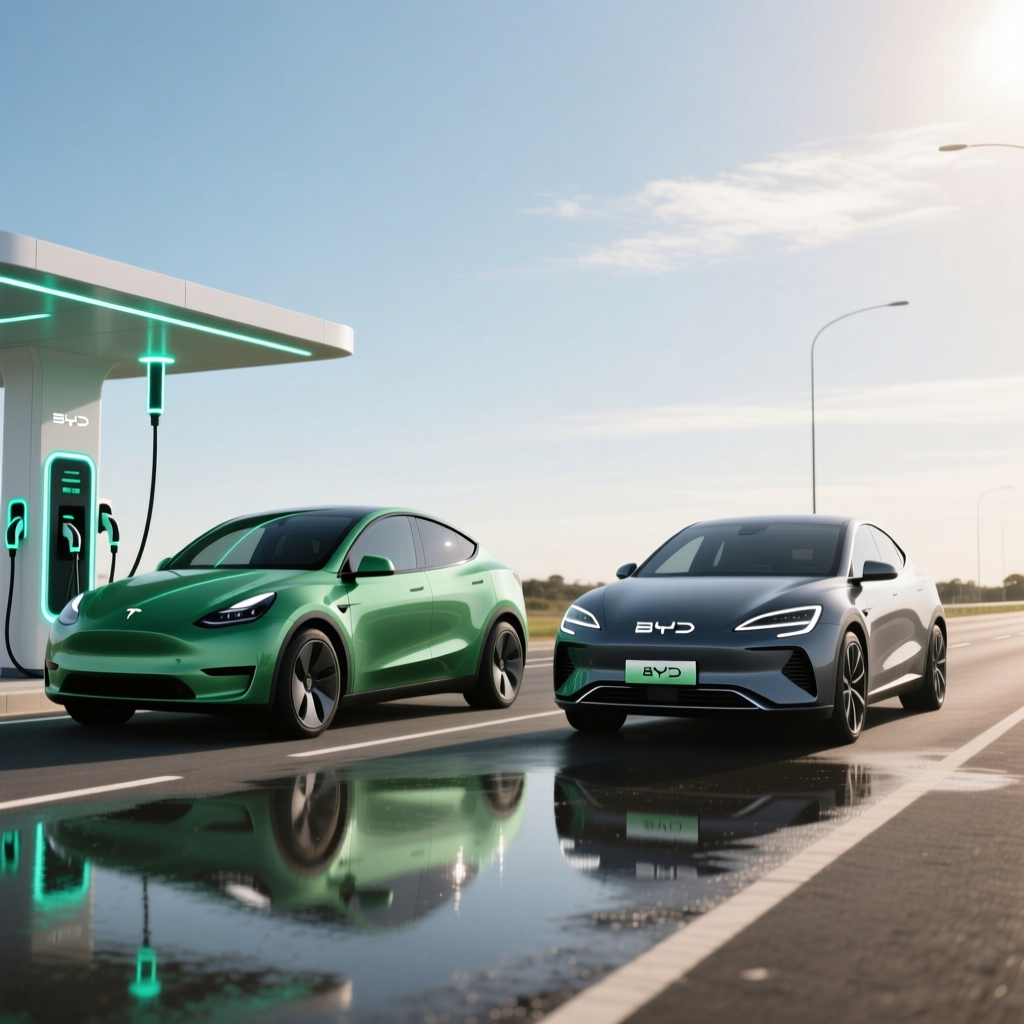
Both vehicles represent entirely different philosophies in EV design. The Tesla Model Y, a global benchmark for electric SUVs, brings industry-leading software, an extensive proprietary charging network, and minimalist American engineering to the table. On the other hand, the BYD Atto 3, a formidable challenger from China, offers exceptional value, a quirky and highly practical interior, and a compelling entry point into the world of zero-emissions driving. If you are cross-shopping these two giants, our detailed Tesla Model Y review and BYD Atto 3 review provide deeper dives into each vehicle individually.
In this head-to-head electric car comparison, we will dissect every critical aspect of ownership. From real-world range and charging speeds to interior practicality and long-term warranty coverage, we will help you determine which of these top-tier contenders deserves a spot in your driveway. For a broader look at the market, be sure to check out our rankings of the best electric SUVs currently available.
Head-to-Head Specification Comparison
Before diving into the nuances of daily driving and ownership, it is essential to look at the raw numbers. The table below contrasts the Rear-Wheel Drive (RWD) variant of the Tesla Model Y with the Extended Range version of the BYD Atto 3, as these are the most popular and directly comparable configurations in the Australian market.
| Feature | Tesla Model Y (RWD) | BYD Atto 3 (Extended Range) |
|---|---|---|
| Battery Chemistry | Lithium Iron Phosphate (LFP) | Lithium Iron Phosphate (Blade LFP) |
| Battery Capacity | ~60 kWh (Usable) | 60.48 kWh (Gross) |
| WLTP Range | 455 km | 420 km |
| EPA Range Estimate | ~430 km | ~390 km |
| Power Output | 220 kW | 150 kW |
| Torque | 440 Nm | 310 Nm |
| 0-100 km/h Acceleration | 6.9 seconds | 7.3 seconds |
| DC Fast Charging Max | 170 kW | 80 kW |
| Cargo Space (Rear Seats Up) | 854 Litres (incl. frunk) | 440 Litres |
| Towing Capacity (Braked) | 1,600 kg | 750 kg |
Range & Efficiency
When evaluating any electric car comparison in Australia, range anxiety remains a primary concern for buyers, particularly given the vast distances between regional towns and cities. The Australian market relies heavily on the WLTP (Worldwide Harmonised Light Vehicle Test Procedure) standard, though EPA ratings and independent test data often provide a more realistic expectation of real-world highway driving.
The Tesla Model Y RWD boasts a WLTP range of 455 kilometres. However, independent test data suggests that during high-speed highway cruising at 110 km/h, the Model Y's aerodynamic efficiency and advanced thermal management system allow it to achieve exceptional real-world mileage, often hovering around the 380 to 400-kilometre mark before requiring a charge. The vehicle's heat pump is a standard inclusion, ensuring that cabin heating during colder months in southern states does not decimate the battery reserves.
The BYD Atto 3 Extended Range features a 60.48 kWh Blade battery, yielding a WLTP range of 420 kilometres. While the Blade battery architecture is renowned for its safety and longevity, the Atto 3's slightly less aerodynamic profile and heavier curb weight result in a marginally higher energy consumption rate. In real-world mixed driving conditions, owners can expect approximately 350 to 370 kilometres of usable range. While it falls slightly short of the Tesla, it remains more than adequate for the average Australian daily commute, which rarely exceeds 50 kilometres.
Both vehicles utilize Lithium Iron Phosphate (LFP) battery chemistry. LFP is highly regarded for its durability, allowing owners to regularly charge the battery to 100 per cent without the long-term degradation concerns associated with Nickel Manganese Cobalt (NMC) batteries. This makes both SUVs excellent candidates for buyers who plan to keep their vehicles for the long haul.
Pricing & Value Proposition
The financial barrier to entry is a critical factor in the Australian EV market. The pricing landscape is highly dynamic, with frequent adjustments driven by global supply chains, shipping costs, and aggressive market competition. Historically, the BYD Atto 3 has positioned itself as the value champion, undercutting the Tesla Model Y by a noticeable margin and making EV ownership accessible to a broader demographic.
The Atto 3 comes exceptionally well-equipped straight from the factory. Standard features include a panoramic sunroof, synthetic leather upholstery, a powered tailgate, and a comprehensive suite of advanced driver assistance systems (ADAS). When factoring in the generous state-based EV rebates and the federal Fringe Benefits Tax (FBT) exemption for novated leases, the Atto 3 presents an incredibly compelling financial argument. For a detailed breakdown of how to maximize these savings, consult our EV incentives guide.
The Tesla Model Y, while carrying a higher initial sticker price, offers a different kind of value. The premium is justified by its superior charging hardware, over-the-air software update capabilities, and access to the Supercharger network. Furthermore, the Model Y's resale value has historically remained robust, though the influx of new competitors is beginning to normalize EV depreciation curves. Ultimately, if budget is the primary constraint, the BYD Atto 3 is the undisputed winner. If you are willing to stretch your budget for cutting-edge tech and performance, the Model Y justifies its premium.
Charging Speed & Infrastructure
Australia's unique geography makes charging infrastructure a make-or-break factor for EV adoption. The Tesla Model Y benefits from the most significant advantage in the EV space: the Tesla Supercharger network. With hundreds of locations strategically placed along major highway corridors and in metropolitan centres, Tesla owners enjoy a plug-and-charge experience that is entirely seamless. The Model Y RWD can accept DC fast charging speeds of up to 170 kW, allowing for a 10 to 80 per cent charge in approximately 25 to 30 minutes under optimal conditions.
Furthermore, Tesla has begun opening select Supercharger stations to non-Tesla EVs, though Model Y owners still benefit from preferential pricing and guaranteed access. For a complete overview of how to navigate the country's charging networks, read our comprehensive EV charging guide.
The BYD Atto 3 relies on third-party charging networks such as Chargefox, Evie, and Ampol. While these networks are expanding rapidly, the experience can sometimes be fragmented, requiring multiple apps and RFID cards. More critically, the Atto 3's DC fast-charging capability is capped at 80 kW. While this is sufficient for urban top-ups, it becomes a noticeable limitation on long regional road trips. A 10 to 80 per cent charge on a compatible 350 kW public charger will take closer to 45 minutes, nearly double the time required by the Tesla. For buyers who frequently embark on long-distance interstate road trips, the Tesla's charging hardware and network integration remain a decisive advantage.
Performance & Driving Dynamics
Electric vehicles are inherently quick off the line, and both SUVs deliver the instantaneous torque that EV enthusiasts adore. The Tesla Model Y RWD produces 220 kW of power and 440 Nm of torque, sprinting from 0 to 100 km/h in a brisk 6.9 seconds. The acceleration is linear, relentless, and accompanied by excellent traction control. The steering is weighted perfectly, offering a sporty, engaging feel that belies the vehicle's substantial weight.
The BYD Atto 3 generates 150 kW and 310 Nm, resulting in a 0 to 100 km/h time of 7.3 seconds. While slightly slower on paper, the real-world difference in urban environments is negligible. The Atto 3 is tuned more for comfort than sportiness. Its suspension setup is remarkably compliant, soaking up the bumps, potholes, and corrugations typical of Australian suburban and regional roads with ease. However, during aggressive cornering, the Atto 3 exhibits more body roll than the Tesla, and its eco-focused tyres prioritize low rolling resistance over ultimate grip.
Both vehicles feature aggressive regenerative braking systems. Tesla's one-pedal driving implementation is widely considered the industry standard, offering smooth, predictable deceleration that allows drivers to navigate city traffic without touching the brake pedal. BYD offers adjustable regen settings, but the highest setting does not quite bring the vehicle to a complete halt, requiring the driver to intervene with the friction brakes at low speeds.
Interior Space & Practicality
Stepping inside the Tesla Model Y is an exercise in extreme minimalism. The dashboard is entirely devoid of physical buttons, with all vehicle controls, climate settings, and infotainment functions routed through the central 15-inch touchscreen. The cabin feels incredibly airy, thanks to the expansive, tinted glass roof that provides excellent outward visibility and a sense of spaciousness for rear passengers. Practicality is a major strong point: the Model Y offers a massive 854 litres of cargo space with the rear seats upright, including a highly useful front trunk (frunk) that is perfect for storing charging cables or groceries.
The BYD Atto 3 takes a radically different approach to interior design. The cabin features a quirky, gym-inspired aesthetic, with muscle-fibre patterns on the door panels, treadmill-style running boards on the centre console, and guitar-string door pocket accents. While the design is polarizing, the material quality is exceptional, featuring soft-touch surfaces and excellent build quality that rivals European competitors. Rear-seat passengers enjoy generous legroom and excellent headroom, though the Atto 3 lacks a frunk, limiting its total cargo capacity to 440 litres. For families requiring maximum luggage space for camping gear or prams, the Model Y's cavernous boot is the clear winner.
Technology & Infotainment
Tesla's proprietary operating system remains the gold standard for automotive infotainment. The interface is lightning-fast, intuitive, and backed by regular Over-The-Air (OTA) updates that continually introduce new features, improve battery management, and refine the user interface. The native navigation system is unparalleled, automatically routing trips through Supercharger stations, pre-conditioning the battery for optimal charging speeds, and providing real-time traffic data. Additionally, the Tesla mobile app offers deep integration, allowing owners to monitor charging, control climate settings, and use their smartphone as a seamless key.
The BYD Atto 3 features a unique 12.8-inch rotating touchscreen that can toggle between landscape and portrait orientations depending on the application in use. While the hardware is impressive and the screen is vibrant, the software interface can feel slightly cluttered and occasionally laggy compared to Tesla's fluid ecosystem. The Atto 3 supports wireless Apple CarPlay and Android Auto, a feature that Tesla notably lacks, forcing Tesla owners to rely on native apps or third-party workarounds. Both vehicles come equipped with robust ADAS suites, including adaptive cruise control and lane-keeping assistance, though Tesla's Autopilot system generally offers smoother and more confident highway lane centering.
Warranty & Ownership Costs
Peace of mind is crucial when adopting new automotive technology. The BYD Atto 3 offers a highly competitive six-year or 150,000-kilometre vehicle warranty, alongside an eight-year or 160,000-kilometre warranty for the high-voltage battery. This extensive coverage reflects BYD's confidence in its Blade battery technology and provides excellent protection for second-hand buyers and long-term owners alike.
Tesla provides a standard four-year or 80,000-kilometre basic vehicle warranty, which is somewhat underwhelming compared to mainstream competitors. However, the battery and drive unit are covered for eight years or 160,000 kilometres. Servicing costs for both vehicles are remarkably low compared to internal combustion engine equivalents, as there are no oil changes, spark plugs, or timing belts to replace. Routine maintenance primarily consists of cabin air filter replacements, brake fluid checks, and tyre rotations. Because EVs rely heavily on regenerative braking, brake pad wear is minimal, often lasting well beyond 100,000 kilometres.
The Verdict: Which EV is Right for You?
Choosing between the Tesla Model Y and the BYD Atto 3 ultimately comes down to your specific lifestyle, budget, and driving habits. Both are exceptional vehicles that have rightfully earned their spots at the top of the Australian EV sales charts.
Choose the Tesla Model Y if: You frequently travel long distances and require the reliability and speed of the Supercharger network. It is also the ideal choice for tech enthusiasts who demand the best software interface, families who need maximum cargo space and towing capacity, and drivers who prioritize sporty handling and rapid acceleration.
Choose the BYD Atto 3 if: You are seeking the best possible value for money and want a feature-packed SUV without stretching your budget. It is perfect for urban commuters, buyers who prefer traditional physical buttons alongside modern screens, and those who prioritize a comfortable, compliant ride over sporty dynamics. The Atto 3's superior vehicle warranty also offers added long-term security.
Whichever you choose, you are stepping into a modern, efficient, and thrilling segment of the automotive market. For more tailored recommendations, explore our complete list of the best electric SUVs available today.
Frequently Asked Questions
Is it cheaper to run an EV compared to a petrol car in Australia?
Yes, in most scenarios, running an electric vehicle is significantly cheaper than a comparable petrol or diesel SUV. The cost of electricity per kilowatt-hour, especially when charging at home using off-peak tariffs or rooftop solar panels, is a fraction of the cost of petrol per litre. Furthermore, EVs have far fewer moving parts, eliminating the need for expensive engine servicing, oil changes, and exhaust system repairs. When combined with federal FBT exemptions for novated leases and various state-based stamp duty waivers, the total cost of ownership for vehicles like the Model Y and Atto 3 is highly competitive.
How long do the LFP batteries in these vehicles last?
Lithium Iron Phosphate (LFP) batteries, used in both the Tesla Model Y RWD and the BYD Atto 3, are renowned for their exceptional longevity and thermal stability. Unlike NMC batteries, LFP cells can be regularly charged to 100 per cent without accelerating degradation. Industry data and independent testing suggest that modern LFP batteries can easily endure 3,000 to 5,000 full charge cycles before dropping below 80 per cent of their original capacity. For the average Australian driver, this equates to well over a million kilometres of driving, meaning the battery will likely outlast the physical chassis of the vehicle.
Can I tow a trailer or caravan with these electric SUVs?
While both vehicles are capable of towing, there is a distinct difference in their capacities. The Tesla Model Y is rated to tow up to 1,600 kg (braked), making it suitable for small boat trailers, bike racks, and light camping trailers. However, towing heavy loads will drastically reduce your driving range, often by 40 to 50 per cent, requiring careful route planning around charging stations. The BYD Atto 3 has a much lower braked towing capacity of 750 kg, restricting it to very light utility trailers. If heavy towing is a primary requirement, you may need to look at larger, dual-motor electric pickup trucks or traditional diesel SUVs.
Do these EVs qualify for Australian government incentives?
Government incentives for EVs in Australia are primarily structured around tax exemptions rather than direct cash rebats, though this varies by state. At the federal level, eligible low-emission vehicles provided through a novated lease are exempt from Fringe Benefits Tax (FBT), which can save buyers thousands of dollars annually. Additionally, the federal government has removed the import tariff on eligible EVs. Various state governments offer further benefits, such as exemptions from stamp duty, discounted registration fees, and rebates for home charger installations. Always consult our EV incentives guide for the most current regulations in your specific state or territory.