Electric Car Compared to Gas: The Complete Head-to-Head Guide
Choosing between an electric vehicle (EV) and a traditional gas-powered car is one of the most significant automotive decisions drivers face today. Both powertrains have evolved dramatically, and the gap between them continues to narrow in some areas while widening in others. Whether you prioritize low running costs, long-distance road trips, raw performance, or cutting-edge technology, this comprehensive comparison will help you determine which option fits your lifestyle.
In this guide, we pit a representative modern electric car against a comparable gas-powered sedan to examine every dimension that matters to buyers — from EPA-rated range and fuel economy to total cost of ownership, charging speed, interior space, and warranty coverage. Let's dive into the ultimate electric car compared to gas showdown.
Overview: Electric Vehicles vs. Gas-Powered Cars
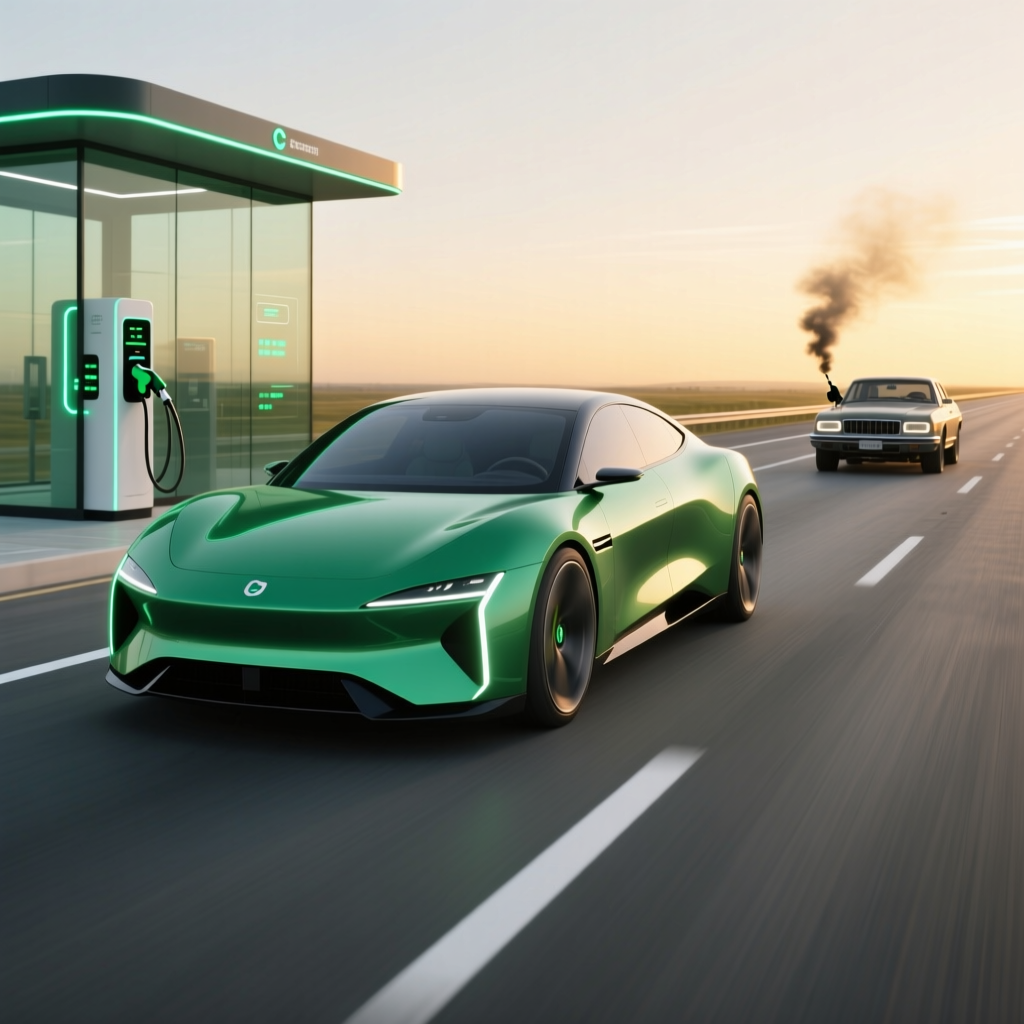
Electric vehicles use one or more electric motors powered by a rechargeable battery pack. They produce zero tailpipe emissions, deliver instant torque, and can be charged at home or at public charging stations. The EV market has expanded rapidly, with offerings from legacy automakers and dedicated EV brands alike. For a broader look at the current landscape, check out our best electric vehicles rankings.
Gas-powered cars rely on internal combustion engines (ICE) that burn gasoline or diesel to generate power. They benefit from over a century of infrastructure development, with fueling stations virtually everywhere. Modern gas cars are more efficient and cleaner than ever, and they remain the default choice for many drivers — especially those who frequently travel long distances or live in areas with limited charging access.
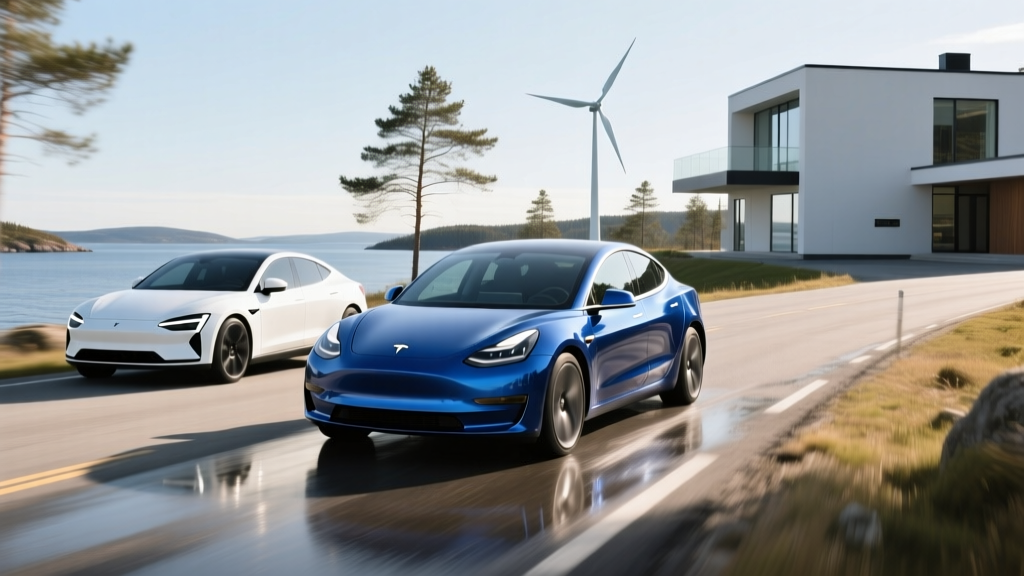
For this comparison, we are evaluating a well-equipped mid-size electric sedan (representative of popular models like the Tesla Model 3, Hyundai Ioniq 6, or BMW i4) against a similarly priced gas-powered mid-size sedan (representative of models like the Honda Accord, Toyota Camry, or BMW 3 Series). This approach lets us focus on the powertrain differences rather than brand-specific quirks.
Side-by-Side Spec Comparison
| Specification | Electric Sedan (Representative) | Gas Sedan (Representative) |
|---|---|---|
| Powertrain | Single or Dual Electric Motor | Turbocharged 4-Cylinder ICE |
| Horsepower | 250–450 hp | 190–255 hp |
| Torque | 300–490 lb-ft | 190–280 lb-ft |
| EPA-Range / Fuel Economy | 270–360 miles / 120–140 MPGe | 28–35 MPG combined |
| 0–60 mph | 3.5–6.0 seconds | 5.5–7.5 seconds |
| Refueling / Recharge Time | 15–40 min (DC fast charge 10–80%) | 3–5 min (full tank) |
| Cargo Space | 12–23 cu ft (often with frunk) | 14–17 cu ft |
| Starting MSRP Range | $38,000–$55,000 | $28,000–$42,000 |
| Estimated Annual Fuel/Energy Cost | $500–$800 | $1,400–$2,000 |
| Drivetrain | RWD / AWD | FWD / AWD |
Note: Specifications represent typical values for popular models in the mid-size sedan segment. Always consult fueleconomy.gov for official EPA ratings on specific vehicles.
Range & Fuel Economy: How Far Can You Go?
Range anxiety remains one of the most cited concerns among prospective EV buyers, and it is a legitimate consideration. Modern electric sedans typically offer between 270 and 360 miles of EPA-estimated range on a full charge, with some premium models pushing past 400 miles. That is sufficient for the vast majority of daily commutes and errands — studies consistently show that the average driver travels fewer than 40 miles per day.
Gas-powered sedans, on the other hand, typically deliver 400 to 550 miles of total range on a single tank, thanks to fuel economy ratings in the 28–35 MPG combined range. Refueling takes only minutes, and gas stations are ubiquitous, making long road trips effortless.
Where EVs shine is in efficiency measurement. The EPA expresses EV efficiency in MPGe (miles per gallon equivalent), and many electric sedans achieve 120–140 MPGe combined. This means they use far less energy per mile than even the most efficient gas cars. In real-world driving, however, EV range can drop 15–30% in extreme cold weather, while highway-speed driving also reduces range more significantly than city driving due to regenerative braking benefits at lower speeds.
For drivers who regularly take trips exceeding 300 miles, a gas car still offers an advantage in convenience. But for the 90% of driving that happens within a 100-mile radius of home, an EV's range is more than adequate — especially when paired with home charging. Explore our best long-range electric vehicles list for models that minimize range concerns.
Price & Total Cost of Ownership
The upfront purchase price is where gas cars typically hold an advantage. A well-equipped gas mid-size sedan often starts between $28,000 and $42,000, while a comparable electric sedan usually ranges from $38,000 to $55,000. The price gap has been narrowing as battery costs decline, but it remains a factor for budget-conscious buyers.
However, purchase price is only part of the equation. Total cost of ownership (TCO) tells a very different story. According to analyses by the U.S. Department of Energy and independent automotive researchers, EVs can save owners $4,000 to $10,000 over the life of the vehicle compared to gas counterparts when you factor in:
- Fuel savings: Electricity costs roughly $0.12–$0.18 per kWh nationally, translating to an equivalent cost of $1.00–$1.50 per gallon of gasoline. Annual energy costs for an EV are typically 50–70% lower than fuel costs for a gas car.
- Maintenance savings: EVs have far fewer moving parts — no oil changes, no spark plugs, no timing belts, no exhaust system repairs. Brake pad life is extended significantly thanks to regenerative braking. Studies estimate maintenance costs are 30–50% lower for EVs.
- Tax incentives & rebates: Federal, state, and local incentives can reduce the effective purchase price of an EV by $2,500 to $7,500 or more, depending on eligibility. Check current incentive programs for details.
- Depreciation: Historically, EVs depreciated faster than gas cars, but this trend is reversing as demand for used EVs strengthens and battery longevity data becomes more reassuring.
Over a five-year ownership period, many EVs break even or come out ahead on total cost despite their higher sticker price. For a detailed breakdown of the most affordable options, see our most affordable electric vehicles guide.
Charging Speed vs. Refueling Convenience
This category highlights the most fundamental difference between the two powertrains. Filling a gas tank takes three to five minutes, and gas stations are found on virtually every corner. For drivers who value speed and convenience above all else — particularly on long road trips — gas cars retain a clear edge.
EV charging, however, operates on a different paradigm. Most EV charging happens at home, where owners wake up every morning to a "full tank" without ever visiting a fueling station. This daily convenience is something gas car owners simply do not experience. A Level 2 home charger (240V) can fully recharge most EV batteries in 6–10 hours, making overnight charging effortless.
For road trips, DC fast charging is the relevant metric. Modern electric sedans support DC fast charging at rates of 150–350 kW, enabling a 10–80% charge in approximately 15–40 minutes, depending on the vehicle and charger capability. The fastest-charging EVs can add 200 miles of range in under 15 minutes on a 350 kW charger. Charging networks continue to expand rapidly, with major providers deploying chargers along highways and in urban centers across the country.
It is worth noting that charging speed is not linear — the rate slows significantly as the battery approaches full capacity, which is why most fast-charging metrics reference 10–80% rather than a full charge. Additionally, charging infrastructure availability varies considerably by region. Urban and suburban areas along major corridors tend to have excellent coverage, while rural areas may still present challenges.
For an in-depth look at which EVs charge the fastest, visit our fastest-charging electric vehicles comparison.
Performance & Driving Experience
If you have never driven an electric car, the performance difference can be genuinely surprising. Electric motors deliver maximum torque from zero RPM, providing immediate, linear acceleration that feels effortless. Even a single-motor electric sedan with 280 horsepower will often out-accelerate a gas sedan with similar power ratings because there is no turbo lag, no transmission shift delay, and no power band to climb through.
Dual-motor all-wheel-drive EVs take performance to another level, with many achieving 0–60 mph times in the 3.5–4.5 second range — territory previously reserved for sports cars. The low center of gravity created by the under-floor battery pack also contributes to composed handling and minimal body roll, giving EVs a planted, confident feel on twisty roads.
Gas-powered sedans have their own performance virtues. They tend to be lighter overall, which can translate to more agile handling dynamics. Enthusiasts often prefer the engagement of a well-tuned turbocharged engine paired with a responsive automatic or manual transmission. The sound and feel of an internal combustion engine at high RPM is an emotional experience that EVs cannot replicate — though some manufacturers are experimenting with synthetic engine sounds.
From a refinement standpoint, EVs are extraordinarily quiet. At highway speeds, the dominant noise is wind and tire roar rather than engine drone. This makes for a serene cabin environment that many drivers find luxurious. Gas cars have made tremendous strides in noise isolation, but the inherent vibration and sound of combustion remain present to some degree.
For performance-oriented buyers, our best performance electric vehicles roundup highlights the quickest and most engaging EVs available.
Interior Space, Technology & Warranty
Interior Space & Cargo
Electric vehicles have a packaging advantage thanks to the absence of a large engine block, transmission tunnel, and exhaust system. Many EVs offer a front trunk ("frunk") in addition to the rear cargo area, providing extra secure storage. The flat floor also allows for more spacious rear-seat footrooms and flexible interior layouts.
That said, the battery pack does occupy space beneath the floor, which can sometimes result in a slightly higher floor height and reduced headroom compared to gas counterparts. In the mid-size sedan segment, cargo volumes are generally comparable — EVs typically offer 12–23 cubic feet (including the frunk), while gas sedans provide 14–17 cubic feet in a traditional trunk. The advantage often goes to EVs when total usable storage is counted.
Technology
EVs are frequently positioned as technology flagships, and they tend to receive the latest features first. Over-the-air (OTA) software updates are standard on most EVs, continuously improving functionality, adding features, and even enhancing performance after purchase. Large touchscreen interfaces, advanced driver-assistance systems (ADAS), smartphone integration, and sophisticated route planning with automatic charging stops are common.
Gas-powered cars have closed much of the technology gap, with modern infotainment systems, digital instrument clusters, and comprehensive safety suites now widely available. However, OTA updates remain less common in the ICE world, and the integration between navigation and fueling logistics is less critical since gas stations are so prevalent.
One area where EVs excel is preconditioning — the ability to heat or cool the cabin while plugged in, using grid power rather than battery energy. This is especially valuable in extreme climates and can be scheduled via smartphone apps. Gas cars can achieve similar results through remote start, but at the cost of fuel consumption and emissions.
Warranty & Battery Coverage
EV warranties deserve special attention because the battery pack is the most expensive component. Most manufacturers provide battery warranties covering 8 years or 100,000 miles, with some extending further. These warranties typically guarantee that the battery will retain at least 70–80% of its original capacity during the coverage period. Independent testing and real-world data from high-mileage EVs suggest that modern lithium-ion battery packs often retain 85–95% capacity after 100,000 miles, significantly exceeding warranty thresholds.
Gas cars typically come with 3-year/36,000-mile bumper-to-bumper warranties and 5-year/60,000-mile powertrain warranties. While the powertrain coverage is shorter than EV battery warranties, gas powertrains are well-understood and repair infrastructure is universal. Any competent mechanic can service a gas engine, whereas EV repairs often require dealer-specialized technicians.
For detailed reliability insights, browse our EV reliability guide to see how various models hold up over time.
The Verdict: Which Should You Choose?
There is no universally correct answer in the electric car compared to gas debate — the right choice depends entirely on your driving habits, budget, and priorities. Here is our recommendation by buyer type:
Choose an Electric Car If:
- You can charge at home (garage or driveway access with a 240V outlet)
- Your daily driving is under 200 miles round-trip
- You want the lowest possible running costs and minimal maintenance
- You value instant acceleration, quiet refinement, and cutting-edge technology
- You want to reduce your carbon footprint and tailpipe emissions
- You plan to keep the vehicle for five or more years to maximize TCO savings
Choose a Gas Car If:
- You regularly drive long distances (300+ miles) in areas with sparse charging infrastructure
- You lack access to home or workplace charging
- Your budget requires the lowest possible upfront purchase price
- You live in an extremely cold climate where EV range loss is a significant concern
- You prefer the familiarity and universal serviceability of internal combustion
- You tow heavy loads frequently (though EV towing capability is improving rapidly)
Consider a Plug-In Hybrid If:
- You want electric commuting for short daily trips but gas flexibility for road trips
- You have home charging access but frequently drive beyond EV range
- You are not ready to commit fully to electric but want to reduce fuel consumption
The automotive industry is moving decisively toward electrification, and each new generation of EVs closes the remaining gaps with gas-powered cars. For many drivers, the question is no longer whether to go electric but when. If your lifestyle aligns with the EV strengths outlined above, making the switch now can deliver immediate financial and experiential benefits.
Ready to explore specific models? Start with our best electric vehicles overall rankings, or compare specific models in our EV comparison hub.
Frequently Asked Questions
Are electric cars really cheaper to own than gas cars?
Over a five-to-ten-year ownership period, most electric cars prove cheaper to own despite higher purchase prices. The savings come from significantly lower energy costs (electricity vs. gasoline), reduced maintenance (no oil changes, fewer brake replacements, fewer moving parts), and available tax incentives. According to U.S. Department of Energy data, the average EV owner saves between $800 and $1,500 annually on fuel alone. The exact savings depend on local electricity rates, driving patterns, and the specific vehicles compared. For budget-focused shoppers, our most affordable EVs list highlights models with the best value proposition.
How long do electric car batteries last compared to gas engines?
Modern EV battery packs are designed to last the life of the vehicle. Real-world data from high-mileage EVs shows that most lithium-ion battery packs retain 85–95% of their original capacity after 100,000 miles, and many continue performing well beyond 200,000 miles. Most manufacturers warrant their batteries for 8 years or 100,000 miles. Gas engines can also last 200,000+ miles with proper maintenance, but they require significantly more scheduled service along the way — oil changes, transmission fluid, timing belts, spark plugs, and emissions system components. In terms of longevity with minimal intervention, EVs hold a meaningful advantage.
Is charging an electric car really more convenient than getting gas?
It depends on your situation. If you have home charging, an EV is arguably more convenient for daily use — you plug in when you arrive home and wake up to a full charge every morning, eliminating weekly trips to the gas station entirely. For road trips, gas cars retain a convenience advantage because refueling takes only minutes and stations are everywhere. However, DC fast charging infrastructure is expanding rapidly, and modern EVs can add 200+ miles of range in 15–20 minutes at high-speed chargers. Many EV owners report that they visit a fueling station far less often than they did with a gas car, even accounting for occasional road-trip charging stops.
Do electric cars perform well in cold weather?
Cold weather affects all vehicles, but EVs experience a more noticeable impact on range. In temperatures below freezing, an EV can lose 15–30% of its rated range due to reduced battery efficiency and energy used for cabin heating. Gas cars also see reduced fuel economy in cold weather (typically 10–20%), but the effect is less pronounced because waste engine heat warms the cabin. Modern EVs mitigate cold-weather losses through heat pump systems, battery preconditioning, and heated seats and steering wheels that use less energy than heating the entire cabin. For drivers in cold climates, choosing an EV with a larger battery and heat pump technology is advisable. Our best EVs for cold weather guide highlights models that handle winter conditions best.