Quick Answer: What Electric Car Ads Won't Tell You
Electric car ads in 2026 routinely highlight EPA range stickers, peak DC fast-charging speeds, and $7,500 tax credits — but omit the real-world conditions that shrink range by 15-30%, the charge-curve taper that makes peak kW irrelevant above 80% SoC, and the strict income, MSRP, and battery-sourcing rules that disqualify many buyers from the full federal credit. Before believing any EV advertisement, verify five numbers: usable battery kWh (not total), sustained 10-80% charge time (not peak kW), real-world highway range at 70 mph (not EPA combined), your specific §30D tax-credit eligibility, and whether your home electrical panel supports Level 2 charging without a costly upgrade.
Automakers spent over $1.2 billion on EV advertising in 2025 alone, and 2026 campaigns are more aggressive than ever. From Hyundai's Ioniq 5 spots emphasizing 18-minute fast charges to Ford's F-150 Lightning towing demonstrations, every manufacturer is competing for buyer attention. But marketing departments optimize for headlines, not for the Tuesday morning commute in January. This guide decodes the most common claims you'll encounter in electric car ads and arms you with the exact data points to verify them.
The Range Claim: EPA Stickers vs Real-World Miles
The single most prominent number in any electric car ad is the EPA-estimated range. For 2026 models, you'll see figures like the Chevrolet Equinox EV's 319 miles, the Tesla Model Y Long Range's 320 miles, or the Hyundai Ioniq 5's 310 miles. These are real, tested numbers from fueleconomy.gov — but they come with critical caveats that ads never mention.
The EPA test cycle includes a mix of city and highway driving at moderate speeds with climate control set to 72°F. Your actual experience depends heavily on three variables:
- Highway speed: At a sustained 75-80 mph, most EVs lose 15-25% of their EPA range due to aerodynamic drag. A 310-mile EPA rating typically delivers 235-265 real highway miles.
- Cold weather: Below 32°F, battery chemistry slows and cabin heating draws significant energy. Expect 20-35% range reduction in freezing conditions, meaning that 310-mile EV might deliver 200-250 miles in a Midwest winter. EVs with heat pumps (standard on Hyundai/Kia E-GMP models, the Tesla Model Y, and most 2026 VW ID.4 trims) mitigate this loss to roughly 15-25%.
- Terrain and payload: Mountain passes and heavy cargo (or towing) can cut range by 30-40% on steep grades.
| Model (Trim) | EPA Range | Real Highway (75 mph) | Cold Weather (20°F) | Battery (Usable kWh) |
|---|---|---|---|---|
| Tesla Model Y Long Range AWD | 320 mi | ~255-275 mi | ~220-260 mi | 78.1 kWh (NMC) |
| Hyundai Ioniq 5 Long Range AWD | 290 mi | ~230-250 mi | ~210-240 mi | 84.0 kWh (NMC) |
| Chevrolet Equinox EV RS | 319 mi | ~255-275 mi | ~210-250 mi | 85.0 kWh (NMC) |
| Ford Mustang Mach-E Extended RWD | 320 mi | ~260-280 mi | ~215-255 mi | 91.0 kWh (NMC) |
| Volkswagen ID.4 Pro S AWD | 291 mi | ~235-255 mi | ~215-245 mi | 82.0 kWh (NMC) |
What to look for in the ad: If the commercial says "up to 320 miles," find out which trim achieves that. Often the base RWD version posts the highest range, while the AWD performance trim drops 30-50 miles. Also check whether the stated range uses the EPA standard (US) or WLTP (Europe), which inflates figures by roughly 10-15%.
The Charging Speed Claim: Peak kW Is Not Sustained kW
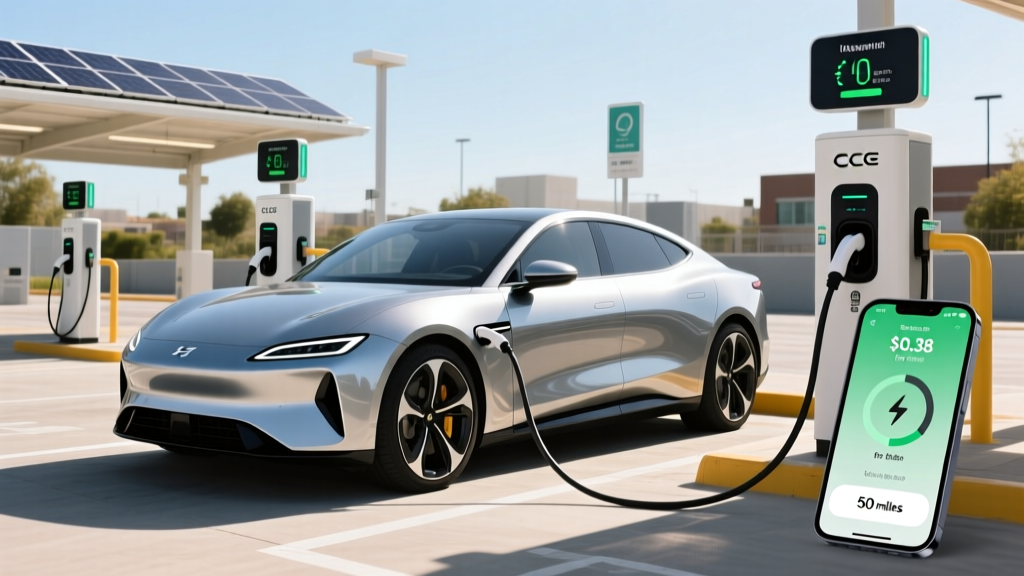
Electric car ads love to flash a big charging number: "250 kW DC fast charging!" or "10 to 80% in 18 minutes!" These claims are technically accurate but practically misleading if you don't understand charge curves.
Here's the physics: an EV battery can only accept its peak charge rate at a low state of charge (typically 5-20% SoC) and at optimal battery temperature. As the battery fills, the battery management system (BMS) deliberately slows the charge rate to protect cell health. This is called the charge curve taper.
A vehicle advertising 250 kW peak charging might sustain that rate for only 5-8 minutes before tapering to 150 kW, then 100 kW, then 50 kW as it approaches 80%. The meaningful metric is the average kW from 10-80%, not the peak.
| Model | Peak DC kW | Avg 10-80% kW | 10-80% Time | Level 2 Rate (kW) |
|---|---|---|---|---|
| Hyundai Ioniq 5 (E-GMP 800V) | 240 kW | ~185 kW | ~18 min | 10.9 kW |
| Tesla Model Y Long Range | 250 kW | ~170 kW | ~22 min | 11.5 kW |
| Ford Mustang Mach-E Ext. Range | 150 kW | ~110 kW | ~34 min | 10.5 kW |
| Chevrolet Equinox EV | 150 kW | ~115 kW | ~30 min | 11.5 kW |
| VW ID.4 Pro S AWD | 175 kW | ~130 kW | ~28 min | 11.0 kW |
Hyundai and Kia's 800-volt E-GMP architecture is the current benchmark for sustained fast charging. The Ioniq 5 can hold above 200 kW for a longer portion of its charge curve than most competitors, which is why its 18-minute 10-80% claim is largely achievable at a functioning 350 kW charger. Tesla's V3 and V4 Superchargers deliver excellent real-world speeds within the Tesla network, though the Model Y's 400V architecture means a slightly longer taper.
Critical preconditioning note: Most EVs must precondition (warm) the battery before accepting peak DC charge rates. Tesla does this automatically when you navigate to a Supercharger. Hyundai/Kia require you to activate preconditioning manually or via navigation routing. If you pull up to a fast charger with a cold battery, your 18-minute charge can become a 35-minute charge.
The Tax Credit Claim: $7,500 Is Not Guaranteed
Nearly every electric car ad in 2026 mentions the federal EV tax credit, often phrased as "eligible for up to $7,500." Under IRS §30D rules, that "up to" carries a stack of requirements that disqualify many buyers and many vehicles:
Tax Credit: Ad Claims vs Actual Rules
| What the Ad Implies | What the IRS Actually Requires (2026) |
|---|---|
| "Get $7,500 off any EV" | $3,750 for meeting critical-mineral sourcing + $3,750 for battery-component sourcing. Many 2026 models qualify for only $3,750 or $0 depending on supply-chain shifts. |
| "Everyone qualifies" | Income caps: $150K single / $225K head of household / $300K joint MAGI. Above these thresholds = $0 credit. |
| "Any price is fine" | MSRP caps: $55,000 for sedans/wagons, $80,000 for SUVs/pickups. Exceed the cap = ineligible. |
| "Just buy and claim it" | Point-of-sale transfer is available through registered dealers, reducing your down payment directly. The dealer must file IRS documentation at time of sale. |
| "Lease and still get it" | Leased EVs fall under §45W (commercial clean vehicle credit), which passes through to the lessee as a lease discount — different rules, no MSRP/income caps, but savings depend on dealer/lessor. |
As of early 2026, vehicles like the Tesla Model Y (certain build configurations), the Ford F-150 Lightning, and the Chevrolet Equinox EV have qualified for the full $7,500, but battery-sourcing requirements tighten annually. Always verify current eligibility on the IRS clean vehicle credit page before signing paperwork — and confirm with your tax professional that your MAGI falls within limits.
Total Ownership Cost: EV vs Gas vs Hybrid
Electric car ads emphasize fuel savings, and they're not wrong — electricity is cheaper per mile than gasoline in most US markets. But a true cost comparison requires looking at the full 5-year picture.
| Cost Category | EV (Tesla Model Y LR) | Gas (Toyota RAV4 AWD) | Hybrid (Toyota RAV4 Hybrid) |
|---|---|---|---|
| Purchase Price (after incentives) | ~$39,990 ($47,490 - $7,500 credit) | ~$33,500 | ~$36,000 |
| Fuel/Energy (5 years) | ~$3,750 (home charging avg $0.14/kWh) | ~$11,250 (28 MPG, $3.50/gal) | ~$6,560 (40 MPG, $3.50/gal) |
| Maintenance (5 years) | ~$1,500 (tires, cabin filter, wiper fluid) | ~$4,500 (oil, filters, brakes, belts) | ~$3,800 (reduced oil changes, regen saves brakes) |
| Insurance (5 years avg) | ~$10,500 (EVs cost ~15-25% more to insure) | ~$7,500 | ~$8,000 |
| Home Charger Install | ~$1,200-$2,500 (Level 2, 240V/48A) | $0 | $0 |
| Estimated Depreciation | ~$18,000 (EV depreciation stabilizing in 2026) | ~$14,000 | ~$14,500 |
| 5-Year Total | ~$74,940-$76,240 | ~$70,750 | ~$68,860 |
The EV wins on fuel and maintenance but loses on insurance, depreciation, and upfront charger installation. The breakeven point against a gas car typically arrives around year 6-7 for high-mileage drivers, or sooner in states with expensive gasoline (California, Washington) and cheap electricity (Pacific Northwest hydro, some Midwest wind markets).
The hybrid sweet spot: If you lack reliable home charging access, drive in extreme cold regularly, or take frequent road trips through charging-desert regions, a PHEV like the Toyota RAV4 Prime (42 miles electric-only, then 38 MPG hybrid) or the Hyundai Tucson PHEV (33 miles electric) may deliver better real-world economics and zero range anxiety.
Common EV Ad Myths — Fact-Checked
| Ad Claim / Common Belief | Reality |
|---|---|
| "Zero maintenance forever" | EVs still need tire rotations (EVs wear tires 20-30% faster due to weight and instant torque), cabin air filters, brake fluid checks, wiper blades, and eventually brake pad replacement (though regenerative braking extends pad life to 100,000+ miles in many cases). |
| "The battery will need replacing" | Modern NMC and LFP batteries are warranted for 8 years/100,000 miles (10 years/100,000 in CARB states) with a capacity retention threshold of 70%. Real-world degradation data from Tesla's 2025 Impact Report shows an average of ~12% capacity loss at 150,000 miles. Full battery replacements are rare and typically covered under warranty. |
| "Self-driving capability included" | Tesla Autopilot, FSD (Supervised), Ford BlueCruise, and GM Super Cruise are all SAE Level 2 driver-assist systems. You must keep your hands on or near the wheel and remain fully attentive. No consumer vehicle sold in 2026 is self-driving. Level 4 robotaxis (Waymo, Zoox) operate only in limited geofenced areas and are not purchasable vehicles. |
| "Charges in 15 minutes anywhere" | Peak charge speeds require a compatible DC fast charger (350 kW for 800V vehicles). Many public chargers deliver only 50-150 kW. Electrify America, Tesla Supercharger, and EVgo networks have the highest concentration of 150+ kW stations, but rural corridors still have gaps. |
| "Every EV qualifies for $7,500" | See tax credit section above — sourcing rules, MSRP caps, and buyer income limits all apply and change annually. |
What Electric Car Ads Will Never Show You
- Charging in an apartment complex with no Level 2 access (you'll rely entirely on public DC charging, adding cost and time)
- Range loss when towing — even the F-150 Lightning drops from 320 to ~150-180 miles when towing 7,000+ lbs
- The $2,000-$4,000 electrical panel upgrade your 1980s home might need before installing a Level 2 charger
- Insurance premiums that can be 20-30% higher than equivalent gas vehicles due to repair costs and parts pricing
- Public charging costs that can exceed gasoline per-mile costs at peak-rate DC stations ($0.48-$0.65/kWh in some markets)
Your Decision Framework: Should You Buy the EV in That Ad?
If-Then EV Buying Checklist
- IF you have a garage or driveway where a Level 2 (240V) charger can be installed, AND your daily commute is under 80 miles round-trip → THEN a 250+ mile EPA range EV will work seamlessly. You'll charge overnight and rarely visit a public charger.
- IF you live in an apartment without charging access, AND there are no reliable DC fast chargers within 2 miles of your home → THEN consider a PHEV first, or wait until your building installs chargers. Daily public-charging dependency adds 30-60 minutes/week and higher per-mile costs.
- IF you regularly drive in sub-freezing temperatures for 6+ months/year → THEN prioritize an EV with a heat pump and add a 25% range buffer to your minimum requirement. A 300-mile EPA vehicle becomes a 225-mile vehicle at 10°F.
- IF you take road trips over 300 miles more than 4 times/year → THEN check the ABRP route planner for your specific routes. Vehicles with 800V architecture (Hyundai/Kia/Genesis) and access to the Tesla Supercharger network (now open to NACS-equipped Fords, Rivians, and others) minimize charging stops.
- IF your household MAGI exceeds $300,000 (joint) → THEN you will not qualify for the §30D federal credit. Factor the full MSRP into your budget, or consider a lease under §45W which bypasses income caps.
- IF you tow a trailer or boat more than 5,000 lbs regularly → THEN expect a 40-50% range reduction and plan charging accordingly. The Rivian R1T and F-150 Lightning are capable tow vehicles, but a 320-mile range becomes ~170 miles under load.
First-Time EV Buyer Essentials
If you're transitioning from a gas car, here's what no electric car ad will walk you through:
Home Charging Setup
A Level 2 home charger (240V, 40-48 amps) adds roughly 25-35 miles of range per hour of charging, which easily replenishes a daily commute overnight. Installation costs range from $800 (simple outlet near the panel) to $3,500+ (long wire runs, panel upgrades, or trenching). Get quotes from at least two licensed electricians and check whether your utility offers rebates — many do.
kW vs kWh — Know the Difference
This is the single most common confusion point. kWh (kilowatt-hours) measures battery capacity — how much energy the car stores. Think of it as the gas tank size. kW (kilowatts) measures power flow — how fast energy moves. Think of it as the pump speed at a gas station. A 78 kWh battery charged at 11 kW (Level 2) takes about 7 hours from empty. The same battery at 150 kW (DC fast) can go from 10-80% in roughly 25 minutes.
Connector Types in 2026
The North American Charging Standard (NACS), developed by Tesla, is now the dominant connector for 2026 model-year EVs. Ford, Rivian, GM, Volvo, and others have adopted NACS. The CCS1 connector is still present on many 2024-2025 models and remains supported at most public stations, but new infrastructure is overwhelmingly NACS. CHAdeMO is effectively discontinued outside legacy Nissan Leaf owners.
Regenerative Braking
Most EVs offer adjustable regenerative braking, which recaptures kinetic energy during deceleration and feeds it back into the battery. Strong regen settings enable "one-pedal driving" in city traffic, reducing brake wear and improving efficiency. This takes about a week to adapt to but becomes second nature.
Frequently Asked Questions
Are electric car ads misleading about range?
Not exactly misleading, but incomplete. The EPA range figure shown in ads is a legitimate standardized test result. However, ads rarely disclose that highway driving at 75+ mph, cold weather below freezing, and heavy cargo can each reduce that number by 15-35%. Always budget for 70-80% of the EPA range as your real-world planning number for highway trips.
Do I need a special electrical panel for an EV?
Possibly. A Level 2 charger drawing 48 amps requires a 60-amp dedicated circuit. If your home has a 100-amp electrical panel (common in homes built before the 1990s), you may need a panel upgrade to 200 amps, which costs $1,500-$3,500. An electrician can assess this during a site visit. Some utilities offer panel-upgrade rebates.
Is a hybrid a better choice than a full EV in 2026?
It depends on your charging access and driving patterns. A PHEV (plug-in hybrid) like the Toyota RAV4 Prime gives you 42 miles of electric-only range for daily commuting (covering most commutes) plus a gas engine for long road trips. If you can charge at home and your daily driving is under 40 miles, a PHEV eliminates range anxiety entirely while still saving significantly on fuel. If you drive more than 60 miles daily and have home charging, a full EV will save more over 5 years.
How long do EV batteries actually last?
Data from millions of EVs on the road shows most NMC batteries retain 85-90% capacity after 100,000 miles. LFP (lithium iron phosphate) batteries, found in standard-range Teslas and some 2026 Chinese-market vehicles entering the US, show even slower degradation — often 92%+ retention at 100,000 miles. Federal law mandates a minimum 8-year/100,000-mile battery warranty, and CARB states require 10 years/150,000 miles. Full battery replacement is uncommon and typically costs $8,000-$18,000 if out of warranty.
Why is EV insurance more expensive?
EVs cost 15-25% more to insure than equivalent gas cars, primarily because collision repairs are more expensive (specialized parts, high-voltage safety protocols, and fewer certified body shops). Battery damage in an accident can total a vehicle that would otherwise be repairable. Shop quotes from EV-friendly insurers like Geico, Progressive, and Tesla Insurance (where available) — premiums vary by as much as 40% between providers for the same EV.
The electric car ads you see in 2026 are built on real engineering achievements — 300+ mile ranges, 18-minute fast charges, and dramatically lower per-mile energy costs are all genuine. But the gap between marketing highlight and daily ownership reality is where buyers get surprised. Verify every number, test-drive in conditions that match your actual commute, and run the full 5-year cost math before signing. The best EV purchase is the one made with open eyes, not just open wallets.