The Short Answer
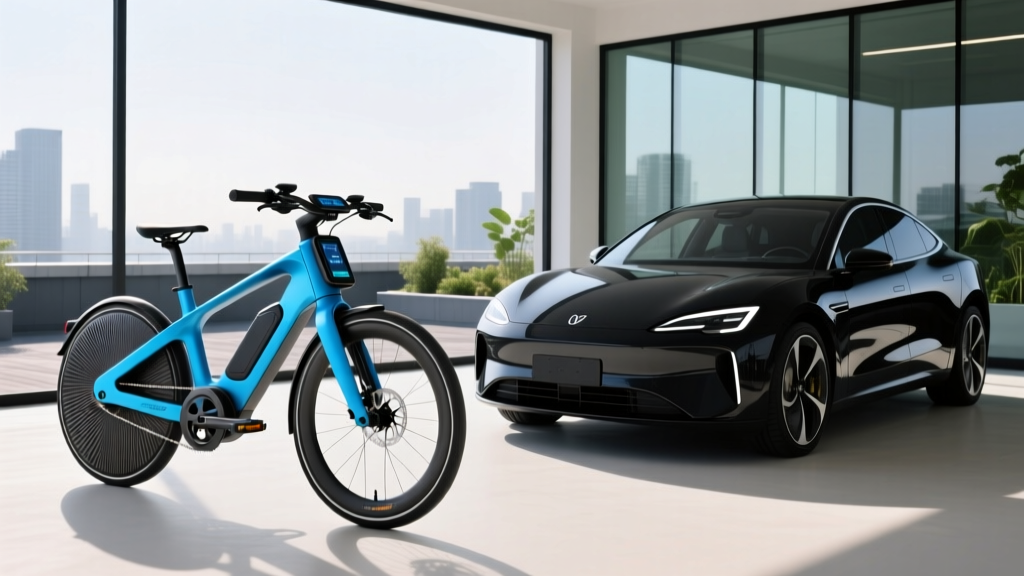
If your commute is under 15 miles one-way and you have secure parking, a Class 1 or Class 3 e-bike from brands like Rad Power, Lectric, or Trek can replace a car trip for under $2,000 upfront and pennies per charge. If you need highway capability, cargo space, passenger seating, or all-weather reliability, a battery-electric vehicle (BEV) like the Chevrolet Equinox EV ($33,400 MSRP, 319 mi EPA) or Hyundai Ioniq 5 ($42,600, 318 mi EPA) is the right tool. Many households find the optimal answer is both: an EV for longer trips and an e-bike for daily errands.
Searches for brands of electric bikes have climbed steadily as commuters weigh alternatives to rising gas prices and traffic congestion. But the decision isn't simply e-bike or electric car — it's about matching the vehicle to your actual trip profile, budget, and infrastructure. This guide breaks down the real numbers on cost, range, charging, and ownership so you can choose with confidence.
Understanding What You're Actually Comparing
An electric bicycle (e-bike) is a pedal-assist or throttle-driven two-wheeler with a hub or mid-drive motor typically rated between 250W and 750W, powered by a 0.4–0.8 kWh lithium battery. In the U.S., federal law defines three classes:
- Class 1: Pedal-assist only, max assisted speed 20 mph.
- Class 2: Throttle-equipped, max speed 20 mph.
- Class 3: Pedal-assist up to 28 mph (some states require a helmet or restrict riders under 17).
A battery-electric vehicle (BEV), by contrast, is a full passenger automobile with a 60–100+ kWh traction battery, 150–500+ hp, and EPA-rated highway capability. The gap between the two is enormous in price, regulation, and use case — which is exactly why the comparison matters.
Side-by-Side: E-Bike vs Electric Car by the Numbers
| Metric | Rad Power RadCity 5 Plus (E-Bike) | Chevrolet Equinox EV 2LT (BEV) | Toyota RAV4 Hybrid (Gas/Hybrid Baseline) |
|---|---|---|---|
| Base Price | $2,099 | $33,400 (before credits) | $32,350 |
| Battery / Energy | 0.672 kWh (48V, 14Ah) | 85 kWh usable (NMC) | 1.6 kWh (hybrid buffer) |
| Range | ~45 mi (pedal-assist) | 319 mi EPA (~270 mi real-world highway) | 605 mi EPA (47 mpg combined) |
| Top Speed | 28 mph (Class 3 assist) | 112 mph (electronically limited) | 112 mph |
| Charging Time (Full) | ~5 hours (standard 120V outlet) | ~9.5 hrs Level 2 (11.5 kW); 10–80% DC in ~22 min at 190 kW peak | ~5 min (gas station) |
| Energy Cost per Mile | ~$0.002 ($0.15/kWh) | ~$0.04 ($0.15/kWh, 3.5 mi/kWh) | ~$0.12 ($3.40/gal, 47 mpg) |
| Annual Insurance (avg.) | $0–$150 (optional rider policy) | $1,800–$2,400 | $1,400–$1,900 |
| Annual Maintenance | $100–$250 (tires, brakes, chain) | $300–$500 (tires, cabin filter, wipers) | $600–$900 (oil, filters, brakes) |
| Federal Incentive | None (some state/local rebates) | Up to $7,500 §30D credit (income, MSRP, sourcing rules apply — see IRS) | None |
| Registration / License | Not required in most states | Required (~$100–$400/yr depending on state) | Required |
Sources: fueleconomy.gov (EPA data), manufacturer spec sheets, IRS §30D guidance. E-bike energy cost assumes 0.18 kWh/mi average consumption.
Real Costs Over Five Years
The purchase price is only the beginning. Here's what a realistic five-year ownership scenario looks like for a commuter covering 30 miles round-trip, 240 days per year (7,200 annual miles):
| Cost Category | E-Bike (RadCity 5 Plus) | Equinox EV 2LT | RAV4 Hybrid |
|---|---|---|---|
| Purchase Price | $2,099 | $33,400 | $32,350 |
| Federal Tax Credit | $0 | –$7,500 (if eligible) | $0 |
| Net Purchase | $2,099 | $25,900 | $32,350 |
| Energy (5 yrs) | $173 | $5,143 | $12,343 |
| Insurance (5 yrs) | $500 | $10,500 | $8,250 |
| Maintenance (5 yrs) | $875 | $2,000 | $3,750 |
| Registration (5 yrs) | $0 | $1,250 | $1,250 |
| Total 5-Year Cost | $3,647 | $44,793 | $57,943 |
| Cost per Mile | $0.10 | $1.24 | $1.61 |
The e-bike's per-mile cost is roughly one-twelfth that of the EV. But the e-bike also can't carry four passengers, handle a 300-mile road trip, or protect you from a January ice storm. The question isn't which is cheaper in isolation — it's which fits your trip profile.
Who Should Buy an E-Bike, and Who Needs an EV?
Decision Framework
Choose an e-bike if:
- Your one-way commute is under 15 miles on roads with bike infrastructure.
- You have secure, weather-protected parking at home and at work.
- You live in a climate with at least 7–8 rideable months per year.
- Your household already has access to a car (gas, hybrid, or EV) for longer trips.
- Your budget is under $3,000 and you want to eliminate daily fuel costs.
Choose a battery-electric vehicle if:
- You regularly drive over 30 miles one-way, including highway segments above 45 mph.
- You need to carry passengers, groceries, or cargo beyond a pannier's capacity.
- You drive in rain, snow, or extreme heat regularly.
- You have access to Level 2 home charging (or can install a 240V circuit).
- You want to reduce lifetime fuel and maintenance costs while qualifying for federal incentives.
Choose both if:
- You're a two-car household considering dropping to one car plus an e-bike — a move that can save $5,000–$10,000 annually in insurance, fuel, and maintenance.
Popular Brands of Electric Bikes: What the Market Looks Like
The e-bike market in 2026 spans budget direct-to-consumer brands and established bicycle manufacturers. Here's a snapshot of widely available brands and their positioning:
- Rad Power Bikes — The U.S. market leader in direct-to-consumer e-bikes. Models range from $1,499 (RadMission) to $2,499 (RadWagon 5 cargo). Known for robust dealer networks and a 1-year warranty.
- Lectric eBikes — Budget-focused, with the Lectric ONE starting around $998. Popular for folding commuters. Shorter warranty (roughly 1 year on frame/components).
- Trek — Legacy bicycle brand offering Bosch-powered e-bikes from $2,500 to $7,000+. Superior build quality, dealer service, and 2-year battery warranties.
- Specialized — Premium segment ($3,000–$12,000), with Brose mid-drive motors and integrated designs. Strong dealer support and 2-year comprehensive warranty.
- Cannondale — Mid-to-premium range ($2,800–$8,000), featuring Bosch and Shimano drive systems. Emphasis on ride quality and lightweight frames.
- Aventon — Value-oriented direct-to-consumer ($1,200–$2,200). Good entry point for cost-conscious buyers; expanding dealer partnerships.
Unlike the EV market — where you evaluate battery chemistry (LFP vs. NMC), DC fast-charge curves, and §30D tax credit eligibility — e-bike purchasing focuses on motor type (hub vs. mid-drive), battery watt-hours, frame geometry, and local dealer support for service.
Common Misconceptions — Myth vs. Fact
| Myth | Fact |
|---|---|
| E-bikes are just toys, not real transportation. | Class 3 e-bikes sustain 28 mph and carry 50+ lb of cargo. In European cities, e-cargo bikes have replaced delivery vans for last-mile logistics. Portland, OR and NYC see tens of thousands of daily e-bike commuters. |
| Electric cars are always more expensive to own than e-bikes. | Per-mile, yes — but an e-bike can't replace a car for highway travel, family trips, or severe weather. The fair comparison is whether an e-bike can replace one car in a multi-car household. |
| E-bikes don't need charging infrastructure. | They charge on any standard 120V outlet, which is an advantage. But apartment dwellers without ground-floor outlet access face the same charging-access challenge as EV owners without home Level 2 capability. |
| EV batteries degrade quickly and are expensive to replace. | Modern NMC and LFP EV batteries are warrantied for 8 years/100,000 miles with a minimum 70% capacity retention threshold. Real-world data from NHTSA-monitored fleets shows most packs retain 85–90% capacity at 100,000 miles. E-bike batteries (smaller, simpler) typically last 500–1,000 charge cycles before noticeable degradation — roughly 3–5 years of daily use — and cost $400–$800 to replace. |
| The $7,500 federal tax credit applies to every EV and e-bike. | The §30D New Clean Vehicle Credit applies only to qualifying BEVs and PHEVs — not e-bikes. It has MSRP caps ($55,000 sedans, $80,000 SUVs/pickups), buyer income limits ($150K single / $300K joint), and critical-mineral/battery-sourcing requirements. Always verify current-year rules on IRS.gov. |
| Cold weather destroys e-bike and EV range equally. | Both lose range in cold, but differently. An EV might lose 20–30% of its EPA range at 20°F due to cabin heating and battery chemistry slowdown. An e-bike loses 15–25% of its already-short range, and the rider is directly exposed to wind chill — making winter commuting impractical in many northern climates without significant gear investment. |
What First-Time Buyers Should Know Before Choosing
Whether you're leaning toward an e-bike or an EV, these practical considerations separate informed buyers from regretful ones:
For E-Bike Buyers
- Test before you buy. Hub motors (in the wheel) feel different from mid-drive motors (at the pedals). Mid-drives handle hills better and feel more natural; hub motors are simpler and cheaper to maintain.
- Budget for accessories. A quality U-lock ($80–$150), helmet ($50–$120), front/rear lights ($40–$80), and rain gear add $200–$400 to your real cost.
- Check local laws. Some municipalities ban Class 2 throttle bikes on multi-use paths. Others restrict Class 3 speeds on certain trails. Your state's DMV or transportation department website will have specifics.
- Secure storage is non-negotiable. E-bike theft is rampant in urban areas. A ground-floor garage, secured bike room, or heavy-duty anchor is essential.
For EV Buyers
- Home charging is the foundation. A Level 2 (240V) home charger delivers 25–44 miles of range per hour of charging — enough to refill overnight for most commuters. Installation costs $500–$2,500 depending on panel capacity and run distance. If your home has a 100-amp panel, a $1,500–$3,000 upgrade to 200 amps may be required.
- EPA range isn't real-world range. Expect 15–25% less than the EPA sticker on sustained highway driving at 70+ mph, and 20–35% less in sub-freezing temperatures. A 319-mile EPA rating might deliver 240 miles on a cold January highway trip.
- DC fast charging isn't linear. A vehicle advertising "200 kW peak charging" only sustains that rate in a narrow state-of-charge window (typically 10–40%). Above 80%, the rate tapers sharply to protect battery health. Plan road-trip stops around 10–80% charges for the fastest sessions.
- Insurance costs more. EV insurance premiums run 15–25% higher than comparable gas vehicles due to higher repair costs and battery replacement risk. Get quotes before you buy.
Frequently Asked Questions
Can I claim a federal tax credit for buying an e-bike?
No. The §30D New Clean Vehicle Credit applies only to qualifying battery-electric and plug-in hybrid passenger vehicles meeting MSRP, income, and battery-sourcing requirements. Some states and municipalities offer separate e-bike rebates (Colorado's e-bike rebate program, for example, provides up to $450 for qualifying residents). Check your state energy office or local air-quality district for current programs.
How long does an e-bike battery last compared to an EV battery?
E-bike batteries are typically rated for 500–1,000 full charge cycles before degrading to 80% of original capacity. At one charge per day, that's roughly 2–3 years of daily use before you'll notice meaningful range loss. Replacement costs $400–$800. EV batteries are warrantied for 8 years/100,000 miles (federally mandated minimum) and, based on fleet data, often retain 85%+ capacity at 150,000 miles. The chemistry difference matters: EV packs use sophisticated thermal management; e-bike packs are passively cooled and more susceptible to heat and cold stress.
Is an e-bike actually faster than driving in city traffic?
For trips under 5 miles in congested urban cores, frequently yes. A Class 3 e-bike maintaining 20–25 mph on bike lanes can outpace cars stuck in stop-and-go traffic, and it eliminates time spent circling for parking. For trips over 8 miles or routes without protected bike infrastructure, a car (electric or otherwise) remains faster and safer.
What's the best e-bike brand for commuting on a budget?
In 2026, Lectric (starting under $1,000) and Aventon ($1,200–$1,800) offer the best value for budget-conscious commuters. Rad Power Bikes ($1,500–$2,500) provides a stronger dealer and service network. If long-term reliability and serviceability matter most, Trek and Specialized command higher prices but offer dealer-installed Bosch or Shimano systems with better warranty support.
Should I get a plug-in hybrid instead of choosing between an e-bike and an EV?
A PHEV like the Toyota RAV4 Prime (42 mi electric-only range, 38 mpg combined after depletion) can serve as a single-vehicle solution that covers short electric commutes and long gas road trips. However, it won't match the per-mile cost of an e-bike for short trips, and it won't match a BEV's home-charging convenience and zero tailpipe emissions. A PHEV makes the most sense for buyers who lack reliable DC fast-charging access on their regular routes but want some electric driving.
The Bottom Line
Brands of electric bikes — from Rad Power and Lectric to Trek and Specialized — offer genuine car-replacement potential for a specific slice of daily travel: short-to-medium commutes in fair weather with secure parking. The economics are unbeatable: under $4,000 total cost over five years versus $45,000+ for an EV or $58,000+ for a hybrid.
But an e-bike is a complement to a car, not a wholesale replacement, for most American households. The highest-value move for many two-car families is to replace one gas car with an EV (capturing fuel savings and tax credits) and replace short car trips with an e-bike (capturing time savings in congestion and near-zero operating costs). Run your own trip-log for two weeks, note which trips are under 15 miles with safe routing, and let the data — not the marketing — drive your decision.