Quick Answer
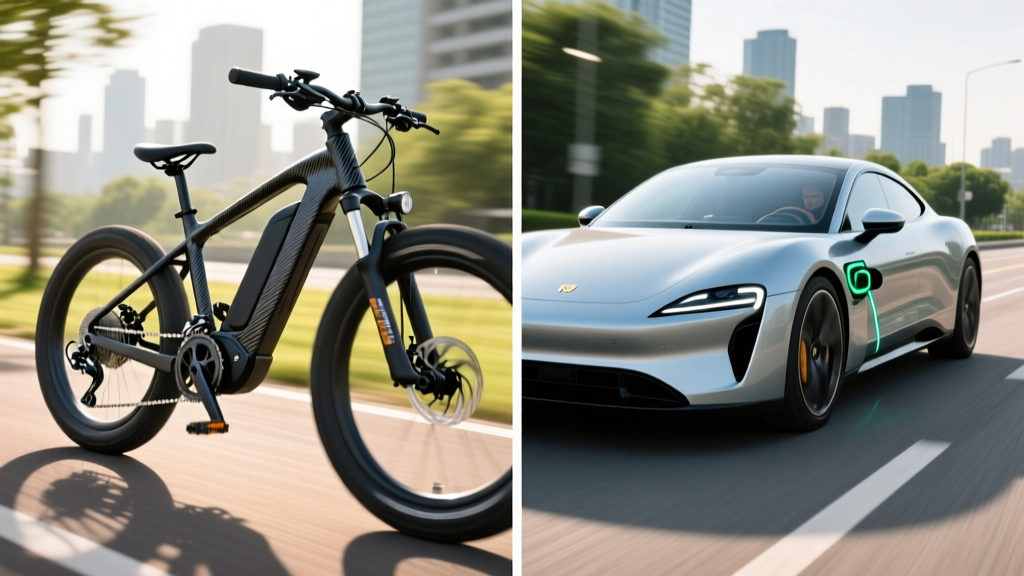
Electric bikes with high torque (typically 60–100+ Nm from mid-drive or hub motors rated 500–1,500W peak) deliver punchy acceleration for hills and cargo hauling, but they exist in a different ownership category than electric cars. If your goal is daily commuting under 30 miles round-trip, a high-torque e-bike can cost $2,000–$6,000 upfront with pennies-per-mile energy costs and zero fuel. If you need highway range, weather protection, cargo space, or passenger capacity, a used or new EV in the $25,000–$45,000 range remains the practical choice. This guide compares both paths with hard numbers so you can decide which electrifies your commute best.
Why High Torque Matters on an Electric Bike
Torque is the rotational force that gets you moving from a stop and up steep grades. On electric bikes with high torque, the motor delivers peak twist instantly — no downshifting, no lag. Most commuter e-bikes in the 250–500W range produce 40–60 Nm of torque, which handles flat terrain fine. But if you haul groceries, kids, or climb sustained 8%+ grades, you want 80–120 Nm from a mid-drive motor (like Bosch Performance Line CX or Shimano EP8) or a high-wattage hub motor.
High-torque e-bikes typically feature:
- Motor output: 500–1,500W peak, 80–120 Nm torque
- Battery: 500–900 Wh (watt-hours — the e-bike equivalent of kWh in a car)
- Range: 25–60 miles per charge depending on assist level and terrain
- Top assisted speed: 20 mph (Class 1/2) or 28 mph (Class 3) per U.S. regulations
- Price: $2,500–$6,500 for quality models from Trek, Riese & Müller, Rad Power, or Specialized
E-Bike vs. Electric Car: The Real-World Comparison
Before dismissing an e-bike as a toy, consider the math for a 15-mile round-trip commute — the average U.S. one-way commute is roughly 16 miles according to Census data. Here's how a high-torque e-bike stacks up against a popular compact EV:
| Metric | High-Torque E-Bike (Class 3) | 2026 Chevy Equinox EV (2LT) | Gas Sedan (30 MPG combined) |
|---|---|---|---|
| Upfront Cost | $3,500–$5,500 | ~$43,000 MSRP (~$35,500 after §30D credit if eligible) | ~$28,000 |
| Energy Cost / Mile | ~$0.005 (charging at $0.15/kWh) | ~$0.045 (3 mi/kWh at $0.15/kWh) | ~$0.12 ($3.60/gal, 30 MPG) |
| Annual Fuel/Energy (7,500 mi) | $37 | $337 | $900 |
| Annual Insurance | $0–$200 (optional) | $1,600–$2,400 | $1,200–$1,800 |
| Maintenance / Year | $100–$250 (tires, chain, brake pads) | $300–$600 (tires, cabin filter, fluid top-off) | $600–$1,200 (oil, brakes, filters) |
| Range per Charge/Tank | 30–60 miles | 315 miles EPA (expect ~260 highway) | 400+ miles |
| Commute Time (15 mi, urban) | 35–50 min (bike lanes, no parking search) | 25–40 min (traffic, parking) | 25–40 min |
| Weather Comfort | Poor without gear; rain/cold/heat exposure | Full climate control | Full climate control |
The e-bike wins on operating cost by a massive margin — roughly $1,500–$2,500/year in savings versus a gas car, and $1,000–$2,000/year versus an EV when you factor in insurance. But the EV wins on range, comfort, safety, cargo, and all-weather usability.
Real Costs: E-Bike Ownership vs. EV Ownership Over 5 Years
Let's model a 5-year, 37,500-mile ownership cycle for both options, assuming a 15-mile round-trip commute 250 days/year:
| Cost Category | High-Torque E-Bike | 2026 Compact EV (post-credit) |
|---|---|---|
| Purchase Price | $4,500 | $35,500 |
| Federal Tax Credit | None (e-bikes not eligible for §30D) | Up to $7,500 via IRS §30D (income/MSRP/sourcing limits apply) |
| Energy (5 years) | $185 | $1,685 |
| Insurance (5 years) | $500 | $10,000 |
| Maintenance (5 years) | $875 | $2,250 |
| Battery Replacement Reserve | $600 (new pack at year 4–5) | Covered by 8-yr/100,000-mi warranty |
| Depreciation (5 years) | ~$2,500 | ~$12,000 |
| Total 5-Year Cost | ~$9,160 | ~$62,085 |
The e-bike saves roughly $50,000 over five years. But this comparison only works if your lifestyle allows e-bike commuting — fair weather, safe bike infrastructure, no highway segments, and flexibility for the days you need a car.
Charging and Infrastructure: What First-Time Buyers Must Know
Whether you're plugging in an e-bike or an EV, home charging access is the single biggest ownership variable.
E-Bike Charging
- Charger: Included with purchase; plugs into a standard 120V outlet
- Charge time: 3–6 hours for a 500–900 Wh battery (no special wiring needed)
- Cost per full charge: $0.07–$0.14 at average U.S. electricity rates
- Location: Charge indoors, in a garage, or at your desk — no installation required
EV Home Charging
- Level 1 (120V): Adds ~3–5 miles of range per hour — adequate only if you drive under 30 miles/day and can charge overnight (10+ hours)
- Level 2 (240V): Adds 25–44 miles per hour at 7.7–11.5 kW; a full overnight charge for any EV. Requires a dedicated 40–60A circuit.
- Installation cost: $500–$2,500 for a straightforward install near the panel; $2,000–$5,000+ if a panel upgrade (100A to 200A) is needed. Always get a quote from a licensed electrician.
- DC Fast Charging: 50–350 kW at public stations; a 2026 Equinox EV peaks at ~150 kW, reaching 10–80% in roughly 30 minutes. Expect charge-curve taper above 80% SoC.
If you rent an apartment without charging access, an e-bike you can carry inside to charge is a massive practical advantage. For EV ownership, reliable home Level 2 charging is nearly mandatory for convenience — public-only charging adds time, cost, and frustration.
Common Misconceptions, Corrected with Data
| Myth | Fact |
|---|---|
| "E-bikes with high torque are basically electric motorcycles" | U.S. Class 1–3 e-bikes are legally limited to 750W continuous (1 hp) and 20–28 mph assisted. They're classified as bicycles, not motor vehicles, in most states. |
| "EVs are worse for the environment because of battery mining" | Lifecycle analyses from the EPA consistently show EVs produce fewer emissions over their lifetime than gas cars, even accounting for battery production. The grid gets cleaner every year. |
| "E-bike batteries degrade quickly and cost a fortune to replace" | Quality lithium-ion e-bike packs (Samsung, LG, Bosch cells) retain 70–80% capacity after 500–1,000 full cycles. Replacement packs cost $400–$800, and most riders won't need one for 4–6 years. |
| "You can't ride an e-bike in the rain or cold" | Most quality e-bikes are IP-rated for water resistance. With fenders, rain gear, and studded winter tires, year-round riding is viable in most U.S. climates — though extreme cold (below 20°F) reduces battery range by 20–30%. |
| "EVs need battery replacements at 100,000 miles" | Modern NMC and LFP EV batteries are warrantied for 8 years/100,000 miles with a 70% capacity retention floor. Real-world data from fueleconomy.gov and fleet studies show most packs retain 85–90% at 100k miles. |
Decision Framework: E-Bike, EV, or Both?
Choose a high-torque e-bike if:
- Your one-way commute is under 20 miles with safe bike infrastructure
- You live in a mild-to-moderate climate or are willing to gear up for weather
- You lack home EV charging access (apartment, street parking)
- You want to minimize total transportation cost to under $2,000/year
- You already own or can borrow/rent a car for weekend trips and bad weather
Choose an electric car if:
- Your commute includes highway segments or exceeds 25 miles one-way
- You regularly carry passengers, large cargo, or need towing capacity
- You live in a region with harsh winters, extreme heat, or heavy rain
- You can install a Level 2 home charger (garage or driveway with panel capacity)
- You value crash safety, airbags, and climate-controlled comfort daily
Choose both (the optimal setup for many households):
- Use the e-bike for 70–80% of daily trips (commute, errands under 10 miles)
- Use the EV for highway travel, bad weather, family hauling, and longer trips
- Combined annual energy cost for both: under $500
- This two-vehicle approach often costs less per year than owning a single gas car
Federal Incentives and Tax Credits: What Applies Where
Understanding what financial help exists is critical for your purchase decision:
- Electric cars: The IRS §30D Clean Vehicle Credit offers up to $7,500 for new EVs meeting battery sourcing, MSRP caps ($55,000 cars / $80,000 SUVs and trucks), and buyer income limits ($150K single / $300K joint). As of 2026, the credit can be transferred at the point of sale, reducing your purchase price directly. Check current eligibility at irs.gov.
- Electric bikes: E-bikes are not eligible for the §30D federal credit. Some states and local utilities offer rebates ($200–$1,500) — check your state energy office or utility provider. A federal e-bike tax credit has been proposed in Congress but has not passed as of early 2026.
- Used EVs: The §25E credit offers up to $4,000 (30% of sale price) for used EVs under $25,000, with lower income caps ($75K single / $150K joint).
Frequently Asked Questions
How much torque do I actually need on an e-bike?
For flat urban commuting, 40–60 Nm is sufficient. For hilly terrain, cargo loads over 30 lbs, or riders over 220 lbs, target 80–120 Nm from a mid-drive motor. Hub motors offer less torque but are simpler and cheaper to maintain.
Can I ride a high-torque e-bike on bike paths and trails?
Class 1 e-bikes (pedal-assist only, 20 mph max) are allowed on most multi-use paths. Class 3 (28 mph) may be restricted. Class 2 (throttle-equipped, 20 mph) falls in between. Always check local regulations — they vary by city, county, and state.
Is an e-bike safer than a car for commuting?
No. Per NHTSA data, cyclists face significantly higher fatality risk per mile traveled than car occupants. However, protected bike lanes, lower urban speeds, and e-bike visibility features (lights, reflective gear) reduce risk substantially. Your route's infrastructure quality is the biggest safety variable.
What happens to e-bike range in cold weather?
Lithium-ion batteries lose 20–30% effective range below 32°F and up to 40% below 10°F. Store and charge the battery indoors, and expect a 500 Wh pack rated for 40 miles in summer to deliver roughly 28–32 miles in January. EVs experience similar but less dramatic losses — typically 15–25% at highway speeds in freezing temps.
Should I buy a used EV or a new e-bike with the same budget?
At $4,000–$5,000, you can buy a premium new e-bike or a high-mileage early-2020s used EV (Nissan Leaf, Chevy Bolt). The e-bike gives you reliable daily commuting with minimal ongoing cost. The used EV gives you weather protection and highway capability but may need a $5,000–$15,000 battery replacement eventually if the pack is degraded. Your commute distance and climate should drive this choice.