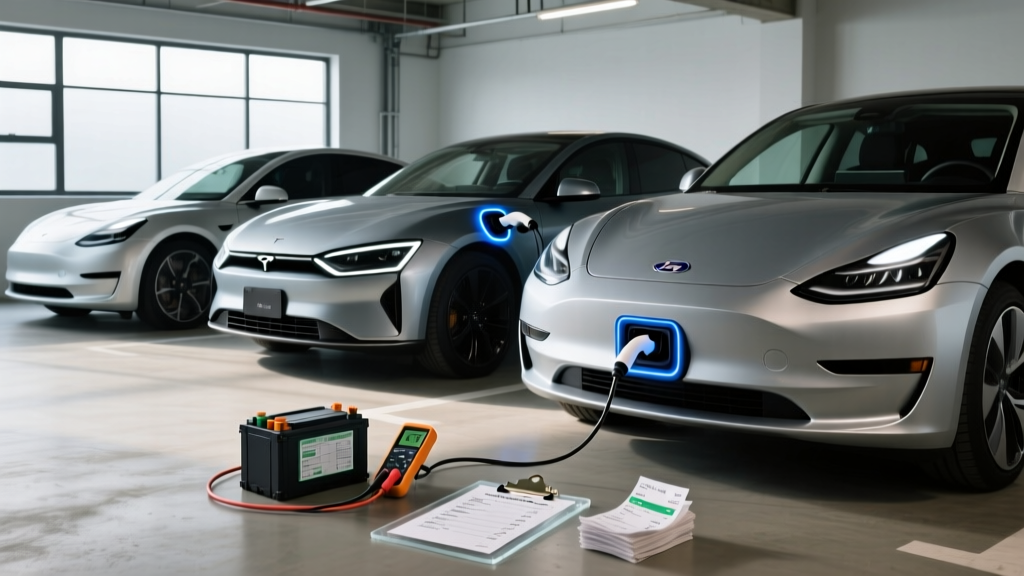
The Quick Answer
If you're searching for electric bikes for adults 40 mph capable of commuting at car-like speeds, you're actually looking at what federal law classifies as an electric motorcycle — not an e-bike. True 40 mph electric two-wheelers cost $4,000–$8,000, require a motorcycle license in most states, lack federal EV tax credits, and offer 40–80 miles of range. For $10,000–$18,000 after incentives, a used or new entry-level EV like the 2026 Chevrolet Equinox EV or Nissan LEAF delivers 200+ miles of EPA range, full weather protection, highway legality, and dramatically lower cost-per-mile. Before spending on a high-speed e-bike, run the numbers below.
What "40 MPH Electric Bike" Actually Means Under Federal Law
The term "electric bike" carries a specific legal definition in the United States. Under the Consumer Product Safety Commission's federal guidelines, a low-speed electric bicycle is limited to a motor producing no more than 750 watts (1 hp) and a top motor-assisted speed of 20 mph on level ground. Many states extend this to 28 mph for Class 3 pedal-assist e-bikes.
Any two-wheeler capable of 40 mph under motor power alone crosses the legal threshold into electric motorcycle territory. This isn't a semantic distinction — it triggers entirely different requirements:
- Licensing: A motorcycle endorsement (M-class license) is required in nearly every state
- Registration: The vehicle must be titled, registered, and display a license plate
- Insurance: Motorcycle liability insurance is mandatory
- Equipment: DOT-compliant lighting, mirrors, horn, and often a motorcycle helmet
- Where you can ride: Bike lanes and multi-use paths are off-limits; you're restricted to roads
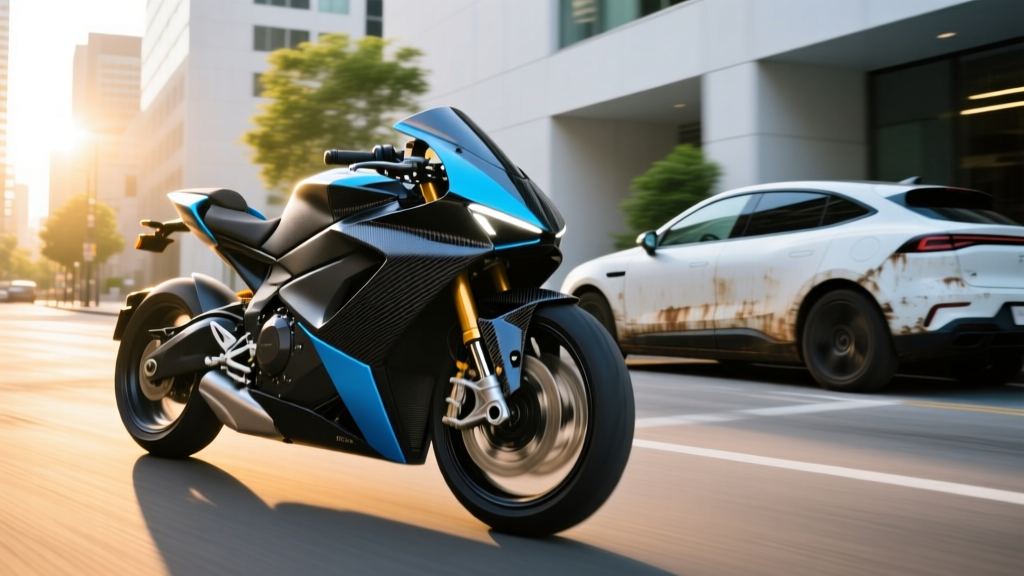
Popular models in this category — such as the Super73-RX, Onyx RCR, or Sur-Ron Light Bee (when derestricted) — market heavily to the "electric bike" search audience, but functionally and legally, they are low-power electric motorcycles. Understanding this distinction is essential before you evaluate cost and practicality against a four-wheeled EV.
Head-to-Head Cost: 40 MPH E-Bike vs. Entry-Level EV
The most common reason buyers search for high-speed electric bikes is commuting economics. Let's test that assumption against actual numbers, comparing a representative 40 mph electric motorcycle against a 2026 Chevrolet Equinox EV LT (one of the most affordable new EVs currently sold in the U.S.) and a used 2023 Nissan LEAF S+.
| Category | 40 MPH Electric Motorcycle (e.g., Onyx RCR) | 2026 Chevy Equinox EV LT (New) | 2023 Nissan LEAF S+ (Used, ~30k mi) |
|---|---|---|---|
| Purchase Price | $6,500 | $33,600 (MSRP) | $14,000–$17,000 |
| Federal Tax Credit (§30D) | $0 (not eligible — 2/3 wheels) | Up to $7,500 (point-of-sale, subject to income & sourcing rules per IRS §30D) | Up to $4,000 (used EV credit, income-capped) |
| Effective Price After Credits | $6,500 | $26,100 | $10,000–$13,000 |
| EPA Range | ~50–75 mi (manufacturer claim, no EPA test) | 315 mi (EPA est. per fueleconomy.gov) | 212 mi (EPA est.) |
| Real-World Range (highway/cold) | 35–55 mi | ~250–270 mi highway; ~210 mi in freezing temps | ~160–180 mi highway; ~130 mi in freezing temps |
| Battery Capacity | ~2.4 kWh (lithium-ion, unspecified chemistry) | 85 kWh usable (NMC) | 60 kWh usable (NMC) |
| Charging: Level 2 (Full) | ~3 hours (standard 120V wall outlet, ~0.8 kW) | ~9.5 hours at 11.5 kW (Level 2, 240V) | ~10 hours at 7.2 kW (Level 2, 240V) |
| DC Fast Charging | None | Up to 150 kW (10–80% in ~32 min) | CHAdeMO, up to 100 kW (10–80% in ~40 min) |
| Top Speed | 40 mph | 105+ mph | 95 mph |
| Annual Insurance (avg.) | $400–$900 (motorcycle policy) | $1,400–$2,000 | $1,200–$1,700 |
| Weather Protection | None (rider exposed) | Full enclosed cabin, HVAC, heat pump | Full enclosed cabin, HVAC |
| Cargo Capacity | Backpack or small saddlebag | 26.4 cu ft (rear seats up) | 23.6 cu ft (rear seats up) |
| Passenger Capacity | 1 (some models allow pillion) | 5 | 5 |
Real-World Ownership: Where the 40 MPH E-Bike Falls Short
The purchase price of a high-speed electric motorcycle looks attractive until you factor in the conditions of daily use. Here are the constraints that rarely appear in marketing materials:
Range Reality vs. Advertised Claims
Most 40 mph electric motorcycles advertise 50–75 miles of range, but those figures assume 20–25 mph average speeds, flat terrain, a 170-lb rider, and moderate temperatures. At a sustained 40 mph, aerodynamic drag increases with the square of velocity — meaning your battery depletes roughly 2.5× faster than at 25 mph. Expect 35–50 miles of real-world range at full speed, dropping to 25–35 miles in temperatures below 40°F due to lithium-ion internal resistance increase and any rider-added heating gear.
By contrast, even a used LEAF with modest battery degradation (expect ~85–90% state of health at 30,000 miles) still delivers 160+ real-world highway miles — enough for round-trip commutes that a two-wheeler simply cannot handle without mid-day recharging.
The Charging Infrastructure Problem
High-speed electric motorcycles lack DC fast charging entirely. If your battery depletes mid-ride, you're looking at a 3-hour wall-outlet charge to resume — there's no pulling into an Electrify America or Tesla Supercharger stall for a 20-minute top-up. For riders with predictable, short commutes and reliable home charging, this isn't disqualifying. For anyone with variable routes or apartment living without dedicated outlet access, it is.
Seasonal Practicality
Riding a 40 mph two-wheeler in rain, snow, ice, or temperatures below 35°F is either dangerous or impossible for most commuters. That means 3–5 months of the year in northern U.S. climates, the e-bike sits unused — and you still need a second vehicle or alternative transportation. An EV operates identically in all weather, with battery preconditioning, traction control, and heated cabins mitigating cold-range loss.
5-Year Cost of Ownership Breakdown
Purchase price is only the entry fee. Here's what five years of commuting (12,000 miles/year) actually costs across all three options. Electricity cost assumed at $0.14/kWh (national average); gasoline at $3.40/gallon for the gas-car baseline.
| 5-Year Cost Factor | 40 MPH E-Moto | 2026 Equinox EV (after credit) | Used LEAF (after credit) | 2026 Gas Compact (e.g., Civic, 33 MPG) |
|---|---|---|---|---|
| Effective Purchase | $6,500 | $26,100 | $11,500 | $26,000 |
| Energy/Fuel (60,000 mi) | $350 (electric) | $2,520 (electric) | $2,800 (electric) | $6,180 (gasoline) |
| Insurance (5 years) | $3,250 | $8,500 | $7,250 | $7,000 |
| Maintenance (tires, brakes, fluids) | $800 | $1,800 | $2,200 | $4,500 |
| Estimated Depreciation | $3,900 (60%) | $10,440 (40%) | $5,750 (50%) | $10,400 (40%) |
| Total 5-Year Cost | $14,800 | $49,360 | $29,500 | $54,080 |
| Cost Per Mile | $0.25/mi | $0.82/mi | $0.49/mi | $0.90/mi |
Note: The e-moto's lower total cost reflects its limitations — single rider, no weather protection, 50-mile range ceiling, and high depreciation on a niche vehicle. It is not a like-for-like substitute for a car.
Common Misconceptions About High-Speed Electric Bikes
| Myth | Fact |
|---|---|
| "I don't need a license or insurance for a 40 mph e-bike." | Any motorized two-wheeler exceeding 20 mph under motor power alone is classified as a motorcycle by the NHTSA and most state DMVs. You need an M endorsement, registration, and liability insurance. |
| "It qualifies for the $7,500 federal EV tax credit." | The §30D Clean Vehicle Credit applies only to four-wheeled vehicles with a GVWR under 14,000 lbs. Two- and three-wheeled electric vehicles lost their separate federal credit after 2021. No current federal incentive exists for electric motorcycles as of 2026. |
| "I can ride it in the bike lane to avoid traffic." | Once classified as a motorcycle, it is illegal in bicycle infrastructure in virtually every U.S. jurisdiction. You're in the car lane — with all the exposure and none of the protection. |
| "The battery will last as long as an EV battery." | EV batteries use sophisticated thermal management (liquid cooling) and are warrantied for 8 years/100,000 miles with guaranteed capacity retention (typically ≥70%). Small electric motorcycle batteries are air-cooled, lack BMS sophistication, and typically carry 1-year warranties. Expect noticeable degradation within 2–3 years of daily use. |
| "Charging is free because I can plug into any outlet." | Charging from a standard 120V outlet at ~0.8 kW takes 3+ hours for a full charge and still costs ~$0.35 per charge at average electricity rates. It's cheap — but not free, and not fast enough for mid-day top-ups. |
Decision Framework: Which Option Actually Fits Your Commute?
Choose the 40 MPH Electric Motorcycle If:
- Your one-way commute is under 20 miles with a reliable charging outlet at both ends
- You live in a mild climate (rarely below 45°F, minimal rain months) or accept seasonal downtime
- You already own or have access to a second vehicle for inclement weather, passengers, and cargo
- You hold or are willing to obtain a motorcycle license and accept the safety exposure
- Your budget is strictly under $7,000 and you cannot access financing for a car
Choose a Used EV (LEAF, Bolt EV, Model 3) If:
- Your one-way commute exceeds 25 miles or includes highway segments
- You need year-round, all-weather transportation
- You carry passengers, groceries, or cargo regularly
- You want DC fast charging for road trips or mid-day top-ups
- Your budget is $10,000–$18,000 and you qualify for the used clean vehicle credit (up to $4,000, income-capped at $75K single / $150K joint)
Choose a New EV (Equinox EV, Hyundai Kona Electric) If:
- You want a full battery warranty (8 yr / 100,000 mi) and latest safety tech
- You qualify for the §30D credit at point of sale (income caps: $150K single / $300K joint; vehicle MSRP caps: $55K cars / $80K SUVs)
- You need 200+ miles of range with fast-charge capability for road trips
- This is your primary or only vehicle
What a First-Time EV Buyer Should Know Before Choosing
If the high-speed e-bike search led you here because you're trying to avoid the perceived complexity or cost of EV ownership, consider these realities:
Home charging is simpler than you think. A Level 2 (240V) home charger installation typically costs $800–$2,500 including equipment and electrician labor, assuming your electrical panel has capacity. Many EV owners simply use a standard 120V outlet (Level 1), which adds roughly 3–5 miles of range per hour — sufficient for daily commutes under 40 miles.
Tax credits are now point-of-sale. As of 2024, the §30D credit can be transferred to the dealer at purchase, reducing your out-of-pocket cost immediately rather than waiting for a tax refund. This applies to both new (up to $7,500) and qualifying used EVs (up to $4,000), though battery sourcing and critical mineral requirements continue to tighten eligibility — always verify current rules at irs.gov before purchasing.
Maintenance costs are dramatically lower. EVs eliminate oil changes, transmission fluid, spark plugs, timing belts, and exhaust system repairs. Regenerative braking extends brake pad life to 80,000–120,000+ miles. The primary recurring costs are tires (EVs are heavier and wear tires ~20% faster than gas cars), cabin air filters, and windshield washer fluid.
Insurance is higher — budget for it. EV insurance premiums run 15–25% higher than comparable gas vehicles due to repair cost structures and battery replacement risk. Get quotes before purchasing; some insurers (GEICO, Progressive, State Farm) offer specific EV discounts.
Frequently Asked Questions
Can I legally ride a 40 mph electric bike without a motorcycle license?
No. In nearly all U.S. states, any electric two-wheeler capable of exceeding 20 mph under motor power alone (without pedaling) is classified as a motorcycle and requires an M-class license endorsement, registration, insurance, and DOT-compliant equipment. The federal CPSC definition of a "low-speed electric bicycle" caps motor-only speed at 20 mph.
Why don't high-speed electric bikes qualify for EV tax credits?
The IRS §30D Clean Vehicle Credit is specifically limited to four-wheeled motor vehicles with a gross vehicle weight rating under 14,000 pounds, purchased for primary use on public roads. Two-wheeled and three-wheeled electric vehicles previously had a separate, smaller credit (up to $2,500 under §30D(g)), but that provision expired and was not renewed as of 2026. Always check the IRS website for current-year rules.
How does cold weather affect a 40 mph electric motorcycle's range?
Lithium-ion batteries experience increased internal resistance in cold temperatures, reducing usable capacity by 20–40% below freezing. Combined with the rider needing heated gear (which draws from the same battery), expect real-world range at 40 mph to drop from ~50 miles to 25–35 miles in temperatures below 35°F. EVs with liquid-cooled battery packs and heat pumps lose a smaller percentage (15–30%) because thermal management systems precondition the battery.
Is a used Nissan LEAF or Chevy Bolt a better value than a high-speed e-bike?
For total transportation capability — yes. A used LEAF or Bolt EV (2019–2023 model years) typically sells for $12,000–$18,000, qualifies for up to $4,000 in used-EV tax credits, offers 150–250 miles of real-world range, supports DC fast charging, and provides full weather protection for five passengers. The effective post-credit cost is comparable to a premium 40 mph electric motorcycle, with far greater utility. The e-bike wins only on absolute lowest purchase price and parking convenience.
What's the cheapest legitimate EV I can buy in 2026?
The 2026 Nissan LEAF S starts at approximately $28,140 MSRP and qualifies for the full $7,500 §30D credit (verify battery sourcing eligibility at purchase), bringing the effective price to ~$20,640. The Chevrolet Equinox EV LT starts at ~$33,600 with similar credit eligibility. On the used market, a 2021–2023 Chevy Bolt EV can be found for $13,000–$16,000, potentially dropping to $9,000–$12,000 after the $4,000 used-EV credit.