Quick Answer: Should You Buy an Electric Backhoe?
An electric backhoe (more precisely called an electric backhoe loader) makes financial sense in 2026 if you work primarily on urban or suburban job sites with access to Level 2 charging, run machines 6–8 hours daily, and can absorb a 40–60% higher upfront purchase price in exchange for 50–70% lower energy costs and near-zero scheduled powertrain maintenance. Models like the CASE 580EV and JCB 3CX Electric deliver roughly 8 hours of typical mixed-duty operation per charge from ~90–120 kWh LFP battery packs. However, if your work is remote, requires continuous heavy trenching for 10+ hours, or lacks reliable charging infrastructure, a diesel backhoe remains the more practical choice today.
What Is an Electric Backhoe (and What It Is Not)
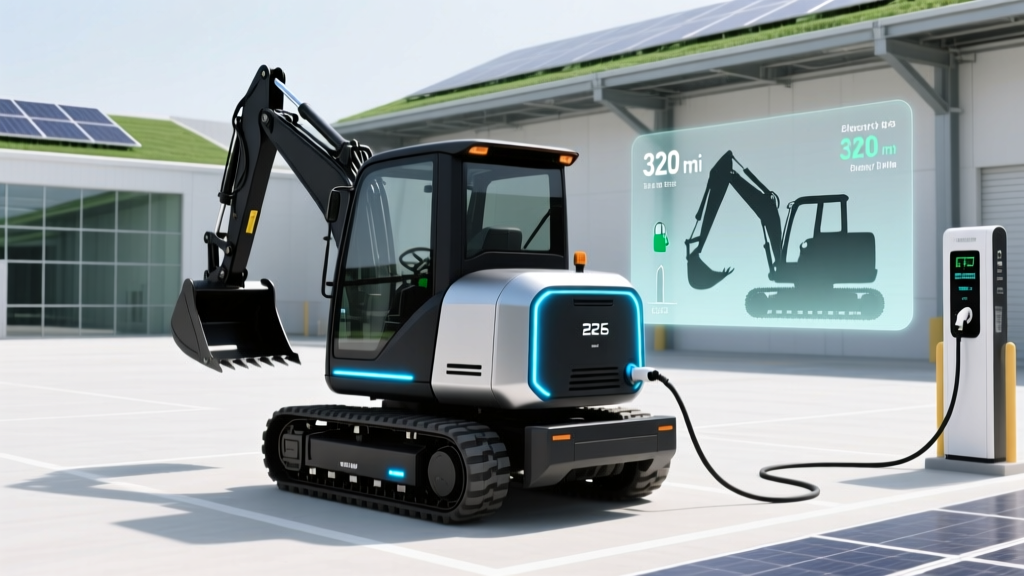
The search term "electric backhoe" typically refers to a full-size electric backhoe loader — the two-ended machine with a front bucket and rear excavator arm used in construction, utility work, landscaping, and agriculture. These are not compact mini-excavators or skid steers, though those categories are electrifying rapidly as well.
As of early 2026, the production electric backhoe loader market is narrow but real. The primary models available or taking orders in North America include:
- CASE 580EV (Project Zeus) — The most widely publicized production electric backhoe loader, developed in partnership with Green Machine Equipment. Uses a ~90 kWh lithium-ion battery pack.
- JCB 3CX Electric — Announced and entering limited production, with a battery pack in the 90–120 kWh range.
- Volvo CE electric compact backhoe/excavator lineup — Volvo offers the ECR25 Electric compact excavator and related models, though not a full-size backhoe loader in the traditional sense.
Most other "electric backhoe" results point to compact electric excavators (1.5–6 ton class) from manufacturers like Takeuchi (TB216e), Bobcat (E10e), and Volvo (ECR18 Electric). These are legitimate electric digging machines, but they serve a different use case than a full backhoe loader.
Electric Backhoe vs Diesel: The Numbers That Matter
The core buying decision comes down to total cost of ownership over a 5–7 year machine life. Here is how a typical electric backhoe loader compares to its diesel equivalent based on available specifications and real-world operating data:
| Specification | Electric Backhoe Loader (e.g., CASE 580EV) | Diesel Backhoe Loader (e.g., CASE 580SN) |
|---|---|---|
| Base Price (approx.) | $140,000–$180,000 | $95,000–$120,000 |
| Battery / Fuel Capacity | ~90 kWh LFP battery | ~30-gallon diesel tank |
| Typical Operating Time per Full Charge/Tank | 6–8 hours (mixed duty) | 8–10 hours |
| Energy/Fuel Cost per Operating Hour | $1.50–$3.50 (electricity at $0.12–$0.18/kWh) | $6.00–$9.00 (diesel at $3.80–$4.50/gal) |
| Peak Power Output | ~90–110 HP equivalent (electric motor) | ~97 HP (diesel engine) |
| Scheduled Powertrain Maintenance (annual) | $200–$500 (coolant, filters) | $2,000–$4,000 (oil, filters, DEF, fuel system) |
| Noise Level at Operator Station | ~65–70 dBA | ~80–85 dBA |
| Tailpipe Emissions | Zero | Tier 4 Final diesel emissions |
| Estimated 5-Year Energy/Fuel Cost (2,000 hrs/yr) | $15,000–$35,000 | $60,000–$90,000 |
| Estimated 5-Year Maintenance Cost | $2,500–$5,000 | $15,000–$25,000 |
Sources: CASE Construction Equipment official specifications; U.S. Energy Information Administration (EIA) diesel pricing data; Construction Equipment magazine field reports.
Real-World Range and Battery Performance
Unlike road-going EVs measured in EPA miles, electric construction equipment is rated in operating hours, and those hours vary dramatically with duty cycle.
Operating Time Reality Check
Manufacturer claim: Up to 8 hours of typical operation per full charge (CASE 580EV, ~90 kWh pack).
Real-world expectations:
- Light/intermittent duty (grading, light trenching, frequent idle): 7–9 hours
- Mixed duty (alternating digging and loading): 5–7 hours
- Heavy continuous trenching (full hydraulic demand): 3–5 hours
- Cold weather (below 32°F / 0°C): Reduce all figures by 15–25% due to battery internal resistance and cab heating load
The battery chemistry matters here. Most electric construction equipment uses LFP (lithium iron phosphate) cells rather than the NMC chemistry common in passenger EVs. LFP offers a critical advantage for work machines: it tolerates daily 100% charging without the degradation concerns that NMC batteries face, and it has a longer cycle life — typically 3,000–5,000 full cycles before reaching 80% state of health. For a backhoe charged once daily, that translates to 10–15+ years of battery service life.
Charging an Electric Backhoe: What You Actually Need
This is where most potential buyers hit their first real obstacle. Charging a 90 kWh battery pack is not like plugging in a passenger EV overnight.
| Charging Method | Power Level | Time to Full (90 kWh) | Infrastructure Needed |
|---|---|---|---|
| Standard 120V outlet (Level 1) | ~1.4 kW | 60+ hours | None — standard outlet |
| Level 2 (240V, 40A) | ~9.6 kW | 9–10 hours | Dedicated circuit, electrician install |
| Level 2 (240V, 80A) | ~19.2 kW | 4.5–5 hours | Upgraded panel likely required |
| DC Fast Charge (CCS, if equipped) | 40–60 kW | 1.5–2 hours (10–80%) | Commercial DC charger ($25,000–$50,000 installed) |
Key takeaway: Most electric backhoe owners will need at minimum a Level 2 charger at 80 amps installed at their shop or yard to achieve a full overnight charge. This typically requires:
- A 200-amp or larger electrical service panel at the charging location
- A licensed electrician to install a hardwired Level 2 EVSE rated for industrial use
- Installation costs of $3,000–$8,000 for the charger and electrical work (more if a panel upgrade is needed, which can add $2,000–$5,000)
- For DC fast charging capability (if the machine supports it): commercial-grade CCS chargers running $25,000–$50,000+ installed, typically requiring 480V three-phase power
If your machines return to a central yard each night, Level 2 overnight charging is practical and keeps energy costs at off-peak utility rates. If your machines stay on remote job sites, charging becomes a significant logistical challenge — and this is the single biggest reason many contractors still choose diesel.
Total Cost of Ownership: The 5-Year Breakdown
The higher sticker price of an electric backhoe is offset by dramatically lower operating costs — but only if you run the machine enough hours to realize those savings.
| Cost Category (5 Years, 2,000 hrs/yr) | Electric Backhoe | Diesel Backhoe |
|---|---|---|
| Purchase Price | $160,000 | $105,000 |
| Energy/Fuel | $25,000 | $75,000 |
| Powertrain Maintenance | $3,500 | $20,000 |
| Hydraulic System Maintenance | $8,000 | $8,000 |
| Charging Infrastructure (amortized) | $5,000 | $0 |
| Insurance (estimated) | $9,000 | $7,500 |
| Total 5-Year Cost | $210,500 | $215,500 |
| Cost per Operating Hour | $21.05 | $21.55 |
At 2,000 hours per year, the electric backhoe reaches cost parity with diesel in roughly 4–5 years. At higher utilization (3,000+ hours/year), payback accelerates to 2.5–3.5 years. Below 1,000 hours/year, the diesel machine will likely remain cheaper over its life due to the higher upfront cost of the electric model not being offset by fuel savings.
Tax incentives and grants: Some states and local air quality districts offer substantial grants or rebates for zero-emission off-road construction equipment — sometimes $20,000–$50,000+ per machine through programs like California's CARB clean equipment incentives. Federal tax treatment for off-road electric equipment differs from the §30D consumer EV credit; consult a tax professional about §179 expensing, bonus depreciation, and any applicable §45W commercial clean vehicle credits that may apply to your fleet purchase.
Common Misconceptions About Electric Backhoes
| Myth | Fact |
|---|---|
| "Electric backhoes don't have enough power for real digging." | Electric motors deliver instant peak torque from zero RPM. The CASE 580EV produces torque comparable to its diesel counterpart at the hydraulic pump, with no turbo lag or RPM buildup needed. Operators consistently report the machine feels more responsive in the dig cycle. |
| "The battery will need replacing in a few years." | LFP batteries in construction equipment are rated for 3,000–5,000 cycles to 80% capacity. At one charge cycle per day, that is 10–15+ years — typically outlasting the machine's economic service life. |
| "You can charge it from any job site outlet." | A standard 120V outlet provides roughly 1.4 kW — it would take 60+ hours to fill a 90 kWh pack. You need dedicated Level 2 infrastructure for practical daily operation. |
| "Electric backhoes eliminate all maintenance." | They eliminate powertrain maintenance (no oil changes, no fuel filters, no DEF, no exhaust system). The hydraulic system, pins, bushings, undercarriage, and attachments still require regular service — and these represent a significant portion of any backhoe's maintenance budget. |
| "Electric machines can't work in cold weather." | They can, but expect 15–25% reduced operating time below freezing due to battery chemistry limitations and cab heating energy draw. Battery preconditioning features (where available) help mitigate this. |
Decision Framework: Electric or Diesel?
Choose an Electric Backhoe If:
- Your machines return to a central yard nightly and you can install Level 2 charging there
- You operate 1,500+ hours per year, making fuel savings meaningful
- You work in urban environments with noise ordinances or emissions restrictions (indoor demolition, utility work in city centers, school/hospital campuses)
- You bid on public projects that increasingly require or incentivize zero-emission equipment
- Your local utility offers off-peak commercial rates below $0.10/kWh, dramatically improving the cost equation
- You qualify for state or local clean equipment grants that reduce the effective purchase price by $20,000+
Stick with Diesel (for Now) If:
- Your work is on remote or rotating job sites with no reliable electrical infrastructure
- You run machines 10+ hours daily in heavy continuous digging — the battery simply cannot sustain this without mid-shift charging
- You operate fewer than 1,000 hours per year — the fuel savings will not offset the higher purchase price
- You work frequently in extreme cold (below 10°F) where range loss compounds with already tight operating windows
- You need immediate parts/service availability in rural areas where electric construction equipment dealerships and technicians are still scarce
What First-Time Electric Backhoe Buyers Should Know
If you are considering your first electric construction machine, plan for these practical realities:
- Electrical site assessment first. Before ordering any machine, have a licensed electrician evaluate your shop or yard's electrical service. You may need a panel upgrade to 200A or 400A service, especially if you plan to charge multiple machines. Budget $2,000–$10,000 for this work.
- Dealer support is still developing. Electric construction equipment is new enough that not every dealer has trained technicians. Confirm your local dealer has certified high-voltage service capability and parts availability before committing.
- Operator training is different. Electric backhoes feel different — quieter, with instant torque response and no engine sound cues for load. Plan a half-day of supervised operator familiarization.
- Resale value is uncertain. The used market for electric backhoes is essentially nonexistent in 2026. If you typically sell machines at 5–7 years, recognize that residual values are speculative. Some buyers mitigate this through leasing programs where available.
- Insurance may cost 10–20% more initially due to the higher replacement cost of the battery pack and limited actuarial data. Get quotes before purchasing.
Frequently Asked Questions
Can I get a federal tax credit for buying an electric backhoe?
The §30D Clean Vehicle Credit applies to on-road consumer vehicles, not off-road construction equipment. However, the §45W Commercial Clean Vehicle Credit may apply to certain qualifying commercial electric vehicles, and §179 expensing and bonus depreciation can provide substantial tax benefits for equipment purchases. State and local air quality district grants (especially in California, New York, and other states with active clean construction programs) may offer $20,000–$50,000+ per machine. Always consult a tax professional and check your state's current incentive programs — rules change frequently.
How long does an electric backhoe battery last before replacement?
LFP batteries used in current electric backhoes are rated for 3,000–5,000 full charge cycles to 80% state of health. At one daily charge cycle, this equates to roughly 10–15 years. Most machines will reach the end of their economic service life before the battery requires replacement. If replacement is needed, expect costs in the $15,000–$30,000 range for a full pack, though prices continue to decline.
Can an electric backhoe run auxiliary hydraulic attachments?
Yes. Electric backhoe loaders typically maintain standard auxiliary hydraulic circuits for attachments like breakers, augers, and thumbs. The hydraulic pump is driven by the electric motor, and auxiliary flow rates are comparable to diesel equivalents. Running high-demand attachments like hydraulic breakers will reduce operating time per charge due to increased energy draw.
What happens if the battery runs out on the job site?
Unlike a diesel backhoe that can be refueled in 5 minutes from a fuel truck, a depleted electric backhoe requires either towing back to a charger or a portable generator/charger solution. Some fleet operators keep a portable battery generator or mobile DC charger on-site for emergencies, but this adds significant cost and logistics. Plan your daily operating hours conservatively and build in a 20% battery buffer.
Are electric compact excavators a better entry point than a full electric backhoe?
For many contractors, yes. Compact electric excavators (1.5–6 ton class) from Bobcat, Volvo, and Takeuchi cost $40,000–$80,000, charge on standard 240V power in 4–6 hours, and are ideal for indoor demolition, utility trenching, and landscaping. They carry far less financial risk and infrastructure demand than a full-size electric backhoe loader, making them a practical first step into electric construction equipment.