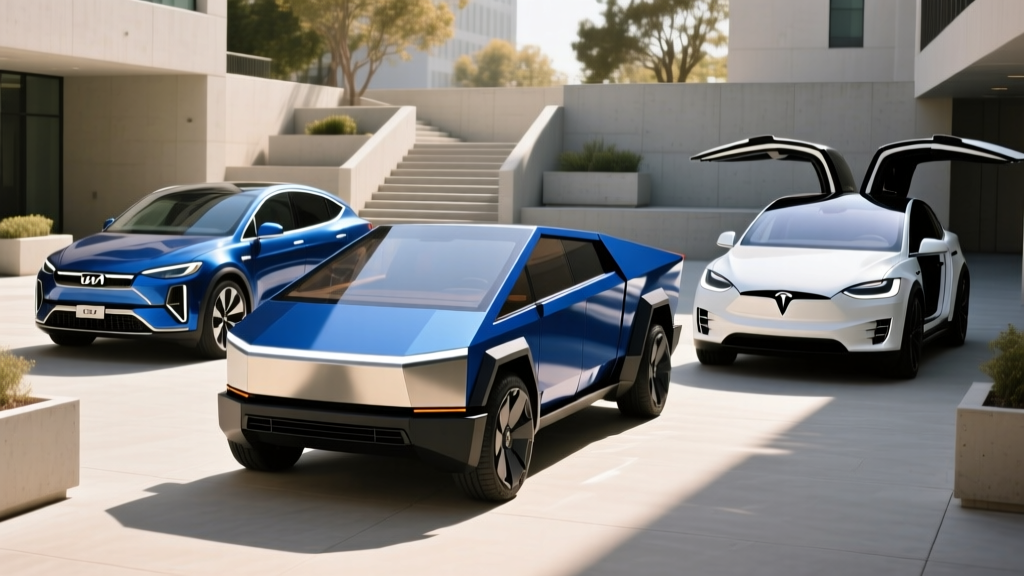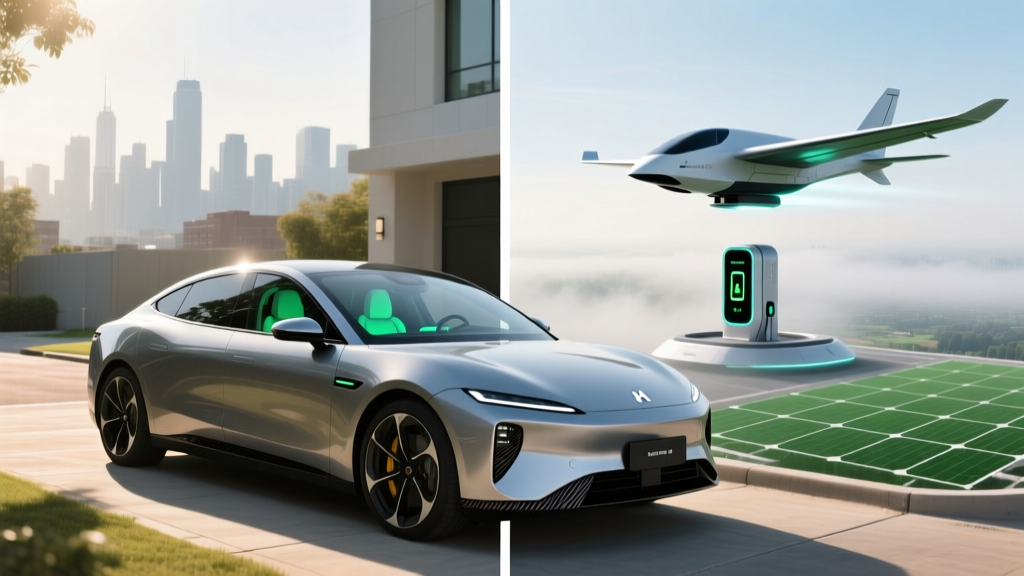
Electric aviation captures headlines, but for most buyers deciding how to electrify their transportation, ground-based EVs remain the only practical option in 2026. While companies like Joby Aviation and Archer are testing eVTOL (electric vertical takeoff and landing) air taxis in select cities, these services are limited to short urban hops at premium prices. Meanwhile, electric vehicles like the Tesla Model Y, Hyundai Ioniq 5, and Chevrolet Equinox EV deliver 300+ miles of EPA range, home charging convenience, and total cost of ownership that undercuts gas cars within 3-5 years.
Quick Answer: Electric Aviation vs Ground EVs
Electric aviation (eVTOL air taxis, electric planes) is in limited commercial trials in 2026, serving 20-100 mile urban routes at $3-6 per mile. Ground EVs are widely available, offer 250-400 mile range, cost $0.04-0.12 per mile to charge at home, and qualify for up to $7,500 in federal tax credits. For daily transportation needs, EVs are the viable choice today.
The Current State of Electric Aviation
Electric aviation in 2026 means two things: eVTOL air taxis beginning limited commercial service, and small electric training aircraft used by flight schools. Neither replaces the personal car.
eVTOL Air Taxis: Companies like Joby Aviation and Archer Aviation have received FAA type certification for their aircraft and are launching pilot services in cities like Los Angeles, New York, and Dubai. These aircraft carry 4-5 passengers plus a pilot, fly at 150-200 mph, and have ranges of 70-100 miles per charge. Expected pricing: $5-7 per passenger mile initially, dropping to $3-4 per mile as operations scale.
Electric Fixed-Wing Aircraft: The Pipistrel Velis Electro remains the only FAA-certified electric airplane, used primarily for flight training. It carries two people, flies at 108 mph, and has about 50 minutes of endurance (roughly 80 miles). Battery capacity: 34.5 kWh. Price: approximately $120,000.
For context, a 2024 FAA rule created the regulatory framework for eVTOL operations, but widespread availability remains years away.
Ground EVs: The Practical Electric Option
While electric aviation develops, ground-based EVs have matured into a mainstream transportation choice with compelling economics.
| Model | EPA Range | Battery (kWh) | DC Fast Charge (kW) | 10-80% Time | Base MSRP |
|---|---|---|---|---|---|
| Tesla Model Y Long Range | 330 mi | 75 kWh (NMC) | 250 kW peak | ~18 min | $44,990 |
| Hyundai Ioniq 5 Long Range | 303 mi | 77.4 kWh (NMC) | 240 kW peak | ~18 min | |
| Chevrolet Equinox EV 3RS | 319 mi | 85 kWh (NMC) | 150 kW peak | ~24 min | |
| Ford Mustang Mach-E Extended | 320 mi | 91 kWh (NMC) | 150 kW peak | ~28 min |
Real-world range caveat: Expect 15-25% range reduction in highway driving at 75+ mph, and 20-40% loss in freezing temperatures. A 330-mile EPA rating translates to roughly 250-280 miles on a cold winter road trip.
EPA Range vs Reality
EPA sticker: 330 miles (Tesla Model Y LR)
Real highway (70 mph, 75°F): ~270-285 miles
Cold weather highway (30°F): ~220-250 miles
Charging curve reality: Peak 250 kW sustained only from 10-30% SoC; tapers to ~100 kW by 60%, ~50 kW above 80%
Cost Comparison: EV vs Gas vs Future Air Taxi
| Category | EV (Model Y) | Gas Car (RAV4) | eVTOL (Projected) |
|---|---|---|---|
| Purchase Price | $44,990 | $32,000 | N/A (ride service) |
| Federal Tax Credit | -$7,500* | $0 | $0 |
| Net Purchase | $37,490 | $32,000 | N/A |
| Fuel/Energy (75k mi) | $4,500** | $9,375*** | $262,500**** |
| Maintenance | $1,800 | $3,750 | N/A |
| Insurance (5 yr) | $9,000 | $7,500 | N/A |
| 5-Year Total | $52,790 | $52,625 | $262,500 |
*§30D credit eligibility depends on MSRP caps, buyer income limits, and battery sourcing requirements. Verify at IRS.gov or with a tax professional.
**Home charging at $0.13/kWh, 3.5 mi/kWh average efficiency.
***Gas at $3.75/gallon, 28 MPG combined.
****eVTOL at $3.50/passenger-mile for 75,000 miles (hypothetical full replacement).
Real-World Ownership Considerations
Before buying an EV, honestly assess your situation:
Home Charging Access
If you have a garage or dedicated parking: A Level 2 home charger (240V, 32-48A) adds 25-35 miles of range per hour. Installation costs $800-2,500 depending on panel capacity and wiring distance. This covers 95% of daily charging needs.
If you rely on street parking or apartments: Public charging becomes your primary source. DC fast charging costs $0.30-0.50/kWh (roughly double home rates) and requires 20-40 minute stops. Some cities and workplaces offer Level 2 charging, but reliability varies.
| Level | Voltage/Power | Miles Added per Hour | Typical Use Case |
|---|---|---|---|
| Level 1 | 120V / 1.4-1.9 kW | 3-5 miles | Overnight trickle, emergencies |
| Level 2 | 240V / 7.7-11.5 kW | 25-40 miles | Home, workplace, shopping |
| DC Fast | 400-800V / 50-350 kW | 150-400 miles (peak) | Road trips, quick top-ups |
Climate and Driving Patterns
Cold climates (regular sub-40°F): Battery chemistry loses efficiency in cold. Expect 20-40% range reduction. Heat pumps (standard on Tesla, Hyundai, many others) help but don't eliminate the penalty. Garage parking and battery preconditioning mitigate losses.
Hot climates (regular 95°F+): Range impact is smaller (5-10%), but battery degradation accelerates if you frequently charge to 100% or let the car sit at high SoC in heat. NMC batteries handle heat better than LFP in terms of calendar degradation.
Long commutes (60+ miles daily): An EV with 300+ mile EPA range handles this easily with home charging. Without home charging, you'll need reliable DC fast charging near work or home.
Common Misconceptions: Aviation vs Ground EVs
| Myth | Fact |
|---|---|
| "Electric planes will replace cars soon" | eVTOLs serve niche urban air routes (20-100 mi). They can't replace the 95% of trips under 30 miles that cars handle, and won't be cost-competitive for decades. |
| "EVs have worse range than gas cars" | Many 2026 EVs exceed 300 EPA miles. The average American drives 39 miles/day (FHWA data). Most EVs need charging only once per week with home access. |
| "EV batteries need replacement every few years" | Modern NMC and LFP batteries retain 85-90% capacity after 100,000 miles. Federal law mandates 8-year/100,000-mile battery warranties. DOE data shows most EVs outlast their batteries' useful life. |
| "Charging takes too long" | Home Level 2 charging happens while you sleep (8-10 hours for full charge). Road-trip DC fast charging adds 150-200 miles in 15-20 minutes—similar to a rest stop. |
| "EVs are worse for the environment" | Even on coal-heavy grids, EVs produce 50-70% fewer lifecycle emissions than gas cars (EPA analysis). On clean grids, the advantage is 70-90%. |
Decision Framework: What's Right for You?
Choose an EV if:
- You have home or workplace Level 2 charging access
- Your daily driving is under 80 miles (covers 90% of Americans)
- You want lower per-mile energy costs ($0.04-0.12/mile vs $0.12-0.18/mile for gas)
- You qualify for federal/state tax credits (check IRS §30D rules)
- You value instant torque, quiet operation, and minimal maintenance
Choose a Hybrid/PHEV if:
- You lack reliable charging access (apartment, street parking)
- You regularly drive 300+ miles in rural areas with sparse charging
- You want electric-only commuting but gas flexibility for road trips
- Examples: Toyota RAV4 Prime (42 mi electric, 38 MPG gas), Honda CR-V Hybrid
Wait for Electric Aviation if:
- You need to travel 20-100 miles between dense urban centers in under 30 minutes
- You're willing to pay $150-300 per trip for the privilege
- You live in a city with eVTOL vertiport infrastructure (limited to LA, NYC, Dubai in 2026)
- You understand this is air taxi service, not personal aircraft ownership
Frequently Asked Questions
When will electric planes be available to the public?
eVTOL air taxi services are launching in 2026-2027 in select cities (Los Angeles, New York, Dubai). These are ride-service models, not personal aircraft. Widespread availability and affordable pricing ($2-3/mile) is projected for 2030+. Personal electric planes remain impractical due to range (50-100 miles), cost ($100,000+), and pilot licensing requirements.
How much does it cost to charge an EV at home vs gas?
Home charging at the US average electricity rate ($0.16/kWh in 2026) costs about $0.045 per mile for an efficient EV (3.5 mi/kWh). Gasoline at $3.75/gallon costs $0.13 per mile for a 28 MPG car. That's a $0.085/mile savings, or $6,375 over 75,000 miles. Public DC fast charging is more expensive ($0.10-0.15/mile) but still undercuts gas.
Do EVs really save money long-term?
Yes, but the timeline depends on your situation. With home charging, federal tax credits, and typical driving, EVs break even with comparable gas cars in 3-5 years through fuel and maintenance savings. Without tax credits or with expensive public charging, the payback extends to 5-7 years. Higher-mileage drivers save faster.
What about battery replacement costs?
Out-of-warranty battery replacement costs $8,000-18,000 depending on the vehicle, but this is rare. Modern EV batteries are designed to last 150,000-200,000 miles with 80%+ capacity retention. The 8-year/100,000-mile federal warranty mandate covers premature degradation. Most EVs are scrapped for collision damage before the battery fails.
Can I use an EV for road trips?
Yes, with planning. The DC fast-charging network (Tesla Supercharger, Electrify America, EVgo) covers major highways with 150-350 kW chargers. A 300-mile-range EV needs one 15-20 minute charge stop every 2-2.5 hours of highway driving. Apps like A Better Routeplanner optimize stops. Rural areas and national parks remain charging deserts—plan accordingly or rent a gas car for those trips.
What's the difference between kW and kWh?
kW (kilowatts) measures power—the rate of energy flow. A 250 kW DC fast charger delivers energy quickly. kWh (kilowatt-hours) measures energy capacity—like gallons in a tank. A 75 kWh battery stores 75 kilowatt-hours of energy. Think: kW is how fast you're filling the tank; kWh is the tank size.
The Bottom Line
Electric aviation is real but remains a niche, premium service for specific urban routes. For the vast majority of transportation needs—daily commuting, grocery runs, family road trips—ground-based EVs are the mature, cost-effective electric solution in 2026. With 300+ mile ranges, expanding charging networks, and total ownership costs that match or beat gas cars, EVs deliver on the promise of electric transportation today, not in some distant future.