The Short Answer on Electric Aircraft for EV Buyers
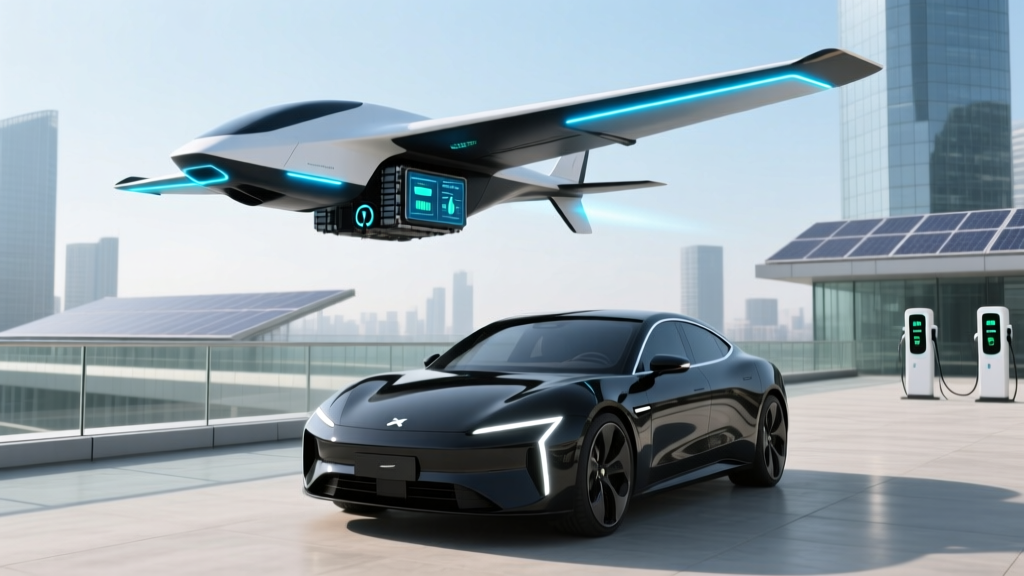
Electric aircraft — including eVTOL air taxis and small electric planes — are not available for consumer purchase in 2026. Companies like Joby Aviation and Archer Aviation are pursuing FAA certification for limited commercial air-taxi services, but you cannot buy one for personal use. Meanwhile, ground-level electric vehicles (EVs) are widely available, with EPA ranges exceeding 300 miles, DC fast charging at 250+ kW, and base prices starting under $30,000. If you're researching electrified transportation, an EV remains the practical, purchasable choice today — electric aircraft are years away from personal ownership.
What "Electric Aircraft" Actually Means in 2026
The term electric aircraft covers several categories, and the differences matter enormously for anyone comparing them to the EVs you can drive today:
- eVTOL (electric vertical takeoff and landing): Small passenger air taxis being developed by Joby Aviation, Archer Aviation, and others. These target short urban hops (20–100 miles) and are pursuing FAA Part 135 certification for commercial air-taxi operations — not personal ownership.
- Electric fixed-wing aircraft: Small training and personal planes like the Pipistrel Velis Electro (the first EASA-certified electric airplane, back in 2020). These offer roughly 50 minutes of flight time on a charge and cost around $120,000+, but production is extremely limited.
- Electric commercial airliners: Effectively nonexistent for battery-electric propulsion. The energy density of current lithium-ion batteries (~250 Wh/kg at the cell level) is roughly 50x lower than jet fuel (~12,000 Wh/kg usable), making large electric airliners physically impractical with current chemistry.
For the vast majority of buyers researching "electric aircraft," what you're really weighing is whether electrified transportation on the ground — EVs and PHEVs — meets your needs today while aviation electrification matures.
Ground EVs vs. Electric Aircraft: Range, Energy, and Physics
Understanding why electric cars have scaled while electric aircraft remain niche requires looking at the energy-density gap. Here's how the numbers compare:
| Metric | Ground EV (2026 Tesla Model Y LR) | eVTOL Air Taxi (Joby S4, estimated) | Electric Plane (Pipistrel Velis Electro) |
|---|---|---|---|
| Battery capacity | ~75 kWh usable (NMC) | ~77 kWh (estimated, NMC) | 34.5 kWh (lithium-ion) |
| Range | EPA 320 mi (real-world highway ~270 mi) | ~100 mi per charge (commercial missions) | ~50 min flight / ~75 mi equivalent |
| Energy density challenge | Moderate — rolling resistance is low | High — must sustain hover and forward flight | High — sustained lift requires continuous power |
| Recharge / turnaround | 10–80% in ~20 min at 250 kW DC | ~30 min between flights (planned) | ~2 hours (full charge) |
| Consumer availability | Widely available, 100+ models on sale | Not for sale — commercial service only | Limited production, ~$120K+ |
| Price to own | $44,990–$53,490 MSRP (before credits) | N/A (ride-hailing model) | ~$120,000+ (where available) |
The core physics problem for electric aircraft: a car only needs to overcome rolling resistance and aerodynamic drag at ground level. An aircraft must generate continuous lift, which demands far more energy per mile. This is why a 75 kWh battery delivers 320 miles in a Model Y but only ~100 miles in an eVTOL carrying fewer passengers.
The Real Costs: EV Ownership vs. What Electric Air Taxis Will Charge
Since personal electric aircraft aren't an option, let's break down what EV ownership actually costs in 2026 compared to gas — and what early electric air-taxi services are projected to charge per trip.
| Cost Category | EV (2026 Model Y LR AWD) | Gas Equivalent (2026 Toyota RAV4 AWD) | Electric Air Taxi (projected per trip) |
|---|---|---|---|
| Purchase price / fare | $46,630 MSRP (est. ~$39,130 after §30D credit if eligible) | $32,500 MSRP | Estimated $50–$100+ per 20-mi trip (early pricing) |
| Energy cost per mile | $0.04–$0.06/mi (home L2, $0.15/kWh avg) | $0.13–$0.16/mi ($3.40/gal, 28 MPG combined) | N/A (passenger fare model) |
| Maintenance per year | ~$300–$500 (no oil, fewer brake replacements) | ~$800–$1,200 (oil, filters, brakes, belts) | N/A |
| Insurance (annual avg) | ~$1,800–$2,400 (varies by state/model) | ~$1,400–$1,800 | N/A |
| 5-year energy/fuel total (15K mi/yr) | ~$3,750 (home charging) | ~$10,500 | N/A |
Source: Energy cost estimates based on fueleconomy.gov data and EIA average electricity pricing. Tax credit eligibility per IRS §30D rules — subject to MSRP caps ($55K sedans / $80K SUVs), buyer income limits ($150K single / $300K joint), and battery sourcing requirements.
What First-Time EV Buyers Should Know (That Doesn't Apply to Electric Aircraft)
If you've been researching electric transportation broadly and are ready to make a ground-level purchase, here are the critical ownership realities that separate informed buyers from disappointed ones:
Home Charging Is the Foundation
Roughly 80% of EV charging happens at home. A Level 2 home charger (240V, 32–48 amps / 7.7–11.5 kW) adds 25–40 miles of range per hour and fully recharges most EVs overnight. Installation typically runs $800–$2,500 for a straightforward setup (panel capacity available, short conduit run) or $3,000–$5,000+ if you need a panel upgrade to 200 amps. If you can't charge at home — apartment living, no garage, street parking only — weigh public charging access carefully before buying.
Real-World Range vs. EPA Stickers
EPA range estimates are useful but optimistic for highway and cold-weather driving. Expect:
- Highway driving at 75+ mph: 15–20% below EPA (e.g., a 320-mile EPA rating yields ~260–275 real highway miles)
- Cold weather (below 32°F): 20–35% range loss depending on cabin heating demands and whether the vehicle has a heat pump
- Combined real-world average: Most owners report 85–95% of EPA in mixed daily driving with moderate climates
Charging Speed: kW vs. kWh and the Curve
This is the most common confusion for new EV buyers. kW (kilowatts) measures power — how fast energy flows into the battery. kWh (kilowatt-hours) measures energy capacity — how much the battery holds total. A 250 kW peak charge rate doesn't mean you sustain 250 kW for the full session. Lithium-ion batteries accept charge fastest at low state of charge (SoC) and taper significantly above 80% to protect cell health. A "10–80% in 20 minutes" spec is the meaningful number — not the peak kW figure alone.
§30D Federal Tax Credit Realities
The federal clean vehicle credit offers up to $7,500 for qualifying new EVs, but eligibility depends on multiple factors that change annually:
- MSRP caps: $55,000 for sedans, $80,000 for SUVs/trucks/vans
- Buyer income limits: Modified AGI ≤ $150K (single) / $300K (married filing jointly)
- Battery sourcing: Increasingly strict requirements for critical minerals and battery components sourced from the U.S. or FTA partners — this disqualifies some models that previously qualified
- Point-of-sale transfer: As of 2024, you can transfer the credit to the dealer for an immediate price reduction rather than claiming it on your tax return
Always verify current eligibility on IRS.gov before committing to a purchase. Vehicle eligibility lists change as manufacturers adjust battery supply chains.
Electric Aircraft Myths vs. Facts
| Myth | Fact |
|---|---|
| "I can buy a personal electric aircraft in 2026" | No consumer eVTOL or personal electric jet is available for purchase. The Pipistrel Velis Electro has limited availability at ~$120K+ for trained pilots only. |
| "Electric air taxis are launching in multiple cities this year" | Joby and Archer are pursuing FAA certification with targeted 2026–2027 initial operations in limited markets (likely Dubai and select U.S. cities), but commercial service remains preliminary and subject to regulatory timelines. |
| "Electric planes will replace short-haul flights soon" | Battery energy density is ~50x below jet fuel. Hybrid-electric and hydrogen propulsion are more likely for regional aviation before pure battery-electric scales beyond very short hops. |
| "EVs are basically grounded electric aircraft" | They share lithium-ion battery chemistry, but ground EVs benefit from far lower energy demands per mile. An EV motor delivers 85–95% efficiency; aircraft must overcome gravity continuously. |
| "Electric aircraft will be affordable within 5 years" | Initial eVTOL air-taxi fares are projected at premium levels ($3–$6+ per passenger mile). Cost parity with ground transportation is unlikely before the 2030s, if ever. |
Decision Framework: Should You Wait for Electric Aviation or Buy an EV Now?
Buy an EV now if:
- You have (or can install) home Level 2 charging access
- Your daily commute is under 100 miles round-trip
- You want to reduce per-mile energy costs by 60–70% compared to gas
- You're eligible for the §30D credit or your state offers additional incentives
- You want a mature product with established service networks, NHTSA safety ratings, and IIHS crash-test data
Consider a PHEV (plug-in hybrid) if:
- You lack reliable home charging but want electric-only for short commutes (20–40 miles)
- You frequently take road trips exceeding 300 miles through areas with sparse DC fast charging
- You want to reduce fuel consumption without full range dependency on charging infrastructure
Follow electric aircraft news (but don't wait) if:
- You're a licensed pilot interested in future electric flight training aircraft
- You live in a metro area likely to receive eVTOL air-taxi service (Los Angeles, New York, Dubai) and want to use it as a ride service in the late 2020s
- You work in aerospace or battery technology and want to track the energy-density breakthroughs needed for broader electric aviation
FAQ: Electric Aircraft and EV Ownership Questions
Can I buy an electric aircraft for personal use in 2026?
Not in any practical sense. The Pipistrel Velis Electro is the only certified electric airplane available, at roughly $120,000+, with limited range (~50 minutes of flight) and availability. All eVTOL air taxis from Joby, Archer, and others are being developed for commercial ride-service, not personal purchase.
How far can current electric aircraft fly?
The Pipistrel Velis Electro manages roughly 75 miles equivalent on its 34.5 kWh battery. Joby's S4 eVTOL targets ~100-mile missions with reserves. Compare this to a 2026 Tesla Model Y Long Range at EPA 320 miles on a ~75 kWh battery — ground vehicles are roughly 4x more energy-efficient per mile traveled.
Will electric aircraft ever be as practical as EVs?
For personal ownership, likely not within the next decade. The physics of sustained flight demands far more energy than ground transportation. Commercial eVTOL air-taxi services may become viable in select metro areas by 2028–2030, but they'll operate as ride services, not personal vehicles.
What's the best EV to buy in 2026 if I want maximum range?
The Lucid Air Grand Touring leads with an EPA 512-mile range, starting around $125,600. For mainstream pricing, the Tesla Model Y Long Range (EPA 320 mi, ~$46,630) and Hyundai Ioniq 6 SE Long Range (EPA 361 mi, ~$43,600) offer the best range-per-dollar ratios. Always factor in real-world highway and cold-weather reductions of 15–35%.
Do electric cars and electric aircraft use the same batteries?
They use similar lithium-ion cell chemistries (primarily NMC for high energy density), but the pack designs, thermal management systems, and safety requirements differ significantly. Aviation batteries face stricter weight constraints and must meet DO-311A certification standards that automotive packs don't require. Automotive LFP (lithium iron phosphate) batteries — common in Tesla Model 3/Y Standard Range and many Chinese-market EVs — prioritize cycle life and cost over the energy density that aviation demands.
Is charging an EV really cheaper than fueling a gas car?
Yes, substantially. At the U.S. average residential electricity rate of ~$0.16/kWh and an EV efficiency of 3.5 miles/kWh, you're paying roughly $0.046 per mile. A gas car at 28 MPG combined and $3.40/gallon costs ~$0.121 per mile — about 2.6x more. Over 15,000 annual miles, that's ~$690 for EV charging vs. ~$1,815 for gas. The savings widen further with time-of-use electricity rates or solar-charged homes.