The Short Answer on Electric Air Planes
Electric air planes — including eVTOL air taxis and small electric aircraft — are not yet available for consumer purchase in 2026. Companies like Joby Aviation, Archer Aviation, and Beta Technologies are conducting limited commercial operations and FAA certification flights, but you cannot buy one for personal use. Meanwhile, ground-based EVs offer 250–400+ miles of EPA range, home charging, and purchase prices starting around $30,000 before incentives. If you're researching electric transportation options today, an EV car, SUV, or truck is your only practical, purchasable electric vehicle.
What Are Electric Air Planes, Exactly?
The term "electric air planes" covers a spectrum of aircraft that use battery-electric or hybrid-electric propulsion instead of jet fuel or avgas. In 2026, the category breaks down into three main segments:
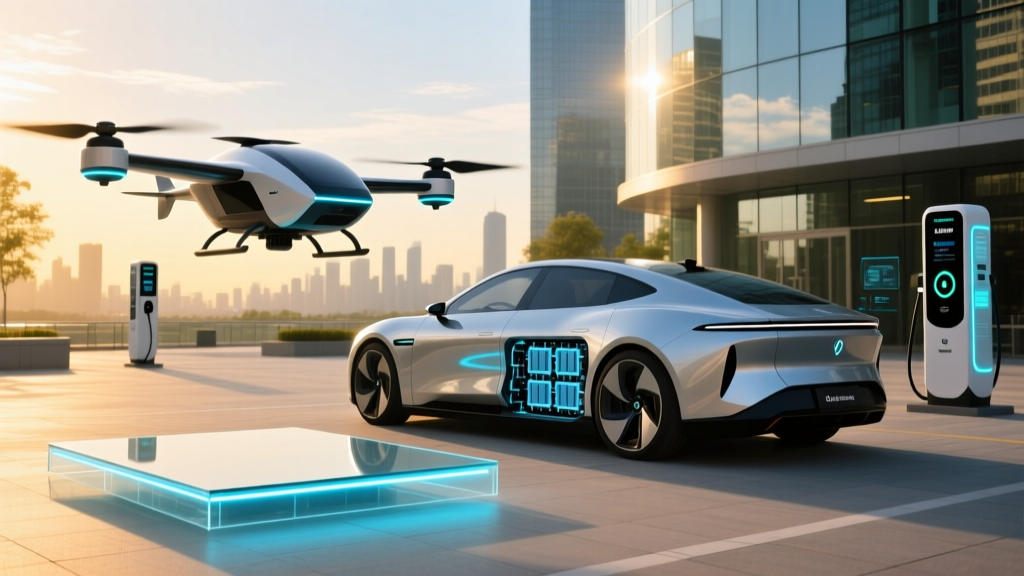
- eVTOL air taxis — Vertical takeoff and landing vehicles designed for short urban hops (20–150 miles). Companies include Joby Aviation (S4), Archer Aviation (Midnight), and Wisk Aero. These are being positioned as ride-service vehicles, not personal aircraft.
- Small fixed-wing electric planes — Conventional-look aircraft like the Pipistrel Velis Electro (the first EASA-certified electric airplane) and Beta Technologies' Alia. These seat 2–6 passengers with ranges of roughly 75–200 miles.
- Regional hybrid-electric concepts — Larger aircraft from startups like Heart Aerospace (ES-30) targeting 30-passenger routes with hybrid-electric powertrains. These remain in development or early certification.
None of these are consumer products you can order today the way you'd configure a Tesla Model Y or Ford F-150 Lightning. Most are being built for fleet operators, cargo carriers, or flight schools.
Electric Air Planes vs. Electric Cars: Range and Energy Reality
The physics of flight impose constraints that ground EVs simply don't face. Lifting a vehicle against gravity consumes far more energy per mile than rolling on tires. Here's how the numbers compare:
| Metric | Electric Air Plane (eVTOL / Small Fixed-Wing) | Ground EV (2026 Mid-Range SUV) | Gas Car (2026 Compact Sedan) |
|---|---|---|---|
| Typical Range | 75–150 miles (eVTOL); up to 200 mi (fixed-wing) | 280–350 miles EPA | 380–450 miles |
| Battery Capacity | 60–100 kWh (estimated, high-discharge cells) | 75–100 kWh (NMC or LFP) | N/A (12–15 gal tank) |
| Energy per Mile | ~1.5–3.0 kWh/mi (flight) | ~0.28–0.35 kWh/mi | ~0.03 gal/mi (~1.0 kWh equivalent) |
| Refuel/Recharge Time | 30–60 min (specialized high-power charging) | 18–35 min (10–80% DC fast charge) | 5 min (gas station) |
| Infrastructure | Vertiports, limited to select metros | Home Level 2 + 60,000+ public chargers in US | 145,000+ gas stations |
| Consumer Availability | Not available for personal purchase | Widely available; 40+ models from 15+ brands | Widely available |
The key takeaway: a ground EV moves a vehicle roughly 5 to 10 times more efficiently per mile than an electric aircraft. This is physics, not engineering failure — batteries are heavy, and fighting gravity costs energy. For automotive buyers, this means EVs have already solved the range problem that electric aviation is still wrestling with.
Real Costs: EV Ownership vs. Waiting for Electric Aviation
Since electric air planes aren't purchasable, let's ground this in what you can buy and what it actually costs to own. Below is a 5-year total cost of ownership estimate for a representative 2026 EV SUV (e.g., Hyundai Ioniq 5 or Tesla Model Y equivalent) compared to a comparable gas crossover.
| Cost Category | 2026 EV SUV (AWD, ~$42,000 MSRP) | 2026 Gas Crossover (AWD, ~$34,000 MSRP) |
|---|---|---|
| Purchase Price (after §30D credit) | ~$34,500 (if eligible for up to $7,500 point-of-sale transfer) | $34,000 |
| Fuel / Electricity (5 yr, 75,000 mi) | ~$3,800 (home charging at $0.14/kWh avg) | ~$10,100 (28 MPG avg at $3.60/gal) |
| Maintenance (5 yr) | ~$1,800 (no oil changes, fewer brake replacements due to regen) | ~$4,200 (oil, filters, transmission fluid, brakes) |
| Insurance (5 yr avg) | ~$9,500 (EV premiums run 15–25% higher) | ~$7,600 |
| Depreciation (5 yr) | ~$18,000 (EV depreciation has improved but still steep) | ~$14,500 |
| Estimated 5-Year Total | ~$67,600 | ~$70,400 |
Sources: EPA efficiency data from fueleconomy.gov, IRS §30D tax credit rules at irs.gov. Actual costs vary by state, driving pattern, electricity rate, and insurance provider. The §30D credit has MSRP caps ($55,000 sedans / $80,000 SUVs/trucks), buyer income limits ($150K single / $300K joint), and battery critical-mineral sourcing requirements that change annually — consult a tax professional before relying on credit eligibility.
The point: buying an EV today already delivers meaningful fuel and maintenance savings over gas, with break-even typically occurring around year 3–4 depending on mileage. Electric air planes, even when they eventually reach limited consumer markets, will carry price tags in the hundreds of thousands to millions of dollars — closer to piston aircraft pricing than automobile pricing.
What First-Time EV Buyers Should Know (Instead of Waiting on Aviation)
If the idea of electric air planes excites you about battery-electric transportation, channel that energy into making a smart ground-EV purchase. Here are the practical realities that separate informed buyers from disappointed ones:
Home Charging Access Is the Make-or-Break Factor
Roughly 80% of EV charging happens at home. If you can install a Level 2 charger (240V, 32–48 amps, delivering 7.7–11.5 kW), you'll wake up every morning with a full "tank." Installation costs range from $500 (simple NEMA 14-50 outlet near the panel) to $3,000+ (panel upgrade, long conduit runs). If you live in an apartment or lack off-street parking, public charging becomes your lifeline — and that changes which EVs make sense (prioritize fast DC charging capability of 200+ kW).
Real-World Range Is Not the EPA Sticker
A 2026 EV rated at 310 miles EPA will typically deliver 250–275 miles in highway driving at 70+ mph, and potentially 200–230 miles in freezing weather. Battery preconditioning (warming the pack before DC fast charging) matters enormously for road trips — a cold battery might accept only 50 kW at a 250 kW charger, while a preconditioned pack can sustain 200+ kW from 10–80% in roughly 18–25 minutes.
Battery Chemistry Matters: LFP vs. NMC
Lithium iron phosphate (LFP) batteries, now used in base-model Teslas and several other 2026 models, offer longer cycle life and can be charged to 100% daily without significant degradation — ideal for daily commuters. Nickel-manganese-cobalt (NMC) packs deliver higher energy density (more range per pound) but are best kept between 20–80% for daily use. Both chemistries carry 8-year/100,000-mile federal warranty minimums, with most manufacturers warranting 70% capacity retention over that period.
Myths About Electric Air Planes and EVs — Fact-Checked
| Myth | Fact |
|---|---|
| "Electric air planes will replace cars within a decade." | eVTOL air taxis are being deployed for short urban hops (20–50 miles) at premium pricing — more like helicopter services than car replacements. Ground EVs remain the practical personal transport solution. |
| "EV batteries need replacing every 5 years." | Modern NMC and LFP packs show 10–15% degradation over 100,000 miles based on fleet data. Full replacement costs $8,000–$18,000 but is rarely needed within the warranty period. Most packs outlast the vehicle. |
| "EVs are worse for the environment because of battery mining." | Lifecycle analyses from the ICCT and Argonne National Lab consistently show EVs produce 50–70% fewer lifetime emissions than gas cars, even accounting for battery manufacturing. The grid is getting cleaner every year, improving EV emissions further over time. |
| "Electric planes will have 500+ mile range soon." | Current battery energy density (~250–300 Wh/kg at cell level) limits small electric aircraft to roughly 150–200 miles. Solid-state batteries may extend this, but commercial viability for long-range electric flight remains a 2030s proposition at earliest. |
| "I can't take road trips in an EV." | The US now has 7,000+ DC fast-charging stations. A 300-mile EV can road-trip with 20-minute charging stops every 2–2.5 hours. Tesla's Supercharger network (now open to NACS-equipped vehicles from Ford, GM, Rivian, and others) covers all major interstate corridors. |
Decision Framework: What Should You Actually Buy?
If X, Then Y
- If you need a vehicle today for commuting, family, or road trips: Buy a ground EV or PHEV. Models like the Hyundai Ioniq 5 (EPA 310+ mi, ~$42K), Tesla Model Y (EPA 320+ mi, ~$44K), or Toyota RAV4 PHEV (42 mi electric-only, 38 MPG hybrid) are proven, purchasable, and incentive-eligible.
- If you're a pilot or aviation enthusiast hoping for a personal electric plane: Follow Pipistrel Velis Electro (available for flight schools in Europe, limited US availability) or Beta Technologies Alia (cargo/charter focused). Budget $400,000–$1M+ and expect restricted operating conditions. This is not a car replacement.
- If you live in a metro where eVTOL air taxi service launches (expected 2026–2028 in select cities like LA, NYC, Dallas): Plan to use it as a premium ride-service for airport transfers, not as a vehicle you own. Expected per-seat pricing: $50–$150 for 20–50 mile hops.
- If you don't have home charging and your area has sparse public infrastructure: Consider a PHEV (plug-in hybrid) as a bridge — 30–45 miles of electric-only range for daily commuting, with a gas engine for longer trips. Models like the Jeep Wrangler 4xe or Toyota Prius Prime eliminate range anxiety while still reducing fuel consumption.
- If you want the lowest total cost of ownership: Choose a used EV eligible for the §25E used clean vehicle credit (up to $4,000, with income caps). A 2–3 year old Model 3 or Bolt EV can be acquired for $18,000–$25,000 after credit, with minimal maintenance costs.
FAQ: Electric Air Planes and EV Ownership
Can I buy an electric air plane in 2026?
Not as a consumer. A few electric aircraft exist in certified or near-certified forms (Pipistrel Velis Electro, Beta Alia), but they're priced for commercial operators and flight schools — typically $400,000 and up. Personal eVTOL vehicles remain conceptual. Your practical electric vehicle purchase in 2026 is a ground-based EV or PHEV.
How does EV range compare to what electric air planes can do?
A 2026 EV SUV delivers 280–350 miles EPA on a ~80–100 kWh battery. An eVTOL air taxi with a similar battery capacity manages roughly 75–150 miles because flight consumes 5–10x more energy per mile than ground driving. Fixed-wing electric planes do better (up to ~200 miles) but still trail ground EVs significantly.
Will electric air planes eventually be affordable like EVs?
Unlikely in any timeframe relevant to current buyers. Aircraft certification (FAA Part 23/27), redundant safety systems, and low production volumes keep aircraft pricing in the hundreds of thousands. EVs benefit from automotive-scale manufacturing (millions of units per year), which drives battery costs down — something aviation cannot replicate.
What's the biggest mistake first-time EV buyers make?
Overlooking home charging setup. Buying an EV without arranging Level 2 home charging is like buying a gas car with no gas stations nearby. Budget $500–$2,500 for a professional Level 2 installation (get a quote from a licensed electrician before purchasing the car), and you'll eliminate 80% of the "range anxiety" concern.
Are PHEVs a better choice than full EVs for some buyers?
Yes — if you lack reliable home charging, regularly drive 300+ miles in a day, or live in an area with limited DC fast-charging infrastructure. A PHEV gives you 30–45 miles of electric range for daily errands (covering most commutes) plus a gas engine for road trips. The tradeoff: you maintain two powertrains (oil changes, gas engine maintenance) and pay a purchase premium over a conventional hybrid.
Sources: Range and efficiency data from fueleconomy.gov; federal EV tax credit rules from irs.gov; FAA eVTOL certification updates from faa.gov. All pricing reflects 2026 model-year MSRP and is subject to change. Tax credit eligibility depends on individual circumstances — consult a tax professional.