Quick Answer: Dodge Charger Daytona EV 0-60 vs. the Challenger
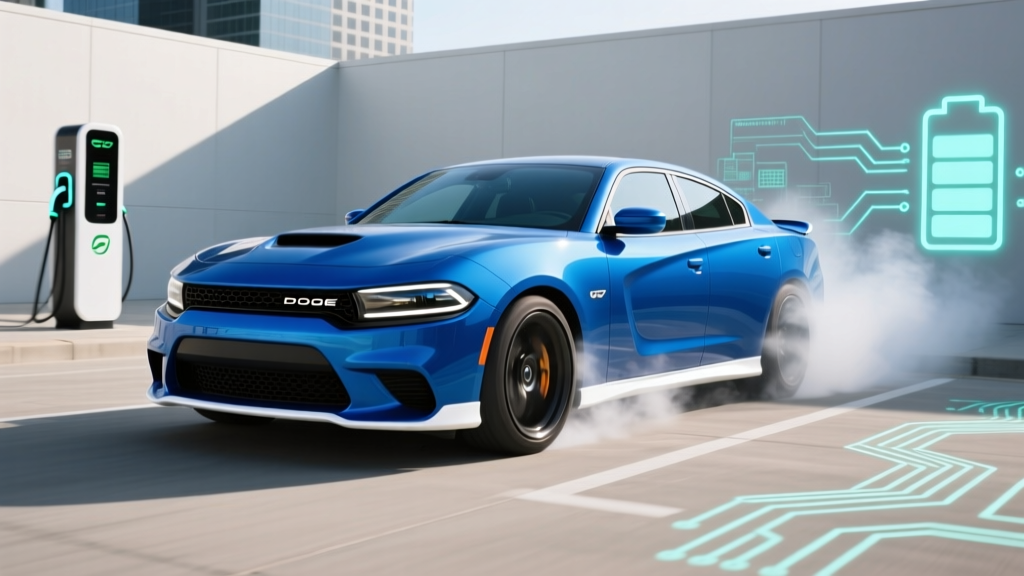
If you're searching for a Challenger EV 0-60 time, here's the reality: Dodge never produced an all-electric Challenger. The Challenger ended production in December 2023 as a gas-only muscle car. Its spiritual electric successor is the 2025 Dodge Charger Daytona, a two-door coupe built on Stellantis' STLA Large platform. The top Charger Daytona Scat Pack hits 0-60 mph in 3.3 seconds with 670 horsepower and 627 lb-ft of torque. The base R/T trim does it in 4.7 seconds with 496 hp. For comparison, the final 2023 Challenger SRT Hellcat Redeye achieved 0-60 in roughly 3.4 seconds — meaning the electric Scat Pack matches or beats the supercharged V8 it replaces, with instant torque and zero tailpipe emissions.
Charger Daytona EV: Full Performance and Battery Specs
The Charger Daytona is Dodge's proof that electrification and muscle-car identity can coexist. Here are the exact numbers buyers need before visiting a dealer.
| Spec | R/T (Base) | Scat Pack (Top) |
|---|---|---|
| 0-60 mph | 4.7 sec | 3.3 sec |
| Horsepower | 496 hp | 670 hp |
| Torque | 404 lb-ft | 627 lb-ft |
| Battery (usable) | 93 kWh (NMC) | 93 kWh (NMC) |
| EPA Range | 317 mi | 260 mi |
| Peak DC Fast Charge | ~175 kW | ~175 kW |
| 10-80% DC Charge | ~27 min | ~27 min |
| Level 2 (240V) Rate | 11.5 kW | 11.5 kW |
| Drivetrain | AWD (dual motor) | AWD (dual motor) |
| Base MSRP | ~$61,590 | ~$74,590 |
| Battery Warranty | 8 yr / 100,000 mi | 8 yr / 100,000 mi |
Real-World Range vs. EPA Sticker
The Scat Pack's EPA-rated 260 miles assumes mixed driving at moderate temperatures. Expect ~210-230 miles on the highway at 75 mph, and as low as ~175-195 miles in sub-freezing winter conditions where battery chemistry and cabin heating cut efficiency by 20-30%. The R/T's 317-mile EPA figure translates to roughly 265-285 miles highway, 220-250 miles in cold weather. These losses are typical for NMC chemistry in a heavy performance coupe; preconditioning the battery while plugged in helps recover some efficiency.
EV vs. Gas Challenger: Head-to-Head Comparison
The Charger Daytona doesn't just replace the Challenger — it redefines what a Dodge coupe can deliver. But the ownership experience is fundamentally different.
| Attribute | Charger Daytona Scat Pack (EV) | 2023 Challenger SRT Hellcat Redeye (Gas) |
|---|---|---|
| 0-60 mph | 3.3 sec | ~3.4 sec |
| Power | 670 hp (electric, instant) | 797 hp (supercharged 6.2L V8) |
| Quarter Mile | ~11.5 sec | ~10.8 sec |
| EPA Range / MPG | 260 mi (89 MPGe combined) | 13 city / 21 hwy / 16 combined |
| Fuel/Energy Cost per Mile | ~$0.04-$0.05 (home charging) | ~$0.25-$0.30 (premium fuel) |
| Annual Fuel/Energy (12,000 mi) | ~$480-$600 | ~$3,000-$3,600 |
| Weight | ~5,838 lbs | ~4,451 lbs |
| Maintenance (annual avg) | ~$200-$400 | ~$800-$1,500 |
| Starting MSRP | $74,590 | ~$87,000 (final MSRP) |
The EV wins on launch acceleration thanks to instant electric torque — no spool-up, no turbo lag, no wheelspin management. The Hellcat still holds a slight edge in the quarter mile due to lower weight and the ability to sustain peak power at high speeds, where EVs typically taper. But for stoplight-to-stoplight performance, the Scat Pack's 3.3-second 0-60 is a genuine supercar-killer stat.
Total Cost of Ownership: 5-Year Breakdown
Performance is only half the equation. Here's what owning the Charger Daytona Scat Pack actually costs compared to a comparable gas muscle car over five years and 60,000 miles.
| Cost Category | Charger Daytona Scat Pack (EV) | Gas Muscle Car (e.g., ~$75K V8) |
|---|---|---|
| Purchase Price | $74,590 | $75,000 |
| Federal Tax Credit (§30D) | $0 (see note below) | $0 |
| Energy/Fuel (60K mi) | ~$2,400-$3,000 | ~$15,000-$18,000 |
| Maintenance (5 yr) | ~$1,000-$2,000 | ~$4,000-$7,500 |
| Insurance (5 yr est.) | ~$15,000-$18,000 | ~$12,000-$15,000 |
| Estimated Depreciation | ~$30,000-$35,000 | ~$25,000-$30,000 |
| 5-Year Total | ~$120,000-$132,000 | ~$131,000-$145,500 |
Tax credit note: As of 2026, the Charger Daytona does not qualify for the IRS §30D federal tax credit of up to $7,500. The vehicle's battery components and critical minerals do not currently meet the domestic sourcing thresholds required under the Inflation Reduction Act. Always verify current eligibility on irs.gov before purchasing, as supply-chain compliance can shift model year to model year. Additionally, the $80,000 MSRP cap for sedans/coupes means the Scat Pack at $74,590 technically clears the price cap — but sourcing rules disqualify it regardless.
The EV's energy savings are substantial — roughly $12,000-$15,000 less spent on fuel over five years. Insurance tends to run 15-25% higher for EVs due to repair complexity and battery replacement costs, partially offsetting those savings. Depreciation remains an open question; early EV muscle cars may hold value among enthusiasts or suffer from typical first-generation EV depreciation curves.
Charging the Charger Daytona: What Owners Need
The 93 kWh NMC battery is large, meaning charging speed matters for daily usability and road trips alike.
| Charging Level | Power (kW) | Miles Added per Hour | Full Charge Time |
|---|---|---|---|
| Level 1 (120V household) | ~1.4 kW | ~3-4 mi/hr | ~65+ hours |
| Level 2 (240V, 48A home) | 11.5 kW | ~30-35 mi/hr | ~8-9 hours |
| DC Fast Charge (peak) | ~175 kW | ~500+ mi/hr (peak) | 10-80% in ~27 min |
At a DC fast charger, the Charger Daytona peaks around 175 kW, which is competitive but not class-leading. For context, Hyundai Ioniq 5 peaks at ~240 kW on 800V architecture. The charge curve tapers significantly above 80% state of charge — that 10-80% time of ~27 minutes can stretch to 45+ minutes if you push to 90-100%. On road trips, plan stops at the 20-25% mark and charge only to 80% for optimal speed.
Home charging setup: A Level 2 home charger is practically mandatory for this vehicle. Budget $800-$1,500 for a quality 48-amp Level 2 unit (ChargePoint Home Flex, Wallbox Pulsar Plus, or similar) plus $500-$2,000 for professional electrician installation depending on your panel's capacity and the run distance. If your home has a 100-amp electrical panel, you may need a $1,500-$3,000 panel upgrade to 200 amps to support the 60-amp circuit the charger requires. Consult a licensed electrician for final specs.
Common Misconceptions About Electric Muscle Cars
| Myth | Fact |
|---|---|
| "EVs can't be real muscle cars" | The Scat Pack's 3.3-sec 0-60 beats the Hellcat Redeye. Instant torque delivers harder seat-of-the-pants launch feel than any supercharged V8. |
| "The battery will need replacing in 5 years" | NMC batteries in modern thermal-managed systems typically retain 85-90%+ capacity at 100,000 miles. Dodge warranties the pack for 8 years/100,000 miles against defects and excessive degradation. |
| "You can't take an EV on road trips" | With 260 miles of range and DC fast charging, the Charger Daytona can cover 500 miles in a day with two 25-30 minute stops. Route planning via PlugShare or A Better Routeplanner is essential. |
| "EVs are cheaper to own, period" | Not always. Higher insurance, potential panel upgrades, and uncertain resale value can narrow the gap. The Charger Daytona's savings come primarily from fuel and maintenance, not purchase price. |
| "There's a Challenger EV you can buy" | Dodge retired the Challenger nameplate in 2023. The Charger Daytona is the replacement — a two-door coupe on the same STLA Large platform, but wearing the Charger badge. |
Who Should Buy the Charger Daytona EV (And Who Shouldn't)
Decision Framework
Choose the Charger Daytona Scat Pack if:
- You want sub-3.5-second 0-60 performance with daily-driver practicality
- You have reliable Level 2 home charging access (garage or driveway with 240V)
- Your daily commute is under 200 miles round-trip
- You value instant torque and silent, vibration-free launches over exhaust noise
- You live in a region with moderate winters or have garage parking to mitigate cold-weather range loss
Look elsewhere if:
- You rely exclusively on street parking with no charging access — public DC fast charging is not a sustainable daily strategy for a 93 kWh battery
- You regularly drive 400+ mile trips in rural areas with sparse charging infrastructure
- Exhaust sound and V8 character are non-negotiable parts of the muscle-car experience for you
- You need to tow — the Charger Daytona is not rated for towing
- Budget is tight — at $74,590+ without a federal tax credit, this is a premium performance purchase
First-Time EV Buyer Essentials
If the Charger Daytona is your first EV, prepare for a fundamentally different ownership rhythm:
- Charge at home, every night. Treat it like a phone — plug in when you get home, wake up to a full battery. This eliminates 95% of range anxiety.
- Learn your charge curve. Peak kW rates (175 kW) only apply between roughly 10-40% state of charge. Above 80%, charging slows dramatically to protect battery health. Plan fast-charge stops accordingly.
- Precondition before fast charging. Use the vehicle's navigation to route to a DC fast charger — this warms the battery to optimal temperature and unlocks peak charge rates. Cold-soaked batteries charge far slower.
- Download PlugShare and A Better Routeplanner. These apps map every public charger, show real-time availability, and calculate road-trip charging stops based on your vehicle's actual efficiency.
- Budget for insurance upfront. Get quotes before purchasing. Performance EVs from Dodge can carry premiums 20-30% higher than equivalent gas models in some zip codes.
Frequently Asked Questions
Was there ever an electric Dodge Challenger?
No. The Dodge Challenger was produced exclusively with gasoline engines (V6 and V8) through its final 2023 model year. Dodge's electric two-door coupe is the Charger Daytona, which shares the STLA Large platform but carries the Charger nameplate.
Is the Charger Daytona Scat Pack faster than a Hellcat?
In 0-60 mph acceleration, yes — the Scat Pack's 3.3 seconds edges out the Hellcat Redeye's ~3.4 seconds. In the quarter mile, the Hellcat's higher peak horsepower and lighter weight give it a slight advantage (~10.8 sec vs. ~11.5 sec). For roll-on highway passing, the Hellcat's top-end power still dominates.
Does the Charger Daytona qualify for the $7,500 federal tax credit?
As of 2026, no. While the Scat Pack's $74,590 MSRP falls under the $80,000 sedan/coupe cap and many buyers meet income limits, the battery's critical-mineral and component sourcing do not satisfy current IRS §30D requirements. Check irs.gov for the latest qualified vehicle list before purchasing.
How much does it cost to charge the Charger Daytona at home?
At the US average residential electricity rate of ~$0.16/kWh, a full 93 kWh charge costs roughly $14.90. That delivers about 260 miles of range in the Scat Pack, or about $0.057 per mile. Compare that to premium gasoline at ~$4.00/gallon in a 16-MPG Hellcat: $0.25 per mile. Over 12,000 miles annually, home charging saves roughly $2,300-$2,500 per year.
What happens to the battery after the warranty expires?
Dodge covers the battery for 8 years or 100,000 miles. Industry data from similar NMC packs suggests 85-90% capacity retention at 100,000 miles with normal use. A full battery replacement outside warranty for a 93 kWh pack would likely cost $15,000-$22,000 at current pricing, though costs are projected to decline as battery manufacturing scales. Most owners will never need a full replacement — individual module servicing is sometimes possible.
Can I daily-drive a 260-mile-range EV?
Absolutely, if your daily round-trip is under 200 miles and you charge at home overnight. The average American drives 37 miles per day according to FHWA data. Range becomes a consideration only on long road trips, where DC fast charging stops every 200-230 miles add roughly 25-30 minutes each.