Quick Answer: Do Electric Vehicles Have Engines?
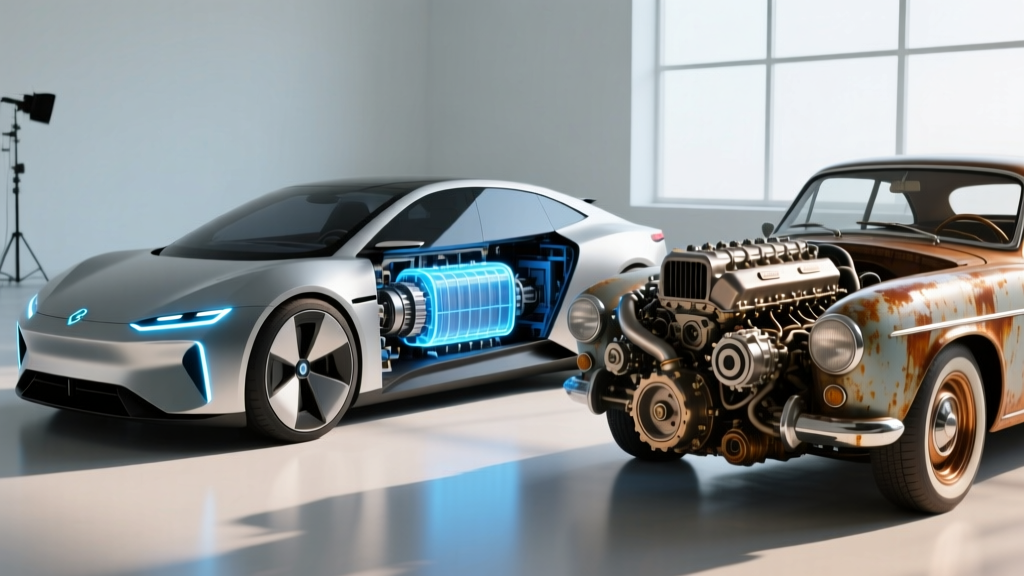
No. Electric vehicles do not have engines. An internal combustion engine (ICE) burns fuel to create motion through controlled explosions in cylinders. A battery-electric vehicle (BEV) replaces that entire system with one or more electric motors powered by a high-voltage lithium-ion battery pack. Where a gas car has an engine block, pistons, crankshaft, fuel injectors, exhaust system, catalytic converter, and multi-speed transmission, an EV has a motor, inverter, reduction gear, and battery. The result: fewer moving parts, instant torque, zero tailpipe emissions, and fundamentally different maintenance and fueling requirements.
How an Electric Motor Replaces the Engine
The confusion around whether EVs have engines comes from the fact that both vehicles "go" — but the physics are entirely different. A gasoline engine converts chemical energy (fuel) into mechanical rotation through combustion. A typical 2.5L four-cylinder engine might produce 200 horsepower and 185 lb-ft of torque, but only within a narrow RPM band, which is why a multi-speed transmission is required.
An electric motor converts electrical energy directly into rotation using electromagnetic fields. There's no combustion, no exhaust, and no need for a traditional transmission. Most EVs use a single-speed reduction gear. A motor like the one in the 2026 Tesla Model 3 Long Range produces 346 hp and peaks at full torque from 0 RPM — which is why EVs accelerate so smoothly and quickly off the line.
Here's the mechanical comparison in concrete terms:
| Component | Gasoline Vehicle (ICE) | Battery-Electric Vehicle (BEV) |
|---|---|---|
| Power source | Internal combustion engine (cylinders, pistons, crankshaft) | Electric motor(s) with permanent magnets or induction |
| Energy storage | Fuel tank (12–20 gal) | High-voltage battery pack (50–120+ kWh usable) |
| Transmission | 6–10 speed automatic or CVT | Single-speed reduction gear (most models) |
| Moving parts in drivetrain | Hundreds (valves, pistons, belts, chains) | Very few (rotor, bearings, gear set) |
| Exhaust system | Manifold, catalytic converter, muffler | None |
| Refueling / Recharging | Gas station, 3–5 min | Level 2 home (6–12 hrs), DC fast charge (15–40 min 10–80%) |
| Typical 0–60 mph | 6.5–9.0 sec (mainstream sedans/SUVs) | 3.0–6.5 sec (most 2026 BEVs) |
What About Hybrids? The Engine Question Gets Nuanced
If you're asking "do electric vehicles have engines," the answer changes when you include hybrids (HEVs) and plug-in hybrids (PHEVs). These vehicles combine a gasoline engine with one or more electric motors:
- HEV (e.g., Toyota Prius): Has a gasoline engine + small electric motor + small battery (~1–2 kWh). Cannot plug in. The engine does most of the work; the motor assists.
- PHEV (e.g., Toyota RAV4 Prime, 2026 Jeep Wrangler 4xe): Has a gasoline engine + larger electric motor + larger battery (~15–25 kWh). Can plug in. Offers 25–45 miles of electric-only driving before the engine kicks in.
- EREV (Extended-Range EV, e.g., upcoming Ram 1500 REV with range extender): Has a small gasoline generator that never drives the wheels — it only charges the battery. The electric motor always propels the vehicle.
- BEV (e.g., Tesla Model Y, Hyundai Ioniq 5, Ford Mustang Mach-E): No engine at all. 100% electric motor propulsion.
For the rest of this guide, we're focusing on BEVs — true electric vehicles with no engine.
Real Costs: EV Without an Engine vs. Gas Car Ownership
The absence of an engine fundamentally changes what you spend money on as an owner. No engine means no oil changes, no spark plugs, no timing belts, no exhaust repairs, and dramatically reduced brake wear (regenerative braking handles most deceleration). But EVs aren't free to own — the costs just shift.
| Cost Category | 2026 Gas Sedan (e.g., Honda Accord 2.0T) | 2026 BEV (e.g., Tesla Model 3 RWD) |
|---|---|---|
| Purchase price (base MSRP) | ~$32,000 | ~$38,990 |
| Federal tax credit (§30D) | $0 | Up to $7,500 (eligibility varies — see IRS rules) |
| Effective purchase price | ~$32,000 | ~$31,490 (if full credit applies) |
| Fuel / Electricity (5 yrs) | ~$9,750 (27 mpg, $3.50/gal avg) | ~$3,600 (home charging at $0.14/kWh, 3.5 mi/kWh) |
| Maintenance (5 yrs) | ~$3,500 (oil, filters, brakes, belts) | ~$1,200 (cabin filter, tire rotation, wiper fluid) |
| Insurance (5 yrs) | ~$7,500 | ~$9,000 (EV premiums typically 10–20% higher) |
| Estimated 5-yr total cost | ~$52,750 | ~$45,290 |
Key takeaway: The EV wins on fuel and maintenance by a wide margin — roughly $8,450 saved over five years. But higher insurance premiums and potentially higher upfront cost (without the tax credit) narrow the gap. Your actual savings depend on local electricity rates, driving patterns, and whether you qualify for the IRS §30D federal tax credit, which has income caps ($150K single / $300K joint), MSRP caps ($55K sedans / $80K SUVs and trucks), and battery-sourcing requirements that change yearly.
Maintenance Without an Engine: What Actually Changes
The most practical consequence of having an electric motor instead of an engine is a radically simplified maintenance schedule. Here's what a typical BEV owner deals with vs. a gas car owner:
Maintenance: Myth vs. Fact
| Myth | Fact |
|---|---|
| "EVs need no maintenance at all." | False. You still need tire rotations (EVs are heavier and wear tires faster), cabin air filter replacement, brake fluid checks, windshield washer fluid, and software updates. Expect 1–2 service visits per year. |
| "EV brakes last forever." | Mostly true for pad wear — regenerative braking handles 80–90% of deceleration, so pads can last 100,000+ miles. But brake fluid still needs flushing every 2–3 years, and calipers can corrode from underuse in mild climates. |
| "The battery will need replacing." | Modern LFP and NMC batteries degrade slowly. Most 2026 EVs carry an 8-year/100,000-mile battery warranty guaranteeing ≥70% capacity retention. Real-world data from fueleconomy.gov and fleet operators shows typical degradation of 10–15% over 8 years. Full replacement costs $8,000–$20,000 depending on pack size, but is rarely needed within the vehicle's useful life. |
| "EVs don't need coolant." | False. EV battery packs use liquid thermal management systems that require coolant. The coolant typically doesn't need replacement for 5+ years, but the system must be monitored. |
Charging Without a Gas Tank: What First-Time Buyers Must Know
No engine also means no gas tank — and that's where first-time EV buyers face the steepest learning curve. You're replacing 5-minute gas station stops with electrical charging, and the speed depends entirely on the charging level:
| Level | Power (kW) | Miles Added/Hour | Typical Use Case | 10–80% Time (80 kWh pack) |
|---|---|---|---|---|
| Level 1 (120V household outlet) | 1.2–1.9 kW | 3–5 mi/hr | Overnight top-up, PHEVs, low-mileage drivers | ~50+ hours (impractical for BEVs) |
| Level 2 (240V home or public) | 7.2–19.2 kW | 20–60 mi/hr | Daily home charging, workplace, shopping centers | ~5–10 hours |
| DC Fast Charge (public) | 50–350 kW | 150–800+ mi/hr (peak) | Road trips, quick top-ups | ~15–40 min (varies by vehicle peak kW and taper) |
Critical distinction: kW (kilowatts) measures power — how fast energy flows. kWh (kilowatt-hours) measures energy — how much the battery holds. A 350 kW charger doesn't deliver 350 kW continuously. Every EV has a charge curve: it accepts peak power at low state-of-charge (SoC), then tapers as the battery fills. A vehicle rated for "250 kW peak" might sustain that rate from 10–40% SoC, then drop to 150 kW by 60%, and below 50 kW past 80%. This is why manufacturers quote 10–80% charge times rather than 0–100%.
Home charging reality: Most EV owners do 80–90% of their charging at home on Level 2. Installing a 240V Level 2 home charger typically costs $800–$2,500 (equipment + electrician + permit), but can exceed $4,000 if your electrical panel needs an upgrade from 100A to 200A service. If you live in an apartment or lack a garage, public Level 2 and DC fast charging infrastructure availability in your area should be a deciding factor — not an afterthought.
Range Reality: EPA Numbers vs. What You'll Actually Get
Without an engine, your "fuel gauge" is the battery's state of charge, and range works differently than with gas. The EPA range sticker is a useful baseline, but real-world results vary significantly based on conditions:
- Highway driving at 75+ mph: Expect 10–20% less than EPA combined range. Aerodynamic drag hits EVs harder than gas cars because there's no multi-gear transmission to optimize efficiency at speed.
- Cold weather (below 32°F / 0°C): Expect 20–40% range loss. Battery chemistry slows in cold, and cabin heating draws significant power (no waste heat from an engine to repurpose). EVs with heat pumps (standard on most 2026 models) recover 5–10% of that loss.
- City driving with regenerative braking: Often matches or exceeds EPA range. Stop-and-go driving lets regen recapture energy that a gas car wastes as brake heat.
- Preconditioning: Warming the battery while still plugged in before a DC fast charge session is critical in cold weather. Without preconditioning, a battery at 20°F might accept only 30–50 kW instead of its rated 200+ kW peak.
For a concrete example: the 2026 Hyundai Ioniq 5 (84 kWh usable battery, NMC chemistry) carries an EPA rating of 303 miles (Long Range RWD). In real-world highway testing at 70 mph in moderate temperatures, expect ~250–270 miles. In winter highway driving at 20°F, plan for ~200–220 miles. On a DC fast charger, it peaks at 240 kW and charges 10–80% in approximately 18 minutes under ideal conditions.
Decision Framework: Should You Buy an EV (No Engine) or Stick With Gas?
Choose a Battery-Electric Vehicle (no engine) if:
- You have access to Level 2 home charging (garage, driveway, or workplace)
- Your daily driving is under 60 miles round-trip (covers 95%+ of US commutes)
- You want to minimize maintenance visits and never pay for gasoline again
- You qualify for the §30D tax credit or your state offers additional incentives
- You take road trips 1–3 times per year and can plan around DC fast charging corridors
- You value instant torque, quiet operation, and one-pedal driving
Choose a Plug-In Hybrid (has an engine + motor) if:
- You lack reliable home or workplace charging access
- You frequently drive 200+ miles in a single day through areas with sparse charging
- You want electric-only commuting (25–45 mi) but gas-engine flexibility for long trips
- You live in an extreme cold climate (below -10°F regularly) where EV range loss is severe
- You tow heavy loads frequently (trailers, boats) and need sustained highway power without range penalties
Stick with a conventional gas vehicle if:
- You have zero charging access at home or work and your area has limited public infrastructure
- Your budget is strictly under $28,000 and you need a new vehicle (few EVs available at this price point in 2026)
- You drive 400+ miles per week in rural areas far from DC fast chargers
Frequently Asked Questions
Do Teslas have engines?
No. All Tesla vehicles (Model 3, Model Y, Model S, Model X, Cybertruck) are battery-electric with electric motors only. There is no internal combustion engine, no fuel tank, and no exhaust system in any Tesla.
If EVs don't have engines, why do some people call the motor an "engine"?
It's informal language carried over from gas cars. Technically, an "engine" converts chemical or thermal energy into mechanical work (like a combustion engine), while a "motor" converts electrical energy into mechanical work. In everyday conversation, some people say "EV engine," but the correct term is electric motor or traction motor.
How long do EV electric motors last compared to gas engines?
Electric motors typically outlast gasoline engines by a significant margin. A well-maintained gas engine might reach 200,000 miles before a major rebuild. EV traction motors have far fewer wear points (no pistons, rings, valves, or timing chains) and routinely exceed 300,000 miles in fleet and taxi service with minimal degradation. The motor itself is rarely a failure point — battery degradation is the more relevant long-term consideration.
Do EVs have transmissions?
Most EVs use a single-speed reduction gear rather than a multi-speed transmission. Because electric motors deliver full torque from 0 RPM and can rev to 15,000–20,000 RPM, there's no need for gear shifting. A few performance EVs (like the Porsche Taycan) use a 2-speed gearbox on the rear axle to optimize both launch acceleration and top-speed efficiency, but this is the exception, not the rule.
What happens if an EV battery dies — is it like an engine blowing up?
No. Battery degradation is gradual, not catastrophic. You'll notice slowly decreasing range over years, not a sudden failure. If a battery does fall below the warranty threshold (typically 70% of original capacity within 8 years / 100,000 miles), the manufacturer replaces or refurbishes it under warranty. Out-of-warranty replacement costs $8,000–$20,000 depending on the pack, but complete battery failure is rare. The NHTSA and IIHS also test EV battery safety extensively in crash scenarios.
Can I convert a gas car to electric by removing the engine?
Technically yes, but it's expensive ($15,000–$40,000+), voids all safety certifications, and rarely produces a practical daily driver. The conversion requires custom motor mounts, battery fabrication, high-voltage wiring, and software integration. For virtually all buyers, purchasing a factory-built EV is safer, more reliable, and eligible for warranties and tax credits that a conversion is not.