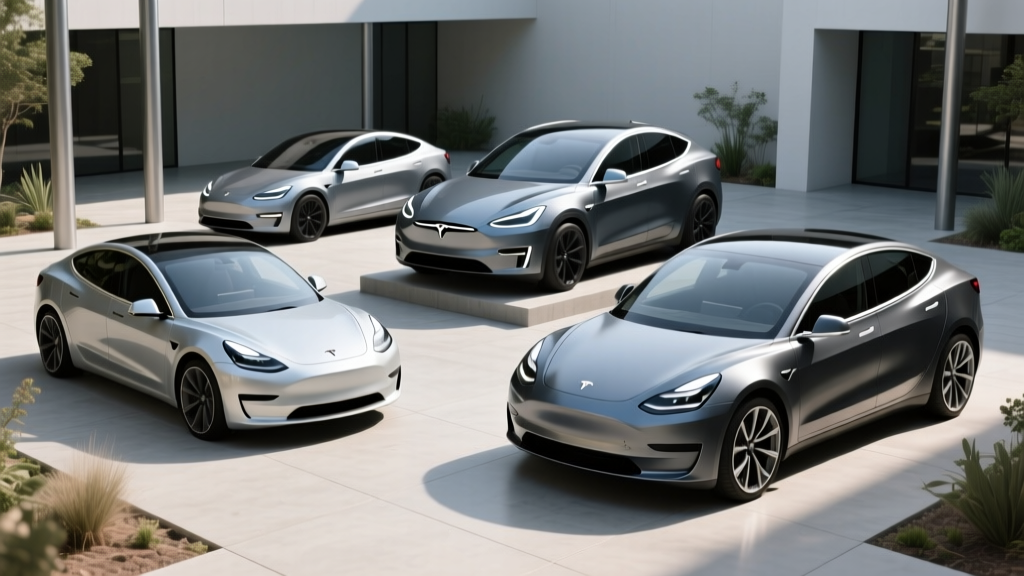
If you're shopping Tesla's 2026 lineup, the badge is the same but the ownership experience is not. The difference between Tesla models comes down to platform generation, battery chemistry, interior space, and how federal tax credit eligibility reshapes the effective price. Below is a data-driven head-to-head of the four vehicles Tesla currently sells in the U.S.: Model 3, Model Y, Model S, and Model X.
Side-by-Side Spec Table: 2026 Tesla Lineup at a Glance
These figures reflect the most common Long Range AWD trims where available, plus the base rear-wheel-drive Model 3 for value context. Battery chemistry, EPA range, and DC fast-charge peaks are from Tesla's U.S. spec pages and fueleconomy.gov.
| Spec | Model 3 RWD | Model 3 Long Range AWD | Model Y Long Range AWD | Model S Long Range | Model X Long Range |
|---|---|---|---|---|---|
| EPA Range | 363 mi | 363 mi | 320 mi | 402 mi | 335 mi |
| Battery (usable, chemistry) | ~60 kWh, LFP | ~78 kWh, NMC | ~78 kWh, NMC | ~95 kWh, NMC | ~95 kWh, NMC |
| Peak DC Charge Rate | 170 kW | 250 kW | 250 kW | 250 kW | 250 kW |
| 10–80% DC Fast Charge | ~30 min | ~25 min | ~27 min | ~30 min | ~32 min |
| Level 2 Charge (11.5 kW) | ~6 hr | ~7.5 hr | ~7.5 hr | ~9 hr | ~9.5 hr |
| 0–60 mph | 5.8 s | 4.2 s | 4.8 s | 3.1 s | 3.8 s |
| Horsepower | 271 hp | 384 hp | 384 hp | 670 hp | 670 hp |
| EPA Efficiency (MPGe) | 132 MPGe | 131 MPGe | 121 MPGe | 120 MPGe | 109 MPGe |
| Cargo Volume (rear seats up) | 23 cu ft | 23 cu ft | 30 cu ft | 25 cu ft | 37 cu ft (+ frunk) |
| Base MSRP (before incentives) | $38,990 | $45,990 | $47,990 | $74,990 | $79,990 |
| Battery & Drive Unit Warranty | 8 yr / 100k mi | 8 yr / 120k mi | 8 yr / 120k mi | 8 yr / 150k mi | 8 yr / 150k mi |
Category Verdicts: Where Each Tesla Model Wins
🏆 Range & Efficiency Winner: Model 3 Long Range AWD
At 363 miles EPA and 131 MPGe, the Model 3 LR matches the RWD's range sticker while adding dual-motor traction and a 4.2-second 0–60. Its lighter platform means fewer kWh consumed per mile — the single biggest predictor of real-world cost per mile and charging time on road trips. The Model S posts 402 miles but at 120 MPGe, it burns more energy to get there.
🏆 Charging Speed Winner: Model 3 / Model Y Long Range (Tie)
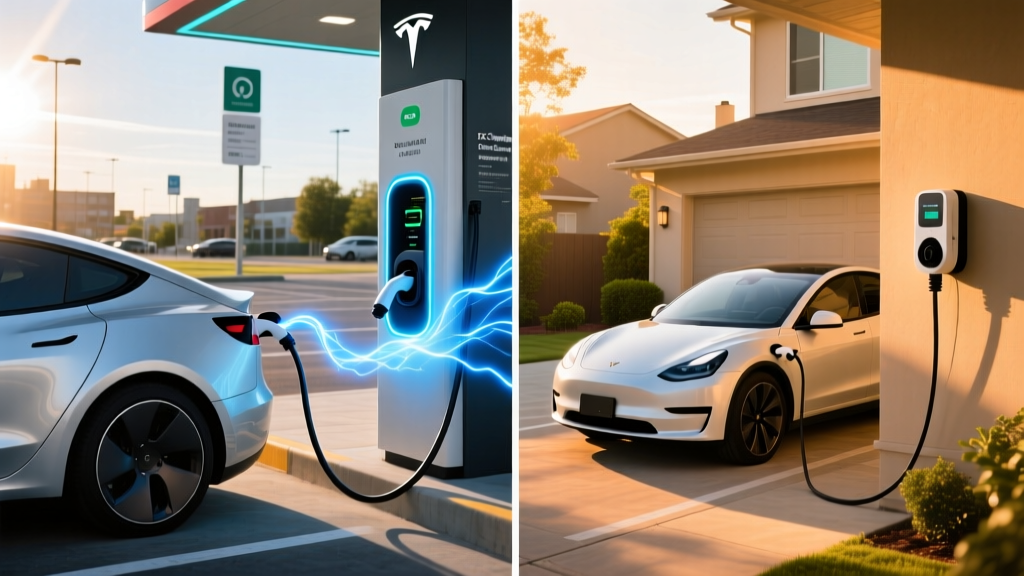
Both peak at 250 kW on V3 Superchargers and hit 10–80% in roughly 25–27 minutes. The Model 3's slightly smaller pack fills marginally faster in absolute time. Note: peak kW is not sustained — expect the charge curve to taper sharply above ~60% SoC, with the final 60–80% taking nearly as long as 10–60%. Preconditioning via on-route navigation is essential to hit peak rates.
🏆 Value Winner: Model 3 RWD
At $38,990 MSRP, the base Model 3 undercuts the lineup by $7,000+. After the $7,500 federal point-of-sale credit (if eligible), effective price drops to ~$31,490 — territory that competes with mid-trim compact sedans, not luxury EVs.
🏆 Cargo & Family Utility Winner: Model X
With 37 cu ft behind the second row (expandable to 88 cu ft with seats folded), falcon-wing doors for easy child-seat loading, and an available six-seat interior, the Model X is the only Tesla that genuinely functions as a three-row family hauler. The Model Y offers 30 cu ft and an optional (but cramped) third row.
🏆 Performance Winner: Model S
670 hp, 3.1-second 0–60, and a 402-mile range — the Model S is the only sedan that combines supercar acceleration with genuine road-trip range. The Plaid variant (1,020 hp, 1.99s 0–60) exists but at $89,990+ it's a specialty purchase.
🏆 Tech & Platform Freshness Winner: Model 3 (Highland Refresh)
The refreshed Model 3 benefits from Tesla's latest interior overhaul — ventilated seats, ambient lighting, rear touchscreen, improved NVH, and the latest HW4 Autopilot hardware. The Model Y received its "Juniper" refresh with similar upgrades. The Model S and X still ride on the older interior architecture.
Price & Tax Credit Comparison: What You'll Actually Pay
Federal EV tax credit eligibility under IRS §30D is the single factor that most reshapes Tesla's value hierarchy. The rules for 2026 include:
- MSRP Cap: Sedans must be ≤$55,000; SUVs/pickups ≤$80,000
- Buyer Income Cap: AGI ≤$150k single / $225k head of household / $300k joint
- Battery Sourcing: Critical minerals and battery components must meet phased-in domestic/free-trade-area thresholds
- Point-of-Sale Transfer: The $7,500 credit can be applied as a down-payment reduction at purchase
- FEOC Restriction: Vehicles with battery components from a "foreign entity of concern" are disqualified
| Model | MSRP | Vehicle Class | Under MSRP Cap? | Est. Price After $7,500 Credit |
|---|---|---|---|---|
| Model 3 RWD | $38,990 | Sedan | ✅ Yes ($55k cap) | ~$31,490 |
| Model 3 LR AWD | $45,990 | Sedan | ✅ Yes ($55k cap) | ~$38,490 |
| Model Y LR AWD | $47,990 | SUV | ✅ Yes ($80k cap) | ~$40,490 |
| Model S LR | $74,990 | Sedan | ❌ No (exceeds $55k sedan cap) | $74,990 (no credit) |
| Model X LR | $79,990 | SUV | ✅ Yes ($80k cap) | ~$72,490 |
Note: Battery sourcing and FEOC rules are subject to change. Always verify current-year eligibility on irs.gov or with a tax professional before purchasing. State incentives vary by jurisdiction.
The critical takeaway: the Model S is the only current Tesla that cannot qualify for the federal credit due to the sedan MSRP cap. This makes the gap between Model 3 LR ($38,490 after credit) and Model S ($74,990) effectively $36,500 — a staggering delta that the Model S must justify through range, performance, and prestige alone.
Real-World Charging Network & Road-Trip Practicality
All four models share access to the Tesla Supercharger network — currently 6,000+ V3/V4 stalls across the U.S. with industry-leading reliability (typically 98%+ uptime). This remains Tesla's strongest ownership advantage over CCS-dependent competitors. However, there are model-specific nuances:
Model 3 & Model Y: These are the road-trip sweet spot. Their efficiency (3.5–4.0 miles/kWh real-world) means you arrive at each Supercharger with more buffer, and their 250 kW peak fills the ~78 kWh pack quickly. On a 600-mile trip, expect two charging stops of ~20–25 minutes each in a Model 3 LR.
Model S: Despite its 402-mile EPA range, the Model S's larger 95 kWh pack and heavier curb weight mean longer charge sessions. A 10–80% fill takes ~30 minutes at peak. On that same 600-mile trip, you'll likely still stop twice, but each stop stretches to ~25–30 minutes. The range advantage manifests as fewer "range-anxiety moments" in remote areas between chargers.
Model X: The least efficient of the group at roughly 3.0 miles/kWh real-world highway. Road-trip charging stops take the longest, and the SUV's aerodynamic drag compounds the penalty at 80+ mph. Plan for ~30–35 minute stops on DC fast chargers.
Ownership Costs: Efficiency, Insurance, and Maintenance
Electricity cost per mile is where the efficiency gap matters most. At the U.S. average residential rate of ~$0.16/kWh:
| Model | Real-World Efficiency | Cost per Mile (home charging) | Annual Fuel Cost (12k mi) |
|---|---|---|---|
| Model 3 RWD | ~4.0 mi/kWh | $0.040 | $480 |
| Model 3 LR AWD | ~3.8 mi/kWh | $0.042 | $505 |
| Model Y LR AWD | ~3.5 mi/kWh | $0.046 | $549 |
| Model S LR | ~3.3 mi/kWh | $0.048 | $582 |
| Model X LR | ~3.0 mi/kWh | $0.053 | $640 |
Insurance: Tesla insurance premiums run 15–30% higher than segment averages due to repair costs and ADAS sensor density. The Model S and X carry the highest premiums — expect $2,200–$3,000/year nationally for a clean-record driver. The Model 3 RWD is the cheapest to insure in the lineup, averaging $1,500–$1,900/year. Always get a quote before purchase.
Maintenance: All Teslas share minimal maintenance needs — cabin air filter ($50–$80 every 2 years), brake fluid check, tire rotation. No oil changes, no transmission fluid. Expect $300–$500/year across all models. Tire wear is higher on the heavier Model S and X, and performance tire replacement on 21" wheels can run $1,200–$1,600 per set.
Autopilot, FSD, and Driver-Assistance: Same Across the Lineup
All 2026 Teslas ship with HW4 (AI4) hardware supporting Autopilot (standard), Enhanced Autopilot ($6,000 option), and FSD Supervised ($8,000 option or $99/month). The feature set is identical across Model 3, Y, S, and X — you're paying for the same software regardless of which vehicle you choose. The Model 3 and Y's newer camera placement offers marginally better close-range visibility for the vision-only system, but the real-world delta is minor.
Decision Framework: Which Tesla Should You Buy?
Choose the Model 3 RWD if: You want the lowest entry price (~$31,490 after credit), commute under 60 miles daily, have home Level 2 charging, and don't need cargo space beyond a week's groceries. LFP chemistry means you can charge to 100% daily without degradation guilt.
Choose the Model 3 Long Range AWD if: You want dual-motor all-wheel drive for snow/rain, need 363 miles of range for road trips, and value the best balance of price, efficiency, and performance in the lineup. This is the default recommendation for most sedan buyers.
Choose the Model Y Long Range AWD if: You need crossover cargo volume (30 cu ft), prefer a higher seating position, or want the optional (if tight) third row for small children. The $2,000 premium over the Model 3 LR buys real utility. It's the best-selling Tesla for a reason.
Choose the Model S Long Range if: You need 400+ miles of range, want supercar-level acceleration (3.1s 0–60), prefer a premium sedan, and can absorb the ~$75,000 price without a federal credit. This is a prestige and performance purchase, not a value one.
Choose the Model X Long Range if: You need genuine three-row seating, falcon-wing door convenience for car seats, and maximum cargo space (37 cu ft). At ~$72,490 after credit, it's the most expensive option but the only Tesla that replaces a large SUV.
Frequently Asked Questions
Which Tesla model has the best range in 2026?
The Model S Long Range leads at 402 miles EPA, followed by the Model 3 (both RWD and LR AWD) at 363 miles. However, the Model 3 LR achieves its range at higher efficiency (131 MPGe vs 120 MPGe), meaning it uses less energy and charges faster on road trips despite the lower sticker number.
Which Tesla is cheapest to own over five years?
The Model 3 RWD, by a wide margin. Lower MSRP, lowest energy cost per mile, cheapest insurance, and full $7,500 federal credit eligibility combine for a five-year total cost of ownership roughly $15,000–$25,000 less than a Model S or X. The Model 3 LR and Model Y LR are close behind.
Do all Tesla models qualify for the $7,500 federal tax credit?
No. The Model S exceeds the $55,000 MSRP cap for sedans and is ineligible. The Model 3, Model Y, and Model X all fall under their respective MSRP caps. However, buyer income limits, battery sourcing rules, and FEOC restrictions apply to all models. Verify on irs.gov before purchasing.
Is the Model Y really that different from the Model 3?
They share the same platform, battery, and powertrain options. The differences are body style (crossover vs sedan), cargo volume (30 vs 23 cu ft), seating height, and a ~$2,000 price premium for the Model Y. Efficiency drops slightly in the Model Y due to weight and aerodynamics. If cargo and ride height matter, choose Y; if efficiency and price matter, choose 3.
Which Tesla charges the fastest on road trips?
The Model 3 and Model Y Long Range both peak at 250 kW and complete a 10–80% charge in ~25–27 minutes. The Model 3's slightly smaller pack and higher efficiency give it a marginal real-world advantage in total trip time. All models benefit from Tesla's battery preconditioning — always navigate to a Supercharger via the car's built-in nav to activate it.
What's the difference between LFP and NMC batteries in Teslas?
The Model 3 RWD uses LFP (lithium iron phosphate) chemistry, which tolerates daily 100% charging, has a longer cycle life, and costs less — but is heavier and loses more range in cold weather. The LR, Model Y, S, and X use NMC (nickel manganese cobalt), which offers higher energy density and better cold-weather performance but should typically be charged to 80% for daily use to minimize degradation.
Is Tesla's build quality consistent across all models?
The refreshed Model 3 ("Highland") and Model Y ("Juniper") have significantly improved panel gaps, paint quality, and interior materials compared to earlier production years. The Model S and X, built on an older platform, still show occasional inconsistencies. All are structurally sound and safe (IIHS Top Safety Pick+ for Model 3 and Y), but fit-and-finish expectations should scale with price.
The difference between Tesla models in 2026 isn't about which is objectively best — it's about which aligns with your budget, space requirements, and how you value range versus utility versus performance. The Model 3 LR AWD remains the lineup's center of gravity for most buyers, the Model Y adds crossover practicality at a small premium, and the Model S and X serve niche roles where price is secondary to capability.