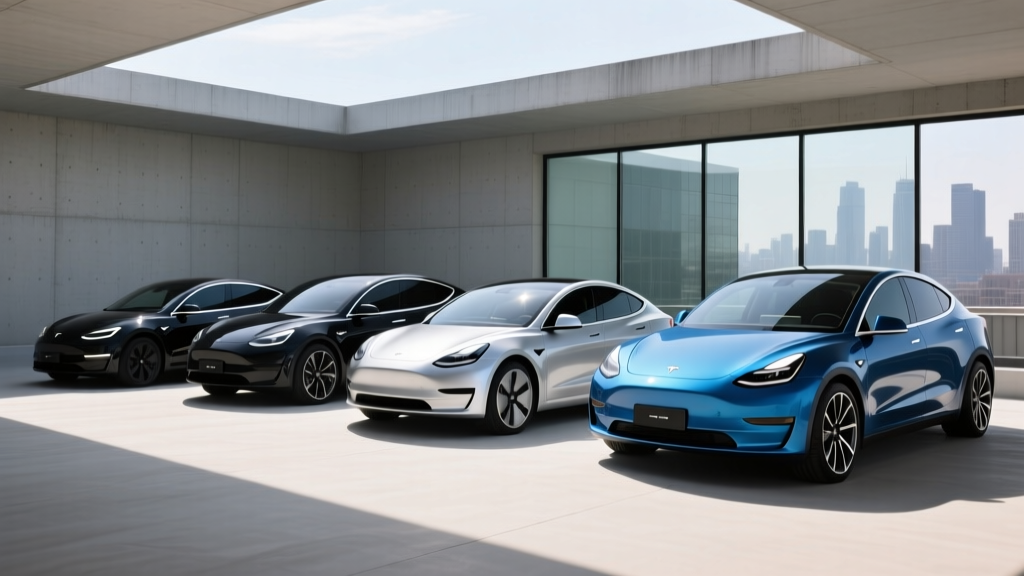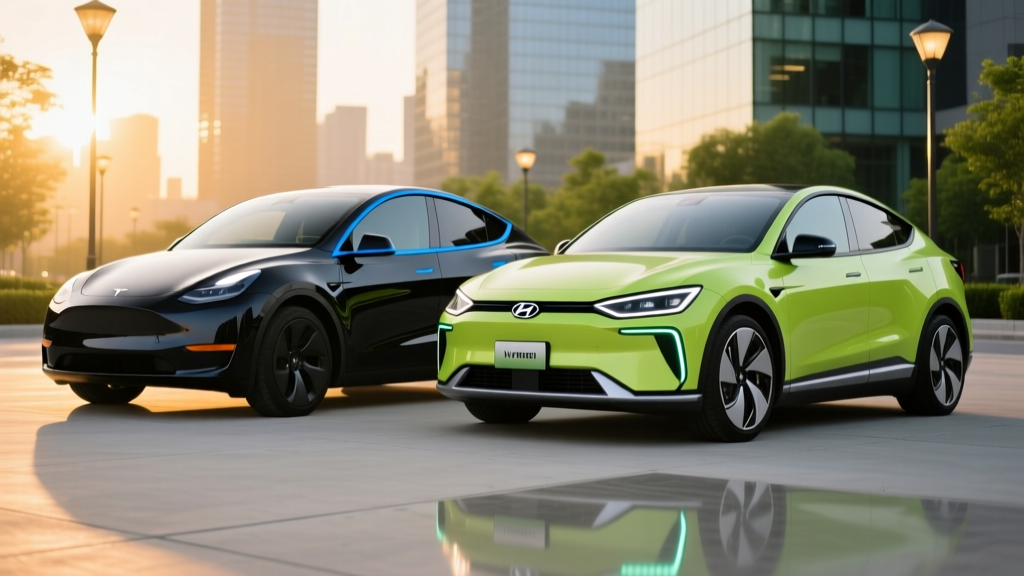
When buyers search to compare EV cars in the compact electric SUV segment, two nameplates dominate the shortlist: the 2026 Tesla Model Y and the 2026 Hyundai Ioniq 5. Both offer over 300 miles of EPA-rated range, DC fast charging under 25 minutes, and access to the Tesla Supercharger network. But their approaches to efficiency, interior packaging, software, and pricing diverge sharply. This head-to-head breaks down every spec that matters — from battery chemistry to real-world highway range to five-year ownership cost — so you can pick the one that actually fits your driving life.
Side-by-Side Spec Table: Model Y vs Ioniq 5
Numbers first. The table below uses the most popular long-range AWD trims for both vehicles, as these represent the highest-volume configurations buyers cross-shop. All figures reflect 2026 model-year data.
| Specification | Tesla Model Y LR AWD | Hyundai Ioniq 5 SEL AWD |
|---|---|---|
| EPA Range | 320 miles | 304 miles |
| Battery (usable) | ~75 kWh (NMC) | 84 kWh (NMC, 4th-gen) |
| Efficiency (combined) | 122 MPGe / 28 kWh/100mi | 110 MPGe / 31 kWh/100mi |
| Peak DC Fast Charge | 250 kW (CCS/NACS) | 240 kW (NACS, 2026+) |
| 10–80% DCFC Time | ~25 min | ~18 min |
| Level 2 Charge Rate | 11.5 kW | 10.9 kW |
| 0–60 mph | 4.8 sec | 5.1 sec |
| Horsepower | 384 hp | 320 hp |
| Cargo (rear seats up) | 30.2 cu ft (+ 4.1 cu ft frunk) | 27.2 cu ft (+ 0.85 cu ft frunk) |
| Base MSRP | $44,990 | $46,950 |
| Battery/Powertrain Warranty | 8 yr / 120,000 mi | 10 yr / 100,000 mi |
Range and Efficiency: Real-World Expectations
The Model Y's 320-mile EPA rating edges out the Ioniq 5's 304 miles on paper, but efficiency tells a deeper story. The Tesla achieves its range with a smaller ~75 kWh battery, meaning it extracts more miles per kilowatt-hour. According to fueleconomy.gov, the Model Y posts 122 MPGe combined versus the Ioniq 5's 110 MPGe. That 12% efficiency gap matters on road trips: the Model Y uses roughly 3 kWh less per 100 miles driven, translating to fewer charging stops on long corridors.
Model Y LR AWD: EPA 320 mi. Expect ~270–285 mi at sustained 75 mph highway speeds; ~230–250 mi in sub-30°F winter conditions.
Ioniq 5 SEL AWD: EPA 304 mi. Expect ~255–270 mi highway; ~215–235 mi in deep cold. The Ioniq 5's larger 84 kWh battery partially offsets its lower efficiency in winter, narrowing the gap when it matters most.
Both vehicles use heat pumps as standard equipment in 2026, which reduces cabin-heating energy draw in winter compared to resistive heaters. However, neither is immune to the 20–30% range reduction that lithium-ion batteries experience in sustained freezing temperatures.
Charging Speed and Network Access
This category has converged dramatically. Starting with the 2025 model year, Hyundai switched the Ioniq 5 to the NACS (North American Charging Standard) connector, granting native access to Tesla's Supercharger network without an adapter. By 2026, both vehicles plug directly into Superchargers, Electrify America, EVgo, and ChargePoint stalls with no dongle required.
The Ioniq 5's E-GMP platform uses an 800-volt architecture, which lets it sustain higher charge rates deeper into the session. While the Model Y peaks at 250 kW, its charge curve tapers more aggressively above 50% state of charge. The Ioniq 5's 240 kW peak holds longer, resulting in a faster 10–80% sprint: approximately 18 minutes versus 25 minutes. On a road trip with two DC fast-charge stops, that's roughly 14 minutes saved — enough to matter when you're covering 600+ miles in a day.
For home Level 2 charging on a 48-amp circuit, both vehicles add approximately 30–35 miles of range per hour of charging. A full overnight charge from 20% to 80% takes about 5.5 hours in either vehicle, well within a typical overnight window.
Category Winners: Where Each EV Excels
122 MPGe combined and 320 EPA miles from a smaller battery. If minimizing kWh consumption and maximizing distance per charge are your top priorities, the Model Y's powertrain engineering is the class benchmark.
800V architecture delivers a 10–80% time of ~18 minutes, 7 minutes faster than the Model Y. For frequent road-trippers, this is the more consequential spec than EPA range.
30.2 cu ft rear cargo plus a 4.1 cu ft frunk. The Model Y's hatchback design and deeper load floor accommodate more gear, strollers, and luggage than the Ioniq 5's slightly more car-like cargo area.
10-year/100,000-mile battery and powertrain coverage versus Tesla's 8-year/120,000-mile. Hyundai's two extra years of battery warranty reduce long-term degradation anxiety for second-owner buyers.
Flat floor, sliding center console, physical HVAC buttons, and a more traditional dashboard layout. The Ioniq 5's interior feels more spacious for rear-seat passengers and less minimalist-dependent than Tesla's screen-only approach.
Tesla's over-the-air update cadence, Supercharger integration, and Autopilot/FSD (Supervised) feature set remain more mature. Note: FSD is SAE Level 2 — the driver must remain fully engaged at all times.
Pricing, Tax Credits, and True Cost to Buy
Sticker prices alone don't tell the full story. The federal §30D EV tax credit can reduce the effective purchase price by up to $7,500 — but eligibility depends on MSRP caps, buyer income limits, battery component sourcing, and critical mineral requirements. Both the Model Y and Ioniq 5 qualify for the full $7,500 credit as of early 2026, and both can be transferred to the dealer at point of sale, effectively functioning as an instant rebate. Always verify current eligibility on IRS.gov before purchasing, as sourcing rules change.
| Cost Factor | Tesla Model Y LR AWD | Hyundai Ioniq 5 SEL AWD |
|---|---|---|
| Base MSRP | $44,990 | $46,950 |
| Destination Fee | $1,390 | $1,395 |
| Federal §30D Credit | −$7,500 | −$7,500 |
| Effective Price (before state incentives) | $38,880 | $40,845 |
| Estimated Insurance (annual avg.) | ~$2,100 | ~$1,850 |
The Model Y's lower starting MSRP gives it a ~$1,965 advantage after the federal credit. However, the Ioniq 5's typically lower insurance premiums — driven by cheaper collision-repair parts and Hyundai's broader dealer network — narrow that gap by roughly $250 per year. State incentives (California's CVRP, Colorado's innovative motor vehicle credit, etc.) can further shift the equation; check your state's energy office for current programs.
Five-Year Ownership Cost Breakdown
| Category | Tesla Model Y LR AWD | Hyundai Ioniq 5 SEL AWD |
|---|---|---|
| Effective Purchase Price | $38,880 | $40,845 |
| Electricity (home + DCFC mix) | $4,100 | $4,500 |
| Insurance (5 years) | $10,500 | $9,250 |
| Maintenance (tires, cabin filter, fluid top-offs) | $2,200 | $2,400 |
| Estimated Depreciation (5 yr) | $18,500 | $17,200 |
| Total 5-Year Cost | $74,180 | $74,195 |
At the five-year mark, these two vehicles land within $15 of each other in total cost of ownership. The Model Y's lower purchase price and superior efficiency are offset by higher insurance premiums and steeper projected depreciation. The Ioniq 5's higher sticker is counterbalanced by cheaper insurance and stronger residual values in the 2026 market. Your actual cost will vary based on local electricity rates, driving habits, and whether you primarily charge at home (cheapest) or rely on DC fast charging (most expensive).
Decision Framework: Which EV Fits Your Life?
- You prioritize maximum EPA range and efficiency per kWh
- Cargo space is critical (larger rear hatch + bigger frunk)
- You want the most mature software ecosystem and OTA update cadence
- You value Autopilot/FSD (Supervised) for long highway commutes — remembering it is SAE Level 2, not self-driving
- You prefer Tesla's direct-to-consumer service model and mobile ranger visits
Choose the Hyundai Ioniq 5 if:
- You take frequent road trips and want the fastest 10–80% DC charging (18 min vs 25 min)
- Interior comfort, rear-seat space, and physical buttons matter to you
- You want a 10-year battery warranty for long-term peace of mind
- You prefer a traditional dealership experience with local service bays
- Lower insurance premiums are a priority in your state
Frequently Asked Questions
Can both the Model Y and Ioniq 5 use Tesla Superchargers in 2026?
Yes. The 2026 Hyundai Ioniq 5 comes with a native NACS charge port, identical to Tesla's connector. Both vehicles plug directly into any V3 or V4 Supercharger stall without an adapter. The Ioniq 5 also retains compatibility with CCS stations via the broader NACS/CCS interoperability agreements now standard across major networks.
Which is cheaper to charge at home?
The Model Y, marginally. Its higher efficiency (28 kWh/100mi vs 31 kWh/100mi) means it draws about 10% less electricity per mile driven. At the US average residential rate of $0.17/kWh, the Model Y costs roughly $4.76 per 100 miles to charge at home versus $5.27 for the Ioniq 5 — a difference of about $38 per year at 15,000 miles of driving.
Do both qualify for the $7,500 federal EV tax credit?
As of early 2026, both vehicles meet the §30D requirements for the full $7,500 credit, including battery component and critical mineral sourcing thresholds. Both can apply the credit as a point-of-sale rebate through a registered dealer. However, buyer income caps ($150K single / $300K joint) and MSRP limits ($55K for SUVs) apply. Confirm your eligibility with a tax professional and check the latest rules at IRS.gov.
Is the Ioniq 5's 800V architecture a meaningful advantage?
For DC fast charging, yes. The 800-volt system allows the Ioniq 5 to accept higher power at higher states of charge, producing a flatter charge curve. In practical terms, you'll spend about 7 fewer minutes at a 250 kW charger during a 10–80% session. If you road-trip more than 4–5 times per year, this adds up to meaningful time savings.
Which has better resale value?
Historically, Tesla vehicles experienced steeper depreciation due to aggressive price cuts on new models. As of 2026, the gap has narrowed, but the Ioniq 5 holds a slight edge in projected 5-year residual value (~63% vs ~59%), supported by Hyundai's warranty transferability and a stabilizing MSRP strategy. Check Edmunds or Kelley Blue Book for real-time trade-in values in your market.
Which is safer?
Both vehicles earned the IIHS Top Safety Pick+ designation and 5-star NHTSA overall ratings. The Model Y benefits from a lower center of gravity due to its structural battery pack, while the Ioniq 5's E-GMP platform was engineered from the ground up for crash energy management. Neither has a clear safety advantage — both represent the current state of the art for compact electric SUV crashworthiness.